Current Utah Mortgage Rates: A Look Inside

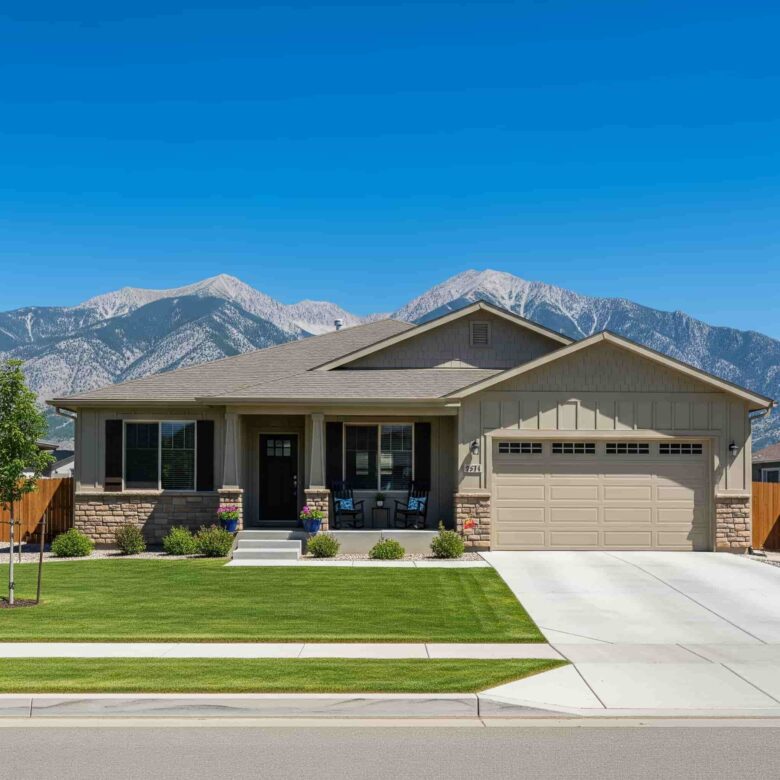
Charming home surrounded by mature trees, offering peaceful curb appeal. Explore how low Utah mortgage rates can make owning a home like this more affordable.
Stunning modern home illuminated by warm evening lights, ideal for those seeking luxury living. Explore how a Jumbo loan can help you finance a home like this.
A spacious, modern home with elegant evening lighting. Discover financing options like a Jumbo loan to make this dream home possible.

Utah Mortgage Rates as of September 22, 2024

Table with average interest rates and the weekly change for each type of mortgage: conventional, VA, FHA, and Jumbo.

This past week, we have seen a slight decrease in rate with most of the mortgage types and a slight increase in rates for Conventional 15 Year Fixed Utah Mortgages. By far the most substantial change over the past week is with the fixed Utah FHA mortgage loans which saw a decrease of .54% in the 30 year fixed Utah FHA mortgage rate and a whopping 1.47% decrease in the 15 year fixed Utah FHA mortgage rate. After a bit of a rate hike over the past couple of weeks, itโ€™s nice to see the rates fall a bit, even if itโ€™s not by much. Even though rates have fallen over the past week, I would recommend that most potential Utah home buyers wait another week before checking the rates again. Utah mortgage rates have been steadily decreasing over the past three months but we have seen a spike over the past couple of weeks and we are currently at the peak of the spike. Therefore I recommend waiting to apply for a mortgage for potential Utah home buyers. On the other hand, if the home buyer qualifies for a Utah FHA mortgage loan, then I would recommend they consider applying for a mortgage due to the steep drop the mortgage type experienced. Keep reading if you want to know if you qualify for a Utah FHA mortgage loan, as well as information and directories for all other major mortgage types.

Current Utah Mortgage Rates for Conventional Loans Analysis

If youโ€™re considering a Conventional Home Loan in Utah, itโ€™s essential to understand how the current Utah mortgage rates and Utah interest rates can impact your decision. These loans typically appeal to buyers with a strong credit history and a stable income looking for stability and predictable payments. The current average interest rate for a 30 year fixed Utah conventional mortgage loan is 5.73%, which has dropped by 0.04% in the past week. The average interest rate for a 15 year fixed Utah conventional mortgage loan is 5.12%, which has risen by 0.03% in the past week. While thereโ€™s been a slight increase in Utah 15 Year interest rates, the average Utah mortgage rates for conventional loans can vary. With the recent fluctuations, particularly the drop in Utah 30 Year interest rates, now might be a good time to explore your options.

Current Utah Mortgage Rates for VA Loans Analysis

If you served in the military, then you should really consider applying for a VA loan. Utah VA loans come from a mortgage loan program offered by the Department of Veterans Affairs. These loans are exclusively for veterans, service members, and their families in purchasing, refinancing, building, repairing, or improving their home. Private lenders like banks and mortgage companies offer these loans, but those eligible are able to get better loan terms than with a conventional loan since the VA guarantees a portion of the loan. In order to qualify for a VA loan, you have to request a Certificate of Eligibility. This certificate contains information on your service history and duty status. You can find out if you meet the credentials for a Certificate of Eligibility here. The limits for VA home loans are the same as FHFA limits, which are Conforming Loan Limits. The 2024 limits sorted by county can be found on the FHFA website

The current average interest rate for a 30 year fixed mortgage rate VA loan is 5.48%, which has dropped by 0.06% in the past week. The average interest rate for a 15 year fixed mortgage rate VA loan is 5.38%, which has dropped by 0.03% in the past week. For the most part, these rates are noticeably lower than the other rate options.

To learn more information about VA loans and if itโ€™s the right loan for you, visit this post on our blog dedicated to VA loans.

Current Utah Mortgage Rates for FHA Loans Analysis

For those exploring FHA Loans in Utah, this option is ideal for first-time homebuyers, individuals with limited savings for a down payment, or those with less-than-perfect credit histories. These loans are particularly beneficial for buyers who may struggle to meet the stricter requirements of conventional financing. Recently, weโ€™ve seen a significant drop in the FHA 30 Year Fixed Mortgage Rate, now at 6.27% after a decrease of 0.54%, and the FHA 15 Year Fixed Mortgage Rate has reached 6.18% with an impressive 1.47% decreaseโ€”the largest drop among loans. With these favorable rates, now is a great time to consider this route. To learn more about FHA loans and their benefits, check out this blog post all about FHA loans.

Current Utah Mortgage Rates for Jumbo Loans Analysis

If you plan on buying a home for over $766,550, then you need to apply for a jumbo loan. A Utah jumbo loan is a mortgage used to finance properties that financially exceed a conventional conforming loan. In most counties in Utah, the maximum amount for a conforming loan for a single unit house is $766,550. But if you intend to move to Summit or Wasatch county, then the limit is $1,149,825 while the limit in Wayne county is $997,050. You can see jumbo loan limits by Utah county here. Jumbo loan limits are determined by the Federal Housing Finance Agency every year, and also varies by house size (single unit, duplex, etc.) Homes that exceed the local conforming loan limit require a jumbo loan in Utah, and are usually used for high-value properties. Jumbo loans have stricter criteria for borrowers: a higher credit score, larger income/assets, and bigger down payments. Therefore, they can vary significantly based on the borrower’s creditworthiness, income, and overall financial profile.

In the current market,  the average 30-year fixed jumbo mortgage APR stands at 6.13%, decreasing 0.09% from the previous week. The 15-year fixed jumbo mortgage rate is slightly higher at 6.37%, which has decreased by 0.6% in the past week.

Charming home surrounded by mature trees, offering peaceful curb appeal. Explore how low Utah mortgage rates can make owning a home like this more affordable.

Final Summary

Make sure to come back next week for updated information and analysis on current Utah mortgage rates. Make sure to regularly visit our blog,  where you can find new information about all of the major mortgage types as well as refinancing. Visit our monthly reddit ama on r/Utah where you can ask a Utah mortgage expert any questions you may have about applying for a mortgage in the state. If there is any information youโ€™d like to know that we donโ€™t seem to have, feel free to message us through our contact page. 

Sources

โ€œSee Todayโ€™s Mortgage Rates on Zillow.โ€ Zillow, www.zillow.com/mortgage-rates/ut/. Accessed 22 Sept. 2024.

โ€œVA-Backed Veterans Home Loans.โ€ Department of Veterans Affairs, www.va.gov/housing-assistance/home-loans/#:~:text=VA%20direct%20and%20VA%2Dbacked,programs%E2%80%94and%20how%20to%20apply. Accessed 24 Sept. 2024. 

VA Home Loans, Veterans Benefits Administration. Department of Veterans Affairs, www.benefits.va.gov/homeloans/#:~:text=VA%20helps%20Veterans%2C%20Servicemembers%2C%20and,you%20with%20more%20favorable%20terms. Accessed 24 Sept. 2024. 

Dehan, Andrew. โ€œWhat Is a Jumbo Loan?โ€ Bankrate, 2 Apr. 2024, www.bankrate.com/mortgages/what-is-jumbo-mortgage/. 

Banton, Caroline. โ€œUnderwriting: Definition and How the Various Types Work.โ€ Investopedia, Investopedia, www.investopedia.com/terms/u/underwriting.asp. Accessed 20 Sept. 2024. 

โ€œJumbo Loans: What You Need to Know.โ€ NerdWallet, www.nerdwallet.com/article/mortgages/jumbo-loans-what-you-need-to-know. Accessed 20 Sept. 2024. 

Segal, T. (n.d.). Federal Housing Administration (FHA) loan: Requirements, limits, how to qualify. Investopedia. https://www.investopedia.com/terms/f/fhaloan.asp Conventional loans. Consumer Financial Protection Bureau. (n.d.). https://www.consumerfinance.gov/owning-a-home/conventional-loans/

The Ultimate Utah VA Home-Loan Resource: Tips for Veterans

VA home loan for a happy family


A VA home loan is a mortgage option available to veterans, active-duty military members, and their families, guaranteed by the U.S. Department of Veterans Affairs (VA). In Utah, VA loans provide several key benefits, including no down payment, no private mortgage insurance (PMI), competitive interest rates, and flexible credit requirements. They also limit closing costs and allow veterans to reuse their benefits. To qualify, applicants must meet specific service criteria, such as active duty during wartime, peacetime, or service in the National Guard or Reserves. In Utahโ€™s competitive housing market, particularly in high-cost areas like Salt Lake City, VA loans can help veterans secure homes with more favorable terms. With the stateโ€™s growing real estate market, these loans are especially helpful for veterans looking to buy homes in both urban and rural parts of Utah, making them crucial financial tools for those who have served.

Varieties of VA Home Loan Options

When it comes to VA home loans, there are several flexible and unique options available to veterans, active-duty service members, and their families. Each loan type is designed to cater to specific financial needs and goals, making homeownership more accessible and affordable. Whether you’re purchasing a new home, refinancing an existing mortgage, or looking to tap into your home’s equity, VA loans offer competitive rates and favorable terms. Below, we break down the different types of VA home loan options.

VA Purchase Loan

This loan type allows qualified buyers to purchase a home without needing a down payment, and it often comes with lower Utah mortgage rates than conventional loans.

VA Cash-Out Refinance

This option lets you replace your current mortgage with a new VA loan, helping you access cash by tapping into your home’s equity, with the potential to benefit from Utah VA refinancing rates.

VA Interest Rate Reduction Refinance Loan (IRRRL)

Also known as a streamlined refinance, this loan is designed to help reduce your monthly payments by securing a lower VA loan interest rate Utah on an existing VA loan.

VA Home Loan Lenders in Utah

Finding the right VA home loan lender in Utah is essential for veterans, active-duty service members, and their families looking to take advantage of their VA benefits. Utah has a variety of experienced lenders who specialize in VA loans, offering competitive rates and terms tailored to the unique needs of military borrowers. These lenders understand the specific requirements of VA loans, including no down payment options, lower interest rates, and no private mortgage insurance, making home ownership more affordable. For a full list of reputable lenders offering VA and other mortgage options,

Choosing a trusted VA lender ensures you get the support and expertise needed throughout the home-buying process. Ensuring youโ€™re partnering with the right bank is crucial before making an important decision such as a mortgage.

Visit our guide on the best banks for mortgages in Utah. https://www.mortgagerateutah.com/category/mortgage-loans/best-mortgage-banks-in-utah/

Utah Military Mortgage Rates

As in other states, Utah military mortgage rates are frequently linked to VA loans, which provide a number of advantages to qualifying spouses, veterans, and active-duty military personnel. Military families find VA loans to be an appealing alternative since they often have lower interest rates than regular mortgages, no down payment requirements, and no private mortgage insurance (PMI). Both home purchases and mortgage refinancing are possible with these specific loans in Utah. VA loan Utah requirements are typically straightforward and designed to meet the financial needs of service people, but VA loan interest rates Utah can vary depending on the lender, the borrowerโ€™s credit history, and the state of the market.

Summary:

Guaranteed by the U.S. Department of Veterans Affairs, a VA home loan Utah is a great option for veterans, active-duty members, and their families. In Utah specifically, these loans are especially useful because of the benefits they offer, including lower interest rates, no private mortgage insurance (PMI), and no down payment. Adding to that, they are also extremely flexible and can be tailored specifically to meet diverse financial needs and circumstances. These options not only enhance affordability but also empower veterans to make smart financial decisions while homebuying. Considering Utah’s highly competitive real estate market, these types of loans are especially great for those who are seeking a home.

On the website Mortgagerateutah.com, they provide lists of the best mortgage banks and brokers in Utah. The page is designed to be intuitive and easy to navigate, which can help veterans access VA home loans with ease. The website also offers specific tabs dedicated to VA loans, showing insights into lenders who specialize in the field, along with additional resources to help the navigation/decision process for military families. The variety of options reflects a commitment to helping veterans achieve their dream home-buying experience.

For more details on the benefits and general information on VA loans

Here we highlight the benefits of VA loans, whether you qualify for one, and how to apply.

Other Places to Help:

This subreddit is a community for veterans to navigate their finances after serving our country. The members discuss a wide variety of topics, with VA home loans being a large piece of it, so this subreddit makes sense to attract readers to connect and ask questions with others in similar situations.

https://www.reddit.com/r/MilitaryFinance/

Closing Documents Demystified: A Guide For Utah Homebuyers

Let’s get started!

When my husband and I purchased our first home in Salt Lake City, Utah, it seemed like there were endless forms to fill out and too many documents to sign, followed by at least an hour of signing more closing document to wrap up the sale. The amount of paperwork involved with buying a home feels endless. However, It’s important to know what documents you’re signing at closing, and why you’re signing them because purchasing a home is a huge investment!

Don’t drown in closing document confusion! Read on for help.

I want to help first-time homebuyers understand what they’ll be reviewing during closing, and/or give experienced homebuyers a friendly reminder. So, below is a list of the most common closing documents you’ll encounter and a brief description of what they entail. Documents are in order alphabetically, by name.

The Affidavit of Title

The Affidavit of Title is a legal document which establishes that the seller holds the title to the property. The new homeowner will sign this document upon taking ownership. Also, it includes any information about liens or other title issues for that property.

The Certificate of Occupancy

The Certificate of Occupancy is a document that’s provided to the homebuyer and contains the address and description of the property. It verifies that it us up to code, which serves as proof that the property is fit to live in and fit for its purpose. This document only applies to new-build homes, therefore anyone closing on an existing home doesn’t need to worry about this one.

The Closing Disclosure

A Closing Disclosure is a form for the new homebuyer which gives the final details of the mortgage loan. It includes the loan terms, projected monthly payments, and how much the new homebuyer will pay in fees and other costs to get the mortgage (closing costs).

The Deed

A Deed is a legal document that transfers ownership of home from the current owner to the new buyer. It also contains a description of the property boundaries and any real property that it contains. Therefore, it is crucial to review this document for accuracy. Every real estate deed must be notarized and filed with the local government in order for the new homebuyer to sell the property, refinance the property, or obtain a line of credit on it. The title insurance company generally performs this task, but it’s important for the homebuyer to verify the process.

The Home Inspection Report

The Home Inspection Report is a detailed list of the the condition of the home and its components. It generally includes the following: foundation, exterior, bathroom fixtures, appliances, roof, plumbing, HVAC system, gas system, and electrical system. An inspector will visually examine the home and then provide the report. This is done prior to closing so that the buyer can review the document and request fixes to be made or even change their mind about purchasing the property.

The Homeowners Insurance

Lenders in Utah require homeowners insurance, and will ask for proof of insurance as one of the closing documents. Lenders want proof that their investment is protected.

The Initial Escrow Statement

The Initial Escrow Statement also goes by the name of the “Initial Escrow Disclosure”. This document outlines how the escrow account is set up and what expenses it covers. It covers common elements such as property taxes, mortgage insurance, homeowners association dues, etc.

The Loan Application

The Loan Application is the homebuyer’s acknowledgement that they understand the terms of the loan and their financial obligation to repay it. The new homebuyer will review this document along with the mortgage application. Therefore, it is important to review for accuracy and notify of any changes.

The Mortgage

The mortgage also goes by the name “The Deed of Trust.” This is an agreement between the new homebuyer and a lender that allows the homeowner to borrow money to purchase or refinance a home. The mortgage legally allows the lender to put the home up as collateral for the loan.

The Promissory Note

The Promissory Note describes the homebuyer’s commitment and responsibility to the mortgage loan. It will state the amount of the loan, the interest rate, repayment schedule and any consequences of defaulting.

The Purchase Agreement

The Purchase Agreement is sometimes called a “Purchase and Sale Agreement” or a “Real Estate Purchase Contract (REPC)”. It is a legally binding document between the buyer and seller for real estate purchases. The Purchase Agreement contains details such as: new homebuyer info, purchase date, purchase price, purchase details (property and any included amenities), how it will be paid for (loan, cash, etc.) It also contains details such as appraisals, conditions of purchase, etc. Utah law requires licensed Real Estate agents to use the REPC form, although the home buyer and home seller can agree to alter or delete its provisions, or to use a different form.

The Sellers Disclosure

The Sellers Disclosure is a document that lists in detail any issues with a home. In the state of Utah, a seller is required by law to disclose material defects and latent defects. Material defects are things you can easily see or find. Latent defects are not easily seen or not obviously apparent.

The Title Document

The Title Document is a list of all previous owners of the home and any liens or other clouds on the title. You’ll need to pay off any additional/existing liens in order to have a free and clear title. It’s important to review this document to prevent delays in the closing process. When you buy a home, you acquire the title, which represents your ownership rights.

The Title Insurance Policy

The Title Insurance Policy is a document that outlines protections for the lender. Hidden title hazards can emerge after purchasing a home, but title insurance can offer protection against them.

The Transfer of Tax Declaration

The Transfer of Tax Declaration is a document that lists the taxes owed for the transfer of the property. Utah does not charge a real estate transfer tax, therefore this is not a concern for Utah homebuyers as it is not a required closing document.

Thanks for Reading!

I hope this article was helpful! Now you’ve seen a quick summary of the closing documents you’ll encounter when buying a home. Also, depending on which state you’re purchasing a home in, there may be more or fewer documents to sign. If you want more details or additional information, then please check out these posts as well!

Frequently Asked Questions About Mortgage Rates in Utah

1. What are the current mortgage rates in Utah?

Mortgage rates can vary daily based on market conditions. For the most up-to-date information, please check our current rates page or contact one of our mortgage advisors.

2. How do mortgage rates in Utah compare to the national average?

Utah’s mortgage rates are often competitive with the national average. Factors such as local economic conditions, state regulations, and the overall housing market influence rates. To see how Utah’s rates compare, view our rate comparison tool.

3. What factors influence mortgage rates in Utah?

Several factors can influence mortgage rates, including:

  • Credit Score: Higher scores typically qualify for lower rates.
  • Loan Amount: Larger loans may have higher rates.
  • Loan Type: Fixed-rate, adjustable-rate, FHA, VA, and USDA loans all have different rates.
  • Loan Term: Shorter terms often have lower rates.
  • Economic Conditions: Inflation, employment rates, and the Federal Reserve’s policies can impact rates.

4. How can I get the best mortgage rate in Utah?

To secure the best mortgage rate:

  • Improve Your Credit Score: Pay off debts and ensure timely payments.
  • Save for a Larger Down Payment: This can lower your loan-to-value ratio.
  • Compare Lenders: Shop around for the best offers.
  • Consider Different Loan Types: Each type may offer different rates and benefits.

5. Are there specific mortgage programs available for first-time homebuyers in Utah?

Yes, Utah offers several programs for first-time homebuyers, such as:

  • Utah Housing Corporation (UHC) Programs: These include down payment assistance and mortgage credit certificates.
  • FHA Loans: Low down payment options and flexible credit requirements.
  • VA Loans: For eligible veterans and active military personnel, offering low or no down payment options.

6. How does the pre-approval process work for mortgages in Utah?

Getting pre-approved involves a lender evaluating your financial situation to determine how much you can borrow. This process includes:

  • Credit Check: Assessing your credit score and history.
  • Income Verification: Reviewing pay stubs, tax returns, and employment status.
  • Debt-to-Income Ratio: Ensuring your debts are manageable relative to your income.

7. What are the benefits of getting pre-approved for a mortgage in Utah?

Pre-approval offers several benefits:

  • Stronger Offers: Shows sellers you are a serious buyer.
  • Budgeting: Helps you understand how much you can afford.
  • Faster Closing: Streamlines the underwriting process once you make an offer.

8. What is the difference between a fixed-rate and an adjustable-rate mortgage (ARM) in Utah?

  • Fixed-Rate Mortgage: The interest rate remains the same throughout the loan term, providing predictable monthly payments.
  • Adjustable-Rate Mortgage (ARM): The interest rate may change periodically, usually starting with a lower rate than fixed-rate loans but potentially increasing over time.

9. Can I refinance my mortgage in Utah to take advantage of lower rates?

Yes, refinancing your mortgage can be a great way to take advantage of lower rates. It involves replacing your current mortgage with a new one, often to:

  • Lower Monthly Payments: By securing a lower interest rate.
  • Shorten Loan Term: Pay off your mortgage faster.
  • Access Home Equity: Through cash-out refinancing.

10. What are the closing costs associated with getting a mortgage in Utah?

Closing costs can vary but typically include:

  • Origination Fees: Charged by the lender for processing the loan.
  • Appraisal Fees: For assessing the property’s value.
  • Title Insurance: Protects against potential title issues.
  • Taxes and Recording Fees: Local government charges for recording the mortgage.

For more detailed information and personalized advice, please contact us or visit our mortgage resources page.

Utah Housing Market Forecast for 2025

Buying a home in Utah for first-time home buyers

Utah Housing Market in 2023, 2024

  1. How much do houses in Utah cost?

The median home sales price in May 2024 has increased in the past 3 months to $545,900. Thatโ€™s up 3.1% and $16,300 higher than May 2023 of last year. That is higher than the national median home sales price of $439,716.

  1. How many houses are available in Utah?

The real estate market in Utah had 9,935 homes for sale in May 2024 and is up from 9004 homes for sale the month prior and up from 8,286 homes in May 2023 which is 19.9% up.

  1. How many houses are sold in Utah?

There were 3468 homes sold in May 2024, trending up from 3116 homes sold a year ago. This is up 352 homes and 11.3% since May 2023.

  1. How long does it takes to sell a house in Utah?

Homes in Utah are staying on the market for 35 days. Thatโ€™s 4 days slower than the median in May 2023, which is 12.9%. This shows that the market is less competitive today.

Utah Housing Market in 2025

  1. Impact of Mortgage Rates

Our forecast for existing home sales through 2025 has been modestly revised downward due to expectations of higher mortgage rates. Rates are expected to remain close to 7% through the end of the year before potentially trending downward in 2025.

  1. Yearly Comparisons

In 2023, the growth rate was 6.6%, and for 2024, we forecast a 4.8% increase. By 2025, the growth rate will dip to 1.5%, well below the long-run average of 3-5% annual increases.

  1. Comparing January and May Forecasts

In January, a lot of real estate professionals predicted a 3.2% increase in home prices for 2024. By May, this forecast was revised to 4.8%. For 2025, the January forecast was a 3% increase, which was later adjusted to 1.5% in May.

  1. Historical Context

The average number of existing home sales per year since 1989 is just over 5 million. The 2025 forecast of 4.5 million is about 500,000 less than this historical norm.

Your User-Friendly Guide to Buying a Home in Utah

Walkable homes in Daybreak Utah

Great! You’ve decided to set roots in Utah, the land of stunning landscapes and vibrant communities. But before you picture yourself sipping tea on a cozy porch overlooking the Wasatch Range, there’s the hurdle of navigating the home-buying journey. This guide will provide a one-stop shop for buying a home in Utah real estate market.

Aerial view suburban Utah
An aerial view of a suburban Utah community, USA.
Buying a home in Utah mountains
Buy a home nestled in the Utah mountains.

Why Buy a Home in Utah?

Utah is known for its stunning landscapes, strong economy, and family-friendly communities. Hereโ€™s why buying a home in Utah could be one of the best decisions you make:

  • Booming Economy: Utah boasts a robust job market, particularly in tech and healthcare, which makes it a prime location for career growth and stability.
  • Outdoor Lifestyle: From skiing in Park City to hiking in Zion National Park, outdoor enthusiasts will find plenty to love. Utahโ€™s natural beauty offers numerous recreational opportunities year-round.
  • Family-Friendly: With excellent schools and safe neighborhoods, Utah is a great place to raise a family. Communities are designed to be welcoming and supportive, making it an ideal place for young families.

Understanding the Utah Real Estate Market

The Utah real estate market is unique and has its own set of trends and characteristics:

  • Growth Areas: Salt Lake City, Provo, and St. George are some of the fastest-growing areas, attracting new residents due to their vibrant economies and desirable living conditions.
  • Price Trends: While prices have been rising, there are still affordable options, particularly in emerging neighborhoods across the valley. This offers opportunities for both first-time homebuyers and those looking to invest in real estate.
Buy a home in St. George, Utah
Overlooking shot of St. George, Utah. (Courtesy of Livability)

Utah Home Buying Statistics

Understanding the current market statistics can help you make informed decisions:

Statistics about Utah Home Buying 
Average sale price of homes in Utah (June 2024) [i]$545,900
Home price increase from June 2023 [ii]2.6%
Minimum down payment in Utah (3%)*$16,377
20% down payment in Utah*$109,180
Average credit score in Utah [iii]731
Average age for first-time Utah homebuyer 36
*based on average sales price

Median Home Sale Prices in Utah

Source: Redfin.com (https://www.redfin.com/state/Utah/housing-market)

Important Financial Information

  • The Economy: Utah boasts a healthy economy, but buying a home requires sound financial planning. In June 2024, 26.6% of homes in Utah sold above list price[iv], which is something to consider when putting in an offer for a home. On the other hand, property tax rates in Utah are low. Utah has the sixth lowest property tax rate in the country at 0.55%.[v]
  • Getting a Mortgage: Whether you have 3% to put down on a home or 20%, finding the right lender is critical. We’ll explore top Utah lenders offering competitive rates and programs tailored to first-time homebuyers or specific needs.
  • Finding a Real Estate Agent: A solid real estate agent who will advocate for you in your Utah home buying journey is critical. We’ll discuss the benefits of working with an agent, along with tips for finding the perfect match who understands your needs and the local market.

Once you understand some of the important financial information, you can look at some important considerations for first-time homebuyers to make sure you’re well-prepared.

Tips for First-Time Homebuyers in Utah

  • Consider State Programs: Utah offers various first-time homebuyer programs and grants. Visit the Utah Housing Corporation for more information.
  • Budget for Closing Costs: In addition to your down payment, budget for closing costs, which can include fees for inspections, appraisals, and title insurance.
  • Research Neighborhoods: Take the time to research and visit different neighborhoods to find the one that best suits your lifestyle and needs.

Make sure to look into down payment assistance and loan programs that you may qualify for!

Utah Down Payment Assistance and Loan Programs

ProgramsFirstHomeFHA or VA MortgageConventional HFA Advantage Loan
Qualifications– First time homebuyer
– 660 or higher credit score
– Previously owned a home or first-time homebuyer
– 620 or higher credit score
– 700 or higher credit score  
Annual Income LimitsYes, refer to the Utah Housing Website (https://utahhousingcorp.org/lenders/limits/) for most current annual income limits. 
Maximum Sales PriceYes, refer to the Utah Housing Website (https://utahhousingcorp.org/lenders/limits/) for maximum sales price NoNo
More InformationThis program typically has lower purchase price and income limits and lower interest rates. Homebuyers can purchase residence with up to 2 unitsFinancing option for this loan might have a higher interest rate but a lower mortgage insurance costs, which might result in a lower monthly payment. 
Source: Down Payment Assistance and Loan Programs. (2023). In Utah Housing Corporation. Utah Housing Corporation. Retrieved July 18, 2024, from https://utahhousingcorp.org/pdf/Form211.pdf

Now that you have all of the information, you are ready for the next steps.

Next Steps to Buying Your Utah Home!

Buying a home in Utah
Take the next steps to buying your home!
  1. Get Pre-Approved for a Mortgage
    • What are todayโ€™s mortgage rates in Utah? Check them out here.
      • Remember: interest rates will vary by lender and by borrower, depending on factors like credit score, loan program, down payment, etc. Compare quotes from at least 3 different lenders to make sure youโ€™re getting the lowest rate.
      • Ask about down payment and closing cost assistance.
    • Start by getting pre-approved to understand how much you can afford. Check out top producing loan officers vetted through Utah Housing Corporation, as well as local lenders like Mountain America, Zions Bank, and First Utah Bank.
  2. Find a Real Estate Agent
    • Partner with a knowledgeable real estate agent who knows the Utah market. Consider agents from reputable firms like Coldwell Banker and Re/Max.
    • Make sure they’re licensed, read reviews, ask questions about how they will help you, and trust your instincts to find the right person to help you buy your home. 
  3. Start Your Home Search
  4. Make an Offer
    • Work with your agent to make a competitive offer. Be prepared for negotiations, especially in hot markets like Salt Lake City.
  5. Home Inspection and Appraisal
    • These are critical to ensure your potential new home is in good condition and valued appropriately.
    • How to prepare as a buyer:
      • Accompany the inspector on the inspection
      • Take notes and photos
      • Carefully review the inspection report to understand the condition
      • Negotiate repairs and improvements. Use the inspection report as a negotiation tool
  6. Close the Deal
    • Once everything is in order, close the deal and get ready to move into your new Utah home!

Resources for Utah Homebuyers

Additional tips to consider:

Sources:

[i] All-transactions house price index for Utah. Federal Reserve Economic Data (FRED). (2024, May 28). https://fred.stlouisfed.org/series/UTSTHPI

[ii] Redfin. (2024, June). House Prices & Trends- Utah. Redfin. https://www.redfin.com/state/Utah/housing-market

[iii] GOBankingRates. (n.d.). The average credit score in each state โ€” see where your state ranks. Nasdaq. https://www.nasdaq.com/articles/the-average-credit-score-in-each-state-see-where-your-state-ranks#

[iv] Redfin. (2024, June). House Prices & Trends- Utah. Redfin. https://www.redfin.com/state/Utah/housing-market

[v] Pitts, E. (2024, February 22). Some states have more affordable property taxes than others. Where does Utah rank? Deseret News. https://www.deseret.com/utah/2024/2/20/24078329/state-ranking-property-tax-value-utah-housing-market/

Real Estate Investing: Wealth through Home Ownership

Become a millionaire real estate investor by simply purchasing homes.

Have you considered the benefits of becoming a landlord as rent prices and real estate prices around the world continue to increase? To illustrate, interest rates are a negligible detail when a renter is paying the entirety of your mortgage. Wouldn’t you agree?

Most importantly, it’s worth noting that a significant number of millionaires in the United States have created their wealth by simply purchasing homes. Don’t believe us at Utah Mortgage Rate? CNBC’s claims, “Real estate is still the best investment you can make today, millionaires sayโ€”hereโ€™s why.”

Investing in real estate has a reputation that discourages Americans.

Yet, the most tried and true path to building generational wealth involves owning multiple homes and having tenants cover your mortgage expenses. However, traditional investment properties, secondary mortgages, and rental loans often demand a 20% down payment and savings.

Furthermore, these requirements create a substantial barrier for aspiring investors and families. Not to mention these mortgages designed specifically for rentals often carry unattractive interest rates that prevent the ability to qualify further.

Housing is the only necessity disguised as an investment vehicle.

21,951,000 people in the U.S. have a net worth of $1 million or more. 40% of an average millionaireโ€™s assets consist of real estate. 

federal reserve
Diverse individuals racing towards homeownership, symbolizing the competitive nature of homeownership, and securing mortgage lending in today's real estate market.

The key to this strategy is occupancy.

For this reason, at Utah Mortgage Rate we provide a unique pathway to help you become a millionaire real estate investor. Especially, for our clientele with limited cash assets. To begin, the strategy to growing an abundant real estate portfolio is through primary mortgages.

Owning a real estate portfolio worth millions is achievable through primary mortgages.

In this scenario, when you apply for your initial home loan, your intention is to live in the property. If you’re a First Time Home Buyer you have a lower minimum requirement of 3% or 3.5% for a down payment. After your initial purchase, each subsequent home only requires a minimum down payment of 5%. Also, if you’re a veteran or in a rural area the required down payment amounts could be even less. More information regarding VA Loans for our brave service members can be found right here at Mortgage Rate Utah.

Image the equity gains you’ll acquire over time if you own multiple mortgages.

To clarify, this strategic approach regarding occupancy allows you to accumulate home loans that require minimal cash down payments. You can transition your first property into a rental property when you’re ready to occupy a new home. It’s crucial to buy your next property with the intent to live in it initially. Primary mortgages are only originated for owner-occupied properties.

In other words, this strategy secures better mortgage terms and gives investors the opportunity to accumulate properties without large down payments. Eventually, after that one year has passed you can apply again for another primary mortgage with a Mortgage Broker.

As a result, your first home becomes an income-generating asset, generating generational wealth and appreciating over time. More importantly, the mortgage terms remain unchanged throughout this process.

Don’t wait to buy real estate. Buy real estate and wait.

Purchase. Occupy. Rent. Repeat.

The average American can realistically repeat this process multiple times creating an accumulating portfolio of properties. This can potentially lead to substantial equity gains. For guidance on the number of homes you can own, you can consult Fannie Maeโ€™s guidelines on their website.

Envision the hundreds and thousands of dollars in equity accumulation. In fact, explore your next down payment options today through our HELOC blog post.

Secure your future and begin building generational wealth with Utah Mortgage Rate and our strategies.

Have you considered your future average net worth? Ultimately, your journey to wealth creation can begin today. Accelerate your net worth with assistance from our local real estate agents. To learn more about what preparation is required to purchase a home we have helpful information for your learning journey.

However, imagine sitting down with an expert Mortgage Broker and a Local Utah Realtor today. Above all, we can discuss the beginning of many investments in real estate with a no obligation consultation.

30-year vs. 15-year Mortgage Loans

What is a Loan?

When looking to buy a home, one can either pay upfront or use a home loan called a mortgage. A mortgage allows home buyers to buy a house when they don’t have enough money to pay for it outright. The loan comes with terms pre-determined by both parties, the lender and the buyer. These terms include everything that is included, including the total sum, the interest rate (extra money one has to pay for borrowing the money), and the rate to which it has to be paid back (usually 15, 20, or 30 years).

Which Term Length is Right for Me?

15-year and 30-year mortgages.  The main differentiator between these two rates is the time it takes to repay the loan. For 15-year mortgages, the buyer has a repayment period of 15 years, meaning that borrowers must make monthly payments for 15 years until the loan is fully paid off. In turn, with 30-year mortgages, the buyer has a repayment period of 30 years. When it comes to making these monthly payments, 15-year mortgages are typically more expensive than that of a 30-year mortgage. Since the term is shorter, borrowers have to pay off the principal (each payment) and the applied interest in a shorter amount of time. This results in larger monthly payments. Buyers can count on 30-year mortgages to be lower, as they are stretched over a longer period. This can make homeownership more affordable on a month-to-month basis.

Interest rates, or the amount a borrower is charged for the money, are typically lower on a 15-year mortgage, than on that of a 30-year mortgage. When choosing between a 15-year and 30-year mortgage, the buyer has to consider their financial flexibility. As a buyer can expect a 15-year mortgage to be more expensive, they can also expect to own their home outright sooner. With 30-year mortgages, lower monthly payments can provide the buyer with more financial flexibility. On the other hand, it takes longer for the buyer to own their home outright. This being said, when it comes to choosing a mortgage rate, consider the long-term financial plans, and whether or not to pay off the home sooner, at a higher rate, or delayed and at a more manageable monthly payment. To estimate the monthly mortgage, see our Mortgage Calculator to break down the payments.

Interest Rates

There are two main types of interest rates. The first one is a fixed interest rate. That means from the moment that the loan is taken out, the rate will be constant. If it starts with 6.8% interest on the loan, that is what will be paid until the loan period ends. The second is an adjustable-rate mortgage. These have the ability to change after a certain amount of years. An example would be the 7/1 loan. This loan has a fixed interest rate for the first seven years and will vary each year after that until your loan pay period is up. There are several that have that same format.

Most mortgage companies have 3 main factors they look at when deciding what your interest rate will be. The first is based on how much money you would be able to put toward a downpayment. They usually require 0%-20%. If you place more, It can lower your interest rate. The second is your credit score. Many require a minimum credit score. The further away you are, the higher the chance of getting a better rate. Lastly, your debt-to-income ratio. This is how much you pay in debts each month compared to how much you make. You have to have at least have 50% higher income vs. your debts to get a better rate.

How to pay off a 30-year Mortgage in 15 years.

So, what if you canโ€™t pay the higher monthly payment associated with a 15-year mortgage but donโ€™t want to be caught with hundreds of thousands in interest? Or maybe your credit score was too low or your debt-to-income ratio was too high to qualify for a 15-year mortgage. Not to fear! This is where refinancing comes in. Letโ€™s say youโ€™ve been paying off your 30-year mortgage for four years and have reached a new height of financial stability or get married and can now afford a higher monthly mortgage payment. At this point, you could opt to restructure your loan to a 15-year mortgage and pay it off in just under 20 years.


Alternatively, you can pay extra installments of monthly payments straight to your principal in order to pay off your 30-year mortgage at an earlier rate. In order to do this you must make sure your mortgage agreement doesn’t have a prepayment penalty, which is written into your agreement. If this is the case, you can make one extra payment a year for a total of 13 payments and pay off your mortgage around four years earlier than expected. This compounds, that if you make two extra payments a year you can pay off your mortgage for around seven to ten years. Altogether there are many strategies to customize your mortgage to make it fit your life and lifestyle at any given time.

Pros and Cons of 15-year mortgages and 30-year mortgages.

How do you know what mortgage is right for you? There are benefits and disadvantages to both types of mortgages. Let’s look at the pros and cons of 15-year mortgages and 30-year mortgages.

Pros and Cons of 15-year mortgages

Starting with 15-year mortgages there is one major pro, you have the chance to save thousands of dollars. Lenders will typically charge a low interest rate for 15-year mortgages so over time you will save on interest. You also have the ability to own your home in 15 years, and you can build home equity faster. When you pay off the balance of your loan faster, you build equity faster.

The cons to be aware of with 15-year mortgages are that your monthly payment will be higher. You will want to be prepared before you commit to a high payment as it may put a strain on your budget. 15-year mortgages may be harder to qualify for because your lender will want to ensure that your income can accommodate the larger interest payments. It may be helpful to look at our mortgage calculator to see what kind of monthly payment you can afford. 

Pros and Cons of 30-year mortgages

The 30-year mortgage is the most popular loan to get. The pros of the 30-year mortgage rate is that it will have lower monthly payments. A lower monthly mortgage rate can allow for savings in other areas such as investing. There is flexibility in a 30-year mortgage rate. You can pay off the loan faster by adding to your monthly payment or by making extra payments. Other pros include more house for your mortgage, so this means you may qualify for a larger home. It is also easier to qualify for a 30-year mortgage.

The downsides to a 30-year mortgage rate are as follows. There are higher interest rates on a 30-year mortgage due to the mortgage lenderโ€™s risk of not getting paid back is stretched over a longer period of time, this also means that you will pay more interest over the lifetime of the loan. Finally, it takes longer to build equity in your home. Whichever way you want to pay, we are here to help you through the process of buying a home.

Summary

So, youโ€™d like to buy a home without paying the full price upfront. The most common way to do so is with a 15-year mortgage or a 30-year mortgage. 15-year mortgages are typically more expensive month-to-month, but allow the buyer to own their home sooner. In turn, 30-year mortgages are a more manageable monthly payment but result in more interest over time and a longer pay period.

When it comes to mortgages, the buyer must consider their interest rate, whether fixed or adjustable. The lender will reference the buyer’s down payment, credit score, and debt-to-income ratio to finalize their rate. Whether the mortgage has a 15 or 30-year payment, the interest rates and terms will affect their monthly payments and overall costs.

When looking into which mortgage rate is best for the buyer, weighing the pros and cons will help develop an answer. For 15-year mortgages, the positives include potential savings on interest, faster home ownership, and quicker equity building. However, the complications come with higher monthly payments and stricter qualification criteria. In turn, 30-year mortgages will offer lower monthly payments, flexibility, and easier qualification. They also come with higher interest costs and slower home equity building.

All in all, there is no one-size-fits-all for mortgage rates. The buyer should weigh their options to find what is best for them. For questions, or a full walk-through of the mortgage process, reference our Support tab on our website.

Financial advisor showing report to young couple. Happy couple consulting financial agent for refinance mortgage loan rates