
In simple terms, dti ratio is the lender’s quick snapshot of how much monthly debt already sits in your budget.
If you are getting ready to buy a home, the credit score usually gets most of the attention. I get why, because it feels like the number everyone talks about first. But lenders also care a lot about your debt to income ratio for mortgage approval. This number compares what you pay toward debt each month with what you earn before taxes. It is not the whole story, but it can decide how much house you can realistically qualify for.
This topic also fits Mortgage Rate Utah well because a rate only matters if the buyer can qualify for the payment attached to that rate. A low rate sounds great, but if the monthly payment pushes the borrower too high, the loan can still become a problem. That is why understanding your mortgage debt to income ratio before shopping is useful, especially in Utah where home prices and payments can feel tight.
What Does DTI Ratio Meaning Mean for a Mortgage?
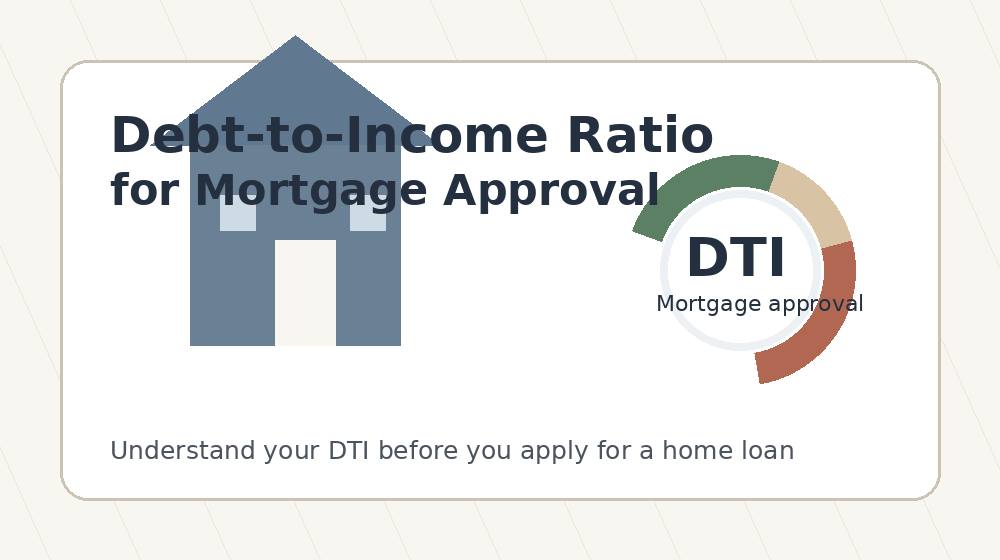
The simplest dti ratio meaning is the percent of your gross monthly income that already goes toward recurring monthly debt. You may also see the same idea written as debt to income ratio meaning. If someone earns $8,000 per month before taxes and pays $3,200 per month toward debts, their DTI is 40 percent.
Lenders use debt to income ratio for mortgage decisions because income by itself does not show whether the payment is affordable. A buyer earning $10,000 per month with low debt may be in a much stronger position than someone earning the same income with several large monthly obligations. DTI gives the lender a cleaner view of the borrower’s actual breathing room.
How to Calculate DTI Ratio
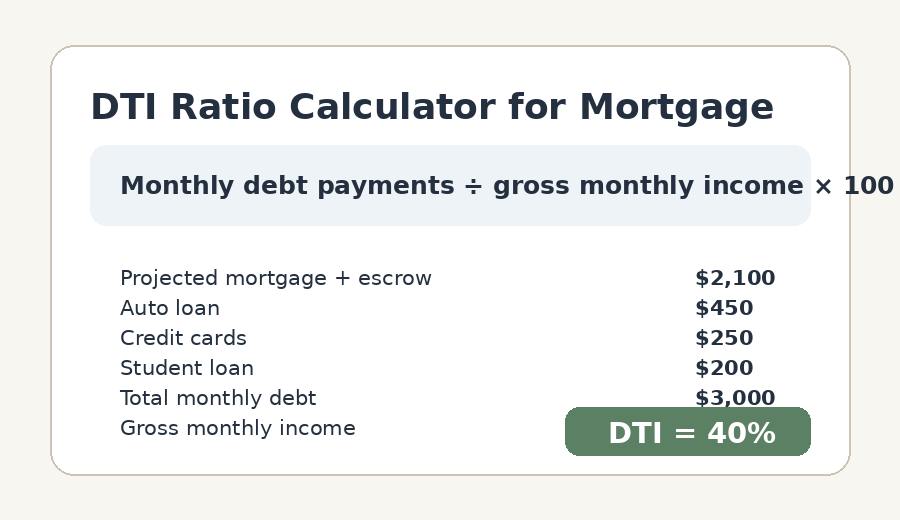
Here is how to calculate dti ratio without overcomplicating it: add your recurring monthly debt payments, divide that number by gross monthly income, and multiply by 100. A debt to income ratio calculator can do it faster, but the formula is still worth understanding so the number does not feel like lender magic.
For example, imagine a buyer has a projected mortgage payment of $2,100, a $450 auto loan, $250 in credit card minimum payments, and $200 in student loans. That equals $3,000 in monthly debt. If gross monthly income is $7,500, the DTI is 40 percent. A dti ratio calculator or dti ratio calculator for mortgage is helpful because the mortgage payment can change depending on the rate, taxes, insurance, and loan type.
Front End DTI Ratio vs. Back End DTI Ratio
There are two versions of DTI that come up often. The front end dti ratio compares only the proposed housing payment to gross monthly income. That housing payment usually includes principal, interest, property taxes, homeowners insurance, mortgage insurance if required, and sometimes HOA dues.
The back end dti ratio includes the housing payment plus other recurring debts. This is usually the number that gives the better picture because it shows the full monthly obligation. When people search for debt to income ratio for home loan, they are usually trying to understand this broader back-end number.
What Is a Good DTI Ratio?
The question what is a good dti ratio does not have one perfect answer. Lower is better because it gives the borrower more room. A common planning guideline is 28 percent for housing costs and 36 percent for total debt, but many real loan decisions depend on the full file. Credit score, savings, income stability, down payment, and loan program all matter.
I would not treat DTI as a single pass-or-fail line. It is better to think of it as a warning light on the dashboard. A lower DTI gives you more options. A higher DTI does not always mean denial, but it may mean the lender needs stronger compensating factors or that the borrower should adjust the price range.
DTI Ratio for FHA Loan
The dti ratio for fha loan searches make sense because FHA loans are common for first-time buyers and borrowers with smaller down payments. Searches like dti ratio for fha, debt to income ratio for fha loan, and max dti for fha loan usually come from buyers trying to figure out whether FHA is more flexible than conventional financing.
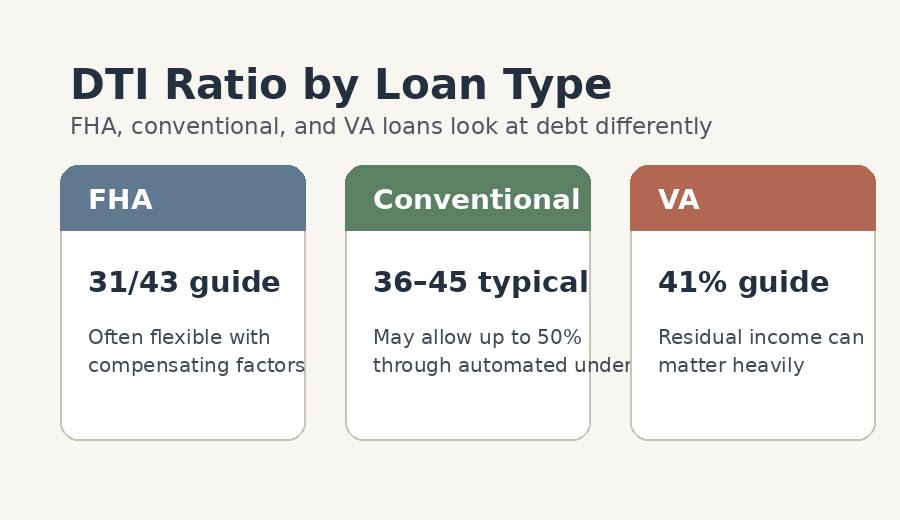
FHA guidelines often reference 31 percent for the housing ratio and 43 percent for total debt. That does not mean every FHA file is limited to those exact numbers. Some borrowers may qualify above the standard guideline with compensating factors, but a buyer with a high DTI should talk with a lender before getting too far into home shopping.
DTI Ratio for Conventional Loan
A dti ratio for conventional loan can work differently because conventional loans are often evaluated through automated underwriting. Borrowers searching for debt to income ratio for conventional loan and max dti for conventional loan are usually trying to decide whether a conventional loan is realistic with their income and debt level.
Conventional approvals may allow higher DTI in some cases, including some files up to 50 percent through automated underwriting. That still does not mean aiming that high is ideal. A high DTI can reduce lender options, make the approval more fragile, or leave the buyer with less room after closing.
DTI Ratio for VA Loan
The dti ratio for va loan is a little different because VA lending also looks closely at residual income. Residual income is the money left over after major obligations are paid. That is why debt to income ratio for va loan and max dti for va loan do not always have a simple one-number answer.
VA guidelines commonly use 41 percent as a reference point, but borrowers above that may still qualify when the file shows enough residual income or other strengths. For eligible veterans and service members, this can make VA financing flexible, but the lender still has to show the payment is reasonable.
How to Improve Your DTI Before Applying
If your DTI is higher than you want, the best fixes usually come from lowering monthly debt payments, increasing qualifying income, choosing a lower home price, increasing the down payment, or looking at a loan program that better fits your situation. Paying off a small credit card can help if it removes a monthly minimum payment, but every file is different.
Before applying, use a calculator and test a few payment scenarios. Try different interest rates, property tax estimates, insurance numbers, and down payment amounts. This gives you a more realistic view before a lender pulls credit or before you fall in love with a house that stretches the budget too far.
Bottom Line
Your DTI does not tell your entire financial story, but it tells an important part of it. If you understand your dti ratio for mortgage before applying, you can shop with more confidence, compare FHA, VA, and conventional options more clearly, and fix weak spots before they become expensive. For Utah buyers watching mortgage rates, DTI is the bridge between seeing a rate online and knowing whether the payment actually works in real life.