
First Time Home Buyer Programs in Utah | FHA vs. USDA vs. Conventional

First Time Home Buyer Programs: Comparing Utah Mortgage Loans
First time home buyers in Utah have many mortgage choices, and understanding those choices can make buying a house easier. First time home buyer programs can help people with smaller down payments. This article looks at FHA, USDA, conventional mortgages, and different ways to get assistance. It also explains how to apply and compare monthly payments.
First Time Home Buyer Loans: What Are Your Options?
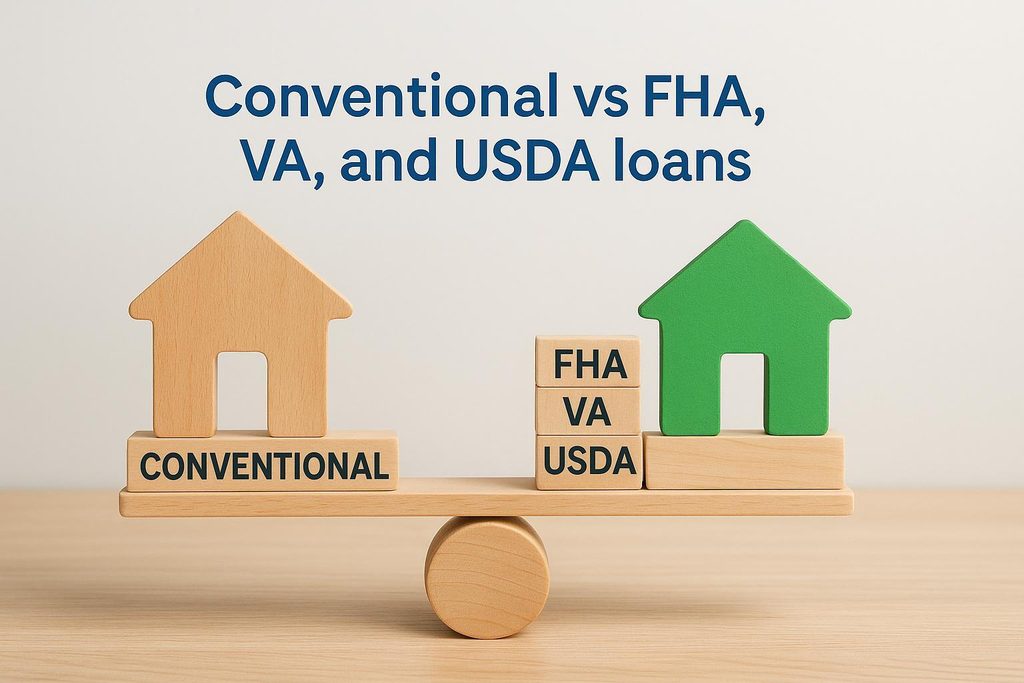
Three common choices are FHA, USDA, and conventional loans. An FHA loan first time home buyer option may appeal to borrowers with limited savings or less-than-perfect credit. USDA loans can offer eligible buyers a zero-down-payment path in qualifying rural and suburban areas. Some conventional first time home buyer mortgage products allow as little as 3% down. The best first time home buyer loans are not necessarily those with the smallest upfront payment: mortgage insurance, interest rates, closing costs, and long-term affordability all matter.
FHA Loan First Time Home Buyer: Benefits and Tradeoffs
An FHA first time home buyer loan is insured by the Federal Housing Administration and issued by an approved lender. Qualified borrowers can put down as little as 3.5%, although approval depends on credit, income, debt, and other underwriting factors. FHA financing is not restricted to people purchasing their first home. It also requires mortgage insurance, which can raise the overall cost compared with some conventional options.
For example, on a $350,000 purchase, a 3.5% down payment is $12,250 before closing costs. A fha down payment calculator can help estimate that amount, but it will not necessarily capture every expense, including appraisal fees, prepaid taxes, and homeowners insurance. Compare full loan estimates rather than choosing a loan solely because the required down payment looks manageable.
USDA First Time Home Buyer Loans and Zero-Down Options
A usda first time home buyer mortgage may be worth considering if you are shopping outside Utah’s most densely populated neighborhoods. USDA guaranteed loans can provide 100% financing for eligible borrowers buying eligible properties, subject to household income and other requirements. That means some buyers may qualify for first time home buyer loans with zero down. However, zero down does not mean zero closing costs or automatic approval.
A no down payment mortgage can also be available through VA financing for eligible military borrowers. If you are comparing a no down payment mortgage with an FHA or conventional loan, ask about guarantee fees, mortgage insurance, and the total projected payment. A smaller upfront cost can be helpful, but it is only one part of the decision.
First Time Home Buyer Down Payment Assistance in Utah
Down payment assistance can be just as important as the mortgage itself. Utah borrowers should explore state and local first time home buyer assistance programs, including programs offered through Utah Housing Corporation and participating lenders. Depending on the program, help may come as a second loan, deferred repayment, or other financing rather than free money. Some first time home buyer grants may exist through particular organizations or local initiatives, but never assume assistance is a grant that does not need repayment.
When researching the best first time home buyer programs, compare eligibility, income limits, purchase-price limits, approved lenders, repayment terms, and whether assistance can be combined with your preferred loan. First time home buyer down payment support may reduce the cash needed at closing, but a second loan can affect monthly costs or the amount due when you sell or refinance.
Utah First Time Home Buyer Loan Eligibility and Requirements
Utah first time home buyer loan eligibility varies by mortgage type and assistance program. Common first time home buyer requirements include a review of your credit history, employment and income, debt-to-income ratio, available funds, and intended use of the property. Some programs define a first-time buyer as someone who has not owned a primary residence in the previous three years; others use different rules. Verify the definition for the specific program you are considering.
Wondering how to qualify for a home loan as first time buyer? Start by checking your credit report, calculating a realistic housing budget, and gathering pay stubs, tax records, bank statements, and identification. Avoid taking on new debt while preparing to apply. A lender can explain whether an FHA, USDA, or conventional option fits your circumstances and whether any local first time home buyer assistance is available.
First Time Home Buyer Pre Approval and How to Apply
Getting first time home buyer pre approval before house hunting can clarify your budget and strengthen an offer. During preapproval, a lender typically reviews income, assets, debts, and credit. A preapproval is not a final mortgage commitment, and the loan can still depend on the appraisal, title review, and final underwriting.
If you are unsure how to apply for a first time home loan, begin by contacting multiple lenders and requesting estimates for comparable loan scenarios. Ask each lender to show the interest rate, annual percentage rate, cash to close, monthly principal and interest, mortgage insurance, and estimated taxes and insurance. Compare the same purchase price and down payment so the numbers actually mean something.

Use a First Time Home Buyer Mortgage Calculator to Compare Costs
A first time home buyer mortgage calculator can show how the loan amount, interest rate, and repayment term affect principal and interest. Add estimates for property taxes, homeowners insurance, mortgage insurance, and any homeowners association fees to get a more useful monthly budget. Remember that online calculators are estimates, not loan approvals.
For a $350,000 home, a 3% conventional down payment would be $10,500, while a 3.5% FHA down payment would be $12,250. USDA financing might require no down payment if both the buyer and property qualify. Those examples do not include closing costs or loan-specific fees. Comparing the complete monthly payment and cash to close is more useful than comparing down payments alone.
Which First Time Buyer Mortgage Is Best for You?
There is no single answer to which first time buyer mortgage is best. FHA may work well when credit flexibility matters. USDA can be appealing for eligible households purchasing in qualifying areas. Conventional financing may offer competitive long-term costs for borrowers who qualify, especially when private mortgage insurance can eventually be removed under applicable rules. The right first time home owners loan is the one you can afford both at closing and month after month.
Before deciding, review several written loan estimates and confirm the current requirements for any assistance program. If you are ready to explore Utah options, visit Mortgage Rate Utah to ask about available loan types and discuss a budget that fits your situation. Buying a first home is a major decision, but understanding the differences among mortgage products can make the next step much clearer.