
Avoid First Time-Home Buyer Mistakes; How to Choose the Best Mortgage Lender in Salt Lake City, Utah.

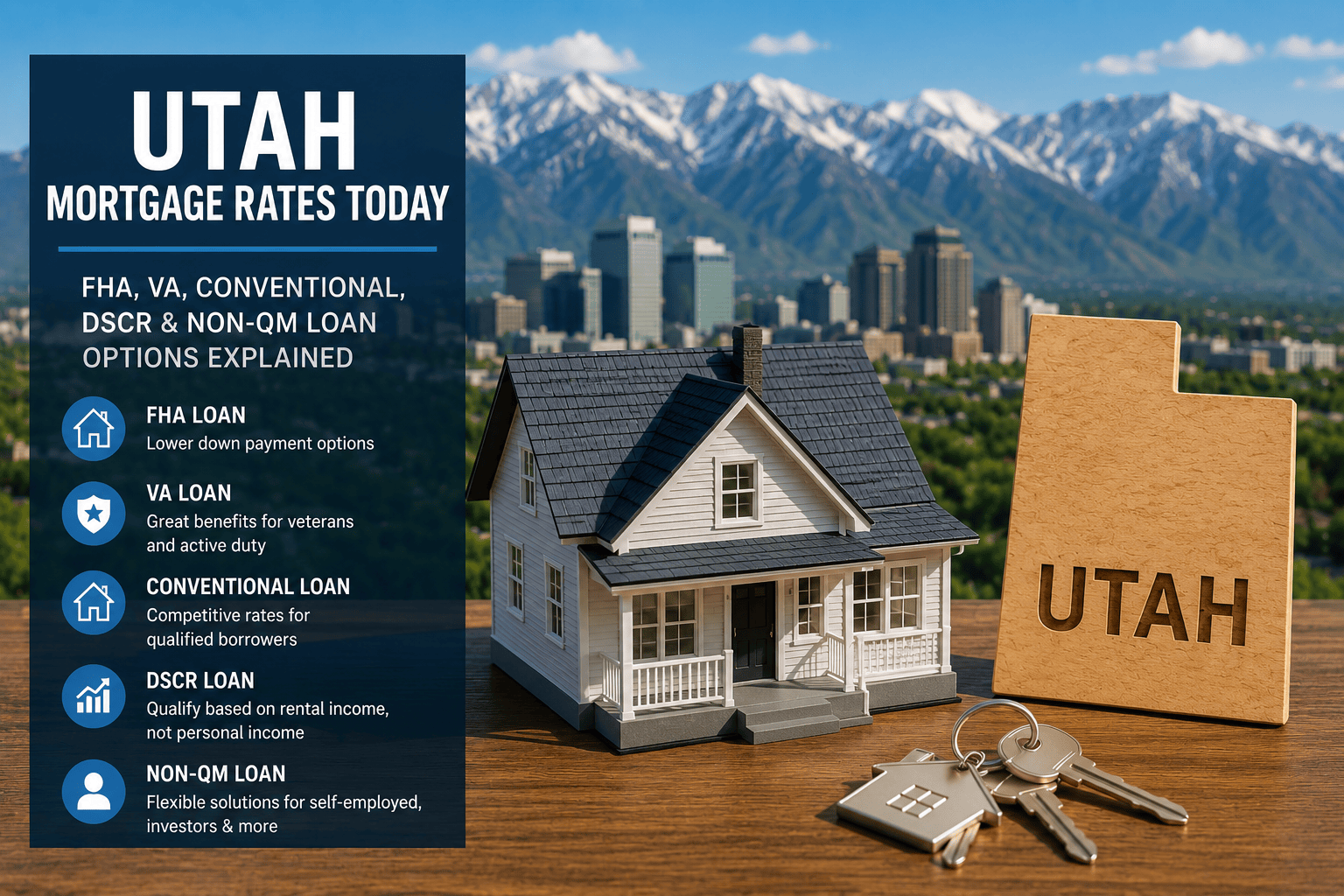
A Utah mortgage lender meeting with first-time home buyers to discuss FHA loans, down payment assistance, and mortgage options.

Choosing the right mortgage lender Salt Lake City homebuyers can trust is one of the most important decisions you’ll make when purchasing your first home. While it’s exciting to browse listings and imagine life in a new home, many first-time buyers make costly mistakes before they ever submit an offer. From selecting the wrong loan program to focusing only on interest rates, these missteps can lead to higher costs and unnecessary stress throughout the home-buying process.

A Utah mortgage lender meeting with first-time home buyers to discuss FHA loans, down payment assistance, and mortgage options.

The best mortgage lender does more than provide financing—they serve as a trusted advisor who helps you compare loan options, understand current home mortgage rates, explore FHA financing, and determine which mortgage best fits your financial goals. Whether you’re searching for a mortgage lender Utah buyers recommend or comparing the best mortgage lenders Utah has to offer, working with an experienced local lender can make your path to homeownership much smoother.

In this guide, you’ll learn how to avoid the most common first-time home buyer mistakes, compare mortgage options with confidence, and choose a lender who can help you navigate Utah’s competitive housing market.

Common First-Time Home Buyer Mistakes

Many first-time buyers assume they should start by looking at homes online. In reality, your first step should be speaking with a qualified mortgage professional. Some of the most common mistakes include:

  • Shopping before getting pre-approved.
  • Choosing the first lender you find online.
  • Focusing only on the interest rate instead of total loan costs.
  • Not comparing multiple loan programs.
  • Overlooking available first time home buyer programs Utah offers.

Taking the time to compare lenders and financing options can help you avoid these costly mistakes while making your home purchase much smoother.

The Consumer Financial Protection Bureau (CFPB) provides an excellent guide to the home-buying process and explains why comparing lenders is important: https://www.consumerfinance.gov/owning-a-home/

How to Choose the Best Mortgage Lender in Salt Lake City

Finding the best mortgage lenders Utah has to offer isn’t just about getting the lowest rate. Great lenders provide education, communication, and personalized guidance throughout the loan process.

When comparing a mortgage lender Salt Lake City homebuyers trust, ask questions like:

  • How long have you helped Utah homebuyers?
  • What loan programs do you recommend for first-time buyers?
  • Do you offer pre-approvals before I begin shopping?
  • Can you explain all estimated closing costs?
  • How often will you communicate during the loan process?

If you’re searching online for the best mortgage lender near me, look for local experience, positive reviews, responsive communication, and knowledge of Utah’s housing market.

Mortgage Lender Utah: Compare More Than Interest Rates

Many buyers immediately compare current home mortgage rates and current housing interest rates. While rates certainly matter, they are only one piece of the financing puzzle. A mortgage quote also includes:

  • Loan origination fees
  • Closing costs
  • Mortgage insurance
  • Loan term
  • Annual Percentage Rate (APR)
  • Estimated monthly payment

When comparing home loan interest rates, ask each lender for a complete loan estimate instead of simply requesting today’s rate. Sometimes a slightly higher interest rate comes with lower closing costs, making it the better financial decision. A trusted mortgage lender Utah buyers recommend will explain every cost so you can make an informed decision.

The Consumer Financial Protection Bureau explains how to read a Loan Estimate and compare mortgage offers from multiple lenders. Read up on it on their website here: https://www.consumerfinance.gov/owning-a-home/loan-estimate/

First-Time Utah Home Buyer Programs Can Make Homeownership More Affordable

Many buyers are surprised to learn they may qualify for programs designed specifically for first-time homeowners. Several first time home buyer programs Utah lenders offer can help reduce upfront costs through down payment assistance or affordable financing.

Depending on your qualifications, you may be eligible for:

  • Down payment assistance
  • Reduced closing costs
  • Low down payment conventional loans
  • Government-backed financing

If you’re searching for a first time home buyer loan, ask your lender to explain every available option before choosing a mortgage. Many first time borrowers discover that these programs make purchasing a home much more affordable than they expected.

FHA Loan Utah: Is FHA Financing Right for You?

An FHA loan is one of the most popular mortgage options for first-time homeowners. Because FHA loans are insured by the Federal Housing Administration, they often allow Utah resident to take advantage of:

  1. Lower down payments
  2. Flexible credit requirements
  3. Competitive financing options
  4. Easier qualifications

However, FHA financing isn’t the right solution for everyone.

A knowledgeable lender can compare FHA financing with conventional loans and determine which option best fits your financial goals. Before applying, it’s also helpful to use an FHA loan calculator to estimate your monthly payment, including mortgage insurance and taxes.

Using a Mortgage Payment Calculator Before Shopping for Homes

Knowing your monthly payment before making an offer helps you shop with confidence. A mortgage payment calculator gives buyers a better understanding of what they can comfortably afford based on today’s market. Many buyers also use a mortgage price calculator to compare different purchase prices and see how changes in the down payment or interest rate affect their monthly payment.

While calculators provide excellent estimates, your lender can provide a personalized payment estimate using your actual income, credit score, and loan program.

First Time Home Buyer Loans: Understanding Your Options

There are several first time home buyer loans available today.

The right loan depends on your financial goals, available down payment, and long-term plans. Some buyers searching for a first time home owners loan may benefit from FHA financing, while others qualify for conventional financing with competitive rates. Similarly, a first home buyers loan may refer to several different mortgage programs rather than one specific loan product.

Working with an experienced lender helps ensure you’re matched with the financing option that best supports your budget.

Why Local Experience Matters

The Salt Lake City housing market continues to evolve, and local knowledge matters. A lender who understands neighborhood values, Utah property taxes, local appraisal requirements, and regional housing trends can help buyers navigate the process more efficiently than a lender unfamiliar with the market.

Choosing a local mortgage professional often results in faster communication, better coordination with your real estate agent, and a smoother closing experience.

In Summary

Buying your first home doesn’t have to be overwhelming. By avoiding common first-time buyer mistakes, comparing lenders carefully, and understanding your financing options, you’ll be in a much stronger position to purchase your home with confidence.

Whether you’re comparing current housing interest rates, researching first time home buyer programs, exploring FHA loans, or searching for the best mortgage lender in Salt Lake City, investing time in choosing the right lender is one of the smartest decisions you’ll make.

The best mortgage isn’t simply the one with the lowest advertised rate—it’s the one that fits your financial goals, monthly budget, and long-term plans. A knowledgeable local lender can help you find that solution while making the home-buying process easier from pre-approval to closing.

First-Time Home Buyer Programs in Utah: Loans, Grants & Tips

First-Time Home Buyer Programs Utah 2026

Buying your first home can feel overwhelming, especially when you are trying to understand loans, mortgage rates, credit requirements, and down payment options at the same time. The good news is that first-time homebuyer programs in Utah in 2026 may help make the process easier for buyers who are ready to purchase a home but need help understanding their financing options.

First Time Home Buyer Loans No Down Payment

Many new buyers are interested in first time home buyer loans no down payment because saving for a large down payment can be one of the hardest parts of buying a home. Some buyers may qualify for no down payment first time home buyer loans depending on the loan type, property location, income, and lender requirements.

There are also no down payment first time home buyer programs that may help eligible buyers reduce upfront costs. These programs can be especially helpful for buyers who have steady income but limited savings.

No down payment first time home buyer loans and grant options.

FHA Loan First Time Home Buyer Requirements

An FHA loan first time home buyer option is one of the most common choices for buyers purchasing their first home. FHA loans are popular because they often have more flexible credit and down payment requirements than some conventional loans.

When researching FHA loan first-time home buyer requirements, buyers should know that lenders usually review credit score, income, employment history, debt-to-income ratio, and available funds. Buyers may also look into an FHA loan, first-time home buyer down payment assistance, to reduce upfront costs.

FHA loan, first-time home buyer requirements, and mortgage approval steps.

First-Time Home Buyer Loans With Bad Credit

Buyers with lower credit scores often search for first-time home buyer loans with bad credit or an FHA loan for first-time home buyer bad credit. While bad credit can make approval more challenging, it does not always make buying impossible.

A lender may still be able to explain available options or help the buyer understand what needs to improve before applying.

First-Time Buyer Mortgage Rates

Understanding first-time buyer mortgage rates is important because the interest rate affects the monthly payment and total loan cost. Buyers should compare FHA mortgage rates, FHA loan rates, FHA interest rates, and current FHA mortgage rates before choosing a lender.

First Time Buyer Mortgage Calculator

A first time buyer mortgage calculator can help buyers estimate what they may be able to afford before applying. Buyers can also use an fha loan calculator or fha mortgage calculator to estimate monthly payments based on home price, down payment, interest rate, taxes, and insurance.

Mortgage Calculator

FHA Loan Pre Approval

Getting fha loan pre approval or fha pre approval can help buyers understand their budget before shopping for homes. Buyers who are ready to begin can research how to apply for fha loan, apply for fha loan, or fha loan application online.

Apply for a Mortgage

First Time Home Buyer Programs in Nevada and Arizona

Although this article focuses on Utah, some buyers compare programs in nearby states. Searches like first time home buyer programs in nevada and first time home buyer programs arizona are common for buyers who may move or compare housing markets.

U.S. Department of Housing and Urban Development

Final Thoughts

For buyers preparing to purchase a first home, first time home buyer programs utah 2026 can be a helpful place to start. The best option depends on the buyer’s credit, income, savings, location, and long-term goals.

Before choosing a loan, buyers should compare first time home buyer loans, review first time home buyer loans and grants, check mortgage rates, use a mortgage calculator, and speak with a knowledgeable lender.

Debt to Income Ratio for Mortgage: How to Calculate DTI Before Buying a House

Before shopping for a home, it helps to know how much of your income is already committed to debt. Your debt to income ratio compares required monthly debt payments with gross monthly income, or income before taxes and other deductions. Mortgage lenders use this percentage as one part of a broader underwriting review. A lower ratio generally leaves more room for a new housing payment, while a higher ratio may signal that your monthly budget is already stretched. Understanding the debt to income ratio for mortgage financing can help you set a realistic price range, avoid surprises during preapproval, and decide whether paying down debt should come before making an offer.

What Is a Debt to Income Ratio for Mortgage Approval?

The debt to income ratio for mortgage approval is calculated by dividing your recurring monthly debt obligations by your gross monthly income and multiplying the result by 100. For example, suppose your monthly debt payments total $2,100 and your gross monthly income is $6,000. Dividing $2,100 by $6,000 produces 0.35, so your DTI is 35%. The Consumer Financial Protection Bureau explains that lenders use DTI to evaluate a borrower’s ability to manage monthly payments, while also noting that different loan products and lenders may apply different limits.

You may see several similar phrases online, including mortgage debt to income ratio, debt ratio for mortgage, dti ratio for mortgage, and debt to income for mortgage. These phrases usually describe the same basic comparison: how much monthly income is committed to debt after accounting for the proposed housing expense. DTI is important, but it does not operate alone. Lenders may also evaluate credit history, income stability, available cash, down payment, property type, and the specific loan program.

How to Calculate Debt to Income Ratio for Mortgage

To calculate debt to income ratio for mortgage purposes, begin by listing recurring obligations that are typically reviewed by lenders. These can include the proposed mortgage payment, property taxes, homeowners insurance, association dues, auto loans, student loans, minimum credit card payments, installment loans, child support, and other required debt payments. Then total the gross monthly income that can be documented and used for qualification. Divide the monthly debt total by the qualifying gross income and convert the answer to a percentage.

For a quick personal estimate, ask: “How can I calculate my debt to income ratio before speaking with a lender?” Gather the minimum required monthly payment for each debt rather than the outstanding balance. Next, estimate the full monthly housing payment, not merely principal and interest. A complete estimate may include taxes, insurance, mortgage insurance, and homeowners association dues. This gives you a more useful picture of your debt to income ratio for home loan planning and your likely debt to income ratio for buying a house.

The basic formula is straightforward: total recurring monthly debt payments divided by gross monthly income, multiplied by 100. Using a documented income of $7,500 per month and total monthly obligations of $2,625 results in a 35% dti ratio. Remember that a self-calculated estimate is not a loan decision. A lender may calculate income or certain debts differently based on documentation and underwriting rules.

Using a DTI Calculator Before Applying for a Mortgage

A calculator can make the first estimate faster. Whether you search for a dti calculator, debt to income calculator, mortgage debt to income ratio calculator, dti mortgage calculator, debt to income ratio mortgage calculator, or debt to income mortgage calculator, the underlying formula should remain the same. Enter gross monthly income, current monthly debt payments, and the estimated new housing payment. Review the result as a planning tool rather than a guarantee of approval.

Some buyers search for a debt to income ratio to buy a house calculator because they want to test different home prices or down payments. Others use a dti ratio calculator to compare scenarios such as paying off a car loan, reducing a credit card payment, or increasing the down payment. A useful calculator should let you separate the housing payment from other debts and should clearly explain which numbers belong in each field.

Use NerdWallet’s Mortgage Calculator to estimate a complete monthly housing payment before calculating DTI.

Calculator, mortgage estimate, monthly budget, house keys, and a written formula showing how to calculate debt-to-income ratio for a mortgage.

Front End Debt to Income Ratio vs. Total DTI

The front end debt to income ratio focuses only on housing expenses compared with gross monthly income. Depending on the loan and lender, housing expenses may include principal, interest, property taxes, homeowners insurance, mortgage insurance, and association dues. The total or back-end DTI includes the housing payment plus recurring obligations such as auto loans, student loans, minimum credit card payments, and other required debts.

This distinction matters because two applicants with the same income and housing payment can have very different overall debt loads. A borrower with no auto loan and low credit card payments may have more flexibility than a borrower with several large installment payments. When reviewing a good dti ratio, avoid treating one number as a universal cutoff. Lender standards, loan programs, compensating factors, and automated underwriting results can all affect the decision.

Review the Consumer Financial Protection Bureau’s explanation of DTI and its calculation method: What is a debt-to-income ratio?

FHA Debt to Income Ratio and Loan Guidelines

Borrowers often research the fha debt to income ratio because FHA-insured loans may be evaluated differently from conventional loans. A search for debt to income ratio for fha loan guidance should lead to a careful review of current lender and program requirements rather than a single number copied from an old article. FHA underwriting considers the complete application, and individual lenders may apply additional standards.

A debt to income ratio calculator fha search can still be useful for estimating the percentage, but the calculator cannot determine whether documented income is acceptable, how a particular debt will be counted, or whether other factors support approval. For this reason, buyers should use calculator results to prepare questions for a licensed mortgage professional. The result can identify whether paying down a balance, avoiding a new loan, or selecting a lower housing payment may strengthen the application.

For conventional-loan underwriting details, review Fannie Mae Debt-to-Income Ratios.

Laptop displaying a 28 percent DTI dashboard beside a mortgage-readiness checklist, calculator, model home, and house keys.

How to Improve Your DTI Ratio for Mortgage Approval

If your estimate is higher than expected, focus on changes that improve the monthly calculation. Paying off a debt entirely can remove its required payment, while paying down a revolving balance may reduce the minimum payment reported to the lender. Avoid taking on new installment debt shortly before applying. If overtime, commissions, bonuses, or self-employment income are part of the plan, ask a lender what documentation and history may be needed before assuming the income will count.

Also test the housing side of the equation. A lower purchase price, larger down payment, less expensive property-tax area, or lower homeowners insurance premium may reduce the projected housing payment. The best target is not simply the maximum DTI a lender might accept. A mortgage should leave enough room for utilities, maintenance, repairs, savings, health costs, and everyday spending that do not appear in the lender’s formula.

Before seeking preapproval, update the estimate using recent statements and realistic housing costs. Then review your credit reports, preserve cash for closing and reserves, and compare loan options.

Learn how mortgage preapproval works and which documents a lender may request in NerdWallet’s Mortgage Preapproval Guide.

Use DTI as a Planning Tool, Not the Entire Decision

Your DTI gives you a valuable snapshot of monthly debt pressure, but it does not measure every part of affordability. A buyer can satisfy a lender’s ratio and still feel uncomfortable after accounting for childcare, transportation, food, medical costs, home repairs, and savings goals. Use the calculation to create a sensible range, then build a complete household budget before choosing a mortgage payment.

In practical terms, understanding DTI helps you ask better questions and make better decisions. Calculate the ratio early, test multiple housing scenarios, verify the result with a lender, and leave room for the costs of owning a home. That approach makes the debt to income ratio for mortgage more than an approval statistic; it becomes a useful tool for buying a home you can afford over the long term.

A Complete Guide to Utah VA home loan rate and Benefits in 2026

Transitioning from military to civilian life comes with a unique set of challenges, but finding a permanent place to drop anchor shouldn’t be one of them. Navigating the complexities of post-service benefits can sometimes feel like learning a completely different language. However, the benefits earned through service are incredibly powerful, especially if you plan to buy a home in utah with va loan. The housing market here is competitive, but armed with the right knowledge about utah va home loan rates, you can secure an excellent foundation for your future.

Many online resources cover standard conventional loans, leaving a massive gap when it comes to the specific needs of military families. This guide is designed to serve as your ultimate resource for everything from obtaining eligibility documentation to understanding your final closing costs.

A veteran family standing in front of a new home in Utah, illustrating the benefits of Utah VA home loan rates and 100 percent financing options.

VA mortgage rates Utah and Available Programs

When starting a home search, comparing the best va mortgage lenders utah is a crucial first step. Because private lenders set their own terms, va mortgage rates utah can fluctuate significantly from one institution to the next. Fortunately, veterans have access to the utah state va home loan program, which works alongside federal benefits to provide aggressive rate options and dedicated regional support. You can track current market trends on our Utah Mortgage Rates Page to see how they compare.

One of the most remarkable benefits of this program is the potential for 100 percent financing va loan utah. Unlike conventional mortgages that demand steep out-of-pocket down payments, VA loans allow qualified buyers to purchase a home with zero down. In addition to this, there are numerous local utah veteran home buying assistance programs designed to help with closing costs and localized grants, making the barrier to entry much lower for those who have served.

Exploring va loan limits utah 2026

A common misconception is that VA benefits are strictly for starter homes, but taking a close look at the va loan limits utah 2026 tells a very different story. If you have full entitlement, the Department of Veterans Affairs does not actually cap the size of the loan they will guarantee. This means that if you are looking at premium real estate markets, securing a va jumbo loan utah is entirely possible, provided you meet the lender’s income and credit guidelines.

Whether you are hoping to settle down with a va loan salt lake city or looking slightly further south, understanding localized boundaries like the utah county va loan limits is important if you have partial entitlement remaining from a previous home purchase. The flexibility of these limits ensures that veterans are not priced out of the expanding Utah neighborhoods where they wish to live and raise their families.

A clean real estate infographic map explaining VA loan limits in Utah and essential VA home loan Utah requirements for 2026.

Essential va home loan utah requirements

Securing these benefits requires meeting specific va home loan utah requirements. The absolute foundational document you will need is the utah va home loan certificate of eligibility (COE), which proves to your lender that you meet the minimum active duty or reserve service durations. You can request this directly through the official VA eBenefits Portal.

Financially, while the government does not mandate a rigid minimum credit score, individual private lenders do. It is highly recommended to ask upfront about specific va loan utah credit score requirements, which typically hover around 580 to 620 depending on the institution. Additionally, the property you are purchasing must pass a specialized safety appraisal to ensure it meets all standard va loan property requirements utah. These guidelines guarantee the home is safe, structurally sound, and sanitary. If you are leaning towards a lower-maintenance condo lifestyle, you must also verify that the complex is officially on the list of va approved condos utah.

Specialized Paths: va construction loan utah and disabled veteran home loan utah

Sometimes, the perfect home isn’t currently sitting on the market—it needs to be built from scratch. A va construction loan utah allows you to finance the purchase of the land and the building costs of a brand-new home, all rolled into a single mortgage. This is an incredibly powerful tool for families looking for a custom build.

Furthermore, there are significant financial advantages associated with a disabled veteran home loan utah. Veterans with a service-connected disability rating are typically exempt from paying the standard VA funding fee, saving them thousands of dollars at the closing table. These specific military home loans utah are purposefully designed to provide maximum financial relief to those who sacrificed their health during their time in uniform.

Refinancing and Managing Costs

If you already own a piece of property, you might be looking to leverage your equity or lower your current monthly payment. A va cash out refinance utah allows you to replace your current mortgage with a new one while extracting cash from your home’s equity, which can be used for debt consolidation, emergency savings, or home renovations. Alternatively, if you simply want a lower interest rate to reduce your monthly burden, you should watch the current va irrrl rates utah. The Interest Rate Reduction Refinance Loan (IRRRL) is a streamlined process that requires minimal paperwork and often skips the appraisal process entirely.

A close-up view of a calculator and loan paperwork, illustrating how to calculate VA loan closing costs and funding fees.

To prepare for any of these paths, utilize a reliable utah va loan calculator to accurately estimate your monthly payments. This tool will help you factor in the va home loan funding fee utah (if you are not exempt) and your total estimated va loan closing costs utah. Being financially prepared will also help you set realistic expectations for the overall va loan processing time utah, which generally takes between 30 to 45 days from application submission to final closing.

Don’t Lose Your Loan After Mortgage Pre Approval in Utah

Utah couple meeting with their mortgage lender outside a home to review a mortgage pre approval

Buying a home in Utah moves fast, and getting a mortgage pre approval Utah lenders will stand behind is the step that lets you compete. But here’s what surprises a lot of buyers: a mortgage pre approval is a conditional snapshot of your finances, not a guarantee.

Nationally, about 9.4% of home-purchase applications were still denied in 2023, according to the Consumer Financial Protection Bureau, many of them after the buyer was already approved. The reassuring part is that nearly all of these fall-throughs are preventable once you understand what lenders verify and re-verify on the way to closing. Here’s how to keep your loan on track.

Utah couple meeting with their mortgage lender outside a home to review a mortgage pre approval

What a Mortgage Pre Approval Really Is in Utah

It helps to start with what you’re actually getting. When you prequalify for mortgage financing, a lender gives you a rough budget based on numbers you report yourself. A full pre-approval goes further: the lender verifies your income, assets, debts, and credit, then issues a mortgage pre approval letter stating how much they’re willing to lend. That gap is the heart of the mortgage pre approval vs prequalification question, and in Utah’s market it matters — most listing agents won’t take an offer seriously without a verified letter behind it.

The number inside that letter is your mortgage pre approval estimate. The verified budget your agent uses to filter listings. But the letter also carries a quiet phrase, “subject to underwriting,” and that phrase is why a pre-approval can still unravel.

The Mortgage Pre Approval Process, Step by Step

The mortgage pre approval process begins when you choose a lender and complete a full application. If you’re still figuring out how to get a mortgage at all, the first move is simply gathering your financial paperwork. The documents needed for mortgage pre approval are consistent across Utah lenders: two recent pay stubs, two years of W-2s or tax returns, recent bank statements, proof of employment, and a photo ID. Building a quick mortgage pre approval checklist before you apply keeps the process from stalling.

Once your file is complete, a decision usually lands within one to three business days, so how long a mortgage pre approval takes is rarely the holdup. From there you start touring homes in your price range. Essentially, what happens after a mortgage pre approval is that you shop and make offers backed by your letter. It’s worth knowing how long a mortgage pre approval is good for, too: most letters stay valid 60 to 90 days, and if yours expires, the lender refreshes your finances and reissues it.
Ready to start your pre approval?

Do You Qualify? Credit, Income, and the Numbers That Decide

Laptop showing a credit score dashboard, illustrating the minimum credit score needed to get a mortgage in Utah

Most fall-throughs come down to qualifying details that shift between approval and closing, so it pays to know the thresholds. The first is credit. The minimum credit score to get a mortgage depends on the loan: conventional loans generally start at 620, while FHA loans go as low as 580 (or 500 with a larger down payment). That’s why a mortgage pre approval bad credit situation isn’t automatically a dead end — the right program can still work.

It’s also fair to wonder whether the credit check itself does damage. Many buyers ask, does mortgage pre approval affect credit score? A hard pull can dip your score a few points temporarily, but credit bureaus treat multiple mortgage inquiries in a short window as one event, so you can compare Utah lenders without extra harm. The bigger risk is a new inquiry after approval, because underwriters pull your credit again right before closing.

Income is the other half. Lenders weigh your debt-to-income ratio — most Utah lenders want total monthly debts under 43% of gross income. This is the real substance behind how much income you need for a mortgage. Put simply, what do I need to get a mortgage is steady income, manageable debt, documented savings, and a qualifying score. The catch is that all four have to stay true through closing, not just on the day you were approved.

Choosing the Right Loan — and Why It Can Save a Denial

When a pre-approval falls through, the loan program is often the real problem. It helps to have the types of home loans explained before you apply. Each program sets its own credit, down-payment, and location rules. The honest answer to what type of mortgage should I get depends on your situation. Here are the four Utah buyers use most, with 2026 Salt Lake County figures.

Loan Types

  • FHA
    • Min. Credit: 580 (500 w/ 10% down)
    • Min. Down: 3.5%
    • Best for buyers with lower credit or limited savings. 2026 Salt Lake County limit: $637,100.
  • Conventional
    • Min. Credit: 620
    • Min. Down: 3%-5%
    • Best for buyers with solid credit. 2026 conforming limit: $832,750 in Salt Lake County. 20% down removes PMI.
  • VA
    • Min. Credit:
    • Min. Down:
    • Best for veterans and active-duty service members. No loan limit with full entitlement; no monthly mortgage insurance.
  • USDA
    • Min. Credit
    • Min. Down
    • Best for buyers in eligible rural Utah areas who meet income limits.

The differences are real, especially for new buyers. Anyone comparing the types of home loans for first time buyers will notice FHA and conventional dominate because of their low down payments. Government-backed loans also carry specific rules worth checking early: fha loan requirements utah buyers should confirm the property and credit standards up front, and va loan requirements utah buyers need a valid Certificate of Eligibility. Matching the program to your situation before you apply is the single best way to avoid a preventable denial.
FHA loan limits by county

What Not to Do Between Pre Approval and Closing

Whatever program you choose, the rule for protecting it is the same: freeze your financial life until the keys are in your hand. Until you close, don’t finance a car or furniture, don’t open or apply for new credit cards, don’t make large unexplained deposits, don’t change or quit your job, and don’t miss a payment. Each of these can move the very numbers your approval was based on. Self-employed buyers should expect an extra look at business deposits, and may be asked for updated profit-and-loss statements in the final days before closing.

Buying in Utah: Local Help and a Second Chance

If your loan does stall, working with a lender who handles mortgage pre approval files every day is the fastest way back on track. Call your loan officer the same day, get the reason in writing, and fix the trigger. Most issues are correctable within 30 to 60 days. A local lender can also pair you with Utah Housing Corporation assistance worth up to 6% of your loan amount (capped at $27,500 in 2026), which can close a funding gap outright.

This local knowledge is exactly why learning how to get a mortgage in Utah is different from doing it anywhere else the programs, price points, and competition are specific to the state. If you’re a first time home buyer Utah resident, most assistance programs ask for a homebuyer education course, a qualifying credit score, and income within your county’s limits, and they can be the difference between a denial and a second-chance approval.

Hand unlocking the front door of a new Utah home after a successful mortgage approval

Protect Your Approval From Day One

A mortgage pre approval in Utah is a promise to keep, not a finish line to cross. Choose the loan program that fits your credit and savings, keep your income steady and your deposits documented, and stay in close contact with your lender from approval to closing. Do that, and a loan that falls through becomes one of the easiest homebuying setbacks to avoid, leaving you free to focus on finding the right home in Utah’s competitive market.

First-Time Home Buyer Mortgage in Utah: How to Get Pre-Approved and Find the Best Loan

Mortgage advisor showing calculator to client with house model on desk — Utah home loan pre-approval

Buying your first home is one of the most exciting milestones in life — and one of the most confusing. If you’re a Utah first-time home buyer, you’re probably wondering where to even start. The answer almost always begins with a mortgage pre-approval. Getting pre-approved puts you ahead of the competition, gives you a clear budget, and shows sellers you’re a serious buyer. This guide walks you through everything you need to know to get pre-approved for a mortgage and find the best Utah home loan for your situation.

What Is Mortgage Pre-Approval — and Why Does It Matter?

Before you tour a single home, you need to understand the difference between mortgage prequalification and mortgage preapproval. Prequalifying for home loan applications gives you a rough estimate based on self-reported income and debts — no documentation required. Home loan pre-approval goes further: the lender verifies your income, employment, credit score, and assets, then issues a formal letter stating exactly how much you can borrow.

In Utah’s competitive real estate market, sellers routinely pass over offers that don’t include a mortgage pre-approval letter. It also helps you understand your true budget before you fall in love with a house you can’t afford. For first-time home buyer loans, having that letter in hand is practically mandatory.

How to Get Pre-Approved for a Home Loan: A Step-by-Step Guide

Wondering how to get pre-approved for a home loan? The process is straightforward once you know what to expect. Here are the six steps every Utah buyer should follow:

Step 1 — Check your credit score. Most first-time home buyer programs require at least a 620 FICO score. FHA loans can qualify borrowers with as low as a 580 credit score (or 500 with a larger down payment). Check your credit at least 60 days before applying so you have time to dispute errors or pay down balances.

Step 2 — Calculate your debt-to-income ratio. Lenders typically want your total monthly debts — including the proposed mortgage payment — to be under 43% of your gross monthly income. Knowing your DTI tells you how much home you can qualify for before you ever apply for a mortgage.

Step 3 — Gather your documents. You’ll need two years of tax returns, recent pay stubs (30 days), two months of bank statements, W-2s, and documentation of any other assets. Having these ready speeds up your mortgage qualification dramatically.

Step 4 — Choose your loan type. As a first-time buyer mortgage seeker, you have options: FHA, USDA, VA, or conventional. Each has different down payment and credit requirements. A Utah mortgage broker can help you compare them side by side.

Step 5 — Submit your application. Many lenders offer online mortgage pre-approval so you can start the process in minutes. You’ll complete an application, authorize a credit check, and upload your documents. Local mortgage lenders near me are also a great option if you prefer face-to-face guidance.

Step 6 — Receive your letter. Your home loan pre-approval letter will state the approved loan amount, loan type, and estimated rate. It’s typically valid for 60–90 days — more than enough time to find your Utah home.

Couple reviewing home loan contract and keys with mortgage advisor — Utah mortgage pre-approval documents

First-Time Home Buyer Programs in Utah: Down Payment Help and More

Utah offers some of the best first-time home buyer programs in the country. The Utah Housing Corporation (UHC) provides low-interest loans, down payment assistance grants, and homebuyer education — all designed to help residents achieve homeownership faster. (External link: Utah Housing Corporation — utahhousingcorp.org)

Down payment assistance Utah first-time buyer programs through UHC can cover 3.5–6% of your purchase price, often eliminating your down payment entirely. To qualify, you’ll need to complete a HUD-approved homebuyer education course, meet county income limits, and purchase within UHC’s price caps.

Veterans and active-duty service members should explore the VA home loan program: zero down payment, no private mortgage insurance (PMI), and some of the lowest mortgage rates available. Utah has a large military population, and many lenders specialize in VA lending.

Buyers in rural Utah counties can take advantage of USDA loans — 100% financing with low mortgage insurance. Parts of Cache, Box Elder, Sevier, and Carbon counties qualify. Use the USDA’s eligibility map to check your address. (External link: USDA Eligibility Map — eligibility.sc.egov.usda.gov)

For buyers with limited savings, FHA loans require just 3.5% down and are available through most Utah lenders. They’re especially popular among first-time home buyer applicants because of their flexible credit requirements and competitive rates.

How to Qualify for a Home Loan as a First-Time Buyer in Utah

Understanding how to qualify for a home loan as a first-time buyer means knowing the five things lenders evaluate. Once you know your numbers, you can walk into any mortgage pre-approval meeting with confidence.

Credit Score: 620+ for conventional and most state programs; 580+ for FHA. The higher your score, the lower your mortgage interest rates.

Income & Employment: Two years of stable income preferred. Self-employed borrowers will need two years of tax returns showing consistent earnings.

Debt-to-Income (DTI) Ratio: Under 43% for most loan types. Some FHA loans allow up to 50% with compensating factors.

Down Payment: 0% for VA and USDA; 3.5% for FHA; 3–20% for conventional. Utah assistance programs can cover this.

Cash Reserves: Some lenders want to see 2–3 months of mortgage payments in savings after closing costs.

If you’re not quite there yet, don’t worry — knowing these benchmarks gives you a clear roadmap. Many Utah buyers take 6–12 months to get pre-approved for a mortgage after getting their finances in order, and it’s worth the wait.

How to Find the Best Mortgage Lenders for First-Time Buyers

With so many of the best mortgage lenders for first-time buyers to choose from, comparison shopping is essential. Here’s how to evaluate your options:

Compare rates across multiple lenders. Even a 0.25% difference on a $350,000 loan can save you over $18,000 over 30 years. Request Loan Estimates from at least three lenders: a local Utah lender, a credit union, and an online mortgage lender. (Internal link: See our Utah Mortgage Rate Comparison tool at mortgagerateutah.com/rates)

Look beyond the rate. Closing costs, origination fees, and discount points all affect your total cost. The APR — annual percentage rate — reflects the true cost of the loan better than the interest rate alone.

Find lenders who specialize in first-time buyers. The best mortgage lenders for first-time home buyers offer dedicated buyer education, patient explanations of loan options, and experience with programs like FHA, USDA, and Utah Housing Corporation assistance.

Consider a mortgage broker. A licensed mortgage broker shops your application across multiple lenders simultaneously, often finding better rates than you’d get going direct. They’re especially useful if your credit or income situation is complex.

Mortgage advisor and client reviewing contract agreement and calculator — Utah home buyer loan comparison

Ready to take the first step? The best time to apply for a mortgage is before you start house hunting. Visit mortgagerateutah.com to start your online mortgage pre-approval in minutes — no obligation, no hard credit pull to see your options. Whether you’re looking for how to get a mortgage for the first time, exploring Utah first-time home buyer programs, or comparing mortgage rates across lenders, we’re here to help. Your Utah dream home is closer than you think.

First-Time Home Buyer Programs in Utah | FHA Loans, Mortgage Options & Low Down Payment Programs

Husband and wife hold their keys to the first-time home they just purchased and pose outside with the home and the Utah mountains in the background.

Buying your first home is exciting, but it can also feel like a lot all at once. Between loan options, interest rates, credit requirements, and saving for a down payment, it’s easy to understand why many Utah buyers don’t know where to start.

The good news is that there are structured first-time home buyer programs designed specifically to make the process easier. Whether you’re looking at fha loan rates, comparing mortgage options, or trying to understand how much you actually need upfront, there are real pathways that can make homeownership more achievable than it first appears.

Most buyers start their research with a simple question: “What can I realistically afford?” This guide will walk you through exactly that.

model home on desk next to new home keys and a stack of coins.

Understanding First-Time Home Buyer Options in Utah

If you are exploring first time home buyer loans, you are not alone. Many Utah residents are searching for affordable financing options due to rising home prices. These programs are designed to reduce upfront costs and make approval easier for new buyers.

You may also hear these referred to as first time home owners loan, first home buyers loan, or even a first time home loan. While the wording changes, the goal is the same: helping buyers enter the housing market with less financial strain.

Local lenders often specialize as first time home buyer lenders, offering tailored programs that support lower credit scores, smaller down payments, and flexible qualification standards. Many of these are marketed as first time buyer mortgage options.

If you’re completely new to the process, the Consumer Financial Protection Bureau offers a helpful breakdown of how mortgages work and what to expect during the process.

Best Mortgage Options for First-Time Buyers

Once you understand the basics, the next question becomes: Which loan is actually the best fit?

Many buyers compare the best mortgage lenders for first time buyers, especially when trying to balance monthly payments with upfront costs. You’ll also see marketing around the best first time home buyer loans or best mortgages for first time buyers, but the “best” option usually depends on your credit score, income, and long-term plans.

In Utah, most first-time buyers end up choosing between FHA loansUSDA programs, or conventional loans that offer a low down payment mortgage structure.

To compare real lenders and rates side-by-side, tools like this mortgage comparison platform can help you understand current options.

If you’re looking specifically at Utah-based lending programs, you can also explore local FHA options here:
Utah FHA loan programs

Husband and wife hold their keys to the first-time home they just purchased and pose outside with the home and the Utah mountains in the background.

FHA Loans and Current Rates Explained

For many first-time buyers, FHA loans become the most realistic path to homeownership.

These loans are popular because fha loan rates and fha rates today tend to be competitive, and qualification standards are more flexible than traditional conventional loans.

FHA loans are also widely used in fha loan first time home buyer programs because they allow buyers to purchase a home with as little as 3.5% down.

Before applying, many buyers use a mortgage payment calculator to understand what their monthly payment might look like after taxes, insurance, and mortgage insurance are included.

If you’re trying to figure out whether you qualify, the key areas lenders review include how to qualify for an fha loan and how to apply for a fha home loan — especially income stability, credit history, and debt-to-income ratio.

Official FHA guidelines can be found through HUD here:
HUD FHA program information

Low and Zero Down Payment Options

One of the biggest concerns for first-time buyers is saving enough money upfront.

That’s where programs like zero down payment mortgages and low down payment mortgage options come in. These are designed to reduce the cash needed at closing, making it easier for buyers to get into a home sooner.

In some cases, buyers may qualify for no down payment first time home buyer programs depending on eligibility and location.

There are also situations where first time home buyer loans with zero down may be possible when combining different assistance structures.

graphic explaining low or zero down payment options. Background is a picture of a clipboard explaining home loan options alongside a coffee mog, plant, calculator, and keys to a home.

Understanding Home Buyer Costs and Affordability

Even before applying for a loan, it helps to understand what “typical” looks like.

Many buyers research the average down payment on a house for first time buyer just to set expectations and build a realistic savings plan.

You may also come across programs like first time buyer home options, which are designed to reduce entry barriers for new buyers.

The goal isn’t just getting approved — it’s making sure the home you buy is financially sustainable long-term.

How to Get a Home Loan as a First-Time Buyer

If you are wondering how to get a home loan first time buyer, the process typically includes:

1. Checking your credit score
2. Getting pre-approved by a lender
3. Comparing loan programs (FHA, conventional, assistance programs)
4. Submitting documentation (income, taxes, employment)
5. Final underwriting approval

Each lender may have slightly different requirements, especially when applying for first home buyer loan programs or specialized assistance options.

Market Trends and Buyer Behavior

Utah’s housing market remains competitive, which means preparation matters more than ever.

Many buyers explore first time home buyer programs early in their search so they can move quickly when they find the right home.

Because affordability varies widely across income levels and locations, combining loan options and understanding monthly payment structure can make a major difference in long-term affordability.

Final Thoughts

Navigating homeownership for the first time can be complex, but Utah offers multiple pathways to make it achievable. Whether you are exploring first time home buyer programs, comparing fha loan rates, or applying for applying for down payment assistance, there are solutions designed to fit different financial situations.

By understanding your options—including zero down payment mortgages, low down payment mortgage programs, and FHA-backed loans—you can confidently take the next step toward homeownership.

With the right strategy and lender support, becoming a homeowner in Utah is more accessible than many buyers realize.

Utah Mortgage Rates Today: What Buyers Should Know in 2026

Salt Lake City neighborhood with the Wasatch Mountains at sunrise, representing Utah mortgage rates today in 2026.

After more than two decades working in Utah’s mortgage industry, I’ve learned that the buyers who do well here aren’t the ones who time the market perfectly. They’re the ones who understand what they’re looking at. If you’ve been searching utah mortgage rates today and trying to make sense of the numbers, this guide covers where rates stand, how the 30-year and 15-year options compare, and how Utah buyers actually end up with better deals.

Current Mortgage Rates in Utah: Where Things Stand

As of June 2026, current mortgage rates in utah are in the low-to-mid 6% range for a 30-year fixed loan, with 15-year loans running roughly 5.75% to 5.95%, according to recent surveys from Zillow, NerdWallet, and Bankrate. Current utah mortgage rates track national averages closely — Utah rarely runs more than a few basis points off the rest of the country.

A note of perspective, because I hear this from buyers constantly: if you’re waiting for a return to the 3% rates of 2021, you may be waiting a long time. Those rates were the exception, not the rule. Rates in the 6s are historically ordinary, and plenty of homes were bought and paid off at higher.

What’s more useful to understand is that mortgage rates utah lenders quote can differ by a quarter point or more for the same borrower on the same day. The home loan rates utah banks advertise are written for the strongest applicant who walks through the door. Your actual rate comes down to your credit score, your down payment, and your debt load — which means you have more influence over it than the headlines suggest.

30 Year Mortgage Rates Utah Buyers Usually Choose

Utah skews young, households here run larger than the national average, and the typical home now costs over $500,000. Put those together and it’s no mystery why most buyers in the state go with a 30-year loan: it keeps the monthly payment workable for a family budget. 30 year mortgage rates utah lenders are offering this summer generally fall between 6.1% and 6.4%, depending on the borrower.

When you’re comparing 30 year fixed mortgage rates utah quotes, look past the rate to the APR — that’s where lender fees show up, and it’s the better number for comparing offers side by side. One more practical habit: when checking 30 year mortgage rates today online, check the date on the quote. Rates reprice daily, and decisions get made on mortgage rates today 30 year fixed figures that are already out of date. If this is your first purchase, our Utah first time home buyer loan guide walks through programs that can ease the payment further.

15 Year Mortgage Rates Utah Buyers Tend to Overlook

Side-by-side comparison of 30 year fixed mortgage rates Utah and 15 year mortgage rates Utah, showing the monthly payment and total interest trade-off.

The 15-year loan deserves more consideration than it usually gets. 15 year mortgage rates utah lenders offer typically run half a percentage point or more below 30-year pricing, and over the life of the loan, that difference adds up to a serious amount of interest saved — often six figures on a typical Utah purchase.

The trade-off is straightforward: a higher monthly payment, because you’re paying the loan off in half the time. Both terms share the main advantage of fixed mortgage rates utah buyers value — predictability. With fixed rate mortgage rates, the principal and interest payment never changes regardless of what the market does. So when comparing current fixed rate mortgage rates across the two terms, the real question isn’t which one saves more on paper. It’s which payment your budget can absorb without strain. If the 15-year payment leaves no room for a furnace repair or a slow month, take the 30-year. You can always pay extra toward principal when you’re able.

Mortgage Rates Salt Lake City vs. the Rest of the State

Buyers along the Wasatch Front often ask whether mortgage rates salt lake city lenders offer beat what’s available in Provo, Ogden, or St. George. In practice, salt lake city mortgage rates mirror statewide averages. What the metro area really offers is more competition — more lenders pursuing your loan means more leverage when you negotiate.

A genuinely local tip: Utah has one of the strongest credit union markets in the country, and credit unions here regularly beat the big national banks on mortgage pricing. So if you’re searching mortgage rates near me, it’s worth looking past the nearest branch. One other wrinkle worth knowing: most purchases in the state fall under standard conventional home loan rates, but in higher-priced counties like Summit and Wasatch, home values can push loans into jumbo territory, where the pricing and qualification rules are different.

Best Mortgage Rates in Utah: How Prepared Buyers Get Them

The path to the best mortgage rates in utah hasn’t changed much in twenty years. Lenders price risk, so the least risky applications get the best offers. If you’re aiming for the lowest mortgage rates in utah, the three levers that matter most are a credit score above 740, a debt-to-income ratio under 43%, and as strong a down payment as you can reasonably manage.

Then comes the step most people skip: getting more than one quote. Borrowers who collect written loan estimates from three or more lenders consistently come out ahead, because the best mortgage rates today usually aren’t advertised — they show up when a loan officer is asked to match a competitor’s estimate. It’s one slightly uncomfortable phone call, and it routinely saves thousands. For a deeper strategy, see our guide on how to get the best mortgage rate in Utah.

Utah Mortgage Rate Calculator: Run Your Real Numbers

Couple at a kitchen table using a Utah mortgage rate calculator on a laptop to estimate their monthly mortgage payment.

A rate doesn’t mean much until it becomes a monthly payment. Before touring homes, run your scenarios through a utah mortgage rate calculator: 10% down versus 20%, a quarter-point difference in rate, 15 years versus 30. Then build in the rest of the costs — property taxes (relatively low in Utah), homeowners insurance, and HOA dues if you’re looking at a townhome or condo.

This step matters because home mortgage rates today only describe the loan, not the life around it. The house mortgage rates today quoted on rate sites don’t include taxes, insurance, or the margin a household needs to handle surprises. Knowing your full monthly number before you start shopping is the single best way to avoid buying a payment you’ll resent.

The Bottom Line

Rates in the 6% range look like the weather for a while, not a passing storm. Waiting for a dramatic drop is a bet — and in Utah, when rates have fallen, home prices have tended to climb to meet them, because demand here doesn’t let up. The better plan is to control what’s controllable: your credit, your debts, your down payment, and your willingness to make lenders compete for your loan. That approach has worked in every rate environment this market has seen, and it will work in this one.

Condo Mortgage Calculator With HOA

Condo mortgage calculator with HOA estimating monthly payment for a condo buyer

Buying or refinancing a condo can be a smart move, but condo financing is not always the same as getting a mortgage for a single-family home. Condo buyers often have to consider HOA dues, property taxes, homeowners insurance, mortgage insurance, condo project approval, and lender requirements. That is why using a condo mortgage calculator or mortgage calculator with HOA can help you better understand your true monthly payment before applying for a loan.

Whether you are purchasing your first condo, refinancing an existing unit, buying a second home, or comparing rental property financing options, it is important to understand how the numbers work. Condo financing can involve conventional loans, FHA loans, VA loans, investment property loans, or non-warrantable condo loans depending on the property and your financial goals.

Interested in running the numbers yourself? Check out this free Mortgage Calculator

Condo Mortgage Calculator: Why Condo Payments Are Different

A regular mortgage payment usually includes principal, interest, property taxes, and homeowners insurance. With condos, buyers also need to include monthly HOA dues. Many buyers use a condo loan calculator, condo calculator, or condo mortgage calculator to estimate the full monthly cost of ownership.

HOA dues can make a major difference in affordability. For example, two condos with the same purchase price may have very different monthly payments if one has a $200 monthly HOA fee and the other has a $600 monthly HOA fee. This is why a mortgage calculator with HOA is more useful for condo buyers than a basic mortgage calculator.

When comparing condo mortgage rates, remember that the interest rate is only one part of the total payment. Your loan type, credit score, down payment, HOA dues, taxes, insurance, and mortgage insurance can all affect your final monthly cost.

Homebuyers reviewing a condo loan calculator and comparing condo mortgage rates

FHA Approved Condos and VA Approved Condos

If you plan to use an FHA loan, the condo project may need to be approved by FHA. Buyers searching for fha approved condos are usually trying to confirm whether a specific condo project is eligible for FHA financing. FHA loans can be helpful for buyers who want lower down payment options or more flexible credit requirements.

Eligible military borrowers and veterans may also need to search for va approved condos before using a VA loan on a condo. VA loans can offer strong benefits for qualified buyers, but the condo project generally needs to meet VA approval requirements.

If a condo is not FHA or VA approved, financing may still be possible. The buyer may need to consider a conventional loan, portfolio loan, or another financing option. This is why it is important to check the condo’s approval status early in the homebuying process.

Want to look up a specific unit to see if it is eligible? Take a look at the official HUD condo lookup page: FHA approved condos

Non Warrantable Condo Lenders: What Buyers Should Know

Some condos are considered non-warrantable, which means they do not meet standard conventional lending guidelines. This can happen if the project has too many investor-owned units, pending litigation, financial issues with the HOA, inadequate insurance, or too much commercial space.

Buyers looking for non warrantable condo lenders are usually trying to find lenders that offer more flexible condo financing options. These loans may have different down payment requirements, interest rates, or underwriting standards. Because non-warrantable condos are more complex, it is important to work with a lender who understands condo project reviews.

Refinance Condo Options and Condo Refinance Rates

If you already own a condo, you may be considering a refinance condo option to lower your monthly payment, change your loan term, remove mortgage insurance, or access home equity. Homeowners often compare condo refinance rates before deciding whether refinancing makes sense.

A condominium refinance works similarly to refinancing a house, but the lender may still need to review the condo project. The HOA, insurance coverage, occupancy mix, and project documents may all be part of the review. If the condo project no longer meets certain lending standards, refinancing may be more complicated.

Still, refinancing can be useful if it helps you secure better terms, reduce your payment, shorten your loan, or use equity for another financial goal. Before refinancing, compare closing costs, your new monthly payment, and the break-even point.

Condo refinance rates and condominium refinance options with home model and calculator

Second Home Mortgage Calculator and Vacation Home Mortgage Rates

Not every condo purchase is for a primary residence. Some buyers purchase condos as vacation homes, second homes, or rental properties. Each property type can have different mortgage rules.

For a vacation condo, buyers may compare vacation home mortgage rates to see how financing differs from a primary residence. A second home mortgage calculator can help estimate the monthly payment for a condo used as a seasonal or occasional residence.

If the condo will be rented out, the buyer may need investment property financing. In that case, keywords like rental property mortgage rates, investment property mortgage rates today, and investment property mortgage calculator become more important. Investment property loans often have different rate structures, down payment requirements, and approval guidelines than primary residence loans.

Investment Property Loan Calculator and Rental Property Refinance Rates

Real estate investors often compare best investment property lenders to find lenders that understand rental income, investor cash flow, reserves, and property qualification. The best mortgage lender for investment property may not always be the same lender used for a primary home loan.

If you already own a rental property, you may be comparing rental property refinance rates or investment property refinance rates. Refinancing an investment property can help investors adjust their loan terms, improve monthly cash flow, or access equity.

Some investors also consider a cash out refinance rental property strategy. This allows the owner to use built-up equity for renovations, another property purchase, debt consolidation, or other investment goals. However, cash-out refinancing usually depends on available equity, credit profile, property performance, and lender rules.

Using an investment property loan calculator can help estimate monthly payments and compare different loan scenarios before moving forward.

How to Get a Mortgage for an Investment Property

Many buyers ask how to get a mortgage for an investment property because the process can be different from buying a primary residence. When getting a mortgage for an investment property, lenders may look closely at credit score, down payment, income, reserves, rental income potential, and existing debts.

The first step is to review your credit, income, and cash reserves. Investment property loans may require stronger financial qualifications than primary residence loans.

The second step is to compare lenders that specialize in rental property financing. The right lender can help explain property-specific requirements and available loan options.

The third step is to use an investment property mortgage calculator to estimate the payment, including taxes, insurance, HOA dues, and potential vacancy risk.

The fourth step is to get an investment property pre approval before making offers. Pre-approval can help you understand your budget and make you a stronger buyer.

Mortgage Calculator With HOA: Why the Right Calculator Matters

Mortgage calculators are not a replacement for a lender quote, but they are useful planning tools. A condo mortgage calculator, condo loan calculator, or condo calculator can help buyers understand how HOA dues affect affordability. An investment property mortgage calculator or investment property loan calculator can help investors estimate cash flow. A second home mortgage calculator can help buyers compare the cost of a vacation or seasonal property.

The key is to use the right calculator for the property type. A condo buyer should include HOA dues. An investor should consider rent, vacancy, repairs, reserves, property management, taxes, and insurance. A second-home buyer should compare total ownership costs, not only the loan payment.

Final Thoughts on Condo and Investment Property Financing

Choosing the right mortgage depends on the property, your goals, and your financial profile. Condo buyers should pay close attention to HOA dues, condo project approval, and whether the property qualifies for FHA, VA, conventional, or non-warrantable condo financing. Investors should compare rental property mortgage rates, investment property refinance rates, and lender options before buying or refinancing.

Whether you are buying a condo, refinancing a condominium, purchasing a vacation home, or exploring rental property financing, the best first step is to understand your numbers. Use the right calculator, compare your loan options, and work with a lender who understands the type of property you want to finance.


Ready to estimate your monthly payment? Use a condo mortgage calculator with HOA, compare current condo mortgage rates, and speak with a Utah mortgage professional about your financing options.

If you are also interested in mobile homes, explore our post here “How to Get Pre-Approved for a Mobile Home Loan.”

Utah First Time Home Buyer Loan | Complete Guide for First-Time Buyers

First-time home buyer reviewing mortgage options while purchasing a home in Utah.

Buying your first home is exciting, but understanding the mortgage process can feel overwhelming. A Utah First Time Home Buyer Loan can help make homeownership more accessible by providing financing options that fit different financial situations. Whether you’re researching home loans for first time buyers, exploring first time home buyer programs, or comparing current mortgage rates, understanding your options is the first step toward a successful home purchase.

First-time home buyer reviewing mortgage options while purchasing a home in Utah.

First Time Home Buyer Programs

Many first time home buyer programs help buyers overcome common barriers such as saving for a down payment or qualifying for financing. Utah residents may qualify for Utah down payment assistance programs that reduce upfront costs and make purchasing a home more affordable. Organizations such as Utah Housing Corporation offer resources, education, and assistance programs designed to help eligible homebuyers achieve homeownership.

If you are wondering how to apply for a home loan first-time buyer, start by reviewing your finances and understanding what credit score is needed for a mortgage. Some buyers may qualify for government home loans for poor credit or home loans for bad credit, depending on their financial circumstances.

Mortgage Pre Approval Utah

Getting mortgage pre approval Utah is one of the most important steps before shopping for a home. Understanding the steps to mortgage pre approval can help you avoid delays and strengthen your position when making an offer.

Many buyers ask what will I need to get a mortgage. Most lenders require income verification, employment history, tax returns, bank statements, and a credit review. If you are asking can I apply for a mortgage before finding a home, the answer is yes—and most experts recommend doing so.

Utah home buyer meeting with a lender to complete mortgage pre approval.

Understanding Current Mortgage Rates

Before selecting a loan, compare current mortgage rates, mortgage rates today: 30-year fixed, mortgage rates today FHA, and mortgage rates for first time buyers. Looking at a mortgage rates today chart or 30-year mortgage rates chart can help you understand market trends and identify whether rates are rising, falling, or remaining stable. Even small differences in interest rates can significantly impact your monthly payment and the total amount you pay over the life of the loan, making it important to research your options carefully.

Using a mortgage payment calculator, home loans calculator, or mortgage calculator Utah can help estimate monthly payments and determine how much house I can afford in Utah. These tools allow you to factor in down payments, interest rates, property taxes, homeowners insurance, and loan terms to better understand your overall housing costs. By calculating different scenarios, first-time buyers can establish a realistic budget, avoid overextending themselves financially, and confidently search for homes that fit both their needs and their long-term financial goals.

Mortgage rate chart showing current mortgage rates for Utah home buyers.

FHA Loans and Utah Mortgage Options

Many first-time buyers choose FHA loans because they often allow lower down payments and more flexible credit requirements. Understanding FHA loan Utah requirements, comparing conventional loan vs FHA financing, and exploring available Utah Mortgage Options can help you choose the loan that best fits your needs and financial goals. Buyers interested in FHA financing can learn more about loan eligibility and program requirements through the U.S. Department of Housing and Urban Development (HUD).

Eligible veterans should also consider VA home loan Utah options, which may offer additional benefits.

Buying a House in Utah

If you are buying a house in Utah, it is important to understand closing costs in Utah, how much down payment for a house, and the overall steps to buying a house in Utah. Researching best mortgage rates in Utah, mortgage rates Salt Lake City, and working with a Utah mortgage broker can help you find competitive financing.

Taking the Next Step Toward Homeownership

A Utah First Time Home Buyer Loan can make homeownership more attainable when you understand your financing options and prepare in advance. By comparing lenders, researching current mortgage rates, and taking advantage of available assistance programs, you can confidently navigate the Utah housing market.

Purchasing your first home is a major financial decision, but having the right information can make the process much less intimidating. Taking time to explore first time home buyer programs, understand the mortgage pre approval Utah process, compare FHA loans and conventional loans, and use tools like a mortgage payment calculator can help you make informed decisions every step of the way.

Whether you are looking for home loans for first time buyers, researching Utah down payment assistance, or trying to find the best mortgage lender in Utah, preparation is the key to success. By understanding your budget, improving your credit when possible, and working with trusted mortgage professionals, you can position yourself for a smoother home-buying experience.

With the right loan program, careful planning, and a clear understanding of the mortgage process, owning a home in Utah can become a realistic and achievable goal. Start researching your options today so you can move forward with confidence and take the first step toward becoming a homeowner.