
Utah Mortgage Rates
Buying a home in Utah is an exciting milestone, but finding the right mortgage can feel overwhelming. With different lenders, interest rates, and loan options available, it can be difficult to know where to start.
Whether you’re purchasing your first home, moving to a larger house, or thinking about refinancing, understanding Utah mortgage rates can help you make a smarter financial decision.
The good news? You don’t have to be a mortgage expert to find a competitive home loan. Knowing what to compare and which questions to ask can make the process much easier.
Understanding Mortgage Rates in Utah
When searching for Utah mortgage rates today, it’s tempting to choose the lender advertising the lowest interest rate. However, the lowest advertised rate isn’t always the best deal.
Your actual mortgage rate depends on several factors, including:
- Your credit score and credit history
- The amount of your down payment
- The type of mortgage you choose
- Your loan amount
- Current market conditions
- The lender’s fees and discount points
Two people buying similar homes in Utah could receive different mortgage offers based on their financial situations.
It’s also important to understand the difference between an interest rate and an annual percentage rate (APR).
Interest rate: The percentage a lender charges you for borrowing money.
APR: A broader measure of borrowing costs that includes the interest rate and certain additional fees.
When comparing lenders, looking at both numbers can help you better understand what you’re actually paying.
15-Year vs. 30-Year Mortgages: Which Is Better?
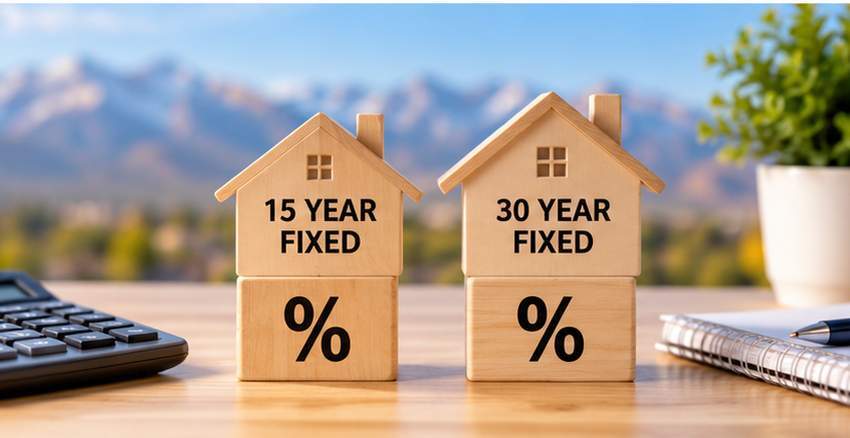
One of the biggest decisions you’ll make when getting a mortgage is choosing how long you want to repay your loan.
Two common options are 15-year and 30-year fixed-rate mortgages.
30-Year Fixed-Rate Mortgage
A 30-year mortgage is popular because it spreads payments over a longer period.
Benefits:
- Lower monthly principal and interest payments compared with a 15-year loan of the same amount and rate
- More flexibility in your monthly budget
- A predictable interest rate throughout the loan
Potential downside: You may pay more in total interest because you’re borrowing money for a longer period.
15-Year Fixed-Rate Mortgage
A 15-year mortgage allows homeowners to pay off their homes faster.
Benefits:
- Faster homeownership without a mortgage balance
- Typically less total interest paid
- Often a lower interest rate than a comparable 30-year mortgage
Potential downside: Monthly payments are usually higher.
Which should you choose?
If keeping your monthly payment manageable is your priority, a 30-year mortgage may be the better fit. If you can comfortably afford larger payments and want to reduce long-term interest costs, a 15-year mortgage may be worth considering.
The best option depends on your income, savings, and financial goals.
Types of Mortgage Loans Available in Utah
Not every homebuyer has the same financial situation, which is why lenders offer different types of mortgage loans.
Conventional Loans
Conventional mortgages are a common choice for buyers with qualifying credit and stable income.
These loans offer different down payment options and repayment terms. However, borrowers who put down less than 20% may need private mortgage insurance (PMI).
FHA Loans
FHA loans are government-insured mortgages that may be helpful for first-time buyers or borrowers who need more flexible qualification requirements.
They can offer lower down payment options, but they also include mortgage insurance costs that buyers should consider.
VA Loans
VA loans are available to eligible veterans, active-duty service members, and certain surviving spouses.
One major advantage is that qualified borrowers may be able to purchase a home without a down payment. VA loans generally don’t require monthly mortgage insurance, although a funding fee may apply.
Jumbo Loans
Jumbo mortgages are designed for loans that exceed the applicable conforming loan limits.
These loans may have different credit, income, and savings requirements. If you’re purchasing a higher-priced property in Utah, asking lenders about jumbo loan options may be helpful.
How to Get a Better Mortgage Rate in Utah

Getting a competitive mortgage rate doesn’t have to be complicated. A few smart financial decisions can make a difference.
1. Improve Your Credit Score
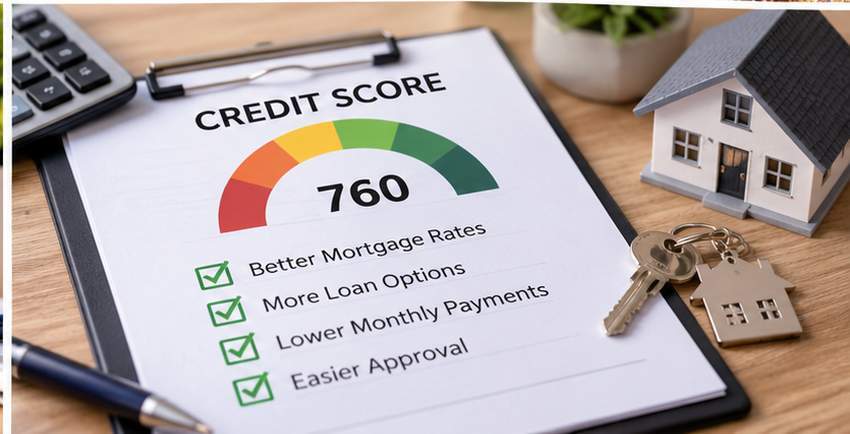
Your credit score plays an important role in determining the mortgage rates you qualify for.
Before applying, review your credit reports, correct any errors, and try to avoid taking on unnecessary new debt.
2. Compare Multiple Lenders
Don’t automatically accept the first mortgage offer you receive.
Try comparing written Loan Estimates from at least three lenders. Look at the interest rate, APR, closing costs, and monthly payments.
Even small differences can add up over the life of a mortgage.
3. Consider a Larger Down Payment
A larger down payment may help you qualify for better loan terms and can reduce the amount you need to borrow.
However, it’s important not to use all your savings for a down payment. Keeping money available for emergencies and homeownership expenses matters too.
4. Ask About Discount Points
Some lenders allow borrowers to pay discount points upfront in exchange for a lower interest rate.
This can make sense if you plan to stay in your home long enough to recover the upfront cost through monthly savings.
5. Understand Your Rate Lock
Mortgage rates can change before closing.
Ask your lender whether your rate is locked, how long the lock lasts, and whether there are fees to extend it.
Understanding these details can help you avoid unexpected costs.
Mortgage Tips for First-Time Homebuyers in Utah
Buying your first home can be both exciting and intimidating. Between saving for a down payment, understanding closing costs, and choosing a lender, there is a lot to think about.
Fortunately, Utah homebuyers may have access to assistance programs that can help with certain homeownership expenses.
Before choosing a mortgage, research available state and local homebuyer programs and ask lenders whether you qualify.
Remember that being a first-time buyer doesn’t automatically mean you’ll receive a special interest rate. Your credit, income, loan program, and other financial factors still influence your offer.
Should You Refinance Your Utah Mortgage?
If you already own a home, you might be wondering whether refinancing could save you money.
Refinancing means replacing your current mortgage with a new loan, potentially with a different interest rate or repayment term.
Homeowners commonly consider refinancing to:
- Lower their monthly mortgage payment
- Change their loan repayment period
- Switch from an adjustable-rate mortgage to a fixed-rate mortgage
- Access home equity through a cash-out refinance
However, refinancing isn’t always the best financial move.
Closing costs, your remaining loan balance, and how long you plan to stay in the home can all affect whether refinancing makes sense.
Before making a decision, compare the total cost of your existing mortgage with the proposed new loan.
Final Checklist Before Choosing a Mortgage
Before committing to a mortgage lender, make sure you understand the complete loan offer.
Ask yourself:
- Have I compared offers from multiple lenders?
- Do I understand the interest rate and APR?
- Can I comfortably afford the monthly payment?
- Have I reviewed the estimated closing costs?
- Do I understand any mortgage insurance requirements?
- Is my interest rate locked?
- Does this loan fit my long-term financial goals?
Taking time to answer these questions can help you feel more confident about your decision.
Final Thoughts: Finding the Right Utah Mortgage Rate
Finding the best mortgage rate in Utah isn’t just about choosing the lowest number advertised online. It’s about finding a loan that fits your financial situation, budget, and future plans.
Whether you’re buying your first home in Salt Lake City, purchasing a property elsewhere in Utah, or refinancing your current mortgage, comparing lenders and understanding your options can help you avoid unnecessary costs.
The best place to start is by requesting personalized mortgage quotes, reviewing the total costs, and choosing a loan that supports your long-term financial goals.
For additional guidance on comparing mortgage offers, visit the Consumer Financial Protection Bureau’s Loan Estimate guide.