
Buying your first home is an exciting milestone, but figuring out how much you can actually afford can feel overwhelming. Between saving for a down payment, comparing mortgage rates, and planning for monthly expenses, there are several financial factors to consider.
One of the biggest mistakes first-time homebuyers can make is focusing only on the price of a home instead of the total cost of owning it. Understanding your budget before beginning your home search can help you make smarter financial decisions and avoid unnecessary stress.
Whether you’re preparing to purchase your first home in Utah or simply exploring your options, learning how mortgage affordability works is an important first step.
What Determines How Much House You Can Afford?
When determining how much house you can afford, mortgage lenders look at several factors, including your income, credit history, existing debts, savings, and potential down payment.
Your income helps lenders estimate how much you can reasonably repay each month. However, income alone doesn’t determine your mortgage eligibility.
Lenders also consider your debt-to-income ratio, which compares your monthly debt payments to your gross monthly income. Existing financial obligations, such as car payments, student loans, and credit card debt, can affect how much you qualify to borrow.
Your credit history also plays an important role. A stronger financial profile may help you qualify for more favorable mortgage terms.
Understanding these factors before applying for a home loan can help you establish a more realistic homebuying budget.
Use a Mortgage Affordability Calculator
One of the easiest ways to estimate how much house you can afford is by using a mortgage affordability calculator.
These tools help you compare potential home prices based on your income, monthly expenses, down payment, and estimated mortgage interest rate.
A home affordability calculator can also show how changing your down payment or reducing existing debts might affect your purchasing options.
For example, increasing your down payment may reduce the amount you need to borrow, which could lower your monthly mortgage payment.
However, it’s important to remember that online calculators provide estimates rather than guaranteed loan approval amounts.
Using these tools before contacting a mortgage lender can give you a better understanding of your financial situation.
Understanding Your Monthly Mortgage Payment
When planning your homebuying budget, it’s important to look beyond the listing price of a property.
A monthly mortgage payment typically includes principal and interest. Depending on your loan and payment arrangements, you may also need to account for property taxes, homeowners insurance, and mortgage insurance.
Principal and Interest
The principal is the amount of money you borrow to purchase your home.
Interest is the cost of borrowing that money from a mortgage lender.
Your interest rate, loan amount, and repayment term all affect how much you pay each month.
Property Taxes and Homeowners Insurance
Property taxes vary depending on the location and assessed value of your home.
Homeowners insurance helps protect your property against certain covered losses.
Both expenses should be included when estimating your monthly housing costs.
Additional Housing Expenses
Some properties also have homeowners association fees, commonly called HOA fees.
You should also prepare for maintenance, repairs, utilities, and other ongoing expenses that come with homeownership.
Using a mortgage payment calculator can help you estimate these costs and compare different housing budgets.
How Much Should You Save for a Down Payment?
A common question among first-time homebuyers is how much money they need for a down payment.
The answer depends on the mortgage program, lender requirements, and your financial qualifications.
Many buyers assume they need a 20% down payment to purchase a home. While a larger down payment can offer advantages, some mortgage programs allow qualified borrowers to purchase a home with less.
A conventional loan may offer lower down payment options for eligible buyers.
FHA loans, which are insured by the Federal Housing Administration, may also provide options for buyers who meet the program’s requirements.
Using a down payment calculator can help you compare different savings goals and understand how your initial payment affects your loan amount.
Before deciding how much to put down, consider whether you will have enough savings remaining for emergencies and unexpected expenses.
Don’t Forget About Closing Costs
Your down payment isn’t the only upfront expense associated with purchasing a home.
Closing costs are additional fees and expenses paid during the mortgage and homebuying process.
These may include appraisal fees, lender charges, title services, and other transaction-related expenses.
The amount you pay depends on your loan, lender, location, and purchase agreement.
A closing cost calculator can help you estimate these expenses before making an offer.
Preparing for closing costs early can help prevent financial surprises when you’re ready to finalize your home purchase.
How Mortgage Interest Rates Affect Affordability
Mortgage interest rates play an important role in determining how much house you can comfortably afford.
Even a small difference in your interest rate can affect your monthly payment and the total amount of interest paid over the life of your loan.
Many first-time buyers compare 30-year mortgage rates because a 30-year fixed-rate mortgage spreads payments over a longer period.
This generally results in lower monthly principal and interest payments compared with a shorter repayment term for the same loan amount and interest rate.
However, a longer loan term can also increase the total interest paid over time.
When comparing home loans, it’s important to look beyond the advertised mortgage rate.
Consider the annual percentage rate, lender fees, and overall borrowing costs to better understand which option fits your financial situation.
Explore First-Time Homebuyer Programs
If you’re buying your first home, researching first-time homebuyer programs may help you discover financing opportunities.
Some programs offer eligible buyers assistance with down payments or closing costs.
Depending on the program, eligibility may be based on income, location, purchase price, and other financial requirements.
Utah homebuyers can research assistance opportunities through state housing resources, including Utah Housing Corporation.
Different mortgage programs also have their own qualification requirements, so comparing available options is important.
Taking the time to research first-time homebuyer loans and assistance programs may help you identify opportunities that fit your financial goals.
Why Mortgage Preapproval Matters
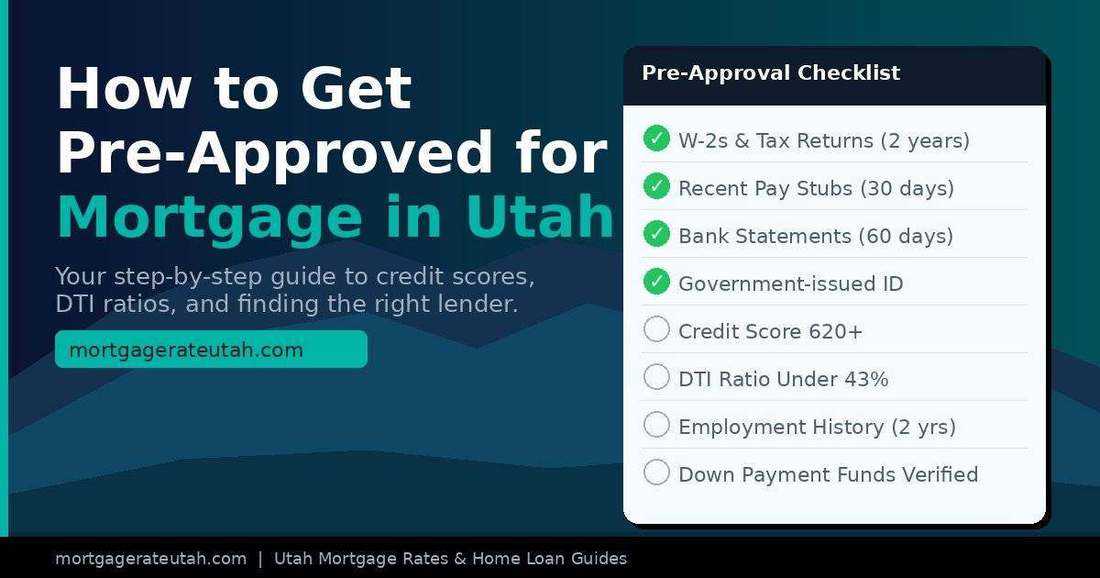
Once you have a better understanding of your budget, mortgage preapproval can help you take the next step.
During the preapproval process, a lender reviews your financial information to estimate how much you may qualify to borrow.
This usually involves reviewing your income, credit history, savings, and existing debts.
Getting preapproved before seriously shopping for homes can help you focus on properties within a realistic price range.
However, mortgage preapproval isn’t a guarantee of final loan approval.
It’s also important to remember that qualifying for a certain loan amount doesn’t necessarily mean you should spend the full amount.
Choosing a monthly payment that fits comfortably within your budget can help you maintain financial flexibility after purchasing your home.
Tips for Preparing Financially Before Buying Your First Home
Preparing for homeownership involves more than saving enough money for a down payment.
Start by reviewing your monthly income and expenses to understand how much you can comfortably spend on housing.
Next, check your credit report and evaluate your existing debts. Improving your financial situation before applying for a mortgage may help you qualify for better financing options.
It’s also helpful to establish an emergency savings fund. Homeownership comes with unexpected expenses, including repairs and maintenance.
Finally, compare mortgage lenders and loan options before making a decision.
Taking these steps can help you feel more confident and financially prepared throughout the homebuying process.
Take the Next Step Toward Homeownership
Buying your first home is a major financial decision, but understanding how much house you can afford can make the process less intimidating.
By using mortgage calculators, comparing interest rates, researching first-time homebuyer programs, and planning for upfront expenses, you can develop a more realistic homebuying budget.
Remember that the goal isn’t simply to purchase the most expensive home you qualify for. It’s to find a home that fits your financial situation and long-term goals.
With the right preparation and a clear understanding of your mortgage options, you can take the next step toward homeownership with confidence.