VA Home Loans: A Veterans guide to home loan programs.

A home being held by a veteran who used a VA home loan

VA home loans are mortgage options that private lenders provide for veterans, active-duty service members, and surviving spouses who qualify. The VA home loan program aims to aid eligible applicants in purchasing, refinancing, or improving a home at the most accessible and affordable price. The Department of Veterans Affairs guarantees a portion of VA home loans, reducing risk for private lenders and enabling eligible applicants to receive the most favorable terms. The benefits of these loans include zero down payment, competitive interest rates, and the absence of private mortgage insurance.

Eligibility for VA Home Loans

A Veteran who is eligible for VA Home Loan and his spouse.

VA home loan requirements have applicants obtain a Certificate of Eligibility (COE). This verifies to lenders that applicants meet the necessary service requirements. These requirements vary based on the type and length of service. Specifically, veterans must have at least 90 days of active-duty service during wartime or a minimum of 181 days of continuous active-duty service during peacetime, provided they have not received a dishonorable discharge. Meanwhile, National Guard and Reserve members must complete at least six years of service in the National Guard or Reserves and receive either an honorable discharge or placement on the retired list. Also, active duty service members are eligible after completing 90 days of continuous active duty service. Surviving spouses married to a veteran who is missing in action or held as a prisoner of war are eligible. In addition to these VA home loan requirements, lenders may have additional requirements applicants must meet to before being approved.

What Type of Home Qualifies for a VA Loan

Borrowers can use VA loans to purchase various home types, including single-family homes, condominiums, mobile homes, and manufactured homes, as long as they meet the VA minimum property requirements (MPRs) and serve as the borrower’s primary residence. However, condominiums must be in a VA-approved complex, although borrowers can request approval for non-listed developments. Manufactured and modular homes must be permanently affixed to a foundation in adherence with HUD and VA home standards. Barndominiums, tiny homes, and other trendy properties may qualify for a VA loan if they meet the MPRs and other required standards. However, VA loans cannot be used to purchase vacant land unless it’s combined with a construction loan for an approved home. The primary criterion for any property is its safety, structural soundness, and move-in readiness, ensuring veterans have a stable place to call home.

A Visual example of home types accepted for VA home loans.

VA Refinancing Options

Veterans are provided two options when it comes to refinancing options through the VA loan program. First is the VA Interest Rate Reduction Refinance Loan (IRRRL) and second is the VA Cash-Out Refinance. The IRRRL also referred to as the VA Streamline is the most common refinancing option for veterans. This is a low-cost option, that in some cases doesn’t require credit underwriting, verification of income, or an appraisal. For veterans to be eligible for the VA IRRRL, they must currently have a VA loan, set a limit on the time it takes to regain costs and fees, and the new rate must be smaller than the previous one. The VA Cash-Out Refinance loan allows a veteran to exchange their current loan for a new one with different terms. Veterans also receive the option to take out cash on their home equity and can refinance up to 90 percent of their home value. The VA Cash-Out Refinance loan is open to veterans with or without a current VA loan, but they must qualify for a COE. This is a good refinancing option for veterans who do not currently have a VA mortgage.

A VA refinanced home loan getting the best rates.

VA Home Loan Types

Multiple home loan types are available to eligible applicants. There are two Direct Home loan options, the first is a VA Direct home loan where the U.S. Department of Veteran Affairs serves as the mortgage lender by working directly with veterans to help them apply for and manage the home loan. The second Direct type is the Native American Direct Loan (NADL). The NADL applies to veterans or their spouses who are Native Americans. This loan helps them buy, build, and improve a home on federal trust land. Purchase Loans or VA-backed home loans are the third type. The VA-backed home loan is a great option in which the VA guarantees a portion of the loan you receive from private lenders. In the case of a foreclosure on the house, your guarantee allows recovery of some or all losses. Another favorable term is that nearly all VA-backed home loans have zero down payment. To qualify, applicants must meet a certain credit score standard and get the home appraised.

Summary

Veteran saluting the country with the American flag.

VA home loans provide a valuable pathway for veterans, active-duty service members, and qualifying spouses to achieve homeownership. With benefits like zero down payment, competitive/low interest rates, and no PMI it is the most favorable mortgage type. Understanding eligibility requirements, property qualifications, loan types, and VA refinancing options helps applicants make informed decisions about their mortgage choices. No matter whether refinancing, purchasing, or building, the VA loan program can make buying a home realistic for every veteran. To find more information on VA home loans, visit the U.S. Department of Veterans Affairs VA home page at, https://www.va.gov/housing-assistance/home-loans/.

Is Utah Home Buying ACTUALLY Hard For First-Timers?

Since the beginning of our country, buying a home has been a staple of what it means to be successful, representing the “American Dream” for many. However, there are quite a few barriers to home buying that may seem daunting for first-time home buyers in Utah. How will I secure the funds for a down payment? How long should I expect to be making payments? What tools are available to guide me along the process? These are but a few of the questions first-time homebuyers in Utah weigh when making this decision, making it difficult to know where to start. In this article, we are going to dig deeper to see if it really is as difficult as they say for young adults to buy their first homes in Utah and what resources they can use to help with the process!

First-Time HomeBuyer Couple Smiling in the living room of their new home

Who is a “First-Time Home buyer” in Utah?

A first-time homebuyer in Utah is someone purchasing a primary residence for the first time or someone who hasn’t owned a home in the past three years. To meet first-time homebuyer Utah qualifications, buyers must typically meet specific income limits and credit requirements, depending on the program they apply for.

Programs like the Utah State First-Time Home Buyer Program and Utah Housing First-Time Home Buyer Grant provide financial assistance and favorable terms for eligible buyers. These programs offer a range of first-time homebuyer Utah benefits, including down payment assistance and lower interest rates.

Common Perceptions About Young First-Time Homebuyers in Utah

Many believe that buying a home in Utah is nearly impossible for young people, especially in competitive markets like Salt Lake City. Many young adults have expressed their worries about ever hoping to buy a home, while older generations question the validity of their complaints. This brings to light a serious question: are the issues with the market or personal issues that are truly affecting the rate at which young people buy their first property?

Are the requirements for first-time home buyers in Utah to secure a first-time mortgage realistic in this economy, or are young home buyers irresponsible with their purchasing habits, leading them to be stuck in these difficult situations?


The Scary Reality of Buying a Home as a First-Time Homebuyer

Recent reports have shown that there is a real challenge for potential young home buyers. The average age of first-time home buyers in Utah has jumped a staggering 10 years since 1991. As of 2024, the median age that a person buys a home for the first time had jumped from 28 to 38, meaning that this person spends a good portion of their early career saving up just to find a home. And with delinquency rates rising for first-time buyers in Utah, it is clear that there are significant strains for first-time home buyers in Utah.

Man-Screaming-At-Scary-statistics-for-first-time buyers

While these challenges may leave you screaming like the man above, the situation isn’t as bleak as it may seem. Many first-time home buyers in Utah are successfully purchasing homes by leveraging first-time home buyer assistance Utah programs, grants, and favorable loan options. These initiatives offer first-time mortgages with competitive first-time homebuyer interest rates and support for covering down payments. Factors like credit scores and income limits can be hurdles, but they are not impossible to overcome. By improving credit, budgeting wisely, and exploring various Utah first-time home buyer help programs, young buyers can find opportunities to purchase homes.

How To Achieve Your Dream of Buying a Home

Here’s a step-by-step guide to help younger buyers navigate the first-time homebuyer tips process in Utah:

  1. Assess Your Finances: Review your credit score and understand the first-time home buyer Utah qualifications. Use a first-time home buyer mortgage calculator to estimate what you can afford.
  2. Explore First-Time Buyer Programs in Utah: Look into the best first-time home buyer programs Utah offers, such as the Utah State First-Time Home Buyer Program and Utah Housing First-Time Home Buyer Grant.
  3. Get Pre-Approved for a Mortgage: Strengthen your offer by getting pre-approved for first-time mortgages. This shows sellers you are serious and financially prepared.
  4. Find a Real Estate Agent: Work with an agent experienced in helping first-time home buyers in Utah. They can guide you through the process and identify properties that meet your needs.

Buying a home in Utah can be challenging for first-time buyers due to rising prices, student debt, and credit requirements, but it is achievable with the right resources. Programs like the Utah State First-Time Home Buyer Program and Utah Housing grants offer financial assistance, down payment support, and lower interest rates. By improving credit, managing budgets, and exploring mortgage options, young buyers can increase their chances of homeownership. Researching grants, getting pre-approved for a loan, and working with a real estate agent can simplify the process. With careful planning and the right support, first-time buyers in Utah can confidently achieve their dream of homeownership.

Everything You Need to Know About Mortgage Rates in Utah: A Homebuyer’s Guide

Understanding Mortgage Rates in Utah

What Are Mortgage Rates and Why Do They Matter?

Mortgage Rate Utah

Mortgage rates are the interest charged on home loans. They significantly affect the total cost of homeownership. These rates frequently fluctuate based on inflation, the Federal Reserve’s policies, and market demand. In Utah, mortgage rates depend on credit scores, loan types, and lender policies. Therefore, understanding these factors helps homebuyers make informed financial decisions when refinancing or purchasing a home.

Current Mortgage Trends in Utah

Recently, Utah’s real estate market has seen rising interest rates, which have affected housing affordability. As a result, homebuyers should actively track mortgage rates and compare adjustable vs. fixed-rate options. Since federal and local factors influence Utah’s home-buying rates, staying informed allows buyers to choose the best loan for their situation.

Utah's rising rates impact affordability.

How Interest Rates in Utah Are Determined

Market conditions, housing supply, and demand primarily determine Utah’s interest rates. Although buyers cannot control these factors, they can improve their credit scores to secure lower rates. Since low credit scores lead to higher interest rates, improving creditworthiness is crucial. Furthermore, comparing mortgage providers is essential, as different lenders offer varying rates. Additionally, researching fees and prepayment penalties before choosing a mortgage can help avoid unexpected costs.

Locking in an interest rate can prevent fluctuations, offering financial stability. To learn more, the Utah Department of Financial Institutions provides mortgage tips and information on rate locks. Visit their site here: https://dfi.utah.gov/general-information/consumer-tips/mortgage-loan-tips/.

Fixed vs. Adjustable-Rate Mortgages: Which One Is Best?

Utah fixed-rate mortgages (FRMs) and adjustable-rate mortgages (ARMs)

When applying for a home loan in Utah, the two most typically chosen options for mortgage rates are fixed-rate mortgages and adjustable-rate mortgages.

Fixed-Rate Mortgages (FRM)

These loans have a stable interest rate throughout the term. As a result, they offer predictable monthly payments, making them ideal for long-term loans (10+ years). However, they typically start with higher rates than ARMs. Moreover, if market rates drop, borrowers cannot adjust their original rate.

Adjustable-Rate Mortgages (ARM)

These loans start with a lower interest rate but adjust based on market conditions. Consequently, they work well for short-term loans or those planning to refinance or sell soon. However, rates can rise over time, leading to unpredictable payments. Therefore, ARMs are riskier for long-term borrowers.

Should You Refinance Your Mortgage?

Refinancing replaces an existing mortgage with a new one. Many homeowners refinance to lower rates, reduce monthly payments, or access home equity. Even a slight rate drop can lead to significant savings. Additionally, refinancing can shorten loan terms or switch an ARM to an FRM for stability.

Furthermore, cash-out refinancing provides funds for renovations or investments. However, since refinancing comes with fees, homeowners must carefully weigh the costs against the benefits before proceeding. The U.S. Department of Housing Development gives advice on when to refinance.

Refinancing lowers costs, modifies loans.

Making Smart Mortgage Decisions in Utah

If you’re a homeowner considering refinance rates in Utah or a first-time homebuyer navigating the mortgage process, it’s important to understand mortgage rates in Utah. Comparing fixed vs. adjustable-rate mortgages, observing current interest rates, and using tools like mortgage calculators can help secure the best possible loan. Advising with local lenders and researching Utah home loan options can offer insights aligned with your financial goals. For more detailed guidance, check out our first-time homebuyer resources and refinancing insights to take the next step toward homeownership.

Unlock the Hidden Power of Mortgage Calculators: Empower Your Homeownership Journey with Revolutionary Insights

Buying a home is likely one of the most significant financial commitments you’ll ever make—exciting yet daunting! Luckily, mortgage calculators can help you cut through the confusion and get to the heart of what matters: how much you’ll pay every month and over the life of your loan.

What are Mortgage Calculators?

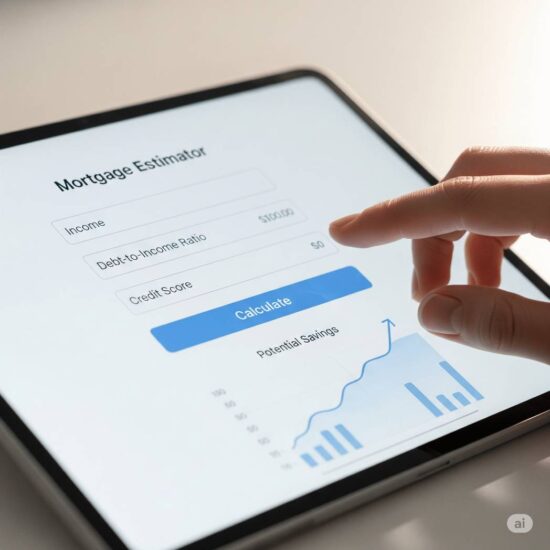
A mortgage calculator is an online tool that estimates your monthly payments using inputs like the loan amount, interest rate, loan term, and even property taxes. The best part? You can experiment with different down payments and loan terms to see how your monthly payment shifts. Want to know how a slight change in interest rate might affect your finances? For instance, just plug in the numbers and watch the magic happen.

Another key point is that by comparing various loan options, you’ll gain clarity on which scenario fits your budget and long-term goals. Therefore, there is less guesswork and more confidence when you finally decide to lock in a rate and start house hunting. Given that, whether you’re a first-time buyer or a seasoned homeowner, using a mortgage calculator is a savvy move that can help you plan like a pro. Furthermore, it allows you to enjoy the homeownership journey with much more peace of mind.

How Mortgage Calculators Work

Mortgage calculators monthly payment breakdown

As can be seen above, a mortgage calculator simplifies the home-buying process by estimating everything from the loan principal and interest rate to the length of your repayment period. Additionally, some calculators even let you tack on property taxes, insurance, and Private Mortgage Insurance (PMI). With this level of detail, homebuying can be a game-changer for first-time buyers. It alleviates the uncertainty surrounding mortgage decisions and empowers you to plan more confidently and clearly.  

Why Use a Mortgage Calculator Before Buying a Home?

  1. Estimate Monthly Payments
    Knowing your potential monthly expenses helps you budget effectively. calculator can help you compare different loan terms and interest rates to find the best financing option.
  1. Compare Different Loan Options https://www.mortgagerateutah.com/30-year-vs-15-year-mortgage-loans/
    If you’re considering different loan types, such as a fixed-rate mortgage versus an adjustable one, a mortgage calculator lets you see how each option affects your payments.
  1. Determine Affordability
    By inputting your income and expenses, you can determine how much house you can afford. Many lenders use similar calculations to assess your eligibility for a home loan.
  1. Plan for Down Payments and Additional Costs
    Some calculators help estimate how much you’ll need for a downpayment and other costs like closing fees and homeowners insurance.

Factors That Impact Your Mortgage Payment

Several factors influence the final amount you’ll pay each month:

Mortgage calculators amortization for loan
  • Loan Amount: The total borrowed for the home loan
  • Interest Rate: A lower interest rate means lower monthly payments
  • Loan Term: A 15-year loan typically has higher payments than a 30-year loan, but you save on interest
  • Property Taxes & Insurance: These vary by location and lender requirements
  • PMI: If your down payment is below 20%, you may need private mortgage insurance
Finding the Best Mortgage Calculator

Many authoritative financial websites provide free mortgage calculators. For example, one great resource is Bankrate’s Mortgage Calculator (https://www.bankrate.com/mortgages/mortgage-calculator/), which allows users to input various factors and see estimated payments instantly.

Final Thoughts

Overall, a mortgage calculator is an invaluable tool for anyone considering homeownership. As a result of understanding how different factors affect your monthly payments, you can confidently move forward with your home loan application. Additionally, for more information on financial planning and home buying, explore the Understanding which Mortage is Best for You and Tips page. https://www.mortgagerateutah.com/mortgage-types/

How Do I Calculate The Down Payment On My Mortgage?

Title image featuring a house, representing the topic of mortgage rates and how to calculate them.

What is a Down Payment?

Understanding the Basics

A down payment is the money you pay upfront when buying a home. Think of it as your initial investment in the house. The rest of the cost is covered by a home loan, which you pay back over time.

Image of a house with coins and percentages, illustrating the financial impact and importance of understanding mortgage rates and down payments when purchasing a home.

Why Does It Matter?

Your down payment can affect how much you pay in interest and fees, like the mortgage rate and APR. Most lenders require a down payment, which can be anywhere from 3% to 20% of the home’s price. Some government-backed loans even allow you to buy a home with little to no down payment.

Types of Down Payments

Conventional Loan

A conventional loan usually requires at least 5%, though some programs allow as little as 3%. If you’re getting an FHA loan, you may only need 3.5% if your credit score is 580 or higher. Military veterans and active-duty service members can get VA loans, which don’t require a down payment at all. If you’re buying in a rural area, a USDA loan might be an option, as it also requires no down payment. The right loan depends on your financial situation and goals.

How to Calculate Your Down Payment

Image of a house with a down payment concept, symbolizing the process of buying a home and the importance of down payments in mortgage calculations.

Determining the Amount

To figure out how much you need for a down payment, start with the home price. For example, if you’re buying a $300,000 house and want to put down 20%, that means you’ll need $60,000.

Considering Additional Costs

Don’t forget about closing costs, which can add to the upfront expenses. Your credit score also matters—having a higher score can help you qualify for lower home interest rates in Utah.

Using Online Calculators

You can use a mortgage payment calculator to see how different down payment amounts affect your monthly payments and long-term costs.

Current Mortgage Rates in Utah

How Rates Impact Your Loan

Knowing the current mortgage rates in Utah is important when planning your down payment. Interest rates change based on economic conditions, your credit score, and the type of loan you choose.

Image of a house representing the final considerations and key takeaways on mortgage rates and home buying

Choosing the Right Mortgage Term

A 30-year fixed mortgage rate in Utah offers steady payments over a long period, while a 15-year mortgage has lower interest rates but higher monthly payments. Check with banks and lenders to help you find the best home interest rates in Utah.

Tools to Help Calculate Your Down Payment

Bank and Credit Union Calculators

If you’re unsure how much to put down, several resources can help. Banks and credit unions offer online calculators to estimate your down payment and monthly payments. Government websites, like those for FHA loans and VA loans, also provide tools specific to their programs. Real estate websites and mortgage brokers also offer insights into home interest rates in Utah.

Final Thoughts

Making an Informed Decision

Your down payment is a key part of buying a home, and understanding how it works can save you money in the long run. Whether you’re considering a conventional loan, an FHA loan, or another option, knowing the Utah interest rates and using online tools can help you make the best decision. Real estate websites and mortgage brokers also offer insights into home interest rates in Utah.

Where to Learn More

For more guidance, check out our mortgage resources or visit lender and government websites for up-to-date details on current mortgage rates in Utah.

First-Time Home Buying 101: Understanding Mortgages, Refinancing, and Interest Rates

An illustration of a real estate agent transfers keys to the owners of a beautiful home in the suburbs. It is an illustration of a new home for the family with a sold sign pointed towards the home.

 What’s a mortgage, and why do we need them?

When choosing a mortgage, the most common types of loans are 15 and 30-year loans. It is important for future homeowners to understand the distinction between both loans so that they know what type of loan best suits their needs. The right decision differs from person to person; and is based on their income, financing, and long-term housing plans. Generally, a 15-year loan comes with a lower interest rate, which allows you to pay your home off faster.

However, that means that there will be higher monthly payments. Someone who would benefit from this is a person who has a job that provides them with a high, stable income because they can not only pay off their house faster but also save on interest. For individuals who would like more flexibility, and might not have the finances to pay off such a high monthly payment, they’d benefit from a 30-year loan. For example, a student homeowner would benefit from this loan because they likely have less income, and this not only makes their month-to-month payments more affordable but also gives them more freedom and flexibility to spend their income on other expenses such as tuition.

Illustration of a house, on the left side is a stack of goal coins and on the right is a bar graph with an arrow that has the percentage symbol on it pointed up signifying that interest rates are going up.

Different types of Mortgages

There are many ways to go about financing a home and there are different loan types to choose from based on your needs. A few examples of common ones are HELOC loans/HELOC as a line of credit, VA Loans, and Adjustable Rate Mortgages to name a few. A HELOC loan (Home Equity Line of Credit) is a line of revolving credit where homeowners borrow money, using the the equity in their home, similar to a credit card, with a variable interest rate. HELOC has a variety of benefits. The loan can be taken out for periods of 5-15 years, only makes you pay for what you used, and can be used for everything from home improvement to funding your child’s college education, or even a vacation if you choose. Though, as with any loan, it must be paid back within the same number of years that it was used. 

An Adjustable-Rate Mortgage (ARM) is a home loan with an interest rate that changes in response to market conditions, matching the current market rates. These often start with a lower fixed rate – compared to a fixed loan – for a set period before adjusting at regular intervals; commonly being annual, or semi-annual (every 6 months). Adjustable-rate mortgages are also a great option for homeowners looking to sell or refinance their home soon.  A VA Home Loan is a mortgage program backed by the U.S. Department of Veterans Affairs, aimed at helping military service members, veterans, and their families purchase homes with benefits like no down payment and competitive interest rates. Another great feature is that these loans offer lower credit standards for approval, making this another great option for first-time home buyers who would have difficulty securing financing through typical channels.

Refinancing Mortgage

In the state of Utah refinance mortgage rates as of February 5, 2025 range from 5.490% to 6.69% depending on the type of loan and the length of the term. Refinancing your home loan can be a powerful financial move, but it’s important to understand the process and consider if it aligns with your financial goals long term. For homeowners in Utah, refinancing has several benefits to offer, but it also comes with some considerations to weigh into your decision. One of the more popular advantages of refinancing is to secure a lower interest rate, which over the life of the loan could save thousands. Refinancing may also lower monthly mortgage payments, either by reducing the interest rate or by extending the term of the loan.

Additionally, if you’ve built up equity in your home, a cash-out refinance or a home equity loan are two viable options to access that equity. A cash-out refinance allows you to pay off your old mortgage in exchange for a new one, ideally, it would be at a lower interest rate. A home equity loan exchanges the equity you’ve built up in your home with cash. The home equity loan is a separate loan that has its own set of requirements and interest rates. While refinancing has some great advantages it does have its drawbacks. Refinancing may extend your loan term, potentially resulting in paying more in interest throughout the life of the loan. A cash-out loan holds its own risks of over-borrowing, increasing your financial risk.

Illustration of a house. On the right side is a clock, percentage symbol, and key. On the left side is a man and woman standing next to a large calculator, gold coins, a pie graph, and bar graph. This image illustrates the multiple considerations that need to be made when refinancing a home.

Interest Rates

As of 2025, 30-year fixed mortgages (6.49%) in Utah have a higher rate than 15-year fixed mortgages (5.625%) because lenders take more risk by lending money for a longer period. The 5-year ARM (6.93%) and 5/1 ARM (6.75%) tend to have a lower rate but may increase over time due to market fluctuations. The conventional fixed mortgage (5.500%) has a lower rate than the Federal Housing Administration (FHA) fixed mortgage (5.875%) because FHA loans are designed for borrowers who either have lower credit scores or smaller down payments. In essence, mortgage rates vary due to several factors including loan length, risk factors, and market conditions.

Mortgages Summary

We hope that after reading this blog post you feel more confident about navigating finding the mortgage that’s right for you. Whether you’re deciding between a 15-year or 30-year loan, choosing to refinance your home in the future, or are a veteran who takes advantage of the highly cost-effective VA loan, feel free to return to this guide or any other sources we have on our site

Illustration of a happy family with three young kids and a dog standing outside their new home.


Best Utah Mortgage Guide for First-Time Home buyers

Utah Mortgage Guide

Buying Your First Home in Utah

Buying a home for the first time is an exciting yet complex journey, especially when it comes to securing a mortgage, so If you’re a first-time homebuyer in Utah, navigating the various loan options, understanding mortgage rates, and preparing your finances can feel overwhelming. However, with the right guidance, you can confidently make one of the most important financial decisions of your life.

In this guide, we’ll walk you through everything you need to know about getting a mortgage in Utah as a first-time home buyer. We’ll cover different mortgage types, loan programs available in Utah, how to compare interest rates, and mistakes to avoid. By the end, you’ll have a clear strategy to secure the best possible mortgage and move forward with confidence.

What is a Mortgage and How Does It Work?

Mortgage Basics

A mortgage is a loan used to purchase a home because most buyers don’t have the full purchase price in cash, they borrow money from a lender and agree to repay it over time. That is to say that the home itself acts as collateral, meaning if the borrower fails to make payments, the lender can take possession of the property through foreclosure.

Mortgage payments typically consist of four main components:

  1. Principal – The amount borrowed.
  2. Interest – The lender’s fee for lending money.
  3. Property Taxes – Local taxes based on the home’s value.
  4. Homeowners Insurance – Protection against property damage.

Choosing the right mortgage depends on various factors, including your financial stability, future plans, and current interest rates, so one of the first decisions you’ll make is whether to get a fixed-rate or adjustable-rate mortgage.

Fixed-Rate vs. Adjustable-Rate Mortgages

Fixed-Rate Mortgage (FRM)

  • The interest rate remains the same throughout the loan term
  • Monthly payments are predictable, making budgeting easier.
  • Suitable for long-term home ownership.

Adjustable-Rate Mortgage (ARM)

  • The interest rate starts lower but adjusts periodically based on market conditions.
  • Can be beneficial if you plan to sell your home within a few years.
  • Carries higher financial risk if rates increase.

How to Prepare for Buying Your First Home in Utah

Before applying for a mortgage, first-time homebuyers should take several key steps to ensure they qualify for the best loan terms.

Check and Improve Your Credit Score

Your credit score is a critical factor in determining your mortgage interest rate. Lenders use it to assess your financial reliability.

  • A FICO score of 740+ qualifies for the lowest interest rates.
  • If your score is below 620, your mortgage options may be limited, and your interest rate will be higher.

Check your credit score for free:

If your score is low, focus on paying down debt, avoiding late payments, and maintaining a low credit utilization ratio before applying for a mortgage.

Save for a Down Payment

  • In Utah, the average down payment ranges between 5% and 20% of the home’s purchase price.
  • A higher down payment often means lower monthly payments and interest rates.
  • Some first-time buyer programs allow down payments as low as 3.5% (FHA loans) or 0% (VA and USDA loans).

Get Pre-Approved for a Mortgage

  • Mortgage pre-approval helps you understand your budget and strengthens your offer when negotiating with sellers.
  • Lenders evaluate your income, debt-to-income ratio (DTI), and credit history before approving a loan.

Great Mortgage Options for First-Time Home buyers in Utah

Utah offers several mortgage programs designed to help first-time homebuyers secure an affordable loan.

Housing Corporation Loan Programs

First Home Loan

  • Designed for low-to-moderate income buyers.
  • Offers down payment assistance programs.

Score Loan

  • Requires a credit score of 620+.
  • Allows for higher debt-to-income ratios compared to traditional loans.

Government-Backed Loans

FHA Loan (Federal Housing Administration Loan)

  • Minimum 3.5% down payment.
  • Requires a credit score of 580+.

VA Loan (For Veterans & Active Military)

  • No down payment required.
  • No Private Mortgage Insurance (PMI) needed.

USDA Loan (For Rural Areas)

  • No down payment required for eligible rural homebuyers.
  • Must meet income eligibility guidelines.

These are some options for Utah Mortgage for first home buyers. If you want to know more detail information, you can click here, UHC site. You can find more deep information about programs.

How to Compare Mortgage Interest Rates in Utah

Finding the Great Mortgage Rates

  • As of 2024, the average mortgage rate in Utah is around 6.5%.
  • Rates fluctuate, so checking multiple lenders and comparison sites is crucial.
  • Top Mortgage Rate Comparison Sites:
  • Bankrate or NerdWallet

Factors That Impact Mortgage Rates

There are some factors for Mortgage Rates.

Most common factors

Loan Term:

30-year vs. 15-year mortgages—longer terms often have higher interest rates.

APR (Annual Percentage Rate):

Includes interest rate + additional fees.

Lender Type:
Compare local lenders, banks, and credit unions for the best deal

Common Mistakes First-Time Home buyers Should Avoid

  • Overextending Your Budget – Buying a home that exceeds your financial capacity can cause stress.
  • Ignoring Hidden Costs – Consider property taxes, HOA fees, and maintenance costs.
  • Skipping Mortgage Pre-Approval – Without pre-approval, sellers may not take your offer seriously.

Conclusion

Buying a home in Utah as a first-time homebuyer can be an exciting yet complex process, but with the right preparation and knowledge, you can secure the best mortgage for your needs. Understanding the different loan options, improving your credit score, saving for a down payment, and getting pre-approved are all crucial steps to ensure a smooth home-buying experience. Additionally, comparing mortgage rates from multiple lenders and avoiding common mistakes, such as overextending your budget or neglecting hidden costs, can help you make a financially sound decision. By taking the time to research and plan, you can confidently move forward in purchasing your first home in Utah, knowing that you have chosen the best mortgage option available. If you need further assistance, consulting a mortgage expert can provide valuable insights tailored to your financial situation.

If you want to get more tips for Utah Mortgage, you can click here.

The Truth About Local Mortgage Rates: The New Buyers Manual

Understanding Localized Mortgage Rates

Understanding Localized Mortgage Rates

When considering purchasing a home in Utah, it is fundamental to understand what localized mortgage rates are to secure the best deal. But first of all, what is a Mortgage Rate? it is the percentage of interest a borrower pays on a home loan. Mortgage rates can increase or decrease based on different factors, such as national economic trends, lender competition, and regional factors. While national mortgage rates provide a broad market overview, localized mortgage rates reflect the specific conditions of a state or region, offering more precise insights for homebuyers. 

In Utah, mortgage rates can be influenced by a combination of economic trends, specific state regulations, and local lender competition. Something to take into accountability when learning about localized mortgage rates are factors like housing demand, employment growth, and state mortgage programs that can lead to variations in interest rates across cities in Utah.  Researching rates specifically for your area is essential for homebuyers; by staying informed, and on top of the latest financial news, potential buyers can make strategic financial decisions and most likely save thousands over the life of their home loan. 

It may seem like there are so many things outside your control that affect your mortgage rate, but here are a few personal factors that you have control over:

  • Credit Scores: It’s no secret that with a higher credit score, you can typically receive a lower interest rate because you pose less of a risk to lenders. 
  • Loan amount/term: Based on the size of the loan that you take out, rates may be lower on a short-term loan, while taking out a larger loan with a longer repayment period tends to come with a higher rate. And this brings us to number three. 
  • Down payment: Depending on your down payment, a larger payment upfront can reduce your mortgage rate by lowering the lender’s risk. 
  • Debt-to-income ratio: It’s also really important that your debt-to-income, or DTI, is good. This ratio simply compares how much you owe each month to what you earn. A good ratio is typically equal to or less than 36%. This shows lenders you can manage a mortgage. 
  • Loan type: There are generally either fixed-rate or adjustable-rate mortgages. Fixed-rate mortgages with the same monthly payment, making them predictable and low-risk. Adjustable-rate mortgage (ARM) rates change periodically, and your initial interest is lower than a fixed-rate mortgage.
Big white house, mortgage rates, best mortgage rate for you, best mortgage rate in utah

Factors affecting mortgage rates in Utah

Several different factors influence mortgage rates in Utah. These include national economic trends as well as local market conditions. The Federal Reserve has a nationwide impact, but Utah’s housing market dynamics, like rapid population growth in Salt Lake City, Saint George, and other city areas in Utah, also contribute to fluctuations. Local job market strength and property demands play a very large role in determining how lenders set their rates.

Finding the best mortgage rates in Utah

There are a few different strategies for finding the best mortgage rates in Utah. Buyers should consider a few different lenders to evaluate pricing and find the best Utah mortgage rate lender for them. Local banks, credit unions, and lenders might offer different rates depending on location and other factors. Financial advisors or mortgage brokers may be helpful to talk to to find what is best for you. Websites like Fund.com provide up-to-date information and comparisons for buyers to make decisions.

Mastering Localized Mortgage Rates in Utah: a Summary

For anyone interested in buying a home in Utah, it is important to understand localized mortgage rates. Factors like local economic conditions, what buyers can control, and how to find the best mortgage rate are things to think about. This will allow buyers to find a rate that works for them and their goals. For more information, check out the authoritative guide from the Federal Reserve.  Additionally, explore our other blogs on Utah’s housing market trends and tips for improving your credit score to further prepare for your homebuying journey.

New home owners, Happy family that found the  best mortgage rate in Utah

Understand which mortgage is the best for you and tips

Home financed through one of the various types of mortgages

Understanding Each Mortgage Type

When it comes to choosing and filling out a mortgage for your home, many factors come into play and must remain top of mind. Things like interest rates and Mortgage Rates are crucial. Understand what each mortgage is and does for you. That’s why down below we will discuss each of the most common mortgage types, their drawbacks, and advantages so you can find the best one.

Considerations:

  • Ideal for high-value properties 
  • Higher interest rates
  • Stricter qualification requirements

First Mortgage vs Second Mortgage

First-Time Mortgage is for when an individual has never or within three years has owned a home. A first-time buyer could potentially qualify for an affordable mortgage rate with a down payment and closing costs assistance. Some advantages of having first-time home buyer loans are having lower down payment requirements and less restrictive credit score requirements. Disadvantages of first-time home buyer loans are potentially having lower loan amounts and paying low down payments. Along with private mortgage insurance, having income limits, and limited home equity to start.

A couple with their first home after getting a first time mortgage

A second Mortgage is a loan taken out on a property with an existing mortgage. There are two types: home equity loan and a home equity line of credit (HELOC). HELOCs allow you to access the equity you’ve created with your home and are a cost-effective way to borrow money. An advantage of a second mortgage include long repayment terms, access to large loan amounts, and having low interest rates. Some cons are income requirements to qualify, higher interest rates than refinancing, expensive closing costs, and losing your home if you default. 

Types
Home Equity Loan

A lump sum loan based on your home equity

Home Equity Line of Credit (HELOC)

A revolving line of credit based on your home equity

Fixed and Adjustable Rates

A fixed-rate mortgage is when the interest rate remains constant for the entire loan term, typically 15, 20, or 30 years. This means that the borrower’s monthly principal and interest payments stay the same, regardless of changes in market interest rates. Fixed-rate mortgages provide stability and predictability, making them a popular choice for homeowners.

A 15-year mortgage is a home loan with a 15-year term that has a fixed interest rate and monthly payment. Some benefits of a 15-year mortgage rate are the predictability of it being a fixed rate, lower interest loans, lower costs of borrowing, and faster equity borrowing. Some disadvantages of a 15-year mortgage rate pertain to higher interest monthly payments, less flexibility since the loan remains the same, and it’s more difficult to qualify than other types of loans.

A 30-year mortgage is a home loan that allows a buyer to pay off their mortgage over 30 years with a fixed interest rate that doesn’t change throughout the loan term. This mortgage allows for lower monthly payments, potentially having a bigger home-buying budget, and having more cash flow for investing, retirement, renovations, etc. Disadvantages include more interest paid over time throughout the loan, slightly higher interest rates than 15-year fixed-rate mortgages, and the slow rates of home equity.

An Adjustable Rate Mortgage (ARM) is a type of home loan where the interest rate changes periodically based on a benchmark or index. Unlike a fixed-rate mortgage, where the interest rate remains constant, the initial rate of an ARM is usually lower for a set period (often 5, 7, or 10 years), making the initial payments more affordable.

A house next to a percentage representing mortgage rate percentages which varies with each mortgage type <br>

Mortgages 101

Private Mortgage Insurance (PMI) is a type of insurance that protects lenders if a borrower defaults on their mortgage. Lenders often require PMI when a borrower makes a down payment of less than 20% of the home’s appraised value. The benefits of PMI allow home buyers to overcome housing affordability and inventory. It allows homebuyers to buy a home in a higher price market sooner rather than later but at a cost. The cost of PMI is that it sticks to the mortgage until the principal balance drops below 80% of the value of the home. For those who barely qualify for the mortgage, the additional PMI monthly payment can compromise their ability to qualify for the loan.

Jumbo Mortgage is a nonconforming loan that exceeds the standard loan limits set by the Federal Housing Finance Agency (FHFA) for conventional mortgages. Jumbo mortgages’ advantages include higher loan limits, one single loan, and a lower down payment. The disadvantages of jumbo loans include higher interest rates and more closing costs. You also need a clean credit score and not all properties qualify.

Refinancing a home involves replacing an existing mortgage with a new one, usually to secure better interest rates, lower monthly payments, or change loan terms. This process can lower financial burdens by lowering interest rates or shortening the loan term, saving money over time. It’s essential to evaluate your financial situation before choosing to refinance your home mortgage.

Lower Interest Rates

Potentially reduce monthly payments

Change Loan Terms

Switch from adjustable to fixed rate, or change loan duration

Cash-Out Refinance

Access home equity for other financial needs

Mortgage Types

FHA mortgage is a loan insured by the Federal Housing Administration (FHA), designed to help low- to moderate-income borrowers qualify for a mortgage. These loans are popular among first-time homebuyers because of their lower down payments (as low as 3.5%) and more flexible credit requirements. It requires borrowers to pay mortgage insurance premiums (MIP), both upfront and annually, which protects the lender if the borrower defaults.

VA mortgage is a home loan program available to veterans, active-duty service members, and eligible surviving spouses, backed by the U.S. Department of Veterans Affairs (VA). VA loans offer several benefits that aren’t typically offered with other mortgage types. For example, a down payment is required, no private mortgage insurance, and other benefits that are curcial to those needing these loans. It is less risky for lenders.

A veteran in uniform holding the home he bought with VA Mortgage type

To learn more about VA Home Loans visit our blog post.

A Construction loan is a short-term loan (6-18 months) used to finance the building or renovation of a home or other real estate project. These loans are issued for the duration of the construction process and are structured differently from traditional mortgages. Will generally require a detailed construction plan and higher credit standards, as they carry more risk for lenders. 

Conclusion

Selecting the right mortgage for your home involves more than just focusing on interest and mortgage rates. It’s essential to understand the different types of mortgages and what each one means for your financial future. By evaluating the advantages and drawbacks of each option, you can make an informed decision that aligns with your long-term goals.

There are key differences between lending through a credit union versus lending through a bank or private institution. To find your ideal lender refer back to our blog post on each lender and what they offer.

Sites through individual factors like Mountain America (https://www.macu.com/rates/home) and Zions Bank (https://www.zionsbank.com/personal/home-loans/) can help you find bank-specific requirements.

Are You Ready to Buy Your First Home in Utah?

Are you ready to buy your first home? Take our quiz to find out: (Link to internal quiz)

For Sale Real Estate Sign in Front of New House.


Are you a first-time home buyer? Buying a home is one of the largest financial decisions you will ever make! Unless you can pay in cash, you’ll need a mortgage. A mortgage is a loan for purchasing real estate, typically offered by banks with interest rates between 4%-6%. Over 30-year mortgage rates in Utah, these interest rates can significantly increase the cost of your home. The property serves as collateral, meaning if you default on payments, the bank can foreclose and take possession of the home. Understanding the mortgage process can help save time, money, and stress. Learn more about affordability and your rights as a first-time home buyer at: https://www.hud.gov/topics/buying_a_home

The Basics

Principal:

This is the amount of money you borrow. For example, if you buy a home for $450,000 and put down a $90,000 down payment, the mortgage principal will be $360,000. You should put down at least 20% of whatever the total cost of the home is. While you may go as low as 3%, that is not suggested. If you are unable to put down 20%, consider saving a little longer. This website explains FHA loans and how they can help you afford your first home!

Home interest rates in Utah:

This is what the lender charges you for borrowing the money. Local bank mortgage rates can vary based on your credit score, the type of loan, and market conditions. There are many benefits to being a first-time home buyer in Utah, be sure to talk to your bank about opportunities available to you!

Term:

The length of time you must repay the mortgage. Common terms are 15, 20, or 30 years. Now terms go all the way up to 40 years!

Mortgage Insurance Rate:

If your down payment is less than 20%, you may have to pay for private mortgage insurance (PMI). This protects your bank in case you default on your loan.

The Process

There are many different types of loans, and it is important to choose the one that is best for you. As a first-time home buyer, the process can be very overwhelming. If you aren’t sure what is best for you, start here!

Step 1: Pre-Approval

Before you start shopping for a home, it’s smart to get pre-approved for a mortgage. A pre-approval gives you an idea of how much you can borrow based on your financial situation. The lender will check your credit score, income, assets, and debts to determine how much they’re willing to lend. You can do a less formal version of this here: mortgage calculator.

Step 2: House Hunting and Making an Offer

Once you’re pre-approved, you can begin searching for homes within your budget. A great place to start is Zillow. With Zillow, you are able to view thousands of homes from your phone! When you find a house you love, you’ll make an offer to the seller. If the offer is accepted, the next step is securing your mortgage

Step 3: Apply for the Mortgage

Now it’s time to submit a formal application. Your local bank mortgage rates will affect your monthly payments. Your bank will ask for documentation to verify your income, employment, and assets. They’ll also schedule an appraisal to ensure the home’s value aligns with the loan amount. You should also get your new home inspected through a third party to ensure you know the status of the home before purchasing.

Step 4: Loan Underwriting

This is the behind-the-scenes work where the lender verifies all your information, reviews the appraisal, and assesses the risk of lending to you. This stage can take several weeks and may require additional documentation. But mostly, you can sit back and let the bank do the heavy lifting for you.

Step 5: Closing

Once the loan is approved, you’ll go to a closing meeting where you sign the final paperwork and pay any closing costs, which can include fees for the appraisal, title insurance, and legal services. After this, the mortgage is officially in place, and you are a first-time homebuyer!

Lowest Mortgage Rates in Utah

Mortgages may seem complex at first, but understanding the basics can make the process less intimidating. When comparing options, look for the lowest mortgage rates Utah and consider if your Utah mortgage rate chart aligns with your financial goals. Some banks offer the lowest mortgage rates, especially those with programs aimed at first-time home buyers seeking the best interest rates.

You may also want to explore federal housing association (FHA) rates Utah or (FHA) mortgage rate in Utah, as these can be beneficial for buyers with lower credit scores or smaller down payments. Understanding 30-year mortgage rates in Utah and how mortgage insurance rate impacts your overall costs is key when making such a big decision.