Refinancing Your Home

What is Refinancing?

Mortgage refinancing is a financial strategy that allows homeowners to replace their existing mortgage with a new, more favorable loan. Many homeowners choose this route to save themselves money in the long-run. Refinancing can result in homeowners obtaining more favorable terms, reducing monthly payments, obtaining lower interest-rates, and achieving other financial goals related to their home. Homeowners typically consider refinancing when interest rates fall and economic conditions prove better than they were at the time of the last mortgage closing. To understand current mortgage rates in Utah better visit the Utah Mortgage Rate Calculator page. Other reasons for refinancing may be due to positive changes in credit profiles, to change the duration of the loan, or to switch to a different type of loan.

Refinancing Your Mortgage

The decision to refinance a mortgage is driven by various factors. These include the desire to secure a lower interest rate, reduce monthly payments, or access the equity built in the home. Reasons to refinance can also encompass debt consolidation, adjusting the loan term, or switching from an adjustable-rate mortgage to a fixed-rate one for stability. Whether motivated by financial savings, improved loan terms, or changing financial circumstances, mortgage and refinance options offer homeowners valuable opportunities to enhance their financial well-being. To better understand the best direction is for you, visit our 30 year vs 15 year Mortgage Loans page.

Financial advisor showing report to young couple. Happy couple consulting financial agent for refinance mortgage loan rates

How to Refinance? The Refinancing Process 

Here are the 5 steps to follow in your process of refinancing your home:

  1. Preparing and Applying to Refinance
    1. When applying to refinance you will need the same paperwork you provided when you originally mortgage your home: pay stubs, W-2s, bank statements, tax returns. You will also need your spouse’s documents if you are married and in a community property state.
  2. Choosing your Refinance Interest Rate Type
    1. After you get approved, you have two options for your interest rate: lock it in or float your rate. When you lock your interest rate you are guaranteed to have the same interest rate no matter if the rates rise after you lock. However this also means that the mortgage rates lower you are stuck at that higher initial rate. The best way to make this decision is to watch the markets and look at future predictions. If you go with a floating interest rate your rate will depend on the market conditions and have the possibility of going up or down.
  3. Getting Approved
    1. Behind the application process, a lender will evaluate your credit history, look at your debt-to-income ratio, verify your down payment and savings. They can also order an appraisal heading into the next step. 
  4. Getting a Home Appraisal
    1. Your lender will order an appraisal on your home. All you will have to do is make sure that your house looks amazing for the appraisal.
  5. Closing Your New Home Loan
    1. Once you have completed all the previous steps, it is time to close on your loan. During this stage, you will go over your details and sign them to make them official. There is usually a 3-day grace period for you to change your mind if something comes up.

For more details about the Refinancing process check out Rocket Mortgages Refinancing Steps.

Reasons to Refinance

Refinancing can be a smart financial move for various reasons including:

  • Getting a Lower Interest Rates: One of the primary reasons homeowners refinance is to secure a lower interest rate for their existing loan. By doing so, they can decrease their monthly mortgage payments and potentially save thousands of dollars over the life of the loan.
  • Reducing Monthly Payments: Refinancing can extend the time you have to pay your loan, resulting in lower monthly payments. This can free up cash for other expenses or investments monthly
  • Accessing Home Equity: Homeowners with substantial home equity can tap into it through a cash-out refinance. This allows you to borrow against your home’s value and use the funds for major expenses like home improvements, debt consolidation, or education. Learn more about it down below.
  • Changing Loan Types: Some homeowners opt to change their loan type, such as moving from an adjustable-rate mortgage (ARM) to a fixed-rate mortgage. This is to secure stability and predictability in their monthly payments.
Woman hugging man from behind. The couple is relaxing in their kitchen, browsing internet on laptop about mortgage rates and finances

Cash-Out Refinance

A cash-out refinance is a type of mortgage refinance where the homeowner uses the equity of the home and exchanges a larger mortgage rate for cash. The existing loan amount is increased allowing for the difference to be received in cash by the hom eowner. Both refinancing and cash-out refinancing involve replacing the existing mortgage with a new one but the purposes differ for each. Cash-outs are commonly used for financial investments, home renovations, paying off student loans, debt consolidation, or unexpected expenses. A positive outcome of a cash-out is it uses built up equity and provides cash for one to use. A negative outcome of a cash-out is it increases the total loan balance and mortgage payments. To learn more about cash-out refinancing and if it is right for you, visit our Cash Out Refinance page.

Understanding Refinance Rates

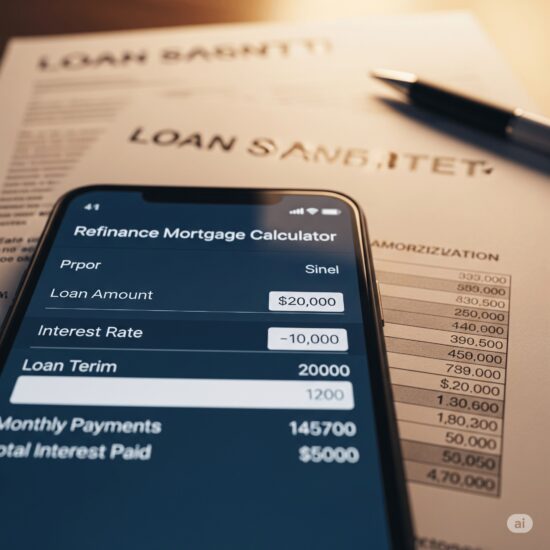
Refinance rates are important in the decision-making process when considering refinancing your home. Refinancing rates can impact your monthly interest rates and the total expense of the loan. The factors that determine refinancing rate are current market conditions, credit score, loan to value ratio, debt to income ratio, and more. If current rates are lower than your original home loan rate, refinancing could save you money in the long term. Online calculators and tools can be used to compare rates that suit your specific needs. Our Mortgage Rate Calculator can help in your decision-making process

Calculating Costs to Refinance

Let’s talk about the costs to refinance a home loan. When you decide to refinance your mortgage loan, it’s like giving your mortgage a facelift. But, much like a makeover, it comes with a price tag. This includes various fees such as application fees, appraisal fees (to determine your home’s value), and potentially some closing costs (like attorney fees and title insurance). It’s crucial to consider that while refinancing your home mortgage. It has the potential to save you money in the long run but you’ll need to take these upfront costs into account. Before you begin the refinancing process, it’s important to do some calculations to ensure that the savings outweigh the costs. Using a reliable tool and researching can provide you with a clearer picture of whether refinancing is the right decision for you. 

Refinancing in Summary

In short, refinancing is a process that replaces an existing mortgage on a property with a newer mortgage, that typically benefits the owner of the mortgage. When you obtain a new mortgage, you often lower your interest rate or change your loan terms. Many also choose to cash-out refinance to tap into their home equity.

For more information on how refinancing works and types of refinancing visit the Investopedia Refinancing page.

VA Loans

What is a VA Loan?

A VA Loan, or a Veteran Affairs loan, is a specialized mortgage program designed to provide financial assistance to eligible veterans, active-duty service members, certain members of the National Guard and Reserves, and eligible surviving spouses to help them achieve home ownership. These loans are some of the most valuable benefits offered to military personnel and veterans, aiming to make mortgages and their current interest rates more accessible and affordable for those who have served. These loans are not directly provided by Veterans Affairs but are guaranteed by the federal government, which means approved lenders are more willing to offer competitive mortgage rates to borrowers who qualify. On top of competitive loan rates, VA loans offer eligible borrowers favorable terms, no down payment, and the absence of private mortgage insurance. These loans are a testament to the nation’s commitment to recognizing and honoring the sacrifices made by those who have served in the armed forces.

VA Loan and Home Buying.

Benefits of VA Loans

VA loans can help you buy your home at a competitive interest rate often without requiring a downpayment or private mortgage insurance, therefore no downpayment is required to achieve home ownership. VA loans often have more lenient credit score requirements compared to conventional loans, making it easier for borrowers with less-than-perfect credit to qualify.

Also, when looking to buy your home, The VA limits the closing costs that borrowers can be charged, reducing the financial burden associated with closing on a home. This helps make home owning easier. VA offers streamlined refinancing programs like the Interest Rate Reduction Refinance Loan (IRRRL), which allows eligible borrowers to refinance their existing and current VA loan to a lower interest rate with minimal documentation and underwriting. 

Do I Qualify for a VA Loan?

To qualify for a VA loan, an individual must typically meet certain eligibility criteria. These criteria primarily apply to active-duty service members, veterans, and some members of the National Guard and Reserves. Generally, a person qualifies for a VA loan if they have served a minimum period of active duty, often 90 consecutive days during wartime or 181 days during peacetime, or they have completed six years of service in the National Guard or Reserves. Additionally, veterans need to be discharged under honorable conditions. Eligibility can also extend to surviving spouses of service members who died in the line of duty or as a result of a service-connected disability. Meeting these criteria allows individuals to take advantage of the many benefits of VA loans, including potentially lower interest rates and no requirement for a down payment. However, specific requirements can vary, and it’s advisable to check with the VA or a qualified lender for the most up-to-date information on eligibility. If you’re still unsure about your eligibility to qualify to receive a low VA loan in your state you can follow this link to a quick questionnaire to get your answer and begin the process within minutes.

How to Apply for a VA Loan?

The first step after verifying your eligibility is to find a VA-Approved Lender: Then, you can choose a VA-approved lender, such as a bank, credit union, or mortgage company. Gather necessary current documentation such as: Proof of income (pay stubs, tax returns, W-2 forms) , Employment verification, Bank statements, Credit history, Debt information, COE (Certificate of Eligibility). After verifying all these documents, you need to complete a loan application along with credit and income verification from your lender. After selecting a home, the VA will do an appraisal, if they approve that, you may move into your new home. With the volatility of current Utah mortgage rates, working closely with a VA-approved lender throughout the process will ensure a smoother and more successful application for a VA loan.

VA Loan Application

VA programs in Utah

Utah is home to a robust range of VA programs and services designed to support its veteran population. The state hosts numerous VA Home Loan Guarantee offices, aiding veterans in securing favorable mortgage options. They specifically offer help for Veteran First Time Home Buying. Utah offers a Veteran First-Time Homebuyer Grant that provides $2,500 to eligible Veterans and current service members (Active Duty, Reserve or Guard) to be used for the first-time purchase of a home in Utah. These programs collectively contribute to the well-being and support of Utah’s veteran community, ensuring they can access the resources and care they’ve earned through their service.

Summary

In summary, VA Loans give eligible former and current service members easier access to housing loans. To those who qualify, they will receive numerous benefits. Including competitive loan rates, favorable terms, no down payment, and the absence of private mortgage insurance. To get a low VA loan, you must find a VA-approved lender. Then, you have to meet the specific criteria for the loan. The criteria for qualifying for these mortgage loans include if you have served a minimum period of active duty, often 90 consecutive days during wartime or 181 days during peacetime, or if you have completed six years of service in the National Guard or Reserves. The other eligibility that needs to be met is dependent on Proof of income (pay stubs, tax returns, W-2 forms), Employment verification, Bank statements, Credit history, Debt information, COE (Certificate of Eligibility). When meeting these requirements, you can finally receive a VA loan. There are also Utah-specific veterans loan benefits that can be applied when purchasing a home for the first time. To conclude, VA loans are a testament to the nation’s commitment to recognizing and honoring the sacrifices made by those who have served in the armed forces.

FHA Loans

The Federal Housing Administration (FHA) loan program is a mortgage loan initiative offered by the United States government to aid individuals, particularly first-time homebuyers, in achieving homeownership. The distinguishing feature of FHA loans is their federal government backing, which mitigates risk for lenders and facilitates qualification for borrowers with lower credit scores or limited down payments. FHA loans typically necessitate a down payment as low as 3.5% of the home’s purchase price, rendering them accessible to a wider range of buyers. Furthermore, FHA loans offer competitive interest rates and more flexible qualification criteria, rendering them a popular choice for those who may not meet the rigorous requirements of conventional loans. However, borrowers are obligated to pay mortgage insurance premiums to safeguard the lender in the event of default, which constitutes an additional cost associated with these loans.

Eligibility Criteria

The eligibility criteria for FHA loans have been designed to facilitate homeownership for a diverse range of borrowers. In order to be eligible for an FHA loan, applicants are typically required to possess a minimum credit score, which may vary but is generally around 580 or higher. While lower credit scores may be considered, they may necessitate a larger down payment. Furthermore, borrowers must possess a stable employment history and adequate income to cover the mortgage payments. Eligibility is also extended to U.S. citizens and legal residents. One of the most notable features of FHA loans is the relatively low down payment requirement, which can often be as low as 3.5% of the home’s purchase price, rendering them an attractive option for first-time buyers. Fulfilling these eligibility criteria provides access to this government-backed mortgage program, which offers a pathway to homeownership for individuals who may not qualify for conventional loans due to more stringent requirements.

FHA loan credit requirements.

FHA Loan Credit Score Criteria: https://www.google.com/url?sa=i&url=https%3A%2F%2Fwww.fha.com%2Ffha_article%3Fid%3D210&psig=AOvVaw1pu3lGGcO56As4W4FdZXKQ&ust=1696437881630000&source=images&cd=vfe&opi=89978449&ved=0CBAQjRxqFwoTCMDJnNyp2oEDFQAAAAAdAAAAABAE

Benefits and Drawbacks

FHA loans present a set of advantages and disadvantages that borrowers must carefully evaluate when selecting their mortgage options. One of the primary benefits is the low down payment requirement, which enables buyers to acquire a property with as little as 3.5% down, thereby enhancing the feasibility of homeownership, particularly for first-time buyers. Additionally, FHA loans offer more flexible credit requirements, accommodating borrowers with lower credit scores. However, there are also drawbacks to consider. Borrowers are obligated to pay upfront and annual mortgage insurance premiums, which augment the overall cost of the loan. Moreover, FHA loan limits may restrict financing options in high-cost areas. While FHA loans provide accessibility, they may not always be the most cost-effective choice in the long run, and borrowers should weigh the benefits against the potential drawbacks when making their decision.

FHA vs. Conventional Loans.

FHA Loans vs. Conventional Loans Breakdown: https://www.google.com/url?sa=i&url=https%3A%2F%2Fmint.intuit.com%2Fblog%2Fhousing%2Ffha-loan-requirements-573%2F&psig=AOvVaw19nux7E3ksGWraTqKzSugK&ust=1696437547931000&source=images&cd=vfe&opi=89978449&ved=0CBAQjRxqFwoTCMjJkr2o2oEDFQAAAAAdAAAAABAJ

Application Process

The process of applying for an FHA loan involves a series of essential steps that borrowers must undertake to secure their mortgage. Initially, applicants must identify an FHA-approved lender to collaborate with, as only these lenders are authorized to originate FHA loans. The process commences with a pre-approval, where borrowers furnish financial information to determine their eligibility and potential loan amount. Once pre-approved, borrowers can commence their search for a suitable home within the FHA loan limits for their area. After identifying a suitable property, an appraisal is conducted to evaluate its value and ensure it meets FHA standards. Concurrently, applicants submit a formal loan application, providing comprehensive financial documentation such as income, employment history, and credit information. The lender reviews the application and gathers the necessary paperwork. If approved, the loan proceeds to underwriting, where it is meticulously evaluated for compliance with FHA guidelines. Finally, upon approval, borrowers can close on the loan, sign the necessary documents, and secure their FHA-backed mortgage. It is imperative to comprehend and efficiently navigate this process for a successful FHA loan application.

FHA Loan types.

FHA Loan Application Types: https://www.google.com/url?sa=i&url=https%3A%2F%2Fwww.fha.com%2Ffha_article%3Fid%3D2881&psig=AOvVaw3Hsulje6gi1Lrnq4rvXiX4&ust=1696437773464000&source=images&cd=vfe&opi=89978449&ved=0CBAQjRxqFwoTCLCe2aip2oEDFQAAAAAdAAAAABAE

The consideration of FHA loan limits and types is of great importance for prospective borrowers. FHA loan limits serve as a restriction on the maximum amount of mortgage that the Federal Housing Administration will insure in a particular region, and these limits vary based on the differences in housing costs across locations. Borrowers who intend to purchase homes that exceed these limits may need to explore alternative financing options, such as conventional loans. With regard to FHA loan types, the standard FHA loan, commonly known as the 203(b)(link to more details about this loan) loan, is the most prevalent and is intended for the acquisition or refinancing of a primary residence. Additionally, there are specialized FHA loan programs, such as the 203(k) loan, which provides financing for both the purchase of a home and necessary renovations or repairs. Familiarizing oneself with the loan limits in their area and the various FHA loan types available can enable borrowers to make informed decisions when selecting the appropriate mortgage option for their specific needs and circumstances.

Limits and Types

Mortgage Rate Calculator

We at mortgagerateutah.com understand and acknowledge the loaning process on your dream home could be stressful and time consuming. That’s why we created a free and simple online mortgage rate calculator. It is our aim to provide you the best mortgage advisors and mortgage brokers because ensuring that you get the best dream home possible is our mission. 

Mortgage

Mortgage Basics

A mortgage is a very large, long-term loan you take on to finance your home. Over the course of the loan you will pay the lender a monthly interest rate on top of repaying the full price of the mortgage. Furthermore, to start, you’ll sign a promissory note detailing your:

  • Interest rate
  • Total loan amount
  • Term of the loan (ex: 5 year mortgage rate, 10 year mortgage rate, 30 year fixed rate)
  • Due date for the loan
  • Monthly principal and interest payments

15 & 30 Year Mortgage Rate Calculator

Since there is great variation between the terms of a mortgage loan you might be wondering which is best for you. The main differences between 15 year mortgage rates and 30 year mortgage rates today are the overall interest costs and monthly principals. Shorter-term mortgages typically have higher monthly payments but lower interest expenses. This makes a shorter-term loan ideal for those seeking to build equity faster and pay off their homes sooner. The choice between the two depends on your own financial goals and budget considerations. You can use our mortgage rate calculator to help make your decision.

mortgage rate calculator

Mortgage Brokers

There are thousands of Mortgage brokers and Mortgage advisors located in Utah; based on your calculation, we select what is best for you. Additional information also taken into consideration, like our user’s review, advisor’s reputation and of course rate!

Mortgagerateutah.com offers a user-friendly mortgage calculator and access to top mortgage advisors/brokers in order to help you secure your dream home and analyze mortgage rates now. If you’re looking for better mortgage rates and mortgage tips and ideas then you’re in the right place!

mortgage broker

First Time Home Buying

Buying a home for the first time can be daunting and scary. It is hard to know where to begin and how to even approach this situation. Before you take this leap, it is important to understand the benefits, as well as the disadvantages, of the home buying process. Thought this blog post we will share: why buy a home, the process of first time home buying, and the pros and cons of buying a home. Within our website and this blogpost we offer reliable advice and how to chose a reputable lenders when buying a home for the first time!

Why Buy a Home?

Why should anyone buy a home? It is hard to know if you should buy a home. Whether or not buying a home is right for you depends on your individual circumstances. You should carefully consider your financial situation, your lifestyle, and your goals before making a decision.


Here are 5 reasons why:

  1. Tax benefits, some expenses are deductible at the end of the year. 
  2. Appreciation, growth in value 
  3. Equity, something not accessible to renters
  4. Payment predictability, unlike rent that goes up, cost will decline the longer you own a home. 
  5. Freedom & Stability, when you own a home you’re able to do anything, without landlord approval. You are more likely to have the same neighbors for a longer time, and children will be able to create friendships as they get older staying in the same school district. 

If you are considering buying a home, it is important to do more research and talk to a financial advisor to get personalized advice.

First Time Home Buying & Current Mortgage Rates

The process of buying a home for the first time is tedious and has around 14 steps. The steps include: determining your budget, getting pre-approved for a mortgage, create a home wishlist, hire a real estate agent (optional), start house hunting, making an offer, negotiating an offer (optional), home inspection, secure financing, appraisal, closing process, final walkthrough, closing day, and post-closing tasks.

Determining Your Budget

In order to determine your budget you need to evaluate all your finances, income, savings and monthly expenses. For the first step you could use a mortgage calculator to estimate what you could afford. A mortgage calculator will also take into consideration the current interest rates and down payments requirement. Then you need to get pre-approved for a mortgage, in this step you might need to get in contact with a mortgage lender or broker to get pre-approved for a loan.

Getting pre-approved will help with giving you a clear idea of the loan amount you qualify for and help you narrow down your home search. Then creating a home wishlist and then hiring a real estate agent. Real estate agents will help find suitable properties, negotiate offers, and navigate the paperwork. Then you can actually start house hunting and once you find your dream house you can make an offer. When making an offer it will include purchase price, contingencies (such as inspections and financing), and a proposed closing date. This step is where you are able to negotiate, you are able to negotiate for better terms and once you reach an agreement you will be able to close. Then there will be an inspection and then you will secure your financing. You will need to finalize your mortgage application with your lender and any additional documentation required.

Then the mortgage lender will order an appraisal to determine the fair market value of the property. The appraisal will determine whether the home meets or exceeds the agreed-upon purchase price. Then all the closing tasks will happen. When buying a home it is important to remember that buying a home involves various costs, including the down payment, closing costs, property taxes, and ongoing maintenance expenses.

Pros and Cons of First Time Home Buying

Buying a home for the first time is a scary and daunting thought. It could be a life altering decision, and of course very expensive. Therefore, you want to know what you are getting yourself into. There are several pros and cons that go with first time home buying. The biggest pro for buying a home for the first time is building equity.  Equity is defined as your assets minus your liabilities. A great way this was explained, is that purchasing a home is like a forced savings account. You aren’t actually putting money into an account, but by paying off your mortgage you are building equity. You can build even more equity, by paying more than your mortgage every month. Having strong equity leads to a better financial future.

Another pro is stability, which is a big one, especially for young adults who are more often than not first time home buyers. You don’t have to worry about having a landlord, getting asked to leave and dealing with the drama with them. Also, the worrying thought of your rent increasing after every year is gone.

One of the biggest pros that we came across was the freedom to customize and do renovations. When you are renting, you have no say in the house looks, the renovations, or the landscapes. Lastly, A great pro to look at after buying a home, is that the value of homes generally increases over time.

Downsides

Even after looking at the pros, first time, homebuyers should still look at the cons, as some of them are very important. The most important con that we can cross was the large upfront cost of a down payment and closing fees. These expenses could be challenging especially for a young adult or a young adult couple.

Another con that seemed to be a hindrance to some was the ongoing expenses that come along with buying a home for the first time. Now that you are the owner, you are in charge of all maintenance and repairs, homeowners insurance and property taxes more often than not, these could be higher than some may think.

One con we found very interesting, especially after talking about the pro of building equity is the con of interest payments. While you do build equity a significant portion of your mortgage payments, especially for first time homebuyers go to interest, and so this may take even more time to build equity.

Lastly, another con to me was the lack of flexibility. We think this one is a big con, especially for young adults that are new to the job market. Once you buy a home there’s a good chance you are tied down to that city or area and makes it a lot harder to move. These are definitely factors that  first time homebuyers should be looking at.

Conclusion

We provided tips and steps to simplify the home-owning process for first-timers. Upon reading the benefits and procedures, users would surely be less confused by the tedious processes. Our website offers convenient access to internal links which direct users to FAQ pages and application processes, as well as external links that direct them to online forums where we, as professionals, share our experiences and advice.

First time home buying sure isn’t easy, but our website is here to help you through your journey. Contact us today!

The Ultimate Guide to Buying a Home: What you need to consider

Buying a home is one of the most significant financial decisions you will make. At a glance, the process can seem complicated and overwhelming. In today’s digital age, there is so much information at your fingertips that it can be challenging to decipher what is most important. Let us be your guide for everything you need to know about buying a home.

Two story house in Utah with a two-car garage, front yard and backyard

Saving for a Home

When committing to a long-term financial commitment like buying a home, it is critical to understand your financial standing and be able to navigate the market. One of the most important steps in knowing your budget is knowing your eligibility. By knowing and improving your credit score you can best understand what current interest rates and homeowner assistance funds you may qualify for. Some banks and many credible third parties offer free credit score checks. One of the main challenges for many home buyers when financing a home is saving for a down payment. Saving in advance for long-term periods and working to save around 20% of your goal home’s price will help you to be prepared for the down payment. A key resource when financial planning is financial assistance programs such as FHA loans and conventional loans.

Building your Mortgage

Choosing the right mortgage plan is a crucial step in the home-buying process, and you want to be sure that you are building the best possible mortgage for your situation. This process involves several key steps, each of which plays an important role in your home-buying journey. First, as we mentioned above, assess your financial situation. What is your yearly income? How much do you have in your savings? What is your credit score? All of these are questions that you need to address before you are ready to even start considering buying a home. You want to determine how much you can comfortably afford to pay for a down payment and monthly mortgage payments.

The next step is to research which type of mortgage is best suited for you. Look into the various types of mortgages available. These include fixed-rate, adjustable-rate, FHA, VA, and more. Understand the key differences in the terms and interest rates, and find out which type of mortgage you can qualify for. Be sure to compare offers from multiple lenders to get a sense of the rates and terms available. We would recommend you consider seeking pre-approval from your lender of choice to show that you are a serious homebuyer. Show you mean business and are ready to go when you find the right place. After that, find a qualified mortgage professional who is knowledgeable, and reputable, with your best interest at heart, one that you click with. Choose what’s best for you and your financial and homeownership goals.

Begin House Hunting

There are a wide variety of choices that go into where you would like to live and they all have different levels of importance that depend entirely on you and your preferences. Major location priorities like work, family, and lifestyle can be the central decisions that are going to help you narrow down where you wish to live. Important statistics can also help you in your search. Our site offers statistics on crime and education in different cities to help you find a home in Utah. Once you have narrowed the search, sites like Realtor.com can then help you with tools to find the house that fits you, with search options like price, number of rooms, and even your preferred commute time limits.

Making an Offer

Now it is time to find YOUR home. As we previously emphasized, it is critical to find a real estate agent that you can trust to have your best interests. Try becoming familiar with an agent’s fiduciary duties to you. Keep them in the loop about your budgets and talk with your agent about contingencies that your agent can include in deals to protect you from unexpected complications, like home repairs. You might also have your agent include an escalation clause, allowing them to raise prices offered to a seller, to a predetermined point in order to compete with other buyers. Most of all, stay open about your options. A seller can say no to an offer for any number of reasons, so it is good to have a second, third, or even fourth option on the table.

Closing the deal

Buying a home is filled with various decisions, all of which can impact your life for years to come. Ensuring that you have a keen understanding of your financial standing, mortgage plan options, and lifestyle-related priorities will help you prepare for the home-buying process. Now that you have equipped yourself with the necessary information you will be able to navigate the real estate market with confidence and start making offers.