

Unveiling Hidden Costs of Homeownership in Utah: Reliable Insights

Discover the true costs of homeownership beyond mortgage rates and calculators. Learn about property taxes, insurance, PMI, and more

When I purchased my first home in 2018 and joined the ranks of homeownership, I thought I had it made.  Purchasing a home is one of the most significant financial decisions one can make.  I remember sitting down at my MacBook and putting numbers into a mortgage calculator trying to figure out how much a loan I could qualify for. I swam through a sea of acronyms FHA, VA, HELOC, PMI, and it felt like a million others.  In the end I was confused and couldn’t determine where to turn.  I felt like a needed to hire a certified financial analyst to clear up my understanding.

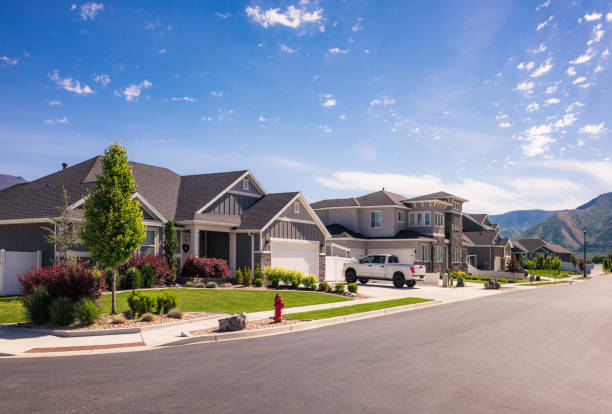
A beautiful, modern house, much nicer than my first home when I joined the ranks of home ownership in 2018
My first house wasn’t quite as nice as this one.

The Basics: Mortgages Rates and Loan Calculators

A mortgage calculator used to estimate monthly payments based on home price, loan interest rate, and other factors
A good mortgage calculator estimates your mortgage payment by using the home’s price, loan interest rate, loan term, estimated credit score, and down payment.

When most people think about buying a home, they start with the monthly payment to the bank often the largest outgoing expense.  A good mortgage calculator estimates your mortgage payment by using the homes price, loan interest rate, loan term, estimated credit score, and down payment to calculate an estimated monthly payment.  They will often help provide an estimate of monthly taxes and private mortgage insurance (PMI) as well. You can find an example of a mortgage calculator here.  Another great, but slightly more technical calculator is the Zions Bank calculator.  It provides estimated amortization and allows you to modify the terms lengths and customize the calculator. I prefer the Zion’s calculator because it gives you a solid report that provides all the details. To learn more about which mortgage provider is right for you check out this article.

Mortgage Payment Calculation Example:

Buying a home in Utah is expensive.  Per Zillow the average Utah home value is hovering around $522k.  https://www.zillow.com/home-values/55/ut/ .  Buying this home with a 20% down payment means the mortgage amount would be ~$417k with a $104k down payment. Property taxes in Utah hover around 0.64% or for our home about $3,300 yearly.  Insurance in Utah averages $1140 per year according to a NerdWallet analysis. Plugging these values into our mortgage calculator we get an estimated payment of $3,285.72
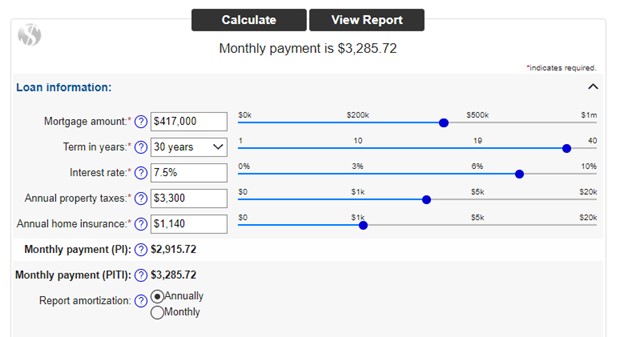
Screenshot of a mortgage calculation using the Zions Bank Mortgage Calculator
Screenshot from the Zions Bank Mortgage Calculator. Showing the Example Calculations for the average Utah Mortgage.

A lot of people stop here and assume this is the total cost of owning a home.  However, in reality this is just the beginning. 

Beyond the Basics: Understanding the Additional Costs of Homeownership in Utah

While the mortgage payment itself is significant other costs can add up quickly as well.  Here are some of key additional expenses you should consider.

Property Taxes:

These taxes are based on the assessed value of your home and can vary widely depending on the location.  Obviously, differences in tax rates between counties and cities can have a considerable impact on the overall tax rate.  Local government websites typically provide information on the property tax rates for your area.  One thing to remember is that assessed tax values do not always match the price you’re paying.

Homeowners Insurance:

Homeowners insurance is a must-have to protect your investment.  The cost of insurance can vary depending on the location, value of the home, and level of coverage you choose.  Standard policies typically protect against fire, theft, and some natural disasters.  Factors that a lot of people don’t consider are distances from fire hydrants and fire stations, proximity to wooded areas, or if the property is in the flood plain.  As a result, purchasing insurance for a home that is in a wooded area next to a river can be significantly more expensive then buying insurance for a comparably priced home in the suburbs.

Homeowners insurance coverage includes protection against fire, theft, and natural disasters

Private Mortgage Insurance (PMI):

If your down payment is less then 20% of your home purchase price, you will likely need to pay for PMI. This insurance protects the lender in case you fail to pay the loan.  The cost of PMI can range from 0.3% to 1.5% of the original loan amount annually and highly depends on the credit score and size of the down payment.  Fortunately PMI can often be removed as a requirement early if the homes value increases.  Following up with your mortgage provider or lender after a year or two can save thousands of dollars if the PMI requirements are dropped.

Homeowners Association (HOA) Fees:

Purchasing a home in a community with a HOA can be a blessing or a curse.  These fees typically cover the cost of maintaining common areas and amenities, such as swimming pools, club houses, gyms, parks, and landscaping. These fees vary widely by the type of community.  Always do your due diligence and ensure that these types of fees are included in your home budget. 

Repairs and Maintenance: The Hidden Costs

Owning a home means that you are responsible for all maintenance and repairs.  Unlike renting, where the landlord is responsible for ensuring the home is in tip-top shape, homeowners must budget for the routine upkeep and unexpected repairs.

Regular Maintenance:

Typically these types of repairs are not that expensive, but are ongoing.  For myself the real cost here is the tools or “toys” that I’ve acquired to do the maintenance.  Mowing the lawn has always been one of my favorite pastimes.  At my first home I bought a $300 lawn mower from Walmart and I felt like I was giving up a kidney.  This last summer I spent “a lot” more on a zero turn mower.  Things like pressure washers, impact drivers, saws, and batteries for everything can be thousands of dollars in total.  You don’t have to purchase everything all at once, but overtime you will likely find significant resources going towards these routine projects.

Major Repairs:

Once in a while the unthinkable happens and something major breaks.  For me it was my basement freezer kicking the bucket on hot day and water leaking into and ruining the flooring and wall.  It was a few thousand dollars to replace the appliances, make a few minor repairs to the walls/flooring.  Luckily we were ready for it.  I’ve always had a emergency fund set aside for these types of issues. Other common problems people face are water damage, roof repairs, foundation repairs, and plumbing/heating issues.  Insurance may be able to cover some of these costs if they exceed the deductible, but depending on your policy you may need to front the first few thousand dollars before the insurance policy can kick in.

Improvements:

When my wife and I looked at our first home we saw a lot of potential, but unfortunately we didn’t budget for it.  We discussed remodeling the kitchen and bathrooms, breaking down walls, and redoing flooring; but at our first home we never found the wiggle room to make any of that happen. We did a lot of the easy improvement, but we didn’t budget for anything major. 

When my wife and I looked at our first home we saw a lot of potential, but unfortunately we didn’t budget for it.  We discussed remodeling the kitchen and bathrooms, breaking down walls, and redoing flooring; but at our first home we never found the wiggle room to make any of that happen. We did a lot of the easy improvement, but we didn’t budget for anything major. 

The Role of a Financial Professional

Navigating the complexities of homeownership can be challenging, and consulting with a financial professional can provide valuable guidance. A Certified Financial Planner (CFP) specializes in helping clients with comprehensive financial planning.  They can assist in budgeting for homeownership, managing debt, and planning for future expenses.  Their expertise can be invaluable in ensuring you make informed decisions throughout the home buying process.

Many home buyers will look to their real estate agent for financial guidance.  It’s important to remember that real estate agents, although they are experienced in helping buy and sell homes, are not financial professionals.  Their role ends at the point of purchase and their goals and motivations may not align with your future homeownership.  This year a major court ruling pointed out an inherent conflict of interest that real estate agents face when aiding the clients.

Tips for effective Financial Planning:

To ensure that you can afford the home of your dreams and associated costs, effective financial planning is essential.  Here are some tips to help manage the process.

  • Create a detailed budget: outline your current monthly expenses.  Determine which expenses will continue to exist after you buy a home and which will go away.  Estimate the mortgage, repair, taxes, and other costs of owning a home as well as allowing for building an emergency fund and additional savings.  Compare this to your income to ensure that you can comfortably afford your home without stretching too thin.
  • Start Building an Emergency Fund:  Get some funds set aside for homeownership.  In both homes I’ve purchased we discovered some repairs needed to be made within the first six months living in the home.  You never know if the sprinklers aren’t going to work, or the furnace won’t ignite, or if shower has a leak until you’ve lived there for a couple of months. 
  • Consider Future Expenses: If you’re planning on remodeling the basement to build the ultimate man cave, you should start planning for it now.  The cost of homeownership doesn’t end when the mortgage documents are signed.  Plan now so that you can meet your future needs later. If you’re looking to start saving money CD’s could be a great place to start.
  • Review Your insurance needs: Evaluate the risks and assets and you need to protect. Ensure that what maybe a giant inconvenience doesn’t turn into a financial disaster through proper risk management.

Conclusion: Beyond The Cost

Purchasing a home is a monumental financial commitment that extends far beyond the simple calculation of mortgage rates and monthly payments.  As we’ve explored understanding a prepaying to the myriad of costs are crucial steps to ensuring that homeownership is financially sustainable and enjoyable.

Home Interest Rates in Utah: Guide to Securing the Best Rates

Navigating Home Interest Rates in Utah: Your Comprehensive Guide

When it comes to purchasing a home, understanding the nuances of home interest rates in Utah is crucial. Whether you’re a first-time homebuyer or looking to refinance, being informed about Utah mortgage interest rates can save you money and help you make the best financial decisions. In this guide, we’ll dive deep into mortgage interest rates in Utah, what influences them, and how you can secure the best rates possible.

Understanding Utah Mortgage Interest Rates

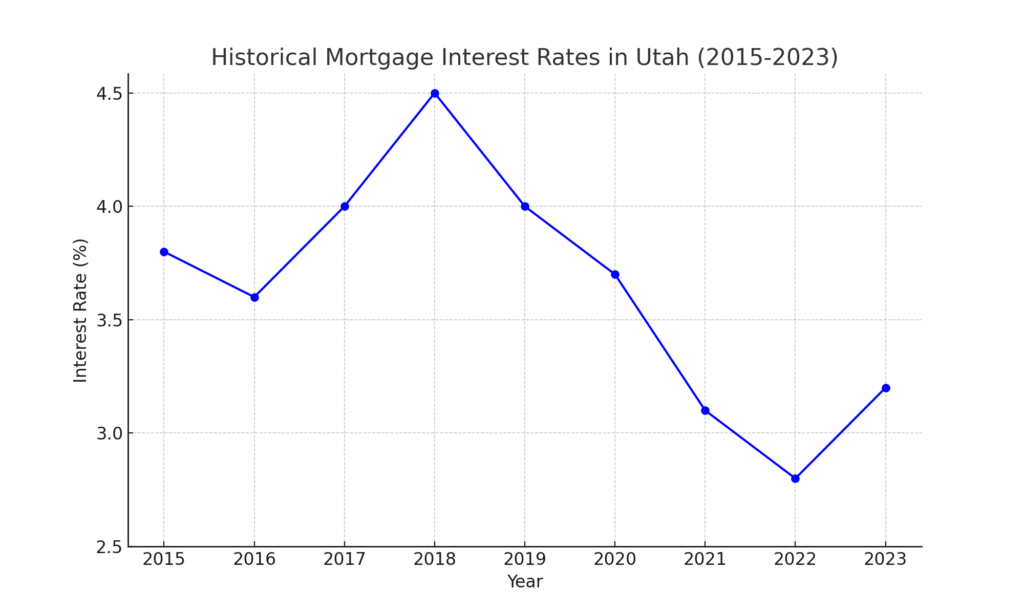
Utah mortgage interest rates are determined by various factors, including the Federal Reserve’s rate decisions, inflation, and the overall economic climate. Local factors such as Utah’s housing market trends and regional economic conditions also play a significant role. Mortgage lenders in Utah assess these factors to offer rates that reflect both national and local economic conditions.

Current Trends in Mortgage Interest Rates in Utah

As of the latest data, mortgage rates in Utah have been relatively stable, but they can fluctuate due to several reasons. Keeping an eye on these trends is essential for potential homebuyers and those looking to refinance. Currently, Utah mortgage interest rates are influenced by:

  1. Economic Indicators: Employment rates, consumer confidence, and economic growth in Utah can impact mortgage rates. A robust economy typically leads to higher rates.
  2. Federal Policies: The Federal Reserve’s policies on interest rates significantly affect mortgage rates. Any changes in the federal interest rate can lead to immediate adjustments in Utah mortgage interest rates. For more information, please visit Federal Reserve Economic Data (FRED).
  3. Inflation: Higher inflation usually leads to higher mortgage rates as lenders need to maintain their profit margins.

How to Secure the Best Mortgage Rates in Utah

Securing the best mortgage interest rates in Utah requires a strategic approach. Here are some tips to help you get the best deal:

  1. Improve Your Credit Score: Lenders offer lower rates to borrowers with higher credit scores. Check your credit report for any errors and work on improving your score by paying off debts and making timely payments. For more information, check out the Consumer Financial Protection Bureau (CFPB).
  2. Compare Offers: Don’t settle for the first offer you receive. Compare rates from multiple lenders to ensure you’re getting the best deal. Utilize online tools to compare Utah mortgage interest rates from various lenders, such as Zillow Mortgage Rates.
  3. Consider the Loan Term: Shorter loan terms often come with lower interest rates. While a 15-year mortgage might have higher monthly payments, it can save you money in the long run due to lower interest rates.
  4. Lock in Your Rate: If you find a favorable rate, consider locking it in to protect yourself from potential increases in mortgage rates in Utah. Rate locks typically last for 30 to 60 days.

The Impact of Utah Mortgage Rates on Homebuyers

Understanding mortgage interest rates in Utah is vital for homebuyers as it directly affects their monthly payments and overall affordability. Lower rates mean lower monthly payments, which can make homeownership more accessible. Conversely, higher rates can increase your payments and limit the amount you can borrow.

For example, on a $300,000 mortgage, a 1% difference in interest rate can change your monthly payment by approximately $150. Over a 30-year mortgage term, this difference can amount to significant savings or costs.

Conclusion

Staying informed about home interest rates in Utah is essential for anyone looking to buy or refinance a home. By understanding the factors that influence Utah mortgage interest rates and implementing strategies to secure the best rates, you can make more informed decisions and potentially save thousands of dollars over the life of your mortgage. Remember, the key to navigating mortgage rates in Utah successfully is to stay educated, compare offers, and act when you find a favorable rate. Happy house hunting!

Related Posts:

Frequently Asked Questions About Mortgage Rates in Utah

1. What are the current mortgage rates in Utah?

Mortgage rates can vary daily based on market conditions. For the most up-to-date information, please check our current rates page or contact one of our mortgage advisors.

2. How do mortgage rates in Utah compare to the national average?

Utah’s mortgage rates are often competitive with the national average. Factors such as local economic conditions, state regulations, and the overall housing market influence rates. To see how Utah’s rates compare, view our rate comparison tool.

3. What factors influence mortgage rates in Utah?

Several factors can influence mortgage rates, including:

  • Credit Score: Higher scores typically qualify for lower rates.
  • Loan Amount: Larger loans may have higher rates.
  • Loan Type: Fixed-rate, adjustable-rate, FHA, VA, and USDA loans all have different rates.
  • Loan Term: Shorter terms often have lower rates.
  • Economic Conditions: Inflation, employment rates, and the Federal Reserve’s policies can impact rates.

4. How can I get the best mortgage rate in Utah?

To secure the best mortgage rate:

  • Improve Your Credit Score: Pay off debts and ensure timely payments.
  • Save for a Larger Down Payment: This can lower your loan-to-value ratio.
  • Compare Lenders: Shop around for the best offers.
  • Consider Different Loan Types: Each type may offer different rates and benefits.

5. Are there specific mortgage programs available for first-time homebuyers in Utah?

Yes, Utah offers several programs for first-time homebuyers, such as:

  • Utah Housing Corporation (UHC) Programs: These include down payment assistance and mortgage credit certificates.
  • FHA Loans: Low down payment options and flexible credit requirements.
  • VA Loans: For eligible veterans and active military personnel, offering low or no down payment options.

6. How does the pre-approval process work for mortgages in Utah?

Getting pre-approved involves a lender evaluating your financial situation to determine how much you can borrow. This process includes:

  • Credit Check: Assessing your credit score and history.
  • Income Verification: Reviewing pay stubs, tax returns, and employment status.
  • Debt-to-Income Ratio: Ensuring your debts are manageable relative to your income.

7. What are the benefits of getting pre-approved for a mortgage in Utah?

Pre-approval offers several benefits:

  • Stronger Offers: Shows sellers you are a serious buyer.
  • Budgeting: Helps you understand how much you can afford.
  • Faster Closing: Streamlines the underwriting process once you make an offer.

8. What is the difference between a fixed-rate and an adjustable-rate mortgage (ARM) in Utah?

  • Fixed-Rate Mortgage: The interest rate remains the same throughout the loan term, providing predictable monthly payments.
  • Adjustable-Rate Mortgage (ARM): The interest rate may change periodically, usually starting with a lower rate than fixed-rate loans but potentially increasing over time.

9. Can I refinance my mortgage in Utah to take advantage of lower rates?

Yes, refinancing your mortgage can be a great way to take advantage of lower rates. It involves replacing your current mortgage with a new one, often to:

  • Lower Monthly Payments: By securing a lower interest rate.
  • Shorten Loan Term: Pay off your mortgage faster.
  • Access Home Equity: Through cash-out refinancing.

10. What are the closing costs associated with getting a mortgage in Utah?

Closing costs can vary but typically include:

  • Origination Fees: Charged by the lender for processing the loan.
  • Appraisal Fees: For assessing the property’s value.
  • Title Insurance: Protects against potential title issues.
  • Taxes and Recording Fees: Local government charges for recording the mortgage.

For more detailed information and personalized advice, please contact us or visit our mortgage resources page.

Is Now a Good Time to Buy a Home in Utah?

Understanding Utah’s Housing Market

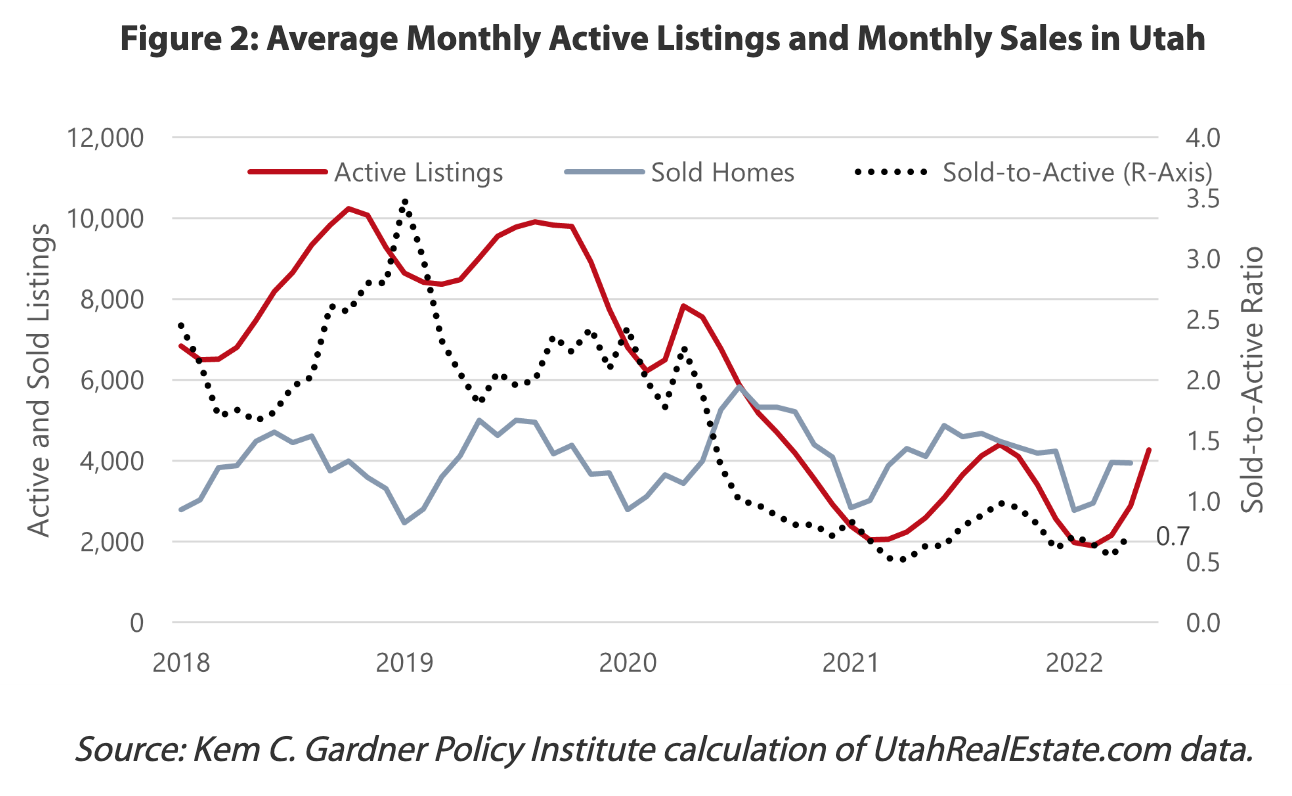
If you are wanting to buy a home in Utah then first, you need a need to understand what the housing market in Utah has looked like and the current trend. The housing market in Utah has been on a consistent growth trend for almost 11 years. However, there has been a recent shift in the market. Median home prices in Utah have slightly decreased in the past few months, following a long period of steady increases. It’s important to understand that the housing market is dynamic and can fluctuate. While there has been a slight decline in prices recently, this is a new trend, and it is crucial to stay informed about market conditions. MortgageRateUtah.com provides the latest market insights and resources to help Utah residents navigate the home-buying process, regardless of current market trends. We will continuously monitor market conditions and update our content to ensure you have the most up-to-date information.

Factors to Consider When Buying a Home in Utah

Advantages of Buying Now:

– Building Equity & Potential Appreciation: Over time, owning a home helps you build equity. With Utah’s history of rising property values can increase your net worth.

– Favorable Mortgage Rates: Current rates are lower than historical averages! Tis makes it possible to lock in an affordable monthly payment.

– Locking in Stability: A fixed-rate mortgage provides stability and predictability for your future budget with the potential for future rate increases.

– Utah’s High Quality of Life: Utah offers a desirable lifestyle with access to outdoor activities, excellent schools, and a family-friendly environment, contributing to stable property values.

– Own Your Dream Home: MortgageRateUtah.com can help guide you through the buying process, making your dream of owning a home a reality.

Factors for Potential Buyers:

Market Conditions: Although the Utah housing market has been growing steadily, there’s been a recent slight decline in median home prices, this might affect affordability and competition.

Financial Readiness: Understand your financial situation. Make sure have enough for a down payment and emergency saving. Also make sure your monthly mortgage payment fits within your budget.

Long-Term Goals: Homeownership is a long-term commitment, so consider your future plans and stay updated with the market trends.

Inventory Levels: Be prepared to act quick in a competitive market, the current inventory levels can impact your choices and potentially lead to bidding wars.

Pre-Qualification: Getting pre-qualified for a mortgage clarifies your borrowing power and bolsters your offer when making bids.

How Mortgagerateutah.com Can Help You When Buying Your Next Home:

Mortgagerateutah.com offers:

  •  Free mortgage calculators to estimate monthly payments and affordability accurately
  • Personalized pre-qualification tools to help understand your borrowing power
  • Educational resources on your home buying process and financial planning
  • Expert insights and market analysis from local Utah real estate professionals

MortgageRateUtah.com provides various free tools and resources to help users make informed decisions throughout the home-buying process and ensure that users have the information they need to navigate the housing market confidently to help buy a home in Utah.

Utah Housing Market Forecast for 2025

Buying a home in Utah for first-time home buyers

Utah Housing Market in 2023, 2024

  1. How much do houses in Utah cost?

The median home sales price in May 2024 has increased in the past 3 months to $545,900. That’s up 3.1% and $16,300 higher than May 2023 of last year. That is higher than the national median home sales price of $439,716.

  1. How many houses are available in Utah?

The real estate market in Utah had 9,935 homes for sale in May 2024 and is up from 9004 homes for sale the month prior and up from 8,286 homes in May 2023 which is 19.9% up.

  1. How many houses are sold in Utah?

There were 3468 homes sold in May 2024, trending up from 3116 homes sold a year ago. This is up 352 homes and 11.3% since May 2023.

  1. How long does it takes to sell a house in Utah?

Homes in Utah are staying on the market for 35 days. That’s 4 days slower than the median in May 2023, which is 12.9%. This shows that the market is less competitive today.

Utah Housing Market in 2025

  1. Impact of Mortgage Rates

Our forecast for existing home sales through 2025 has been modestly revised downward due to expectations of higher mortgage rates. Rates are expected to remain close to 7% through the end of the year before potentially trending downward in 2025.

  1. Yearly Comparisons

In 2023, the growth rate was 6.6%, and for 2024, we forecast a 4.8% increase. By 2025, the growth rate will dip to 1.5%, well below the long-run average of 3-5% annual increases.

  1. Comparing January and May Forecasts

In January, a lot of real estate professionals predicted a 3.2% increase in home prices for 2024. By May, this forecast was revised to 4.8%. For 2025, the January forecast was a 3% increase, which was later adjusted to 1.5% in May.

  1. Historical Context

The average number of existing home sales per year since 1989 is just over 5 million. The 2025 forecast of 4.5 million is about 500,000 less than this historical norm.

How to Find Your Ideal Utah Mortgage Bank

How to Find Your Ideal Utah Mortgage Bank

Purchasing a home is an accomplishment that everyone hopes to look forward to in their life. Ensuring that you secure the right mortgage for you is crucial to be comfortable financially while enjoying your new home. Trying to sort and calculate through the numerous mortgage banks in Utah can be a confusing and intimidating experience. However, if you approach it by analyzing your options and informing yourself the best you can, you will hopefully be able to make a decision that benefits you and your home. 

Assess Your Financial Situation 

When deciding which mortgage bank you should choose, you should first assess your own financial situation. Take time to understand your credit score and how that will affect the interest rate and terms you will be offered by different Utah banks. Double check your credit score history for any mistakes that could have been made. After doing so, work to calculate your debt-to-income ratio. This will give you a good idea of how much you can afford to borrow. For reference, many banks prefer a debt-income ratio of 43% or lower. 

Research Mortgage Types: what makes the most sense for you? 

Once you analyze your financial situation, it is important to educate yourself on the different mortgage types available and which one will work best for you. Most of these mortgages will have both advantages and disadvantages which is why it is needed to weigh all your options before coming to a decision. Here is a brief overview of the most common types of mortgages that you may encounter.  

  • Fixed-Rate Mortgages: You can expect these loans to have a consistent interest rate throughout the term. This is often preferred as it provides stability in monthly payments. 
  • Adjustable-Rate Mortgages (ARMs): These loans normally start with a lower fixed rate for the first couple of years. Afterwards, you will see the rate adjusted based on the market’s conditions. 
  • FHA Loans: This type of loan is provided by The Federal Housing Administration. These loans are usually preferred for first-time homebuyers that have a lower credit score. 
  • VA Loans: These loans are available to veterans and active military members. They offer loans at a competitive rate and require no down payment. 
  • Jumbo Loans: This is the loan that you would want for a property that exceeds the conforming loan limit. Jumbo loans are a great option for people who need them, but along with the larger lump sum of money comes higher interest rates and stricter requirements. 

Compare Mortgage Rates and Terms 

Having a reasonable interest rate is a vital detail to ensure that you will be comfortable with the overall cost of your mortgage. To find the best rate it is important that you compare the offers and terms from multiple institutions. Reach out to banks for a personalized mortgage quote and compare the Annual Percentage Rate (includes the interest rate and additional fees) as that will give you the best overall view of the loan. After analyzing the interest rates, reading and evaluating the loans terms and conditions is just as important. Consider factors such as: 

  • Loan Fees: This can include origination fees, closing costs, and other charges that can unexpectedly add up. Ensure you understand all costs associated with the bank. 
  • Prepayment Penalties: Some banks will have loans penalties for paying off your mortgage early. This is something you want to make yourself aware of, especially if you plan to sell or refinance before the end of the loan. Try to avoid these penalties if possible. 
  • Flexibility: When a bank offers flexibility in payment scheduling and rate locks it could be end of being very helpful in the future. It is worth checking out each bank’s options.  

Do your research on who you are trusting your money with 

After combing through the rates and terms of each bank, it is important to ensure that the institution you are going through will be reliable and safe with your money. Reading through other people’s reviews from their personal experiences is a great way to understand more about the mortgage bank’s reputation and how your experience with them will likely go. Look into banks with a strong reputation for customer satisfaction as you will more likely have a smooth experience with their institution. 

Utilize Utah’s financial resources 

Once you have completed your research into your own financial capability and into the banks that you are considering it is always a good idea to get a professional opinion as well. Utah has many different resources that can help guide homebuyers. For first-time homebuyers, The Utah Housing Corporation offers programs that assist with down payments and finding competitive mortgage rates. Local credit unions and banks also offer services tailored to serve Utah homebuyers.

How to Find Your Ideal Utah Mortgage Bank  

  • For more information on The Utah Housing Corporation click here 
  • For more information on banks and credit unions in Utah click here 
  • To see our recommendations for Utah mortgage banks click here 

The 5 Best Mortgage Banks and Brokers in Utah for Local Homebuyers

Finding the right mortgage lender is crucial if you’re looking to buy a home in Utah. With a booming real estate market and various options available, knowing where to start can be challenging. To help you navigate this important decision, here are our top five mortgage banks and brokers in Utah known for their excellent service, competitive mortgage rates, and local expertise.

1. SecurityNational Mortgage Company

SecurityNational Mortgage Company, headquartered in Salt Lake City, Utah, stands out for its comprehensive and innovative mortgage solutions. Founded in 1993, SecurityNational offers a wide range of loans designed to meet the diverse needs of Utah homeowners. Their product offerings include conventional, FHA, VA, USDA, and jumbo loans. Additionally, they provide specialized programs for first-time homebuyers, offering lower down payments and flexible credit requirements to make homeownership more accessible.

Note: Some customers have reported that the processing time can be longer than expected, which could be an issue if you need a quick closing.

Visit their website: https://snmc.com

2. Intercap Lending

Intercap Lending, based in Orem, Utah, is another leading mortgage company in Utah. Known for their streamlined processes and quick turnaround times, Intercap Lending makes the mortgage process straightforward and stress-free. They offer competitive mortgage rates and a variety of loan products, including fixed-rate and adjustable-rate mortgages, FHA and VA loans, and refinancing options. Intercap Lending’s commitment to customer satisfaction and their deep knowledge of the Utah housing market make them a top choice for many homebuyers.

Note: While they offer quick turnaround times, some clients have mentioned that communication can be inconsistent, leading to potential misunderstandings during the process.

Visit their website: https://www.intercaplending.com

3. Altius Mortgage Group

Altius Mortgage Group, located in South Jordan, Utah, is a highly regarded mortgage broker that offers a personalized approach to home financing. As a broker, Altius works with multiple banks to find the best loan options for their clients. This flexibility allows them to offer highly competitive mortgage interest rates and a wide range of loan products. 

Note: As a broker, their rates and terms are subject to the lenders they partner with, which can sometimes result in less control over the final loan conditions.

Visit their website: https://altiusmortgage.com

4. Guild Mortgage

Guild Mortgage, with several branches throughout Utah, has been providing home financing solutions since 1960. Known for their strong commitment to customer service, Guild Mortgage offers a variety of loan products tailored to meet the needs of Utah homeowners. They provide conventional loans, FHA and VA loans, jumbo loans, and refinancing options. Guild Mortgage’s knowledgeable loan officers are well-versed in the local market conditions and work closely with clients to find the best mortgage solutions to fit their needs.

Note: Some borrowers have experienced higher closing costs compared to other lenders, which could affect your overall budget.

Visit their website: https://www.guildmortgage.com

5. Citywide Home Loans

Citywide Home Loans, headquartered in Sandy, Utah, is a full-service mortgage lender with a strong presence in the state. They, like their competitors, offer a comprehensive range of loan products, including conventional loans, FHA and VA loans, USDA loans, and jumbo loans. Citywide Home Loans is highly regarded by many Utah homeowners for their exceptional customer service and competitive mortgage rates

Note: Despite their excellent service, some customers have noted that their application process can be more documentation-heavy and rigorous than other lenders.

Visit their website: https://www.citywidehm.com

Choosing the Right Lender

When selecting a mortgage lender, it’s important to consider factors such as mortgage interest rates, loan options, customer service, and the lender’s knowledge of the local market. These five mortgage companies in Utah have established themselves as leaders in the industry, offering excellent service and competitive mortgage rates to help you achieve your homeownership dreams. Be sure to contact multiple lenders, compare their offerings, and choose the one that best meets your needs and financial situation.

By selecting a reputable mortgage lender, you can navigate the home-buying process with confidence, knowing you have a trusted partner to help you every step of the way. Whether you’re buying your first home, refinancing, or investing in property, these top Utah mortgage banks and brokers are ready to assist you in securing the best possible mortgage for your needs.

Looking to purchase your first home and need advice? Click here.

Need a mortgage rate calculator? Visit our Mortgage Rate Calculator blog here.

Your User-Friendly Guide to Buying a Home in Utah

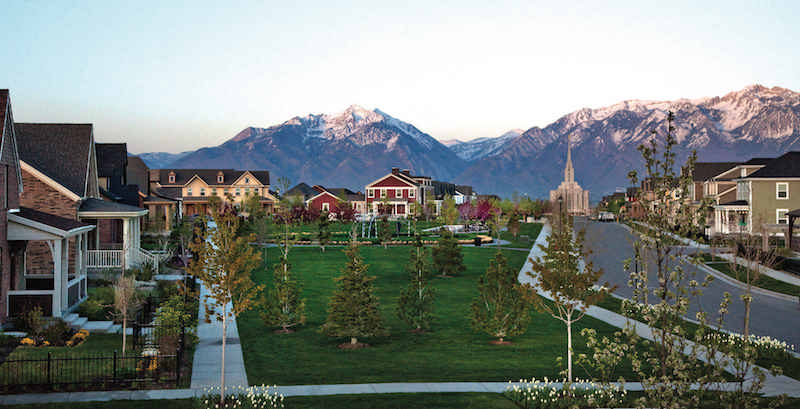
Walkable homes in Daybreak Utah

Great! You’ve decided to set roots in Utah, the land of stunning landscapes and vibrant communities. But before you picture yourself sipping tea on a cozy porch overlooking the Wasatch Range, there’s the hurdle of navigating the home-buying journey. This guide will provide a one-stop shop for buying a home in Utah real estate market.

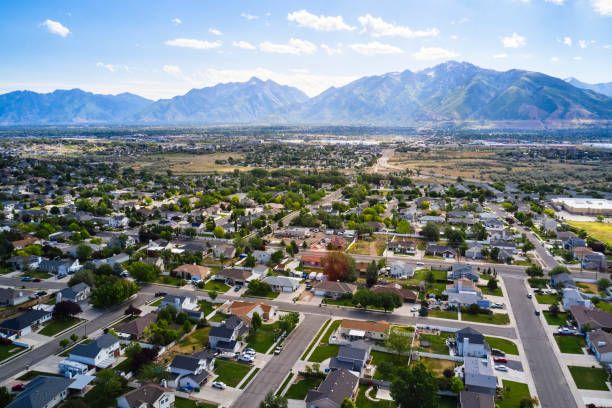
Aerial view suburban Utah
An aerial view of a suburban Utah community, USA.
Buying a home in Utah mountains
Buy a home nestled in the Utah mountains.

Why Buy a Home in Utah?

Utah is known for its stunning landscapes, strong economy, and family-friendly communities. Here’s why buying a home in Utah could be one of the best decisions you make:

  • Booming Economy: Utah boasts a robust job market, particularly in tech and healthcare, which makes it a prime location for career growth and stability.
  • Outdoor Lifestyle: From skiing in Park City to hiking in Zion National Park, outdoor enthusiasts will find plenty to love. Utah’s natural beauty offers numerous recreational opportunities year-round.
  • Family-Friendly: With excellent schools and safe neighborhoods, Utah is a great place to raise a family. Communities are designed to be welcoming and supportive, making it an ideal place for young families.

Understanding the Utah Real Estate Market

The Utah real estate market is unique and has its own set of trends and characteristics:

  • Growth Areas: Salt Lake City, Provo, and St. George are some of the fastest-growing areas, attracting new residents due to their vibrant economies and desirable living conditions.
  • Price Trends: While prices have been rising, there are still affordable options, particularly in emerging neighborhoods across the valley. This offers opportunities for both first-time homebuyers and those looking to invest in real estate.
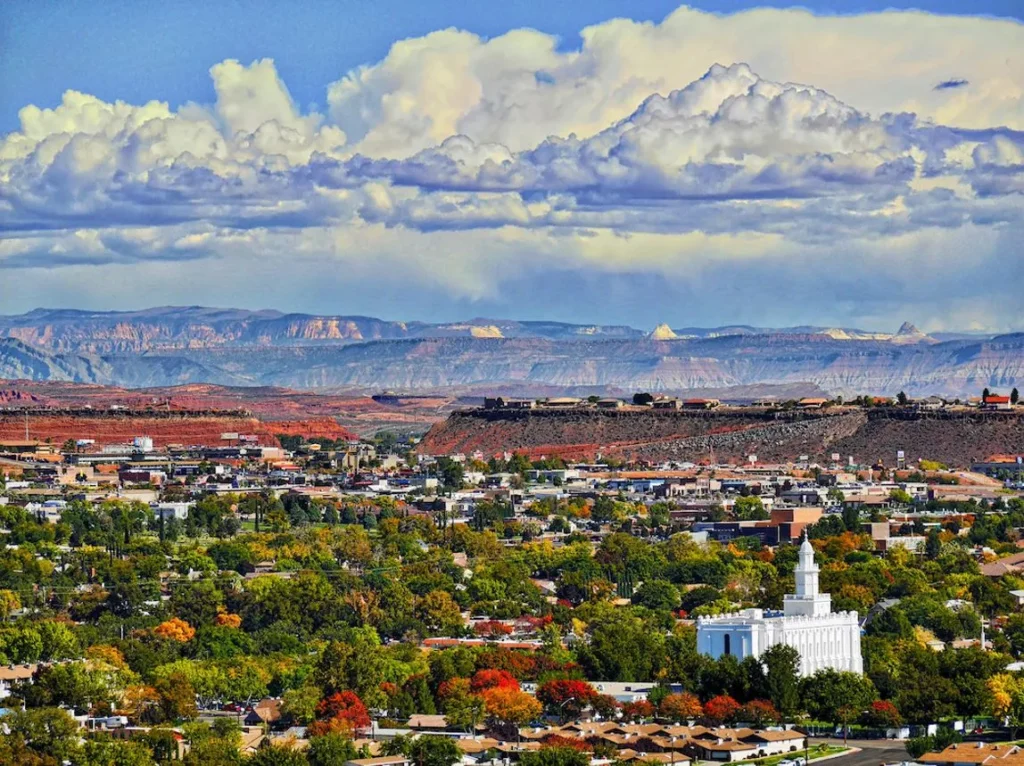
Buy a home in St. George, Utah
Overlooking shot of St. George, Utah. (Courtesy of Livability)

Utah Home Buying Statistics

Understanding the current market statistics can help you make informed decisions:

Statistics about Utah Home Buying 
Average sale price of homes in Utah (June 2024) [i]$545,900
Home price increase from June 2023 [ii]2.6%
Minimum down payment in Utah (3%)*$16,377
20% down payment in Utah*$109,180
Average credit score in Utah [iii]731
Average age for first-time Utah homebuyer 36
*based on average sales price

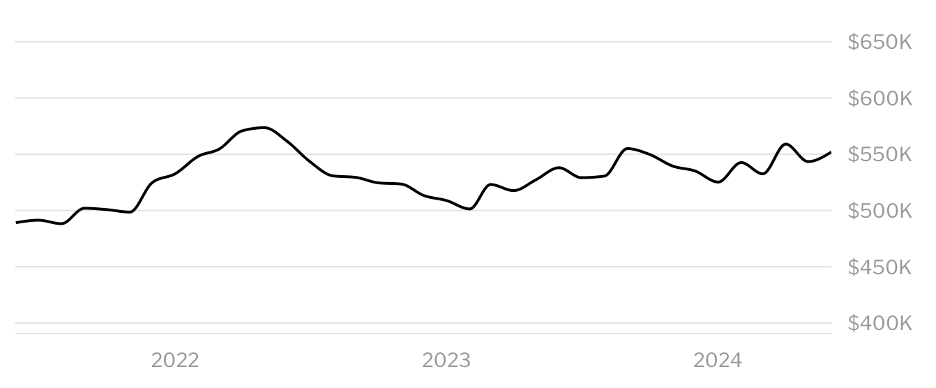
Median Home Sale Prices in Utah

Source: Redfin.com (https://www.redfin.com/state/Utah/housing-market)

Important Financial Information

  • The Economy: Utah boasts a healthy economy, but buying a home requires sound financial planning. In June 2024, 26.6% of homes in Utah sold above list price[iv], which is something to consider when putting in an offer for a home. On the other hand, property tax rates in Utah are low. Utah has the sixth lowest property tax rate in the country at 0.55%.[v]
  • Getting a Mortgage: Whether you have 3% to put down on a home or 20%, finding the right lender is critical. We’ll explore top Utah lenders offering competitive rates and programs tailored to first-time homebuyers or specific needs.
  • Finding a Real Estate Agent: A solid real estate agent who will advocate for you in your Utah home buying journey is critical. We’ll discuss the benefits of working with an agent, along with tips for finding the perfect match who understands your needs and the local market.

Once you understand some of the important financial information, you can look at some important considerations for first-time homebuyers to make sure you’re well-prepared.

Tips for First-Time Homebuyers in Utah

  • Consider State Programs: Utah offers various first-time homebuyer programs and grants. Visit the Utah Housing Corporation for more information.
  • Budget for Closing Costs: In addition to your down payment, budget for closing costs, which can include fees for inspections, appraisals, and title insurance.
  • Research Neighborhoods: Take the time to research and visit different neighborhoods to find the one that best suits your lifestyle and needs.

Make sure to look into down payment assistance and loan programs that you may qualify for!

Utah Down Payment Assistance and Loan Programs

ProgramsFirstHomeFHA or VA MortgageConventional HFA Advantage Loan
Qualifications– First time homebuyer
– 660 or higher credit score
– Previously owned a home or first-time homebuyer
– 620 or higher credit score
– 700 or higher credit score  
Annual Income LimitsYes, refer to the Utah Housing Website (https://utahhousingcorp.org/lenders/limits/) for most current annual income limits. 
Maximum Sales PriceYes, refer to the Utah Housing Website (https://utahhousingcorp.org/lenders/limits/) for maximum sales price NoNo
More InformationThis program typically has lower purchase price and income limits and lower interest rates. Homebuyers can purchase residence with up to 2 unitsFinancing option for this loan might have a higher interest rate but a lower mortgage insurance costs, which might result in a lower monthly payment. 
Source: Down Payment Assistance and Loan Programs. (2023). In Utah Housing Corporation. Utah Housing Corporation. Retrieved July 18, 2024, from https://utahhousingcorp.org/pdf/Form211.pdf

Now that you have all of the information, you are ready for the next steps.

Next Steps to Buying Your Utah Home!

Buying a home in Utah
Take the next steps to buying your home!
  1. Get Pre-Approved for a Mortgage
    • What are today’s mortgage rates in Utah? Check them out here.
      • Remember: interest rates will vary by lender and by borrower, depending on factors like credit score, loan program, down payment, etc. Compare quotes from at least 3 different lenders to make sure you’re getting the lowest rate.
      • Ask about down payment and closing cost assistance.
    • Start by getting pre-approved to understand how much you can afford. Check out top producing loan officers vetted through Utah Housing Corporation, as well as local lenders like Mountain America, Zions Bank, and First Utah Bank.
  2. Find a Real Estate Agent
    • Partner with a knowledgeable real estate agent who knows the Utah market. Consider agents from reputable firms like Coldwell Banker and Re/Max.
    • Make sure they’re licensed, read reviews, ask questions about how they will help you, and trust your instincts to find the right person to help you buy your home. 
  3. Start Your Home Search
  4. Make an Offer
    • Work with your agent to make a competitive offer. Be prepared for negotiations, especially in hot markets like Salt Lake City.
  5. Home Inspection and Appraisal
    • These are critical to ensure your potential new home is in good condition and valued appropriately.
    • How to prepare as a buyer:
      • Accompany the inspector on the inspection
      • Take notes and photos
      • Carefully review the inspection report to understand the condition
      • Negotiate repairs and improvements. Use the inspection report as a negotiation tool
  6. Close the Deal
    • Once everything is in order, close the deal and get ready to move into your new Utah home!

Resources for Utah Homebuyers

Additional tips to consider:

Sources:

[i] All-transactions house price index for Utah. Federal Reserve Economic Data (FRED). (2024, May 28). https://fred.stlouisfed.org/series/UTSTHPI

[ii] Redfin. (2024, June). House Prices & Trends- Utah. Redfin. https://www.redfin.com/state/Utah/housing-market

[iii] GOBankingRates. (n.d.). The average credit score in each state — see where your state ranks. Nasdaq. https://www.nasdaq.com/articles/the-average-credit-score-in-each-state-see-where-your-state-ranks#

[iv] Redfin. (2024, June). House Prices & Trends- Utah. Redfin. https://www.redfin.com/state/Utah/housing-market

[v] Pitts, E. (2024, February 22). Some states have more affordable property taxes than others. Where does Utah rank? Deseret News. https://www.deseret.com/utah/2024/2/20/24078329/state-ranking-property-tax-value-utah-housing-market/

How to Start the Process of Selling Your Home

Before you begin to sell your home, it’s important to understand that there are a number of factors you can control to make the home-selling process easier. There are many factors to consider when you are thinking about selling your home. The housing market has undergone some major shifts in the last year so it’s important to consider your options and use the tips we have listed below to aid you in your home-selling process. We go over setting a timeline, home inspections, advising with an agent, and finally listing your home.

Set A Timeline For Selling Your Home

Before beginning the process of selling your home, you need to consider when you want it to be sold and how long it may typically take. There are a variety of websites that offer advice on the best times to sell your home but oftentimes it can be contradictory. Real estate market agencies and companies such as Zillow, Utah Real Estate, and UpNest, offer advice based on the analysis of the home sales around Utah.

Realtor.com offers a home-selling timeline taking 10 steps:

1. Make renovations/repairs

2. Find a listing agent

3. Figure out how much your house is worth

4. Declutter/stage your space

5. Put together your listing with a description, photos, and video

6. Hold home showings/ open houses

7. Wait for an offer (or offers) to roll in and negotiate the best deal

8. Accept an offer, and wait for the home inspection/appraisal

9. Close the deal

10. Move out

While this may not be an exhaustive list- it gives opportunity to consider the factors that play a role in selling your home.

Home Inspections

When it comes to getting your home ready to sell/list on the market there are a few things you want to make sure you have done first, as this is a key part in winner over your buyers.

  1. Start with getting a deep clean of your house.
  2. Get an inspector to check the electrical, plumbing, and physical integrity of the home.
  3. Consider contracting for repairs and replacements that may need to be done by professionals after inspection.
  4. Get an handyman to to check all the locks, squeaky doors, running toilets, and other small fixes that can turn a buyer off.
  5. Repaint the walls if necessary, make sure the home is looking new and nice so buyers are attracted to it.
  6. Stage your home with furniture looking nice, nothing lying around and outside landscaped, bushes, grass, trees, etc…
  7. Finally, get a good photographer to take nice professional pictures of the home to make buyers want to come out and schedule a viewing

This is the make or break for selling a home. No one want’s to buy a home that looks like it has not been taken care of properly. First impressions are everything and you want your buyer to have love at first sight when viewing your home.

Advising with an Agent

Many people either choose the route of selling on their own or going through an agent. Before getting ready to list your home on the market, consider advising with an agent to make all the preparations and gather all the details you need. Advising with an agent and having them assist in the home selling process can position your home on the market for the best possible sale.

It’s important to research agents’ profiles and consider their time in the industry, sales, and how they are marketing their listings-note the quality of their photo listings and where they post their listings is an important factor to consider as well.

Advising with an agent who understands the current market is a key factor in having a smooth and successful sale.

Listing Your Home

When it comes to listing your home on the market one of the best practices is to take professional photos and clean the home to make it appealing. You might want to have the home without furniture (staging the home), or you might want to give the home buyers a picture of what the home looks like with everything in it. Either way, you want the home to be appealing to potential home buyers.

Another great thing that helps when listing your home for sale is to focus on an online appeal. Experts say that nearly all homebuyers look at online listings; meaning that your home’s first showing is online (Bankrate, 2023). So, taking good photos, adding a detailed description, and adding an open/time-slotted showing can help you sell your home quickly.

Summary

Selling your home can be a hassle, but doing all the topics mentioned above can help one sell their home in no time. We have covered most of what it takes to sell a home in order, starting with planning a timeline for the whole process of selling your home. We have also gone over what it takes to make the home look appealing. Whether that is renovating it, decorating it, staging it, or taking professional photos so that it catches one’s attention. However, if you are a first-time home buyer, selling a home is much different than buying a home. If you are interested in buying a home, check out our site on how to buy a home.