

Adjustable Rate Mortgage Loan: What You Need to Know

A young couple sitting at a kitchen table reviewing adjustable rate mortgage loan options during the early stages of buying their first home.

Adjustable Rate Mortgage Loan: A Comprehensive Guide for Homebuyers

The journey to homeownership comes with many big decisions, and one of the most important is choosing the right mortgage. While fixed-rate options remain popular for their consistency, the adjustable-rate mortgage loan (ARM) is gaining attention, especially in today’s changing interest rate environment. For many home buyers, an ARM offers a compelling, cost-effective alternative, but understanding how it works is essential to making a sound decision.

Understanding Your Adjustable Rate Mortgage Loan

At its core, an adjustable-rate mortgage loan is a home loan with an interest rate that changes over time, usually after an initial fixed-rate period. This means monthly payments can go up or down depending on market trends. Staying informed about adjustable-rate mortgage rates today is essential for buyers exploring this option.

Unlike a fixed-rate mortgage, where the interest rate stays the same, ARMs typically start with a lower rate, making homeownership more affordable in the early years. This can be especially beneficial if you plan to sell or refinance a house before the rate adjusts. For example, if a job relocation or life change is on the horizon, or if you believe you’ll qualify for better terms down the road, an ARM could lead to substantial savings on interest in the early years. Still, it’s important to weigh the potential for higher payments later in the loan term.

A smiling family standing in front of their newly purchased home, representing successful homeownership after getting approved for an adjustable rate mortgage loan.
A family poses proudly outside their new home after mortgage loan approval.

Leveraging the Adjustable Rate Mortgage Calculator and Payment Strategies

Understanding how an ARM affects your finances is crucial, which is where an adjustable rate mortgage calculator becomes incredibly helpful. These calculators model various rate scenarios and help estimate future monthly payments, giving you a clearer picture of what to expect and allowing you to plan ahead.

To reduce the overall cost of your mortgage, use an additional mortgage payment calculator to explore how even small extra payments can lower your principal faster. Pairing this with strategies like accelerated weekly mortgage payments or using an accelerated mortgage payoff calculator can make a noticeable difference. Over time, consistent proactive payments can significantly cut down the length of your loan and reduce total interest, whether you have a fixed-rate or adjustable loan.

If market conditions shift or your personal financial situation changes, you might consider an adjustable-rate mortgage refinance. This option replaces your current ARM with a new loan, often a fixed-rate one, to lock in predictable payments or take advantage of lower interest rates. It’s a strategic move that many homeowners use to gain long-term stability and peace of mind. For more on this approach, check out the US News’ article on refinancing, which offers helpful insights.

Navigating Mortgage Approval and Diverse Loan Options

Beyond the type of loan, securing mortgage approval is a multi-step process. If you’re wondering about the best way to get approved for a home loan, start by maintaining a solid credit history, stable income, and a low debt-to-income ratio. Checking offers from academy mortgage rates or comparing what a popular bank mortgage might provide gives you a sense of where you stand in the market. It’s also worth looking into what a good mortgage company can offer and reviewing rates from a top 10 bank for a home loan to ensure you’re getting the most competitive deal.

For buyers facing credit challenges, working with an adverse mortgage lender or an adverse credit mortgage broker could open doors. These specialists help individuals with poor credit histories explore mortgage opportunities, such as an affordable loan solution mortgage, which offers more flexibility for those in unique financial situations. Older homeowners may also benefit from specific options like those provided by AARP reverse mortgage lenders, though it’s important to note that reverse mortgages differ significantly from standard purchase loans and are tailored to senior borrowers.

From Pre-Approval to Closing: What to Expect Next

Homebuyer and Loan Officer Discussing Mortgage Plan
Navigate the mortgage process with the help of a loan officer.

After receiving pre-approval, the path to closing begins. The steps to buying a house after pre-approval include selecting a home, submitting an offer, and moving through the underwriting process. After getting pre-approved for a mortgage, it’s essential to maintain financial discipline. Many wonder about what’s allowed after pre approval mortgage status or whether applying for credit after mortgage offer is okay. Lenders typically recommend avoiding new credit lines during this period, even if you’re thinking, “after closing on a house can I apply for credit?” The answer is, it’s safest to wait until the deal is fully closed.

Knowing how long it takes from a mortgage application to approval can help ease anxiety; timelines vary, but clear communication with your lender will help you stay on track. Following each of the steps after pre approval with care keeps your loan moving smoothly toward closing.

In conclusion, an adjustable rate mortgage loan can be a smart, flexible option for certain homebuyers, especially those who value lower upfront costs and plan to move or refinance within a few years. But understanding the mechanics, planning for rate changes, and using the right tools like calculators and refinance strategies are key. With thoughtful research and smart planning, you can approach homeownership with confidence and clarity. For more financial guidance, visit Investopedia.

Free Mortgage Estimator: Plan Your Home Loan With Confidence

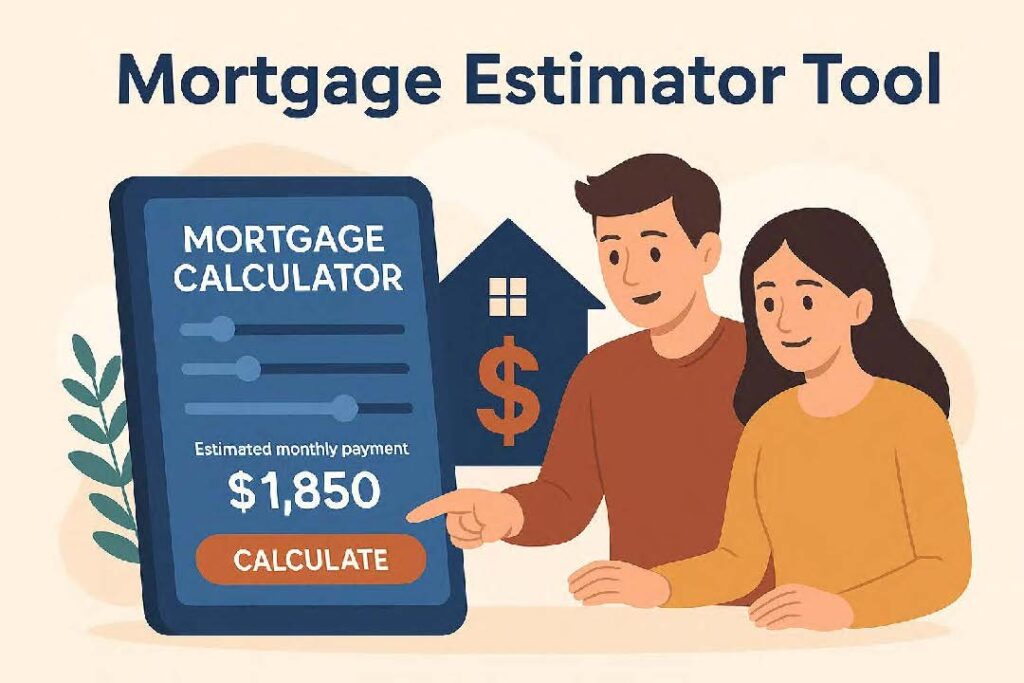
Mortgage Estimator Tool

Buying a home is one of the most important financial steps you’ll ever take, and the first thing you need is information. With the right tools—like a mortgage calculator free, mortgage estimator based on income, or mortgage estimator tool—you can confidently plan your next move in Utah’s competitive housing market. Whether you’re a first-time buyer, investor, or planning to refinance with bad credit, we’ve gathered everything you need to make smarter decisions. Use our free mortgage estimator to be up to date on Utah Home Loan tools and advice.

Mortgage Estimator Tools Every Buyer Should Use

Before you reach out to a lender, use a free mortgage estimator tool to estimate your monthly payments. Most calculators allow you to input your down payment, loan term, and interest rate. More advanced platforms like the mortgage estimator Zillow or a mortgage estimator based on income offer deeper insights based on your salary and debt ratio.

Want to go deeper? Try a how much mortgage can I afford calculator to know your exact buying power before you apply online.

Mortgage Estimator Free | Utah Home Loan Tools and Advice

First-Time Buyers: Mortgage Tips for Utah Residents

Shopping for a mortgage for first time buyers in Utah? You’re in luck. There are dozens of home loan assistance [state] programs that offer grants, lower down payments, or reduced closing costs. To find the best mortgage for new home buyers, look for fixed-rate terms, low fees, and flexible credit requirements.

Don’t forget to learn how to qualify for a mortgage first time buyer. Most programs require proof of income, job stability, and sometimes a credit score over 620.

Refinancing Your Home, Even with Bad Credit

Many Utah homeowners benefit from a refinance, whether to lower monthly payments or change loan terms. Start by comparing mortgage refinance rates and learning how to refinance my mortgage based on your goals. Even with poor credit, refinance with bad credit options exist.

The key is working with the best lenders for refinancing, especially local mortgage lender near me options or a mortgage broker in [city] who understands Utah’s market.

Understanding Home Equity Loan vs HELOC

Many Utah homeowners tap into their home’s value to cover renovations or major expenses. The most common options are a home equity loan vs heloc. A home equity loan with good credit is ideal for those who want fixed monthly payments. If you’re less creditworthy, a home equity loan with bad credit may still be possible, but rates will be higher.

Need more flexibility? A home equity loan vs line of credit comparison will help you understand whether you want a lump sum (loan) or revolving credit (HELOC).

Mortgage Estimator Free | Utah Home Loan Tools and Advice

Investment Properties and DSCR Loans

Looking beyond your primary residence? You’ll want to consider a mortgage for second home or a loan for real estate investment. If you’re investing in rental property, a dscr loan for investors may be the best option—it’s based on rental income, not your personal debt-to-income ratio.

Application Tips and Staying Informed

Apply anytime with a mortgage application online and speed up the process. Use a mortgage pre approval tool to strengthen your offer and avoid surprises during underwriting. Staying informed through mortgage news and regularly checking the best mortgage rates in [city] can save you thousands over the life of your loan.

Need help choosing the right partner? Ask local home loan providers for quotes or schedule time with a mortgage broker in [city].

Conclusion

Whether you’re applying for a mortgage for first time buyers, considering a home equity loan vs heloc, or looking for home loan assistance [state], you don’t have to do it alone. Use every tool at your disposal—from a mortgage estimator free to a mortgage application online—and compare options wisely.

Don’t forget: your financial future begins with knowledge. Bookmark this page, check back for mortgage news, and reach out to local home loan providers to get started today.

First Time Home Buyer Loan Programs and Mortgage Pre-Approval

Young parents smile as their daughter colors at the kitchen counter in their new home.

What Are First-Time Home Buyer Programs?

First-time home buyer programs help new buyers overcome challenges like high down payments and limited credit history. These first-time buyer home solutions often include down payment assistance, flexible credit requirements, and competitive mortgage rates.

In Utah, the Utah Housing Corporation offers specific 1st time home buyer programs, giving locals an affordable path to homeownership.

 Learn more about Utah Housing loans


How to Buy a Home With No Money Down

Available Loan Programs

You don’t need 20% down to buy your first home. In fact, several programs offer home loan pre-qualification with no money down:

  • VA Loans – No down payment for veterans/military.
  • USDA Loans – No down payment for qualifying rural areas.
  • FHA Loans – As low as 3.5% down and pair well with down payment assistance.

These are ideal for first home buyers who want to build equity without breaking the bank.

Check out your eligibility for USDA Loans here:  USDA Property Eligibility Map


What Is a Good Mortgage Credit Score?

A common question is: what is a good mortgage credit score?

  • FHA loans: 580+
  • Conventional loans: 620+
  • USDA/VA: Often 640+

Improving your score boosts your odds of prequalify for mortgage approval. Even if your credit isn’t perfect, first time home buyer loan programs are often flexible.


Mortgage Pre-Approval Requirements in Utah

To apply for a mortgage, you’ll need:

  • Recent pay stubs, W-2s, and tax returns
  • Bank statements
  • Employment and asset verification

This is part of the home loan pre approval process, which shows sellers you’re serious.

Don’t confuse prequalification mortgage (an estimate) with mortgage pre approval requirements (fully reviewed by a lender). Pre-approval is stronger and often necessary for your offer to be accepted.

Local mortgage lender explaining mortgage pre-approval process for first-time buyers.

Step-by-Step: How to Get a Mortgage Loan in Utah

Here’s the path to how to get a mortgage loan in Utah:

  1. Prequalify for a home loan
  2. Work with a trusted local lender
  3. Choose a program (FHA, VA, USDA, etc.)
  4. Complete the apply for home loan steps
  5. Get your offer accepted and close

Knowing how to get a mortgage gives you the power to act quickly when you find your dream home.

For a more information about Mortgages Rates, Lenders and Tools, check out this article.


Mortgage Affordability

Your mortgage home affordability depends on:

  • Credit score
  • Debt-to-income ratio
  • Income and assets
  • Loan type

If you’re asking “How much mortgage can I qualify for?” try an online mortgage calculator or speak with a lender for a customized estimate.


Apply for a Mortgage Loan: What to Expect

When you’re ready to move forward, it’s time to apply for mortgage loan options with your chosen lender.

Be ready to:

  • Verify your income
  • Share employment info
  • Choose your loan program

Some lenders allow you to apply for a home loan online in just minutes.


Best Mortgage Lenders for First Time Buyers in Utah

Looking for the best mortgage lenders for first time buyers? Look for lenders who:

  • Offer first time home buyer loans
  • Are familiar with Utah-specific grants
  • Provide fast home loan pre-qualification
  • Walk you through prequalify for mortgage steps

Working with a local lender means personalized service and faster turnaround—essential for first-time buyers in a competitive market.


Conclusion

You don’t need perfect credit or a giant down payment to buy your first home in Utah. With the right first time home owner loan programs, and support from experienced lenders, your path to homeownership is absolutely within reach.

Whether you’re ready to apply for a mortgage, prequalify for a home loan, or just want to understand your options, now is the perfect time to start.

First-time home buyers looking at a modern home with a “For Sale” sign.

Mortgages: Everything You Need to Know About Them

Mortgages: Graphic of a mortgage broker, mortgage lender, mortgage payment calculator, and money in a house.

Your Complete Guide to Rates, Lenders, and Tools

Navigating the mortgages application process can feel overwhelming, especially for first-time homebuyers. With numerous options, terms, and fluctuating mortgage rates, it’s essential to be informed before making any decisions. Whether you’re just starting to explore how to get a mortgage or ready to compare mortgage quotes, this guide will walk you through every step, using the tools and insights you need to make smart financial decisions.

Understanding Mortgages and the Application Process

The first step in home buying is understanding the mortgage application process. This process involves submitting financial documents, verifying your income, obtaining a credit report, and selecting a loan product that best suits your needs. A “mortgage broker near me” can often assist in navigating the paperwork and connecting you with potential lenders.

When comparing lenders, it’s a good idea to read mortgage lender reviews. These reviews offer insight into real customer experiences and can help you find the best mortgage lenders for first-time buyers who may need extra support and educational resources.

Tools to Help You Calculate and Compare Mortgages

Knowledge is power, and with so many tools available online, it’s easier than ever to evaluate your options. A mortgage calculator is one of the most valuable resources. This tool helps you estimate monthly payments based on principal, interest, and loan term.

There’s also the mortgage payment calculator, mortgage loan calculator, and mortgage rate calculator, each designed to give you a more detailed look at how specific rates, terms, and loan amounts will affect your monthly budget.

If you’re just beginning your home search, a mortgage estimator can give you a quick sense of your potential loan amount based on income and debt levels. These calculators are often found on lender websites and are a must-use for smart planning.

Comparing Mortgages and Their Rates

One of the most important factors when choosing a lender is the mortgage interest rate. This determines the cost of borrowing over time. Today’s rates can vary widely between lenders, so it’s important to shop around.

Check out mortgage rates today using online comparison tools or contact a “mortgage broker near me” who can compile current offers. If you’re wondering what a good deal looks like, look up the average mortgage rate as a benchmark.

Sites that offer a mortgage comparison feature allow you to view offers side by side, a great way to spot differences in closing costs, APRs, and more.

Getting Pre-Qualified and Pre-Approved for Mortgages

One way to strengthen your position as a buyer is to pre-qualify for a mortgage. This is a basic financial check that shows you’re serious and gives you a ballpark figure for your budget.

Once you’ve pre-qualified, it’s smart to get pre-approved. This required more documentation, but it puts you in a stronger position when making offers. It shows sellers that you’ve already passed a lender’s initial review.

Finding the Right Lender

Choosing a lender isn’t just about the lowest mortgage rates today; it’s about trust, support, and flexibility. Look for “mortgage companies near me” that offer personalized service, or go national if you want access to digital tools and fast underwriting.

There are many mortgage companies to choose from, so take your time researching. Don’t just go with the first bank that pre-approves you. Read mortgage lender reviews, compare quotes, and make sure you understand the terms.

The Power of Shopping Around

Rates can vary by lender and even by location. Whether you’re comparing home mortgage rates, mortgage loan rates, or looking for the best mortgage rates on the market, cast a wide net.

Online lenders often offer highly competitive rates, while local lenders may provide more hands-on service. Always request multiple mortgage quotes; even a small difference in interest rate can translate into tens of thousands of dollars over the life of the loan.

Today’s Market: What to Know

In today’s housing market, current mortgage interest rates are affected by inflation, Federal Reserve policy, and broader economic trends. Use real-time tools to track mortgage rates today, and don’t hesitate to lock in a rate if you find a favorable offer.

It’s also helpful to understand what drives the average mortgage rate nationally and regionally. This context can help you decide when to act and when to wait.

Final Thoughts: How to Get a Mortgage That Works for You

If you’re asking yourself how to get a mortgage, the answer starts with preparation. Know your credit score, gather your financial documents, and use every tool at your disposal, from the mortgage calculator to the mortgage comparison platforms, to make the most informed choice.

Whether you’re a first-time buyer or refinancing, the right combination of planning, research, and expert advice will help you secure the best possible loan. Remember: the best mortgage isn’t just the lowest rate, it’s the one that fits your financial goals and lifestyle.

By using all available tools, from the mortgage loan calculator to lender comparison websites, and educating yourself on today’s mortgage rates, you’re well on your way to homeownership success.

Everything You Need to Know About Mortgages: Your Complete Guide to Rates, Lenders, and Tools

Best Mortgage Lenders to Save Big | First-Time Buyer Guide

A step-by-step guide for first-time homebuyers on how to apply for a mortgage, explore FHA loans, use a mortgage calculator, get pre-approved, and compare lenders.

Buying your first home is a milestone, and for most people, it starts with securing the right mortgage. But with so many options out there, it can be difficult to know where to begin. In this guide, we’ll walk you through how to apply for a mortgage as a first-time home buyer, how to compare the best mortgage companies, and how to use tools like a first-time home buyer mortgage calculator to stay on track.

How to Apply for a Mortgage First-Time Home Buyer

The mortgage process can seem intimidating, but the steps are straightforward once you understand them. If you’re wondering how to apply for a mortgage first-time home buyer, it starts with evaluating your financial health—your credit score, income, debt-to-income ratio, and savings.

Once you’re ready, the next step is to find a lender and begin your fha first time home buyer loan application if you qualify. FHA loans are government-backed loans that offer lower credit score requirements and down payments, making them ideal for first-time homebuyers.

Get Pre-Approved for First-Time Home Buyer Loans

Before house hunting, it’s smart to get pre approved for first-time home buyer financing. This shows sellers you’re serious and helps you set a realistic budget. Preapproval involves submitting documentation like pay stubs, tax returns, and bank statements.

You may also choose to prequalify for home loan first-time buyer programs first. This is a softer check that gives you an estimate of what you can borrow without a hard credit pull.

Top Mortgage Lenders for First-Time Home Buyers

Not all lenders are created equal. Finding the best mortgage companies for first-time homebuyers means researching those with competitive rates, strong reputations, and helpful loan officers.

Some of the top mortgage lenders for first-time home buyers offer programs tailored to new buyers, such as:

  • Flexible credit requirements
  • Down payment assistance
  • Education resources

When you compare the best lenders for first-time homebuyers, be sure to evaluate customer reviews, loan offerings, and accessibility—especially if you prefer to get pre approved for a home loan online.

Using a First-Time Home Buyer Mortgage Calculator

A first-time home buyer mortgage calculator is one of the most helpful tools during your home-buying journey. These calculators estimate your monthly payment based on factors like loan amount, interest rate, and term.

Pair this with a first-time home buyer down payment calculator to estimate how much money you’ll need upfront, including taxes, insurance, and closing costs.

Housing Loan Amortization and Early Payoff Tools

Understanding the long-term impact of your mortgage is important. Use a housing loan amortization calculator to break down your loan over time and see how much goes toward principal and interest.

Want to pay off your mortgage sooner? A home loan early payoff calculator and a mortgage amortization schedule with extra payments will show you how even small additional payments can reduce the total interest paid and the life of your loan.

Getting Approved for a Mortgage First-Time Buyer: What You Need

Many ask, “What does it take for getting approved for a mortgage first-time buyer?” The short answer: solid financials, documented income, manageable debt, and a good credit score.

If you’re wondering if you can get a mortgage if you have bad credit, the answer is yes—particularly through FHA or specialized first-time buyer programs. The key is finding a lender willing to work with your situation.

Where to Apply for First-Time Home Buyer Loans

So, where to apply for first-time home buyer loans? You have options:

  • Traditional banks and credit unions
  • Online mortgage lenders
  • Government-backed programs through HUD or FHA

Each has pros and cons. If you prefer a fast, digital process, online lenders let you apply for a mortgage before finding a house and complete most steps from your computer.

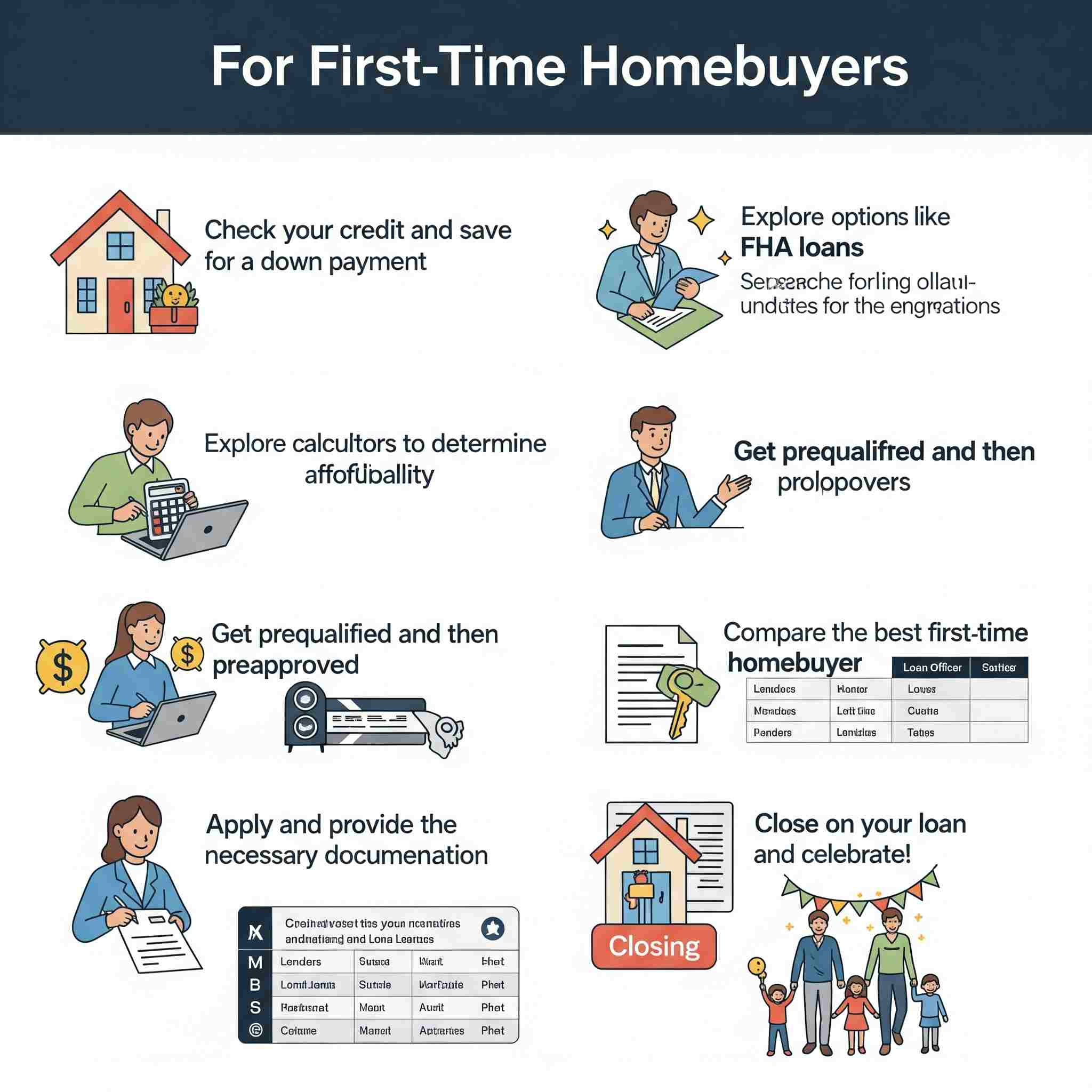
Infographic titled 'Where to Apply for First-Time Home Buyer Loans,' outlining options like banks, credit unions, mortgage lenders, and government-backed programs. Includes tips on FHA loans, getting pre-approved, and top lenders for first-time buyers

How to Get a Home Loan for the First Time

Still unsure how to get a home loan for the first time? Here’s a quick summary:

  1. Check your credit and save for a down payment.
  2. Explore options like FHA loans.
  3. Use calculators to determine affordability.
  4. Get prequalified and then preapproved.
  5. Compare the best first-time homebuyer lenders.
  6. Apply and provide the necessary documentation.
  7. Close on your loan and celebrate!
Outlined steps like checking credit, exploring FHA loans, using affordability calculators, getting prequalified, comparing lenders, applying, and celebrating closing.

When Should I Get Pre-Approved for a Mortgage Loan?

If you’re asking, when should I get pre-approved for a mortgage loan? The answer is simple: before you begin house hunting. Preapproval helps define your price range and makes your offers more attractive to sellers.

Can I Get Pre-Approved for a Home Loan Online?

Absolutely. Many of the best mortgage companies for first-time buyers offer easy online applications. This convenience allows you to compare rates, upload documents, and get results quickly—all from home.

Final Thoughts

Navigating the mortgage process doesn’t have to be overwhelming. From filling out your FHA first-time home buyer loan application to using a first-time home buyer mortgage calculator or finding the best mortgage lenders for first-time buyers, you have a wealth of tools and options available.

Other Helpful Tools:

Utah Housing Loan: The Key to Affordable Homeownership in Utah

If you’re exploring homeownership in the Beehive State, a Utah housing loan might be your best path forward. Whether you’re a first time home buyer in Utah, a low-income family, a self-employed professional, or even a single parent, Utah offers a wide range of mortgage programs tailored to your needs. These programs—often backed by the Utah Housing Corporation—can help make buying a home more affordable with flexible credit requirements, down payment assistance, and low-interest financing options.

FHA Home Loan in Utah: A Flexible Option for New Buyers

The FHA home loan in Utah is one of the most popular loan options for new buyers, particularly those with moderate or low credit scores. FHA loans are backed by the federal government and offer a down payment as low as 3.5%. These loans also pair well with Utah housing loan programs, which may include grants or second mortgages to assist with upfront costs.

If you’re not sure whether an FHA loan is your best fit, consider using a home loan comparison in Utah to explore other choices. For many, the FHA option stands out thanks to its low barrier to entry and compatibility with Utah mortgage assistance offerings.

The Utah First Time Home Buyer Program: What You Should Know

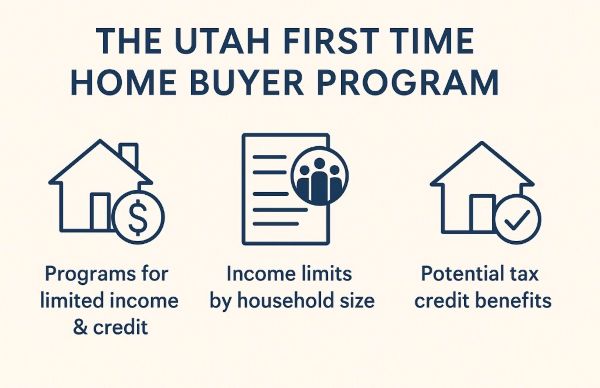
The Utah first time home buyer program offers significant support for those purchasing their first home. Through the Utah Housing Corporation, eligible buyers can access programs like FirstHome, HomeAgain, Score, and NoMI—all designed to support individuals with limited income or credit history.

These programs often come with Utah housing first time buyer income limits, which are set based on household size and location. If you qualify, you may also be eligible for the first time home buyer tax credit in Utah, giving you additional savings after your purchase.

Don’t forget to check whether your home qualifies for a USDA home loan in Utah—an option for buyers in rural areas—or if you’re a veteran, a VA home loan in Utah might offer zero down and no mortgage insurance. Check out Tools to Beat Today’s Mortgage Rates

Utah Mortgage Preapproval Checklist: Preparing for Success

Before you apply for a mortgage, use a Utah mortgage preapproval checklist to get organized. Preapproval increases your credibility with sellers and gives you a clearer idea of your budget.

Here’s what you’ll likely need:

  • Two years of tax returns and W-2s
  • Recent pay stubs or income proof
  • Asset documentation and bank statements
  • Photo ID and Social Security number

For buyers in unique situations, such as applying for a mortgage for self employed in Utah, you’ll need to provide business income verification, including profit-and-loss statements and 1099 forms. Similarly, a mortgage for single parents in Utah may involve proof of child support or government assistance.

Collecting the documents needed for a mortgage application in Utah can feel overwhelming, but preparation makes the process smoother. Beyond financial records, lenders may also ask for rental history, gift letters (if applicable), and proof of homeowner’s insurance. These documents are crucial, especially when you’re applying for low income mortgage programs in Utah or using down payment assistance Utah funding.

Low Down Payment Mortgage Options in Utah

If saving for a down payment is holding you back, you’re not alone. Thankfully, low down payment mortgage Utah options can get you into a home with minimal upfront cost. These programs—often available through the Utah housing loan system—include grants or secondary loans that cover both the down payment and part of the closing costs.

Working with one of the best lenders for first time buyers in Utah ensures you receive guidance on these options and helps you navigate the eligibility criteria effectively.

How to Apply for a Home Loan in Utah

Understanding how to apply for a home loan in Utah is simpler when broken down step-by-step:

  1. Gather financial documents and get preapproved
  2. Choose a lender or mortgage broker in Salt Lake City
  3. Explore Utah housing loan programs
  4. Compare offers using a home loan comparison Utah tool
  5. Submit your full application and schedule a home inspection

The best mortgage companies in Utah will walk you through each of these steps and ensure you receive all applicable Utah mortgage assistance.

Refinance and Beyond: Getting the Best Rates in Utah

Already a homeowner? You may still benefit from the best refinance rates Utah. Refinancing your existing mortgage—especially if you originally used a Utah housing loan—can lower your monthly payments or reduce your interest rate. Be sure to ask your lender if you qualify for a streamlined refinance under FHA or VA guidelines.

Choosing the Right Lender or Mortgage Broker in Salt Lake City

Partnering with a mortgage broker in Salt Lake City can help you compare multiple loan options at once, especially if you’re not sure whether to go with a conventional, FHA, VA, or USDA home loan in Utah. Brokers often have access to exclusive rates and can assist with unique needs like self-employment income or single-parent households.

Utah Mortgage Myths

Blue sky with the welcome to Utah sign on the left showing red mountains.

Mortgage Myths Debunked: What Every Utah Homebuyer Should Know

Buying a home can feel like a daunting task, especially with some common misconceptions that can make it feel like homeownership is out of reach for so many. Homebuyer education, mortgage calculators and tools, loan, and down payment assistance programs can make homeownership more accessible and affordable than you might think. We will debunk common myths regarding mortgage rates and homeownership in Utah and show how you might access a mortgage that previously seemed out of reach.   

Myth: You Need a 20% Down Payment and Perfect Credit to Buy a House in Utah

The belief that you need a perfect credit score and a 20% down payment to buy a home discourages many potential homebuyers. While these can ease the process of buying a home, certain incentives and benefits make it easier to get approval for a loan than you might think. 

Utah Down payment Assistance

One myth that keeps many from pursuing homeownership is the idea that you need a 20% down payment to purchase a home. While it’s true that a larger down payment can help you secure a better mortgage rate, it’s far from a requirement. In fact, there are several Utah mortgage assistance programs that can help you cover your down payment. For first-time homebuyers in Utah, down payment assistance programs and low down payment mortgage options like FHA loans or USDA loans can make buying a home much more affordable. The Utah Housing Corporation down payment assistance program offers down payment assistance specifically for eligible Utah homebuyers. Some Utah communities offer additional down payment assistance should you choose to purchase a home there. Using a Utah mortgage calculator, you can quickly see how much you can save on your down payment by exploring different loan options, including low down payment mortgages or even no down payment loans for eligible buyers in rural areas with USDA loan eligibility.

Homebuyer Assistance in Utah with Low Credit

Smiling couple standing in front of their new home, holding a wooden sign that reads 'Home Sweet Home,' symbolizing homeownership and a fresh start. This is their first mortgage.

A common myth that discourages many potential buyers is the belief that you need a perfect credit score to secure Utah home loans. While having a strong credit history certainly helps when applying for a mortgage, it’s not a dealbreaker if your score isn’t flawless. Many Utah mortgage brokers and local mortgage companies in Utah offer specialized loan options for those with less-than-perfect credit. FHA loans, for instance, are designed to help buyers with lower credit scores (often as low as 580) secure financing with lower down payments. If you’re worried about your credit score, talk to the best mortgage lenders in Utah about homebuyer resources and options like FHA loans, VA loans or USDA loans. These can be forgiving of lower scores, especially if other financial factors, such as your debt-to-income ratio, are strong.

Myth: Renting is Always Cheaper Than Buying in Terms of Home Affordability

There is a common myth that states that renting is always cheaper than buying. We will discuss and debunk this myth. It is not necessarily true that renting is always cheaper. While renting has lower upfront costs, buying a house can be more cost-effective in the long run. There are many different factors at play to determine which is better for you. Current Utah mortgage rates, tax benefits, access to FHA loans in Utah, and property appreciation can all impact your financial decisions. Depending on the rates when you buy, a mortgage payment could be cheaper than a rent payment.

Utah Homebuyer Grants vs. Costs of Renting

While buying means more upfront costs, there are resources which can combat this. First-time homebuyers can qualify for homebuyer grants which provide sums of money for free to use towards a down payment or closing costs. This can be huge in the long run, because the larger down payment you put down, the lower your monthly mortgage payment is. On the flip side, with renting there can be many extra costs that can increase your monthly rent payment. For example, parking fees, pet ownership fees, and amenities fees; as well as one-time large payments for a security deposit. Additionally, when you pay a monthly mortgage, you are building equity by owning a property and can get money back if you sell the house later on. When you rent, you do not build any equity or get any money back that you have paid. This is because owning a house is an investment. Fixed-rate mortgages mean that payments do not inflate over time, but rent payments generally increase steadily every year. While mortgage rates are currently higher in Utah than they were several years ago, analysts predict them to be lower in the future. This gives you the chance to lock in a house at the current price and refinance at a lower rate down the road.  With the right loans, homeowner assistance programs, and a look to the future, now could be a great time to make the switch from being a renter to being a homeowner. 

Navigating Utah’s Mortgage Myths and Homebuying Realities

Buying a home in Utah can seem overwhelming with all the myths surrounding mortgage rates, down payments, and credit requirements. However, as we’ve explored, you don’t need a perfect credit score or a 20% down payment to become a homeowner. With various federal / Utah down payment assistance programs and flexible loan options, purchasing a home is more accessible than many realize. While renting might seem like the cheaper option upfront, buying a home can often be more cost-effective in the long run, thanks to homebuyer grants, equity building, and stable mortgage payments. To further assist you in navigating Utah’s mortgage landscape, check out the resource Mortgage Rates Made Easy for helpful tools, updated rates, and personalized guidance. Understanding your options, using tools like a Utah mortgage calculator and working with reputable lenders can help you make the best decision for your financial future. Whether you’re looking to buy your first home or exploring ways to invest, debunking these common myths is the first step toward turning homeownership into a reality in Utah.

Young couple in Utah sitting on the floor of their new home, toasting with drinks, surrounded by moving boxes and a pizza box, celebrating their move. This is their first home and first mortgage!

The Best Guide To Understanding Mortgage Rates in Utah

What are mortgage rates and how can I find the best mortgage rate? Mortgage rates are interest rates charged by lenders for home loans and determine the cost of purchasing a home. These tend to fluctuate based on current economic conditions when looking at Utah’s booming real estate market. This has led to increased home prices. And is why mortgage rates are essential to take into consideration for new and old home buyers. The smallest incremental changes can significantly affect your monthly and the total amount that is paid over the loan’s life. Check out our Mission page to learn more about how we can help you with all things involving mortgage rates. 

best mortgage rate Utah family home house buying home

Factors that influence Mortgage Rates

We have to look at factors that are influencing these increased or lower rates in Utah. Currently Utah is being driven by:

  • High population growth,
  • New residents,
  • And new employment opportunities especially in the tech industry with companies like Adobe. All these factors end up driving up the mortgage rates for Utah.

Utah mortgage rates are generally in line with national averages, although they can vary slightly depending on local housing market trends. For example: rapid growth in Utah’s housing market may cause rates to fluctuate more than in states with a more stable market. Comparing Utah mortgage rates with national averages can help you understand if you’re getting a competitive offer. Use online rate comparison tools or consult with local lenders to find the best rate available to you.

Tips for getting the best Mortgage Rate in Utah

Securing the lowest possible mortgage rate requires preparation and research. Start by improving your credit score. You can do this by paying down debt, avoiding new credit inquiries, and ensuring all your payments are on time. Learn more about your credit score by visiting the Consumer Financial Protection Bureau.  Saving for a larger down payment can also help you qualify for a better rate. Shopping around and getting quotes from multiple lenders is crucial; even a slight difference in rates can lead to significant savings over the life of the loan.

Refinancing Your Mortgage in Utah

Refinancing your mortgage rate in Utah can be extremely beneficial for the homeowner. This is especially true if today’s home mortgage interest rates are lower than when you previously got your loan. In addition to the refinancing interest rates, you must also keep in mind other costs that could be associated with the process. Our page on Refinancing Advice allows for an even more in-depth look on how and when homeowners refinancing is a good idea. 

Utah’s mortgage rates play a critical role in the affordability of homeownership. Mortgage rates in Utah can be influenced by economic conditions, local market trends, and personal financial factors. Whether you’re a first-time buyer, looking to refinance, or simply comparing rates, understanding these elements can help you to find your mortgage solutions. By improving your credit score, saving for a larger down payment, and shopping around for the best mortgage rate, you can optimize your mortgage options. For more insights and expert guidance, explore our Mortgage and Money Resources page for a deeper understanding of mortgage rates in Utah, visit our Saving and Investing section for refinancing tips, and find the best mortgage rate in Utah.

Utah’s Guide to Fixed-Rate Mortgages

Utah valley housing with mountain in background. Understanding mortgage rates in Utah.

Understanding 30-Year Fixed-Rate Mortgages in Utah

A 30-year fixed mortgage rate may seem daunting, but it doesn’t always have to be. Many issues can stem from just not fully understanding the process. By breaking it down into easier steps such as advantages, factors influencing fixed rates, and how long your loan should be, you will leave feeling confident in your knowledge of mortgage rates within Utah. 

A 30-year fixed-rate mortgage is the most popular loan length allowing homeowners to purchase property by paying the balance over 30 years through fixed interest rates. The loan features predictable monthly payments as payments stay unchanged throughout the loan period. This length choice stands out as the most popular selection for first-time homebuyers as monthly payments are lower than what borrowers would pay with shorter mortgage terms. Residents of Utah frequently choose this type as it helps them purchase homes in an ever-changing market by providing steady payment amounts.

Advantages of a 30-Year Fixed-Rate Mortgage

There are several benefits to a 30-year fixed mortgage rate. Borrowers with mortgage rates such as these benefit from consistent monthly payments that remain lower than those for 15-year mortgage loans. When choosing this payment plan, homeowners can extend their financial resources ultimately leading them to purchase their dream homes, staying far away from compromise. Fixed interest rates also protect borrowers from market rate increases, establishing a constant payment amount for future periods. Because of its stable payment plan, Utah families can more confidently plan their future while living in this constantly evolving housing market.

Factors Influencing 30-Year Mortgage Rates in Utah

A variety of factors affect the rates of 30-year mortgages in Utah. Some significant economic factors that usually play a part can include inflation, employment rates, and the country’s general economic well-being. Monetary policies of the Federal Reserve can also affect mortgage rates indirectly. For instance, when the Federal Reserve raises interest rates, banks are forced to increase the rates at which they borrow money leading to higher costs for consumers. Locally, mortgage rates within Utah are influenced by the market demand for housing and property values as lenders change their interest rates according to market trends.

As of 2025, the 30-year fixed rate mortgage in Utah sits at 6.56%, which is only slightly below the current national average. This is possible due to Utah having a strong economy, with a prosperous and overall healthy housing market to follow. As a result, rates are relatively stable compared to other states. It is predicted that mortgage rates in Utah will stay between 6.0% and 6.9% throughout 2025. For potential homebuyers, any rate changes will be accompanied by changes in their monthly payments and the overall total amount paid toward the loan.

30-Year vs. 15-Year Fixed Rate Mortgages

You may be wondering, why choose a 30-year over a 15-year mortgage? The major disadvantage of a 15-year mortgage is the higher and more frequent monthly payments that accompany it. Alternatively, the main advantage is that homeowners can make fewer payments, overall paying less in interest over the life of the loan. This option is quite popular in Utah for buyers who want to build equity quickly or be mortgage-free as soon as possible. The choice between a 30-year and 15-year mortgage ultimately boils down to the personal financial objectives, income stability, and personal preference of each individual homeowner.

Take-Aways

In conclusion In Utah, many homebuyers prefer a 30-year fixed-rate mortgage as it offers affordability and financial planning advantages. Understanding the advantages and disadvantages of each available option helps individuals select the correct mortgage term for their circumstances. However, It is crucial to make sure to evaluate your own financial goals before making a final decision. Our website https://www.mortgagerateutah.com/ features additional resources about Utah mortgages and current rate information. Additional resources include the Utah Department of Financial Institutions and City Creek Mortgage which can help you discover more detailed and specific loan options.

Utah Mortgage Rates Made Easy

What Are Mortgage Rates and Why Do They Matter?

Mortgage rates determine how much interest you will pay on a home loan. These rates fluctuate based on economic factors such as inflation, Federal Reserve policies, and local housing market conditions. Whether you’re a first-time homebuyer or a homeowner looking to refinance, understanding current mortgage rates in Utah can help you make informed financial decisions.

Current Mortgage Rate Trends in Utah

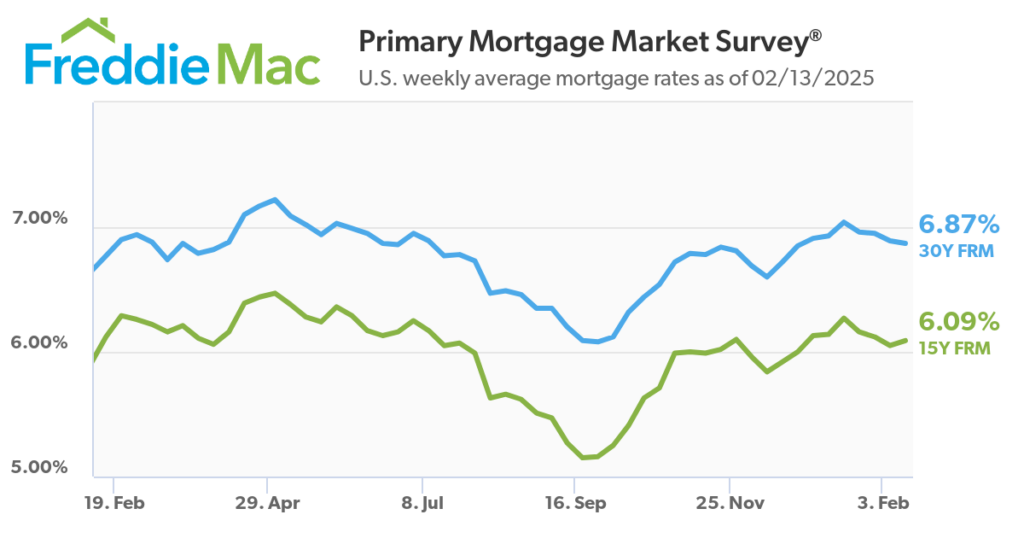
2025 Primary Mortgage Market Survey

Mortgage rates in Utah are affected by market demand, lender competition, and national interest rate policies. As of February 6, 2025, interest rates have been fluctuating due to economic uncertainty and inflation concerns (as seen in the image to the left). For the latest national mortgage rate data, you can refer to Freddie Mac’s Primary Mortgage Market Survey. Homebuyers looking to lock in a mortgage should consider fixed-rate vs. adjustable-rate loans, depending on their long-term financial goals.

Types of Home Loans Available in Utah

Choosing the right mortgage is essential. In Utah, homebuyers can explore options such as:

Conventional Loans –

Best for buyers with strong credit and a solid down payment.

FHA Loans –

Ideal for first-time buyers with lower credit scores and smaller down payments.

VA Loans –

Designed for veterans and active-duty military members with benefits like no down payment.

Jumbo Loans –

Suitable for purchasing high-value homes beyond conventional loan limits.

Not sure which loan is right for you? Our First-Time Homebuyers Guide breaks down everything you need to know about qualifying for a mortgage and choosing the best loan option.

Should You Lock in Your Rate?

Given current volatility, many borrowers are asking: Should I lock in my mortgage rate now?

If rates are expected to rise, locking in a rate now could save money.

If rates may decrease, some lenders offer “float-down” options that allow you to secure a lower rate before closing.

Is Now the Right Time to Refinance?

Refinancing can help homeowners lower their monthly payments or switch to a better loan term. Utah homeowners should monitor interest rates and consider rate-and-term refinancing to reduce costs or cash-out refinancing for home improvement projects.

How to Get the Best Mortgage Rate in Utah

To secure the most competitive mortgage rate, consider:

Improving Your Credit Score –

A higher score qualifies for lower rates.

Comparing Lenders –

Rates and fees vary between banks and mortgage companies.

Locking in Rates at the Right Time –

Interest rates fluctuate, so timing matters.

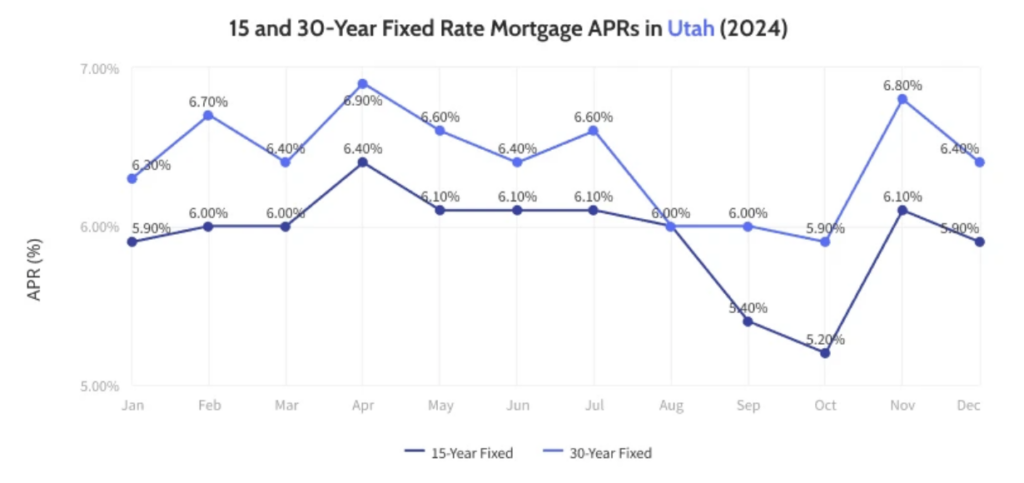
15 and 30-Year Fixed Rate Mortgage APRs in Utah (2024)

Final Thoughts & Resources

Navigating mortgage rates and loan options can feel overwhelming, but understanding the basics can empower you to make the best financial decision. Check out our Mortgage Calculator to estimate your monthly payments, or visit this Loan Comparison Calculator to explore different mortgage options. For more expert insights, visit Bankrate’s Mortgage Resources for the latest industry updates.

Proudly powered by WordPress