How to Refinance Your Mortgage in Utah

Couple meeting with mortgage refinancing advisor in Utah office

How to Refinance Your Mortgage in Utah

Refinancing your mortgage means replacing your existing home loan with a new one, ideally one with better terms. But how does refinancing a mortgage work? In short: you apply for a new loan, get approved, and use it to pay off your old loan. The result? New terms that could lower your monthly payment, reduce your mortgage refinance interest rates, or even allow you to tap into your home equity with a cash-out refinance.

Benefits of Refinancing a Mortgage

Why refinance your home loan? Here are the key benefits of refinancing a mortgage:

  • Reduce your interest rate through current refinance mortgage rates
  • Change loan types (e.g., from an ARM to a fixed-rate mortgage)
  • Access cash via a cash-out refinance
  • Eliminate PMI or consolidate debt
  • Lower your taxes, insurance, and other housing-related costs

Whether you’re looking for no closing cost mortgage refinance options or a faster process like an FHA streamline refinance, refinancing can be a strategic financial move.

Should I Refinance My Mortgage?
If you’re asking, “Should I refinance my mortgage?” consider the following:

  • Are mortgage refinance interest rates today lower than your current rate?
  • Has your credit score improved since you got your loan?
  • Will you stay in your home long enough to break even on closing costs?

If your answer is yes, then it’s likely a smart time to refinance your mortgage.

Current Refinance Mortgage Rates in Utah
Utah homeowners have access to some of the most competitive home mortgage refinance rates in the country. That said, rates vary daily. Be sure to compare current refinance mortgage rates with national averages, and review offerings from both local and online lenders to find the best refinance mortgage rates for your situation. 

Find the Best Refinance Mortgage Rates
To get the best mortgage refinance rates today, compare quotes from multiple sources. Top mortgage companies for refinancing often provide customized options based on credit score, equity, and income level. Make sure to ask whether they offer no closing cost mortgage refinance options or rate locks.

Popular Mortgage Refinance Options in Utah
Utah borrowers have several mortgage refinance paths to choose from:

  • Rate-and-term refinance: Adjust your loan’s term or interest rate
  • Cash-out refinance: Tap into your home’s equity for extra funds
  • FHA streamline refinance: Lower your rate with minimal paperwork (Learn more here → HUD FHA Streamline Guidelines)
  • No closing cost mortgage refinance: Roll costs into the loan

Each path has unique benefits depending on your financial goals.

How Soon Can You Refinance a Mortgage?
How soon can you refinance a mortgage after purchase or a previous refinance? Some lenders allow it within 6 months; others may require a longer waiting period depending on the loan type and whether it’s a FHA streamline refinance or conventional product.  

Special Refinance Scenarios
Not all homeowners have the same needs. Consider these mortgage refinance options:

  • Refinance mortgage with bad credit: Government-backed loans like FHA or VA may offer flexibility
  • Mortgage refinance for self-employed: Requires tax returns and income documentation
  • Mortgage refinance options for seniors: Shorter terms, reverse mortgages, or lower monthly costs
  • Refinancing a mortgage after divorce: Remove a former spouse from the mortgage and title

These paths may require additional documentation or underwriting but can be life-changing.

When to Refinance a Mortgage
Knowing when to refinance a mortgage can help you build wealth over time. Consider refinancing:

  • When rates fall significantly
  • When your home equity has increased
  • When your financial or credit situation improves
  • When switching from an FHA loan to a conventional one to drop PMI

Refinancing at the right moment can lead to major savings.

Refinance Mortgage Calculator with Taxes
Use our refinance mortgage calculator with taxes to get a detailed look at your new monthly payment. Make sure to factor in property taxes, homeowners insurance, and any other fees to get a realistic picture. 

Current Mortgage Rates Utah – Your Complete 2025 Guide

Understanding current mortgage rates Utah can be the difference between saving thousands or paying more than you should for your home. Whether you’re a first-time buyer or considering a refinance, this guide will help you feel confident in your decisions. We’ll walk you through today’s interest rates, common loan options, and how to get pre approved for mortgage Utah quickly and easily.

Smiling couple discussing mortgage refinance options with a Utah lender at home

Compare Mortgage Rates Utah with Confidence

Before you choose a lender, it’s smart to compare mortgage rates Utah and see what options are available. Rates can change daily and depend on your credit score, income, and loan type. Using a mortgage calculator Utah shows you the impact of different rates and helps you plan your budget accurately.

If you’re shopping for a larger property, pay special attention to Utah jumbo mortgage rates, which can have stricter credit and down payment requirements.

Working with the best mortgage broker Utah can simplify the process. A broker can help you access competitive offers from the best mortgage lenders in Utah and make sure you’re getting the best terms for your situation.

For national mortgage news and advice, check out Bankrate’s Mortgage Rates.

What Are Utah FHA Loan Requirements?

FHA loans are a popular option for buyers who need flexibility. The Utah FHA loan requirements include a minimum credit score and specific property guidelines. With as little as 3.5% down, these loans can help more buyers enter the market.

If you need help with your down payment, consider exploring Utah down payment assistance programs or a zero down mortgage Utah. Both options can make buying a home more affordable, especially for first-time buyers.

Keep in mind that Utah mortgage closing costs can range from 2–5% of your loan amount. Using a mortgage affordability calculator Utah can help you plan for these expenses and avoid surprises.

Happy home buyer learning about Utah FHA loan programs for affordable mortgages.

How to Get Pre Approved for a Mortgage in Utah

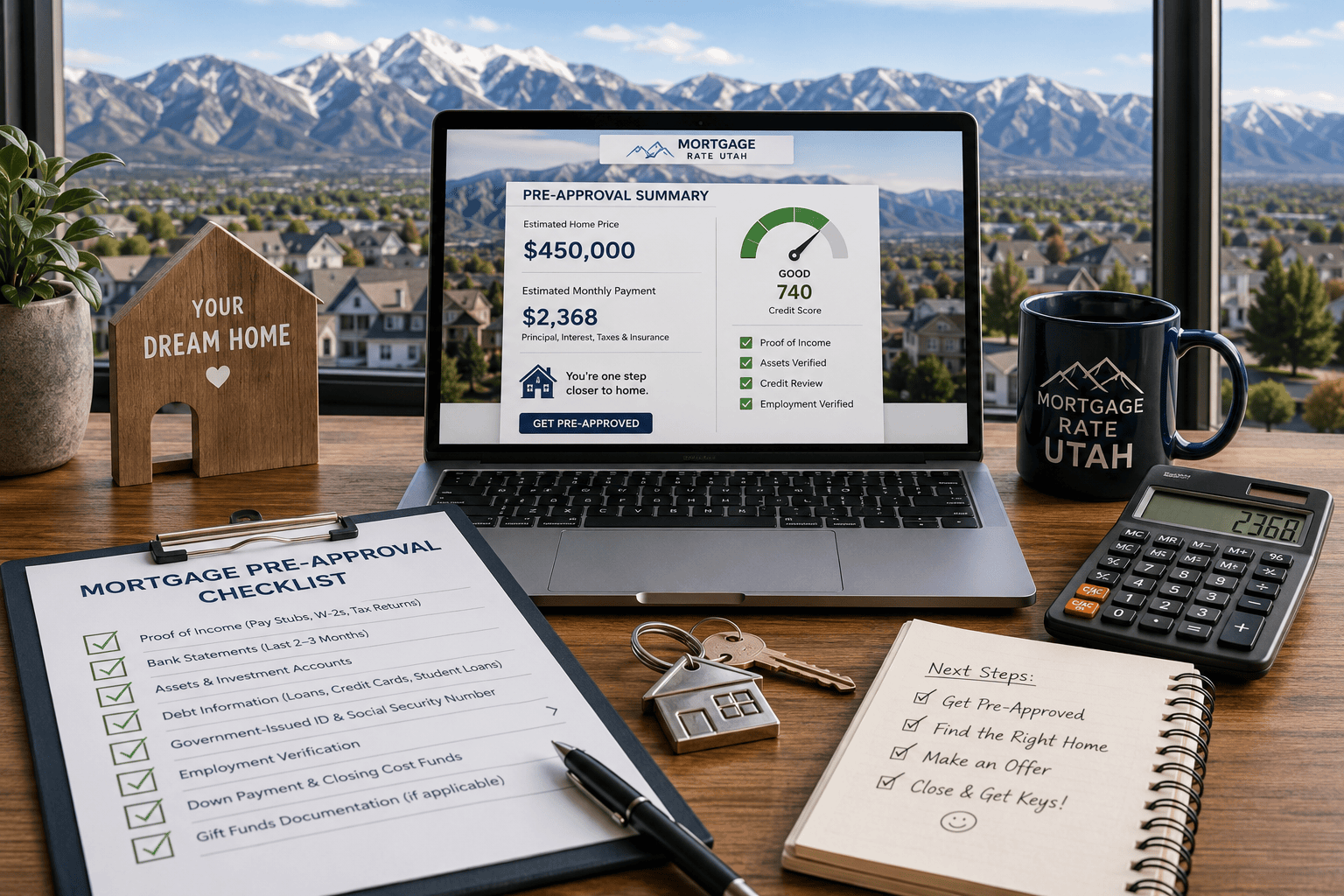
The Utah mortgage pre approval process helps you understand exactly how much you can afford and shows sellers you’re serious. You’ll need to provide income documentation, verify employment, and have your credit reviewed. Most buyers can get pre approved for mortgage Utah within a few days.

Remember, the Utah mortgage approval timeline varies depending on the lender and your unique financial picture. If you’re concerned about credit issues, some lenders specialize in working with the best mortgage lenders for bad credit Utah, helping you find options that fit your needs.

Considering Refinancing in Utah?

With rates still relatively low, now can be a great time to explore mortgage refinancing rates Utah. Refinancing can help you lower your monthly payments, reduce your loan term, or tap into equity for renovations and other expenses.

A cash out mortgage refinance Utah allows you to use your home’s value to access cash. Use a mortgage refinance calculator Utah to estimate your savings and see if refinancing makes sense for your goals.

Veterans may qualify for Utah VA mortgage benefits, including no down payment and lower interest rates, making refinancing even more attractive.

Tips for Choosing the Right Mortgage Lender in Utah

Finding a lender you trust is as important as finding the right home. Start by reading Utah mortgage lender reviews and asking friends or your real estate agent for recommendations. A good lender should be responsive, transparent, and willing to answer all your questions.

Be sure to compare mortgage brokers Utah to see who offers the best service and rates. The best mortgage broker Utah will guide you through every step and make sure you never feel overwhelmed.

Conclusion

Navigating current mortgage rates Utah doesn’t have to be stressful. With the right tools and a trusted professional by your side, you’ll be able to compare rates, explore loan options, and move into your new home with confidence. Use resources like a mortgage calculator Utah, research Utah FHA loan requirements, and don’t hesitate to ask questions. The more informed you are, the smoother your mortgage journey will be. Staying up to date with mortgage rates Utah can help you save thousands on your home.

Is Now a Good Time to Refinance in Utah?

Home financed through one of the various types of mortgages

First of all, what does it mean to refinance?

The process of refinancing has the goal of replacing a homeowners existing mortgage with a new one! The new mortgage typically has more favorable terms for the homeowner to live life more comfortably. This could mean securing a lower interest rate, reducing your monthly payments, or shortening the loan term.

A process called “cash-out refinancing” allows homeowners to tap into the equity they’ve built in their home and use that money for other possible areas of life. Homeowners may typically use this money for higher education, remodeling, and paying off other loans. There are many different reasons why a refinance could be for you. Refinancing is a valuable tool used by many homeowners. Let’s find out if it’s a good time for you!

Utah homeowners reviewing options for refinancing.

Lower interest rate? When and why.

First off, when and why should you lower your interest rate? Refinancing your mortgage makes sense for several reasons; one of which is lowering interest rates. But why is it so important? The main reason is it allows you to save money every month and who doesn’t want that? The key is WHEN you do it. You can’t refinance at any time or else you could lose money instead of saving it.

The first thing you need to do is look at market rates as the ideal time to refinance is when market rates have fallen below the rate on your current loan. Second, if you want to refinance, calculate the break even point of your loan so you’ll know exactly how long it will take to reap the benefits. A good source to learn more about when and how to figure out the timing on When Should You Refinance?

Reducing your monthly payments

Mortgages are expensive, budget constricting, and just flat out stressful. Figuring out how to lower your monthly mortgage payment can help you keep your housing expenses and budget affordable yet sustainable. Here are a few strategies to combat your high mortgage payment.

First and foremost, refinancing is the most effective and easiest way to lower your monthly payment. Second, lengthening your loan term, it spreads your payments out more and reduces your monthly payment. Lastly, shop for cheaper homeowners insurance, if you can find a cheaper rate out there, it is an easy way to save you money without refinancing or stretching out your mortgage. If you want to see more strategies to lower your monthly payments check out How to Lower Your Monthly Mortgage Payment.

Making the most of your money and how to save every last penny.

Shortening your Loans

No one wants to be stuck on a 30 year loan. Less time = less interest. If the principal is paid in a higher amount at the start, as well as an increase in the monthly payment, the time that is associated with the loan goes down. But why does that matter? Think of it this way. The longer someone pays on a loan, the more interest they are putting down on that loan. When the loan is shortened, less interest is paid overtime ultimately saving you money. Because who doesn’t want to save money? Not sure which loan to pick or have more questions? The Purchase Rates and Types of Loans pages can give you more information on what loan types work best for you.

Live out your loan term in a state of "life elevated."

Cash Out Refinancing

First of all, what is cash-out refinancing? Cash-out refinancing is a type of mortgage loan. This specific mortgage loan allows you to replace your existing mortgage loan with a larger mortgage, and then you, the homeowner, can keep the difference and take advantage of your home’s equity!

First, let’s see if you qualify for cash-out refinancing. To qualify for cash-out refinancing, you first have to have equity in your home. What does it mean to have equity in your home? To have equity in your home, your home’s value must be greater than the current mortgage balance.

Now let’s decide if refinancing your mortgage is for you! If saving money in the long run, reducing your monthly payments, or obtaining lower interest rates sounds like something you’d be interested in, then refinancing may be for you! To get a better understanding of your mortgage loan type; 30 year loan or 15 year loan, refinancing can look different. If you want to learn more about which direction may be best for you our 30 years vs 15 years Mortgage Loans page can give you more information

Cash Out Refinancing

In Conclusion:

Cash out refinancing is a great way to save money on home investments and steer away from longer loan periods that may rack up interest over time. Buying a home can be a scary decision, but our website has many great resources and tools that you need to help you on your way to make that purchase count. Still have questions or are looking for a customized rate? Contact us! You can receive free rate calculations and pre-approvals that are tailored to your needs and lifestyles.

Authors: Isaac Villafranca, Anna Lam, Tim Withers, Bridger Speirs

Refinancing Your Home

What is Refinancing?

Mortgage refinancing is a financial strategy that allows homeowners to replace their existing mortgage with a new, more favorable loan. Many homeowners choose this route to save themselves money in the long-run. Refinancing can result in homeowners obtaining more favorable terms, reducing monthly payments, obtaining lower interest-rates, and achieving other financial goals related to their home. Homeowners typically consider refinancing when interest rates fall and economic conditions prove better than they were at the time of the last mortgage closing. To understand current mortgage rates in Utah better visit the Utah Mortgage Rate Calculator page. Other reasons for refinancing may be due to positive changes in credit profiles, to change the duration of the loan, or to switch to a different type of loan.

Refinancing Your Mortgage

The decision to refinance a mortgage is driven by various factors. These include the desire to secure a lower interest rate, reduce monthly payments, or access the equity built in the home. Reasons to refinance can also encompass debt consolidation, adjusting the loan term, or switching from an adjustable-rate mortgage to a fixed-rate one for stability. Whether motivated by financial savings, improved loan terms, or changing financial circumstances, mortgage and refinance options offer homeowners valuable opportunities to enhance their financial well-being. To better understand the best direction is for you, visit our 30 year vs 15 year Mortgage Loans page.

Financial advisor showing report to young couple. Happy couple consulting financial agent for refinance mortgage loan rates

How to Refinance? The Refinancing Process 

Here are the 5 steps to follow in your process of refinancing your home:

  1. Preparing and Applying to Refinance
    1. When applying to refinance you will need the same paperwork you provided when you originally mortgage your home: pay stubs, W-2s, bank statements, tax returns. You will also need your spouse’s documents if you are married and in a community property state.
  2. Choosing your Refinance Interest Rate Type
    1. After you get approved, you have two options for your interest rate: lock it in or float your rate. When you lock your interest rate you are guaranteed to have the same interest rate no matter if the rates rise after you lock. However this also means that the mortgage rates lower you are stuck at that higher initial rate. The best way to make this decision is to watch the markets and look at future predictions. If you go with a floating interest rate your rate will depend on the market conditions and have the possibility of going up or down.
  3. Getting Approved
    1. Behind the application process, a lender will evaluate your credit history, look at your debt-to-income ratio, verify your down payment and savings. They can also order an appraisal heading into the next step. 
  4. Getting a Home Appraisal
    1. Your lender will order an appraisal on your home. All you will have to do is make sure that your house looks amazing for the appraisal.
  5. Closing Your New Home Loan
    1. Once you have completed all the previous steps, it is time to close on your loan. During this stage, you will go over your details and sign them to make them official. There is usually a 3-day grace period for you to change your mind if something comes up.

For more details about the Refinancing process check out Rocket Mortgages Refinancing Steps.

Reasons to Refinance

Refinancing can be a smart financial move for various reasons including:

  • Getting a Lower Interest Rates: One of the primary reasons homeowners refinance is to secure a lower interest rate for their existing loan. By doing so, they can decrease their monthly mortgage payments and potentially save thousands of dollars over the life of the loan.
  • Reducing Monthly Payments: Refinancing can extend the time you have to pay your loan, resulting in lower monthly payments. This can free up cash for other expenses or investments monthly
  • Accessing Home Equity: Homeowners with substantial home equity can tap into it through a cash-out refinance. This allows you to borrow against your home’s value and use the funds for major expenses like home improvements, debt consolidation, or education. Learn more about it down below.
  • Changing Loan Types: Some homeowners opt to change their loan type, such as moving from an adjustable-rate mortgage (ARM) to a fixed-rate mortgage. This is to secure stability and predictability in their monthly payments.
Woman hugging man from behind. The couple is relaxing in their kitchen, browsing internet on laptop about mortgage rates and finances

Cash-Out Refinance

A cash-out refinance is a type of mortgage refinance where the homeowner uses the equity of the home and exchanges a larger mortgage rate for cash. The existing loan amount is increased allowing for the difference to be received in cash by the hom eowner. Both refinancing and cash-out refinancing involve replacing the existing mortgage with a new one but the purposes differ for each. Cash-outs are commonly used for financial investments, home renovations, paying off student loans, debt consolidation, or unexpected expenses. A positive outcome of a cash-out is it uses built up equity and provides cash for one to use. A negative outcome of a cash-out is it increases the total loan balance and mortgage payments. To learn more about cash-out refinancing and if it is right for you, visit our Cash Out Refinance page.

Understanding Refinance Rates

Refinance rates are important in the decision-making process when considering refinancing your home. Refinancing rates can impact your monthly interest rates and the total expense of the loan. The factors that determine refinancing rate are current market conditions, credit score, loan to value ratio, debt to income ratio, and more. If current rates are lower than your original home loan rate, refinancing could save you money in the long term. Online calculators and tools can be used to compare rates that suit your specific needs. Our Mortgage Rate Calculator can help in your decision-making process

Calculating Costs to Refinance

Let’s talk about the costs to refinance a home loan. When you decide to refinance your mortgage loan, it’s like giving your mortgage a facelift. But, much like a makeover, it comes with a price tag. This includes various fees such as application fees, appraisal fees (to determine your home’s value), and potentially some closing costs (like attorney fees and title insurance). It’s crucial to consider that while refinancing your home mortgage. It has the potential to save you money in the long run but you’ll need to take these upfront costs into account. Before you begin the refinancing process, it’s important to do some calculations to ensure that the savings outweigh the costs. Using a reliable tool and researching can provide you with a clearer picture of whether refinancing is the right decision for you. 

Refinancing in Summary

In short, refinancing is a process that replaces an existing mortgage on a property with a newer mortgage, that typically benefits the owner of the mortgage. When you obtain a new mortgage, you often lower your interest rate or change your loan terms. Many also choose to cash-out refinance to tap into their home equity.

For more information on how refinancing works and types of refinancing visit the Investopedia Refinancing page.