


Utah First Time Home Buyer Programs: 2026 Roadmap to Homeownership

Utah first time home buyer meeting with mortgage advisor discussing loan programs.

The dream of owning a home in the Beehive State is more achievable than many realize, especially with the current Utah housing market forecast 2026 indicating a shift toward a more balanced environment. After years of rapid price escalation, inventory has stabilized, and buyers finally have more room to breathe. However, the most common question remains: Is now a good time to buy a house in Utah? For those prepared to leverage state resources, the answer is a resounding yes. By understanding the various Utah first time home buyer programs, you can navigate the path from renting to owning with financial confidence.

How to Qualify for a Mortgage in Utah and Secure Your Financing

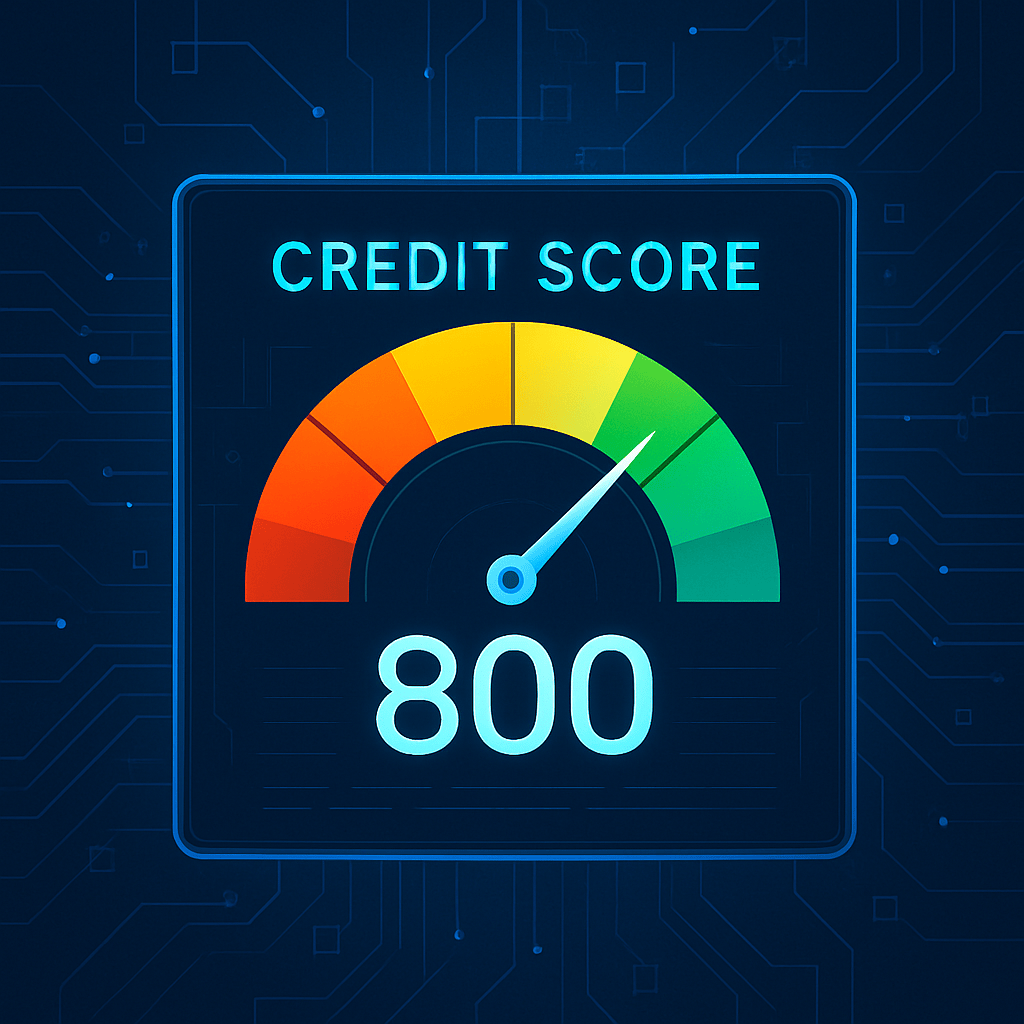
Before you begin touring neighborhoods, you must understand the financial benchmarks required by local lenders. Learning how to qualify for a mortgage in Utah starts with a deep dive into your credit health. The minimum credit score for mortgage in Utah typically ranges between 580 and 620 depending on the loan type, though a higher score will always unlock more competitive interest rates.

To gain a competitive edge, you should initiate the Utah home loan prequalification process as early as possible. This preliminary step gives you a ballpark figure of your borrowing power. However, in a serious market, a formal mortgage pre approval Utah is the “gold standard.” This document proves to sellers that a lender has fully vetted your financial documents and is ready to fund your purchase. During this phase, many buyers ask, “how long does mortgage approval take in Utah?” Generally, once you are under contract, the full underwriting process takes between 30 and 45 days.

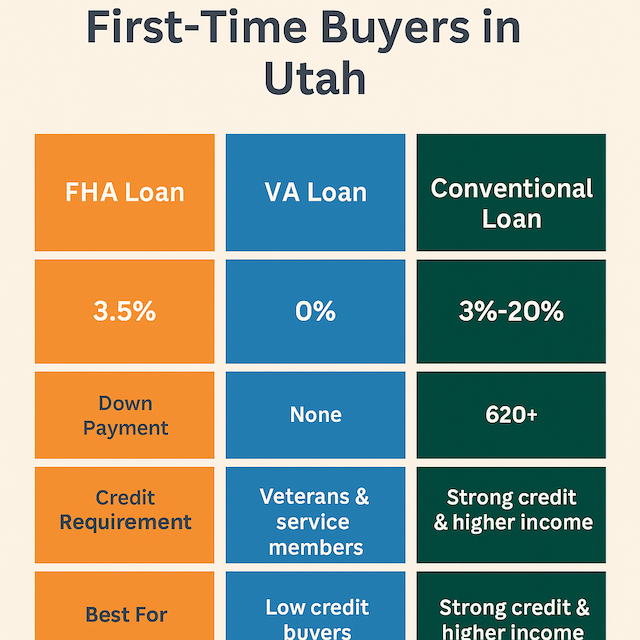
Choosing the right loan product is equally vital. Most buyers weigh the pros and cons of an FHA vs conventional loan Utah. An FHA loan is excellent for those with lower credit scores or smaller down payments, while conventional loan requirements Utah often demand a slightly higher credit profile but may offer lower long-term costs. For specific groups, there are specialized paths:

  • Utah VA loan eligibility: Veterans and active-duty members can often buy with $0 down.
  • Utah rural development loan requirements: Those looking in less populated areas may qualify for zero-down USDA financing.
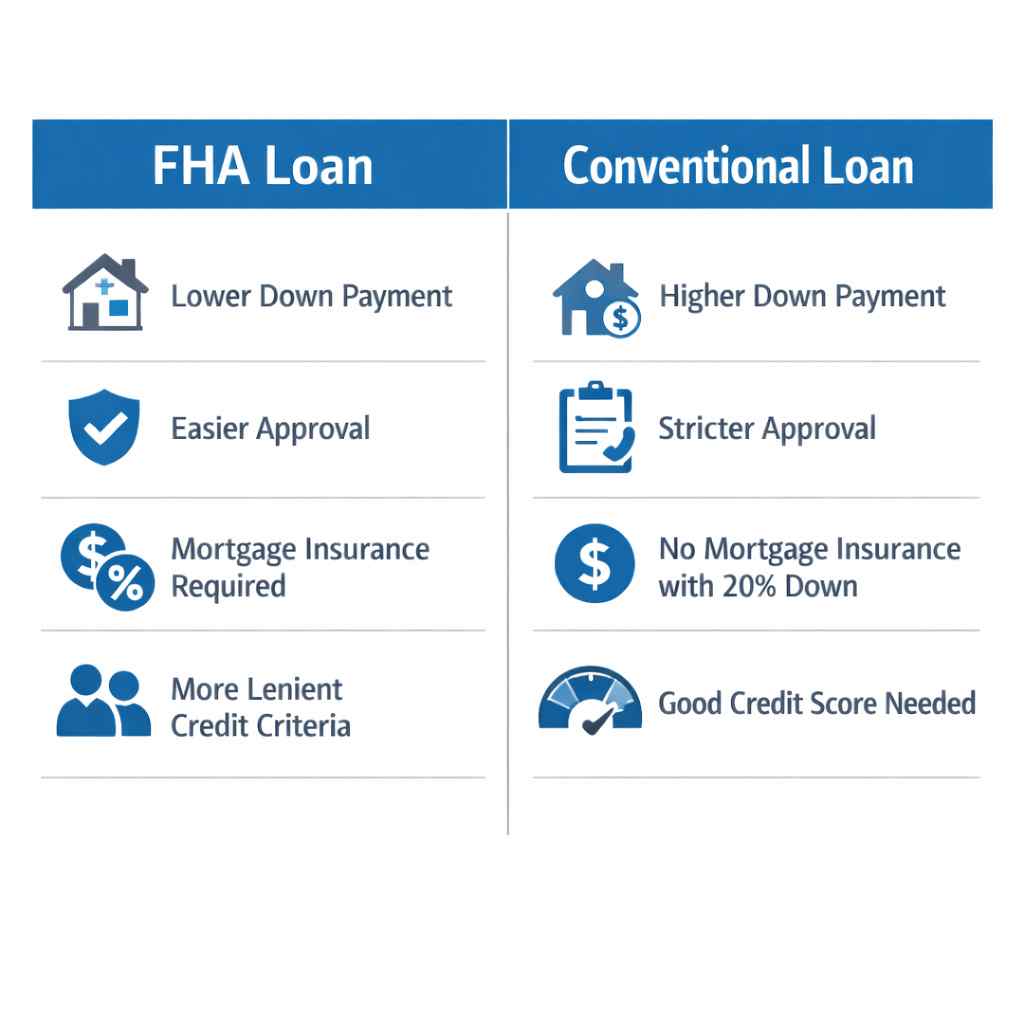
Visual comparison of FHA and conventional loan options for Utah home buyers.

Utah Home Buying Process Step by Step: From Search to Closing

Navigating the Utah home buying process step by step requires a blend of patience and preparation. Once you have secured your pre-approval, the next step is determining your budget. Use a Utah mortgage calculator to look beyond the listing price and understand the full monthly impact of your investment. This tool will help you answer the critical question: “How much house can I afford in Utah?”

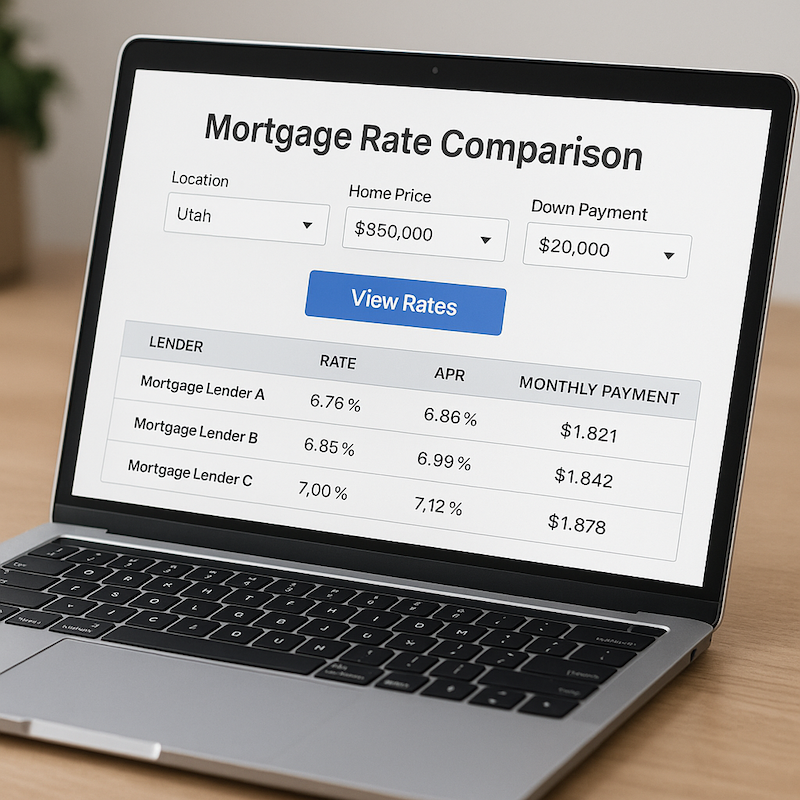
When calculating your budget, don’t forget to account for the average mortgage payment in Utah, which includes principal, interest, taxes, and insurance (PITI). As you monitor the market, keep a close eye on Utah mortgage rates today. In early 2026, 30 year fixed mortgage rates Utah have stabilized, offering a more predictable environment than the volatility seen in previous years. You will also need to decide between a fixed vs adjustable mortgage Utah. While a fixed rate offers a “set it and forget it” stability, an adjustable-rate mortgage (ARM) might offer a lower initial rate if you plan to move or refinance within a few years.

As you approach the finish line, you must prepare for closing costs in Utah. These fees, which cover everything from title insurance to appraisals, typically range from 2% to 5% of the home’s purchase price. To ensure you aren’t overwhelmed by these upfront costs, work with the best mortgage lenders for first time buyers Utah who can help you structure your offer to potentially include seller concessions or lender credits.

Illustration representing down payment assistance programs for first time home buyers in Utah.

Maximizing First Time Home Buyer Grants Utah and Assistance

The most powerful tool in a new buyer’s arsenal is the availability of first time home buyer grants Utah residents can access. The state government and local municipalities have recognized the affordability challenge and created robust down payment assistance Utah initiatives.

One of the most popular programs is the “silent second” mortgage offered through the Utah Housing Corporation, which can provide the funds needed to cover your initial down payment or closing costs. These programs are often designed to work in tandem with other local first time home buyer grants Utah, effectively lowering the barrier to entry. For example, some cities offer forgivable loans if you stay in the home for a set number of years.

Even after you’ve successfully closed on your home, your financial strategy shouldn’t stop. As market conditions change, keep an eye on Utah refinance options for first time buyers. If interest rates drop significantly after your purchase, refinancing can help you lower your monthly payment or eliminate private mortgage insurance (PMI) more quickly as your home equity grows.

Conclusion: Securing Your Future in Utah

The 2026 market presents a unique opportunity for those who are well-informed and ready to act. By mastering the Utah home buying process step by step and taking full advantage of Utah first time home buyer programs, you can secure a home that fits both your lifestyle and your budget. Whether you are aiming for a zero-down path through Utah VA loan eligibility or seeking the best down payment assistance Utah has to offer, the resources are there to support you. Start your journey today by speaking with a local expert to begin your mortgage pre approval Utah and turn the dream of homeownership into a reality.


Best Mortgage Lenders for Self-Employed and Bank Statements

Sunset over Salt Lake City Valley, suburban Neighborhood

Self-employed borrowers face unique challenges when qualifying for a home loan. Traditional underwriting models were built for salaried employees, not entrepreneurs with fluctuating income. Fortunately, programs like bank statement home loans and other Non-QM options now make being self-employed and getting a mortgage far more accessible.

If you’ve been wondering, can a self-employed person get a mortgage? — This guide explains exactly how.

 Bank Statement Home Loans for Self-Employed Borrowers

A mortgage for the self-employed with bank statements allows borrowers to qualify using 12–24 months of bank deposits instead of tax returns.

Unlike conventional loans, bank statement mortgage loans calculate income based on actual deposits, not net income after deductions. This makes them ideal for business owners who maximize write-offs.

How Bank Statement Mortgage Lenders Calculate Income

Self-employed borrower qualifying for bank statement mortgage loans

Most bank statement mortgage lenders:

  • Review 12–24 months of personal or business bank statements
  • Apply an expense ratio (often 50%)
  • Average monthly deposits to determine qualifying income

This structure makes bank statement home loans one of the most popular options among the best mortgage lenders for self-employed borrowers.


Best Mortgage Lenders for Self Employed in 2026

Choosing the best mortgage lenders for self employed borrowers requires finding lenders that specialize in Non-QM products.

When comparing lenders, consider:

  • best bank statement mortgage lenders
  • best no doc mortgage lenders
  • best non qm lenders
  • best mortgage company for self employed
  • best lender for self employed
  • best mortgage broker for self employed
  • best mortgage provider for self employed

The best in mortgage lenders for entrepreneurs understand fluctuating income and business deductions.

Internal Link Suggestion

If you have a Non-QM page, link like this:

Explore all Non-QM options here:
https://www.yourwebsite.com/non-qm-mortgage-programs

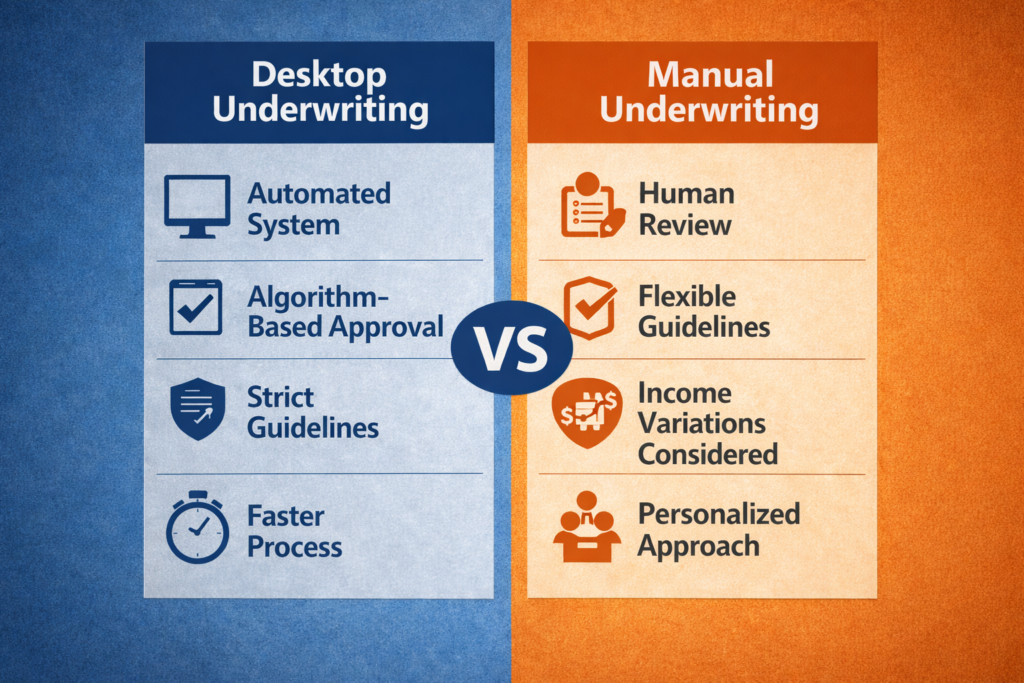
Desktop Underwriting vs Manual Underwriting

Understanding Desktop Underwriting vs Manual Underwriting can dramatically affect approval outcomes.

Desktop Underwriting vs Manual Underwriting comparison for self employed mortgage

Desktop Underwriting (DU)

  • Strict documentation requirements
  • Automated approval system
  • Used for conventional loans

Manual Underwriting

  • Human review process
  • Greater flexibility
  • Ideal for self-employed borrowers

Many of the best home lenders for self-employed use manual underwriting when income is complex.

DSCR Loans for Real Estate Investors

If you own rental property, DSCR loans for real estate investors may be better than income-based loans.

Instead of verifying personal income, lenders qualify you based on rental property cash flow.

This makes DSCR programs a strong offering from the best non qm lenders.

Internal Link Suggestion

Learn more about DSCR loan programs here:
https://www.yourwebsite.com/dscr-loans-for-real-estate-investors

Anchor text suggestion: DSCR loans for real estate investors

 ITIN Home Loans for Non-Citizens

Self-employed borrowers without a Social Security number may qualify for ITIN home loans for non-citizens.

These programs:

  • Accept Individual Taxpayer Identification Numbers
  • Often paired with a bank statement, mortgage lenders
  • Provide alternative documentation options

Best Mortgage Refinance for Self-Employed Borrowers

Refinancing can help entrepreneurs access equity or lower rates.

Borrowers often search for:

  • best mortgage refinance companies for self-employed
  • best mortgage refinance for self employed
  • best refinance companies for self employed
Best mortgage refinance for self employed borrower reviewing loan documents

If your tax returns show limited income due to deductions, refinancing with bank statement mortgage loans may offer better qualification terms.

The best mortgage for self employed borrowers depends on the income structure.

You may prefer:

  • bank statement, home loan,s if you maximize deductions
  • DSCR loans for real estate investors if you scale rental properties
  • ITIN home loans for non-citizens if you lack an SSN
  • Manual underwriting if automated systems decline your file

If you previously researched the best mortgage for self employed 2021 or best mortgage for self employed 2022, you’ll find that today’s programs are more flexible and competitive.

Working with the best home loan lenders for self-employed individuals ensures your application is structured correctly from the beginning.

 Can a Self-Employed Person Get a Mortgage?

Yes — and more options exist than ever before.

Whether you’re comparing:

  • bank statement mortgage lenders
  • best mortgage lenders for self employed
  • best no doc mortgage lenders
  • best mortgage provider for self employed
  • best refinance companies for self employed

There is a solution that aligns with your business income.

If you’re serious about qualifying, start by speaking with the best lender for self-employed borrowers who understands how entrepreneurs earn, deduct, and grow income.

First Time Home Buyer Utah Loan Programs & Requirements

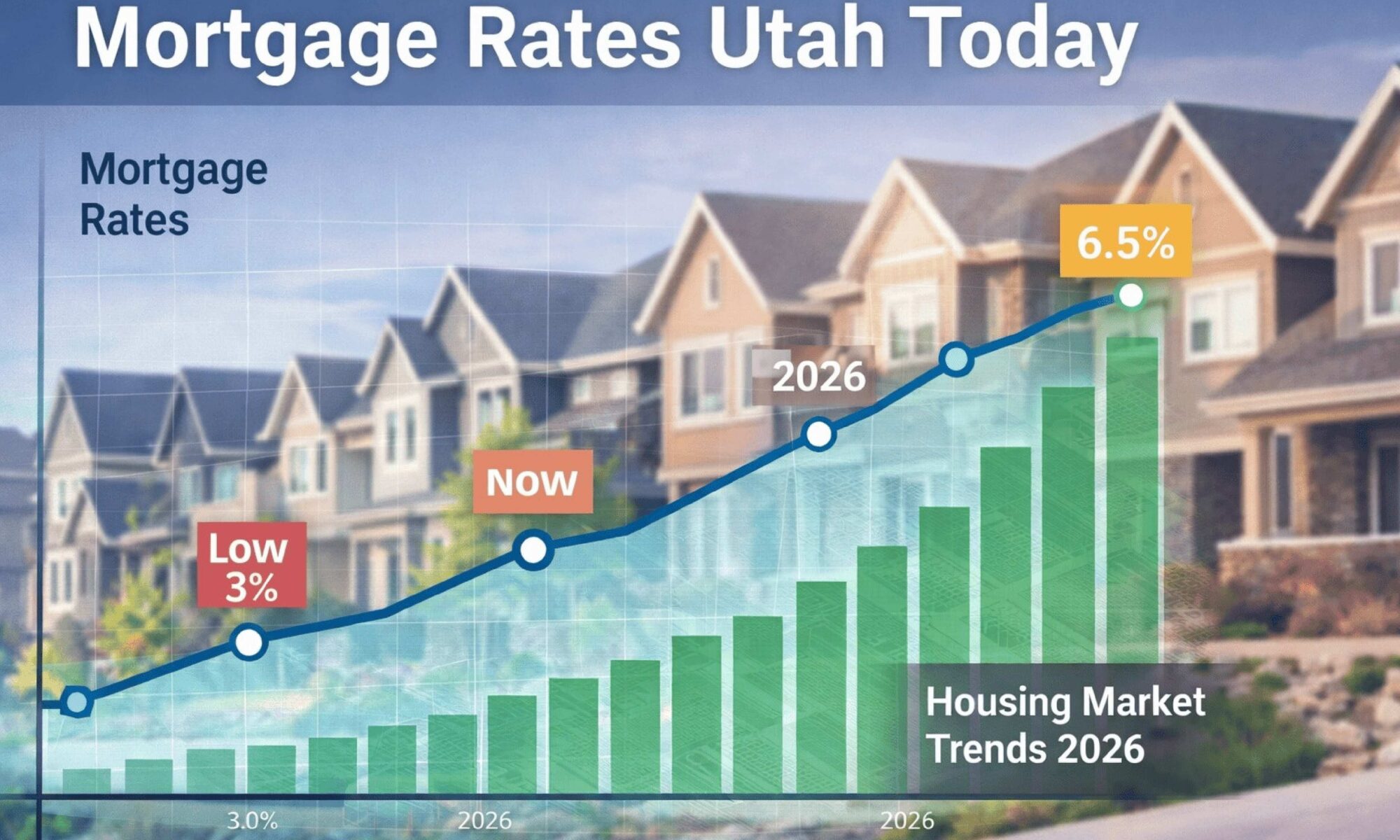
Bar chart showing a gradual increase of mortgage rates as time progresses

What Is a First Time Home Buyer Utah Loan?

Buying your first home can feel overwhelming, especially when it comes to understanding loan options. A first time home buyer Utah loan is designed to make homeownership more accessible by offering programs with lower down payments, flexible credit requirements, and potential financial assistance. These loans are specifically structured to help buyers who may not have significant savings or prior experience navigating the mortgage process.

First-Time Homebuyer Loan Options Available in Utah

Utah offers several first-time homebuyer loan programs through both government-backed and conventional options. Many buyers qualify for FHA loans, which allow for smaller down payments and more forgiving credit standards, while others may benefit from USDA or VA loans depending on location and eligibility. In addition, Utah-based housing assistance programs can provide down payment assistance or reduced interest rates, making monthly mortgage payments more manageable.

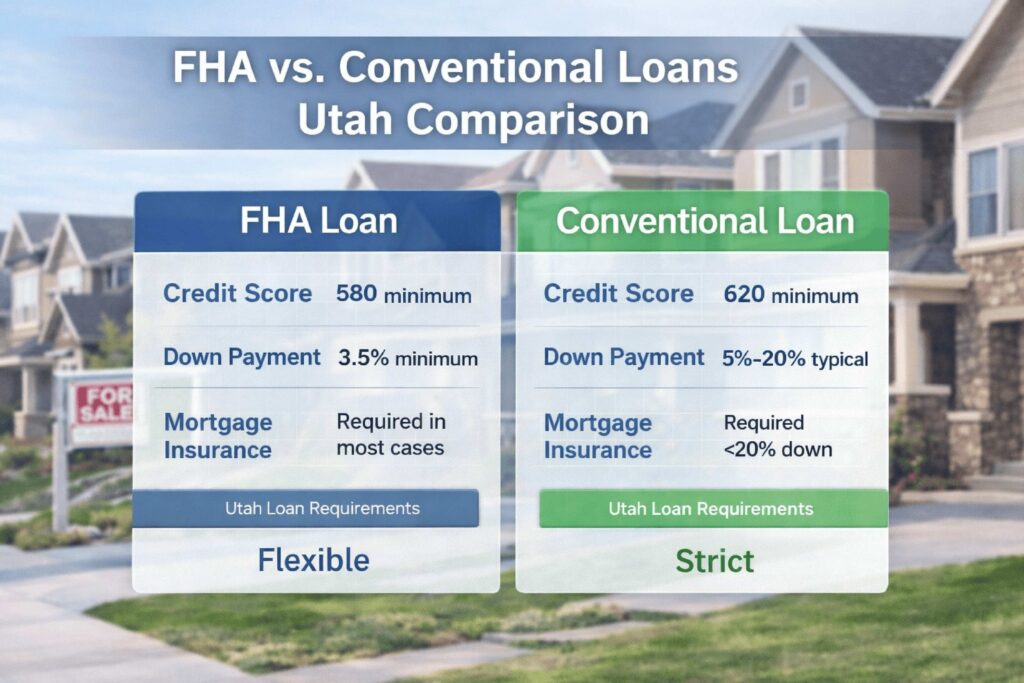
Two charts comparing FHA loans and Conventional loans

Qualification Requirements for First-Time Buyers in Utah

To qualify for a first time home buyer Utah loan, lenders typically evaluate income, credit history, employment stability, and debt-to-income ratio. While requirements vary by program, many first-time buyers are surprised to learn that perfect credit is not necessary. Preparing ahead of time by reviewing your credit report, reducing outstanding debt, and saving for upfront costs can significantly improve your chances of approval and secure better loan terms.

How to Choose the Right First Time Home Buyer Utah Loan

Choosing the right loan is an important step toward long-term financial stability. Working with a knowledgeable mortgage professional can help first-time buyers compare loan options, understand eligibility requirements, and identify programs that best fit their financial situation. With the right guidance and preparation, a first time home buyer loan can turn the goal of homeownership into a realistic and achievable milestone. Start today, and watch your dreams in Utah grow!


Purchasing a Home in Utah: FHA & HELOC Guide

Utah couple standing in front of home after buying a house

Entering Utah’s housing market requires more than just finding the right property. it requires understanding how to finance it strategically. Whether you’re preparing to buy a home in Utah or planning long-term equity growth, knowing how FHA loans, refinancing options, and equity tools work together will put you in a stronger financial position.

This guide walks through the major financing options available to Utah buyers and explains how each decision impacts your long-term financial plan.

FHA Loans in Utah: Qualification, Credit Scores, and Loan Limits

For many buyers, FHA loans provide one of the most accessible paths to homeownership. These government-backed mortgages are especially helpful for borrowers with moderate income, limited savings, or credit challenges.

Those researching FHA loans for bad credit often find that FHA guidelines are more flexible than conventional programs. The typical FHA loan minimum credit score is lower than most traditional financing options, making it attractive for first-time buyers.

Understanding how to qualify for FHA loan programs requires reviewing income stability, debt-to-income ratio, and employment history. Before choosing FHA financing, buyers should evaluate the fha loan pros and cons, particularly mortgage insurance requirements. It’s also wise to compare FHA vs. conventional loan structures to determine which aligns best with your long-term financial goals. Additionally, county-specific FHA loan limits in Utah can influence how much you’re able to borrow, depending on where you plan to purchase.

Down Payment Assistance and First-Time Buyer Programs in Utah

One of the biggest obstacles for new homeowners is saving for a down payment. Fortunately, several first-time home buyer down payment assistance programs exist to reduce upfront costs.

Programs offering Utah first-time home buyer assistance and broader Utah down payment assistance programs help qualified buyers bridge the financial gap. Reviewing first-time home buyer requirements early ensures you’re fully prepared before entering the market.

If you’re still learning how to buy your first home, working with a local mortgage professional can clarify eligibility guidelines, documentation needs, and financing timelines.

In certain rural areas, a USDA loan Utah may also provide zero-down financing opportunities for eligible properties.

Monitoring Mortgage Rates and Evaluating Refinance Opportunities

Interest rates significantly affect monthly payments and long-term affordability. Keeping an eye on the mortgage rate forecast and reviewing a mortgage rate history chart can help you understand current market trends.

Choosing between a fixed vs adjustable mortgage is another critical decision. Fixed-rate loans offer payment stability, while adjustable-rate mortgages may offer lower introductory rates depending on market conditions.

After purchasing, many homeowners begin asking when they should refinance. To answer that, you must consider refinance closing costs, evaluate whether a no closing cost refinance makes sense, and compare current cash out refinance rates.

Some borrowers also compare refinancing vs. home equity loan options to determine which offers greater flexibility or lower overall borrowing costs.

Home Equity Loan vs HELOC: Accessing Built-Up Equity

As property values increase, homeowners build equity that can later be accessed strategically. Before applying, it’s important to understand how much equity is needed to qualify for secondary financing.

When comparing home equity loans vs. HELOC products, the primary difference is structure. A traditional home equity loan provides a lump-sum payment with fixed repayment terms, while a revolving line of credit offers more flexibility. Evaluating HELOC vs. home equity loan options allows homeowners to match borrowing structure with financial goals.

Understanding typical HELOC requirements, including minimum credit thresholds, equity levels, and income documentation, improves your chances of approval.

Many borrowers choose a home equity loan for debt consolidation to reduce high-interest balances and simplify monthly payments.

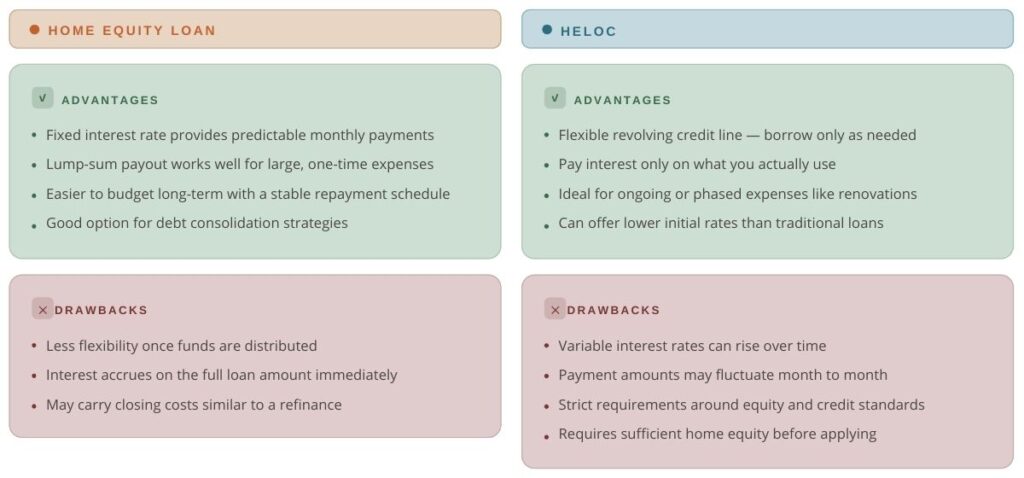
Table describing the Pros and Cons of Home Equity Loans vs. HELOC loans

Building a Sustainable Strategy

Successfully planning to buy a home in Utah involves more than securing loan approval. It requires understanding how FHA loans, Utah assistance programs, refinancing strategies, and equity tools fit into a long-term financial plan.

By monitoring rate trends, comparing loan structures (e.g., fixed vs. adjustable mortgages), evaluating refinance timing, and preparing for future equity access, you position yourself for financial stability and growth.

Working with experienced Utah mortgage professionals ensures you remain informed as market conditions evolve and your goals change.

First-Time Buyer’s Guide to Getting Approved for a Mortgage

First-time homebuyers celebrating new home purchase in Utah.

Buying your first home is a major milestone — and it comes with a lot of questions. What’s a
mortgage preapproval? How do you apply for a mortgage? Which types of home loans are
right for you in Utah?


If you’re a first-time homebuyer Utah, this guide will walk you through the entire mortgage
application process step by step, using real advice, practical tips, and helpful comparisons.
From choosing a mortgage lender to learning the pros and cons of an FHA loan Utah vs.
conventional options, we’ve got you covered.

Understanding the Basics of Home Loans
A home loan is a loan you take out to purchase a home, and it typically lasts for 15 to 30 years.
There are different types of first-time home buyer loans designed to help people purchase their
first homes without needing a massive upfront payment.
Common loan types:
• FHA loan Utah: Backed by the government, ideal for those with lower credit scores.
Offers a low down payment mortgage (as low as 3.5%).
• VA home loans: Available to veterans and active-duty service members. Typically
require no down payment or private mortgage insurance.
• USDA loans: Designed for rural homebuyers. They often include zero down payment
options.
Prequalify vs. Preapproval: What’s the Difference?
Before shopping for homes, you’ll want to either prequalify for mortgage or obtain a mortgage
pre-approval.
• Prequalify for mortgage: An informal estimate based on financial self-reporting. Helps
you understand how much home you can afford.

• Mortgage preapproval or mortgage pre approval: A more detailed process involving
income verification, a credit check, and a conditional commitment from a lender. You’ll
receive a letter that makes your offer more credible to sellers.

How to Get Approved for a Mortgage
To get approved for a mortgage, your lender will review:

  1. Credit score
  2. Income and employment history
  3. Debt-to-income ratio
  4. Cash savings for down payment and closing costs
  5. Supporting documentation (W-2s, bank statements, tax returns)
    Understanding the mortgage process step by step gives you confidence and avoids surprises.
    Work closely with your mortgage lender to ensure every form is filled out correctly and
    submitted on time
    Comparing Utah Mortgage Rates
    Utah mortgage rates fluctuate daily. It’s important to monitor current mortgage rates and
    compare them to national averages.
    You may see differences in:


• Mortgage interest rates for first-time buyers
• Loan terms (15-year vs. 30-year)
• Fixed vs. variable rates
Using an online tool to compare mortgage rates across lenders can save you thousands of
dollars over the life of your loan.

Conventional vs. FHA Mortgage
The conventional vs FHA mortgage debate is common for first-time buyers.
Loan Type Minimum Down Payment Credit Requirement Ideal For
FHA Loan 3.5% 580+ Lower credit, smaller savings
Conventional 3-20% 620+ Better credit, stable income
FHA loans offer more flexibility. Conventional loans may result in lower monthly payments if
you qualify.


Finding the Right Mortgage Lender in Utah
Your lender is your guide throughout the process. Look for best mortgage companies and best
mortgage lenders in Utah who:

  • Explain your options clearly
  • Offer low fees and transparent terms
  • Are responsive and experienced
    Ask whether they offer Utah home loan programs, including grants or down payment
    assistance designed for first-time homebuyer Utah applicants.
    Tips for First-Time Buyers
    Here are essential mortgage tips for new buyers:
  • Don’t make large purchases before closing
  • Maintain steady employment and income
  • Use tools to understand how much mortgage can I afford
  • Work with professionals who explain things in simple terms
    Applying for a mortgage can be stressful, but having a good support team makes it easier.
    Conclusion
    As a first-time homebuyer Utah, you have access to a range of home loans and supportive
    programs. Whether you’re exploring first-time home buyer loans, comparing Utah mortgage
    rates, or trying to get approved for a mortgage, being informed is your greatest asset.


The Ultimate FHA Loan Gameplan For Utah Dream Homes

If you’re considering buying a home in Utah but are concerned about high down payments or strict credit requirements, an FHA loan Utah could be the solution you’ve been looking for. Backed by the Federal Housing Administration, FHA loans are designed to make homeownership more accessible—especially for first-time buyers and those with moderate incomes.

We’ll break down everything you need to know about FHA loans in Utah, from requirements to current rates, and how to use an loan calculator to estimate your payments.

Top Benefits of FHA Loans

Utah homebuyers can benefit greatly from an FHA loan, especially in today’s competitive housing market. Here’s why:

  • Lower down payment options (as low as 3.5%)
  • Competitive mortgage rates
  • More lenient credit score requirements
  • Access to FHA approved condos
  • Streamlined refinancing

To qualify, buyers need to meet certain criteria. While requirements can vary slightly by lender, they generally include:

  • A minimum credit score of 580 for the 3.5% down payment option
  • Proof of steady income and employment
  • The home must be your primary residence
  • The property must meet FHA appraisal standards
  • Staying within FHA loan income limits based on location

If you’re unsure whether you meet these guidelines, many lenders offer prequalification tools to help you assess eligibility.

Top financial benefits of using an FHA loan to buy a home in Utah

Understanding FHA Loan Mortgage Rates

FHA mortgage rates are often competitive compared to conventional loans, but they can fluctuate based on:

  • Market conditions
  • Your credit score
  • Loan amount and term

Current FHA rates are still historically low, making it a great time to explore your options. Be sure to compare multiple lenders to secure the best possible rates.

Smiling woman learning about FHA mortgage options online

Tools to Help You

Before you apply, it’s wise to estimate your monthly mortgage payments using tools like:

  • Loan Calculator
  • Mortgage Calculator
  • Payment Calculator

These calculators help you:

  • Estimate your monthly principal, interest, taxes, and insurance
  • Understand how different FHA mortgage interest rates affect your payments
  • Determine how much you can afford
Magnifying glass on computer keyboard symbolizing FHA loan research tools

How to Apply

When you’re ready, follow these steps:

  1. Check your credit score and financial documents
  2. Use an FHA home loan calculator to estimate your payments
  3. Shop around for lenders offering competitive rates
  4. Complete your application and get pre-approved
  5. Find a property that meets FHA approved condos or other requirements
  6. Finalize your loan and close on your new home

Other Options

Beyond standard loans, you might also explore:

  1. 203k FHA loan: Great for homes that need repairs or renovations
  2. FHA streamline refinance: A simplified process to lower your rate or monthly payments without extensive documentation

Final Thoughts

For many Utah residents, an FHA loan opens the door to homeownership. By understanding loan requirements, tracking mortgage rates, and using tools, you can make informed decisions and get one step closer to owning your dream home.

Ready to take the next step? Contact a local lender today and explore your options for an FHA loan!

Happy couple celebrating outside new Utah home after FHA loan approval

Additional Useful Links

We want to provide you with the most comprehensive set of tools available online. Check out these other links!

More of our detailed blog posts
Other sites we think you should check out
Accordion Title

How to Get Pre-Approved for a Mortgage in Utah: A Step-by-Step Guide

If you’re planning to buy a home in Utah, getting pre-approved for a mortgage in Utah is the key to securing your dream home. This guide covers FHA loan qualifications, ensuring you’re ready for Utah’s competitive market.

Why Mortgage Pre-Approval Matters in Utah?

Utah’s housing market (especially in Salt Lake City and Provo) is highly competitive. A pre-approval letter proves you’re a serious buyer and helps you:

  • Stand out in bidding wars
  • Lock in mortgage rates by credit score before they rise.
  • Calculate affordability with tools like a 300k mortgage payment calculator or mortgage affordability calculator income.

Step 1: Understand Pre-Qualification vs. Pre-Approval

Mortgage Pre-Qualification

  • Soft credit check (no impact on score).
  • Example: “estimate prequalification mortgage”.

Mortgage Pre-Approval

  • Hard credit pull + verified documents.
  • Example: “being pre approved for a home loan”.

💡 *Tip: Need a precise estimate? Use a 30-year fixed mortgage calculator or recast calculator mortgage.*

Step 2: Check Your Credit Score

Your mortgage rates in Utah depend heavily on your credit score:

<620 → Explore credit union refinance mortgage options.

740+ → Best rates (e.g., “top rated mortgage lenders 2021”).

620-699 → May need FHA loans (“what qualifies for fha home”).

Step 3: Compare Utah Mortgage Lenders

Lender TypeBest forKeywords Examples
BanksTraditional borrowers“bank of america get pre approved”
Credit UnionLower rates“uw credit union pre approval”
Online LendersSpeed“preapproval rocket mortgage”
Local LendersPersonalized service“best mortgage company to use”

🔎 *Self-employed? See “best mortgage lenders for small business owners”.

Step 4: Submit Your Application

Documents Needed:

  • Pay stubs, tax returns, proof of income (“mortgage affordability calculator income”).
  • ID, bank statements, and asset proof.

Timing:

  • Apply 3-6 months early (“when should i apply for mortgage pre approval”).
  • Pre-approval lasts 60-90 days

Step 5: Explore Loan Types & Refinancing

FHA Loans

  • “Can I get a second FHA home loan?” → Yes, with restrictions.

Investment Properties

  • “Qualifying for investment property mortgage” requires higher down payments.

Refinancing

  • “Refinance mortgage lenders” can lower rates or tap equity.

Final Checklist for Utah Homebuyers

  • Use a mortgage payment calculator Utah to budget.
  • Avoid new debt before closing.
  • Compare mortgage charges for home loan fees.

How to Qualify for a No Money Down Mortgage in Utah — Even with Bad Credit

Dreaming of homeownership in Utah but worried about your credit score or lack of savings? You’re not alone. Fortunately, there are no money down mortgage programs designed specifically for first time home buyers, even those with bad credit. This guide breaks down your options and shows you how to qualify — no large down payment required.

Best No Money Down Mortgage Lenders in Utah

Finding the best no money down mortgage lenders starts with understanding the programs they offer. In Utah, some of the most accessible options include:

  • USDA home loans Utah: These government-backed loans are available to eligible rural and suburban homebuyers. They offer 100% financing, meaning no down payment is needed.
  • VA loans: If you’re a veteran or active service member, VA loans also provide no down payment options with competitive interest rates.
  • FHA loans: While not technically zero down, FHA loans only require a 3.5% down payment and can be paired with down payment assistance programs Utah to cover it.

Lenders such as Guild Mortgage, Academy Mortgage, and Zions Bank are known for helping Utahns access these programs. They often work with government-backed loans and local housing agencies.

How to Get a Mortgage with No Money Down

Qualifying for a no down payment mortgage program 2024 involves a few key steps:

  1. Check eligibility: Each loan program has specific requirements based on income, location, credit score, and more.
  2. Gather documentation: Lenders will ask for income statements, tax returns, and proof of residency.
  3. Shop lenders: Look for the best mortgage options for bad credit if your score is below average.
  4. Explore assistance: Some cities and counties offer grants or second loans that help you meet down payment or closing cost needs.

Wondering how to get a mortgage with no money down? Many buyers qualify by combining USDA or FHA loans with local aid programs.

Mortgage Lenders for Bad Credit Scores: What You Need to Know

Many fear they’ll be rejected because of their credit, but numerous mortgage lenders for bad credit scores work with clients starting at 580 — and in some cases, even lower.

You might ask, can I get a home loan with 500 credit score? The answer: maybe. FHA loans accept credit scores as low as 500 (with a 10% down payment) or 580 (with 3.5% down). You’ll need to demonstrate steady income and a low debt-to-income ratio.

It’s essential to apply for mortgage with bad credit through lenders who specialize in helping challenged borrowers.

Apply for Mortgage Pre-Approval Early

No matter your credit or income, it’s smart to apply for mortgage pre-approval early in the process. Pre-approval helps you:

  • Understand your budget
  • Show sellers you’re serious
  • Get personalized rate estimates

In Utah, many programs also require pre-approval to access down payment assistance programs Utah or first time home buyer mortgage Utah incentives.

You can apply for mortgage pre-approval online or in person. Be prepared to provide financial documents, employment info, and permission for a credit check.

Joint Mortgage with 3 People or Multiple Borrowers

Struggling to qualify on your own? Consider a joint mortgage with 3 people or adding co-borrowers.

The multiple applicants mortgage process allows friends, family, or even partners to combine income and credit. This can help you meet loan qualifications or access a larger budget. Just make sure everyone involved understands the shared responsibility.

Thinking of adding multiple borrowers to a mortgage? Discuss how payments and property ownership will be divided. Lenders will review all applicants’ income and credit history.

Utah Mortgage Calculators to Guide Your Plan

Before committing, use tools like a:

  • FHA loan calculator – estimates your monthly payment based on loan terms and down payment.
  • Retirement mortgage calculator – helps seniors explore reverse mortgages or retirement-friendly loans.
  • Mortgage payoff calculator – shows how early payments can reduce your loan term and total interest.

These calculators help first-time buyers plan better — especially when paired with a good look at current Utah mortgage interest rates.

How to Qualify for No Money Down Mortgage in Utah: Recap

To qualify, you’ll want to:

  • Get preapproved with a trusted lender
  • Explore home loans for first time buyers like USDA, FHA, or VA
  • Use mortgage payoff calculator and FHA loan calculator to understand your financial commitment
  • Work with lenders that help people apply for mortgage with bad credit
  • Look into programs that allow a no money down mortgage or no down payment mortgage programs 2024

Buying a home doesn’t require perfect credit or a huge bank account. With the right tools, partners, and local programs, you can own a home in Utah — even with a 500 credit score.

Free Mortgage Estimator: Plan Your Home Loan With Confidence

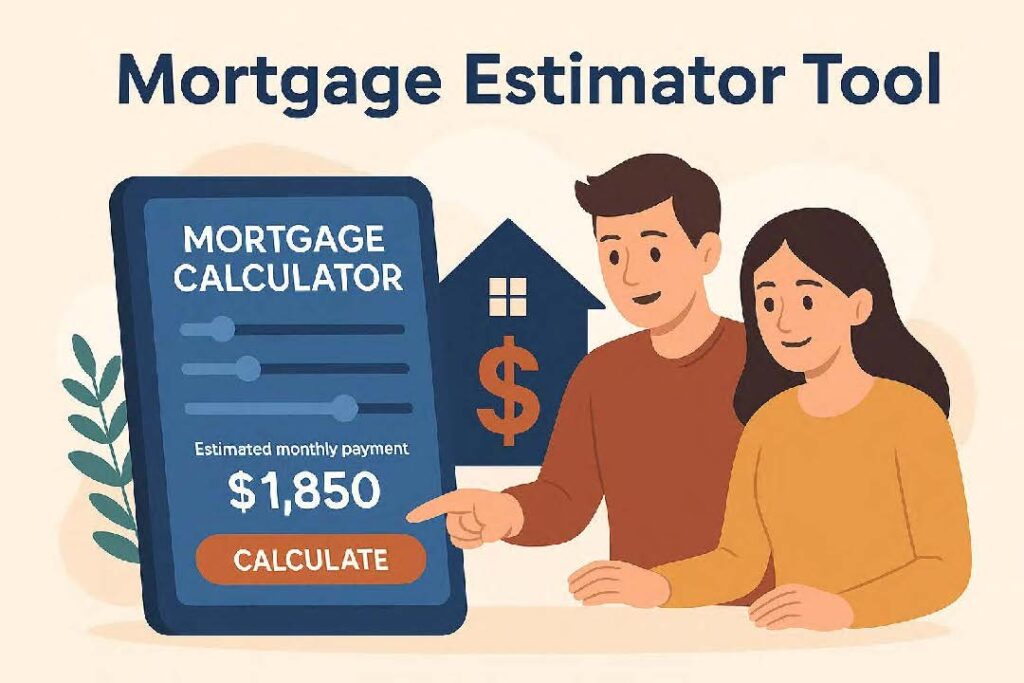
Mortgage Estimator Tool

Buying a home is one of the most important financial steps you’ll ever take, and the first thing you need is information. With the right tools—like a mortgage calculator free, mortgage estimator based on income, or mortgage estimator tool—you can confidently plan your next move in Utah’s competitive housing market. Whether you’re a first-time buyer, investor, or planning to refinance with bad credit, we’ve gathered everything you need to make smarter decisions. Use our free mortgage estimator to be up to date on Utah Home Loan tools and advice.

Mortgage Estimator Tools Every Buyer Should Use

Before you reach out to a lender, use a free mortgage estimator tool to estimate your monthly payments. Most calculators allow you to input your down payment, loan term, and interest rate. More advanced platforms like the mortgage estimator Zillow or a mortgage estimator based on income offer deeper insights based on your salary and debt ratio.

Want to go deeper? Try a how much mortgage can I afford calculator to know your exact buying power before you apply online.

Mortgage Estimator Free | Utah Home Loan Tools and Advice

First-Time Buyers: Mortgage Tips for Utah Residents

Shopping for a mortgage for first time buyers in Utah? You’re in luck. There are dozens of home loan assistance [state] programs that offer grants, lower down payments, or reduced closing costs. To find the best mortgage for new home buyers, look for fixed-rate terms, low fees, and flexible credit requirements.

Don’t forget to learn how to qualify for a mortgage first time buyer. Most programs require proof of income, job stability, and sometimes a credit score over 620.

Refinancing Your Home, Even with Bad Credit

Many Utah homeowners benefit from a refinance, whether to lower monthly payments or change loan terms. Start by comparing mortgage refinance rates and learning how to refinance my mortgage based on your goals. Even with poor credit, refinance with bad credit options exist.

The key is working with the best lenders for refinancing, especially local mortgage lender near me options or a mortgage broker in [city] who understands Utah’s market.

Understanding Home Equity Loan vs HELOC

Many Utah homeowners tap into their home’s value to cover renovations or major expenses. The most common options are a home equity loan vs heloc. A home equity loan with good credit is ideal for those who want fixed monthly payments. If you’re less creditworthy, a home equity loan with bad credit may still be possible, but rates will be higher.

Need more flexibility? A home equity loan vs line of credit comparison will help you understand whether you want a lump sum (loan) or revolving credit (HELOC).

Mortgage Estimator Free | Utah Home Loan Tools and Advice

Investment Properties and DSCR Loans

Looking beyond your primary residence? You’ll want to consider a mortgage for second home or a loan for real estate investment. If you’re investing in rental property, a dscr loan for investors may be the best option—it’s based on rental income, not your personal debt-to-income ratio.

Application Tips and Staying Informed

Apply anytime with a mortgage application online and speed up the process. Use a mortgage pre approval tool to strengthen your offer and avoid surprises during underwriting. Staying informed through mortgage news and regularly checking the best mortgage rates in [city] can save you thousands over the life of your loan.

Need help choosing the right partner? Ask local home loan providers for quotes or schedule time with a mortgage broker in [city].

Conclusion

Whether you’re applying for a mortgage for first time buyers, considering a home equity loan vs heloc, or looking for home loan assistance [state], you don’t have to do it alone. Use every tool at your disposal—from a mortgage estimator free to a mortgage application online—and compare options wisely.

Don’t forget: your financial future begins with knowledge. Bookmark this page, check back for mortgage news, and reach out to local home loan providers to get started today.

Mortgages: Everything You Need to Know About Them

Mortgages: Graphic of a mortgage broker, mortgage lender, mortgage payment calculator, and money in a house.

Your Complete Guide to Rates, Lenders, and Tools

Navigating the mortgages application process can feel overwhelming, especially for first-time homebuyers. With numerous options, terms, and fluctuating mortgage rates, it’s essential to be informed before making any decisions. Whether you’re just starting to explore how to get a mortgage or ready to compare mortgage quotes, this guide will walk you through every step, using the tools and insights you need to make smart financial decisions.

Understanding Mortgages and the Application Process

The first step in home buying is understanding the mortgage application process. This process involves submitting financial documents, verifying your income, obtaining a credit report, and selecting a loan product that best suits your needs. A “mortgage broker near me” can often assist in navigating the paperwork and connecting you with potential lenders.

When comparing lenders, it’s a good idea to read mortgage lender reviews. These reviews offer insight into real customer experiences and can help you find the best mortgage lenders for first-time buyers who may need extra support and educational resources.

Tools to Help You Calculate and Compare Mortgages

Knowledge is power, and with so many tools available online, it’s easier than ever to evaluate your options. A mortgage calculator is one of the most valuable resources. This tool helps you estimate monthly payments based on principal, interest, and loan term.

There’s also the mortgage payment calculator, mortgage loan calculator, and mortgage rate calculator, each designed to give you a more detailed look at how specific rates, terms, and loan amounts will affect your monthly budget.

If you’re just beginning your home search, a mortgage estimator can give you a quick sense of your potential loan amount based on income and debt levels. These calculators are often found on lender websites and are a must-use for smart planning.

Comparing Mortgages and Their Rates

One of the most important factors when choosing a lender is the mortgage interest rate. This determines the cost of borrowing over time. Today’s rates can vary widely between lenders, so it’s important to shop around.

Check out mortgage rates today using online comparison tools or contact a “mortgage broker near me” who can compile current offers. If you’re wondering what a good deal looks like, look up the average mortgage rate as a benchmark.

Sites that offer a mortgage comparison feature allow you to view offers side by side, a great way to spot differences in closing costs, APRs, and more.

Getting Pre-Qualified and Pre-Approved for Mortgages

One way to strengthen your position as a buyer is to pre-qualify for a mortgage. This is a basic financial check that shows you’re serious and gives you a ballpark figure for your budget.

Once you’ve pre-qualified, it’s smart to get pre-approved. This required more documentation, but it puts you in a stronger position when making offers. It shows sellers that you’ve already passed a lender’s initial review.

Finding the Right Lender

Choosing a lender isn’t just about the lowest mortgage rates today; it’s about trust, support, and flexibility. Look for “mortgage companies near me” that offer personalized service, or go national if you want access to digital tools and fast underwriting.

There are many mortgage companies to choose from, so take your time researching. Don’t just go with the first bank that pre-approves you. Read mortgage lender reviews, compare quotes, and make sure you understand the terms.

The Power of Shopping Around

Rates can vary by lender and even by location. Whether you’re comparing home mortgage rates, mortgage loan rates, or looking for the best mortgage rates on the market, cast a wide net.

Online lenders often offer highly competitive rates, while local lenders may provide more hands-on service. Always request multiple mortgage quotes; even a small difference in interest rate can translate into tens of thousands of dollars over the life of the loan.

Today’s Market: What to Know

In today’s housing market, current mortgage interest rates are affected by inflation, Federal Reserve policy, and broader economic trends. Use real-time tools to track mortgage rates today, and don’t hesitate to lock in a rate if you find a favorable offer.

It’s also helpful to understand what drives the average mortgage rate nationally and regionally. This context can help you decide when to act and when to wait.

Final Thoughts: How to Get a Mortgage That Works for You

If you’re asking yourself how to get a mortgage, the answer starts with preparation. Know your credit score, gather your financial documents, and use every tool at your disposal, from the mortgage calculator to the mortgage comparison platforms, to make the most informed choice.

Whether you’re a first-time buyer or refinancing, the right combination of planning, research, and expert advice will help you secure the best possible loan. Remember: the best mortgage isn’t just the lowest rate, it’s the one that fits your financial goals and lifestyle.

By using all available tools, from the mortgage loan calculator to lender comparison websites, and educating yourself on today’s mortgage rates, you’re well on your way to homeownership success.

Everything You Need to Know About Mortgages: Your Complete Guide to Rates, Lenders, and Tools