Mortgage rates can vary daily based on market conditions. For the most up-to-date information, please check our current rates page or contact one of our mortgage advisors.
2. How do mortgage rates in Utah compare to the national average?
Utah’s mortgage rates are often competitive with the national average. Factors such as local economic conditions, state regulations, and the overall housing market influence rates. To see how Utah’s rates compare, view our rate comparison tool.
3. What factors influence mortgage rates in Utah?
Several factors can influence mortgage rates, including:
Credit Score: Higher scores typically qualify for lower rates.
Loan Amount: Larger loans may have higher rates.
Loan Type: Fixed-rate, adjustable-rate, FHA, VA, and USDA loans all have different rates.
Loan Term: Shorter terms often have lower rates.
Economic Conditions: Inflation, employment rates, and the Federal Reserve’s policies can impact rates.
4. How can I get the best mortgage rate in Utah?
To secure the best mortgage rate:
Improve Your Credit Score: Pay off debts and ensure timely payments.
Save for a Larger Down Payment: This can lower your loan-to-value ratio.
Compare Lenders: Shop around for the best offers.
Consider Different Loan Types: Each type may offer different rates and benefits.
5. Are there specific mortgage programs available for first-time homebuyers in Utah?
Yes, Utah offers several programs for first-time homebuyers, such as:
Utah Housing Corporation (UHC) Programs: These include down payment assistance and mortgage credit certificates.
FHA Loans: Low down payment options and flexible credit requirements.
VA Loans: For eligible veterans and active military personnel, offering low or no down payment options.
6. How does the pre-approval process work for mortgages in Utah?
Getting pre-approved involves a lender evaluating your financial situation to determine how much you can borrow. This process includes:
Credit Check: Assessing your credit score and history.
Income Verification: Reviewing pay stubs, tax returns, and employment status.
Debt-to-Income Ratio: Ensuring your debts are manageable relative to your income.
7. What are the benefits of getting pre-approved for a mortgage in Utah?
Pre-approval offers several benefits:
Stronger Offers: Shows sellers you are a serious buyer.
Budgeting: Helps you understand how much you can afford.
Faster Closing: Streamlines the underwriting process once you make an offer.
8. What is the difference between a fixed-rate and an adjustable-rate mortgage (ARM) in Utah?
Fixed-Rate Mortgage: The interest rate remains the same throughout the loan term, providing predictable monthly payments.
Adjustable-Rate Mortgage (ARM): The interest rate may change periodically, usually starting with a lower rate than fixed-rate loans but potentially increasing over time.
9. Can I refinance my mortgage in Utah to take advantage of lower rates?
Yes, refinancing your mortgage can be a great way to take advantage of lower rates. It involves replacing your current mortgage with a new one, often to:
Lower Monthly Payments: By securing a lower interest rate.
Shorten Loan Term: Pay off your mortgage faster.
Access Home Equity: Through cash-out refinancing.
10. What are the closing costs associated with getting a mortgage in Utah?
Closing costs can vary but typically include:
Origination Fees: Charged by the lender for processing the loan.
Appraisal Fees: For assessing the property’s value.
Title Insurance: Protects against potential title issues.
Taxes and Recording Fees: Local government charges for recording the mortgage.
For more detailed information and personalized advice, please contact us or visit our mortgage resources page.
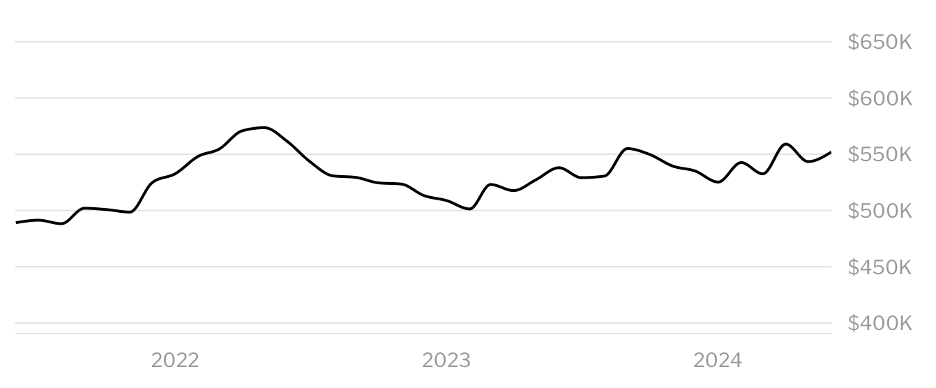
The median home sales price in May 2024 has increased in the past 3 months to $545,900. That’s up 3.1% and $16,300 higher than May 2023 of last year. That is higher than the national median home sales price of $439,716.
How many houses are available in Utah?
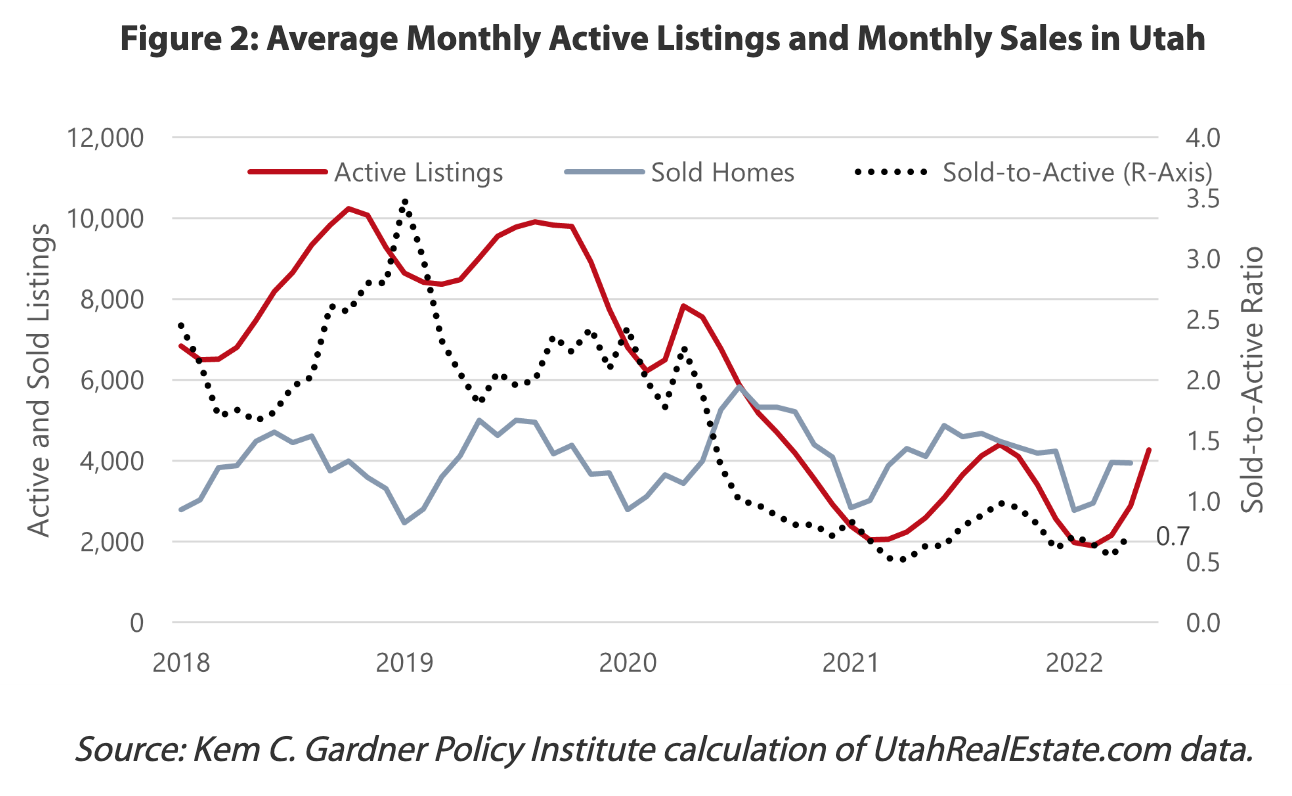
The real estate market in Utah had 9,935 homes for sale in May 2024 and is up from 9004 homes for sale the month prior and up from 8,286 homes in May 2023 which is 19.9% up.
How many houses are sold in Utah?
There were 3468 homes sold in May 2024, trending up from 3116 homes sold a year ago. This is up 352 homes and 11.3% since May 2023.
How long does it takes to sell a house in Utah?
Homes in Utah are staying on the market for 35 days. That’s 4 days slower than the median in May 2023, which is 12.9%. This shows that the market is less competitive today.
Utah Housing Market in 2025
Impact of Mortgage Rates
Our forecast for existing home sales through 2025 has been modestly revised downward due to expectations of higher mortgage rates. Rates are expected to remain close to 7% through the end of the year before potentially trending downward in 2025.
Yearly Comparisons
In 2023, the growth rate was 6.6%, and for 2024, we forecast a 4.8% increase. By 2025, the growth rate will dip to 1.5%, well below the long-run average of 3-5% annual increases.
Comparing January and May Forecasts
In January, a lot of real estate professionals predicted a 3.2% increase in home prices for 2024. By May, this forecast was revised to 4.8%. For 2025, the January forecast was a 3% increase, which was later adjusted to 1.5% in May.
Historical Context
The average number of existing home sales per year since 1989 is just over 5 million. The 2025 forecast of 4.5 million is about 500,000 less than this historical norm.
Great! You’ve decided to set roots in Utah, the land of stunning landscapes and vibrant communities. But before you picture yourself sipping tea on a cozy porch overlooking the Wasatch Range, there’s the hurdle of navigating the home-buying journey. This guide will provide a one-stop shop for buying a home in Utah real estate market.
Utah is known for its stunning landscapes, strong economy, and family-friendly communities. Here’s why buying a home in Utah could be one of the best decisions you make:
Booming Economy: Utah boasts a robust job market, particularly in tech and healthcare, which makes it a prime location for career growth and stability.
Outdoor Lifestyle: From skiing in Park City to hiking in Zion National Park, outdoor enthusiasts will find plenty to love. Utah’s natural beauty offers numerous recreational opportunities year-round.
Family-Friendly: With excellent schools and safe neighborhoods, Utah is a great place to raise a family. Communities are designed to be welcoming and supportive, making it an ideal place for young families.
Understanding the Utah Real Estate Market
The Utah real estate market is unique and has its own set of trends and characteristics:
Growth Areas: Salt Lake City, Provo, and St. George are some of the fastest-growing areas, attracting new residents due to their vibrant economies and desirable living conditions.
Price Trends: While prices have been rising, there are still affordable options, particularly in emerging neighborhoods across the valley. This offers opportunities for both first-time homebuyers and those looking to invest in real estate.
Overlooking shot of St. George, Utah. (Courtesy of Livability)
Utah Home Buying Statistics
Understanding the current market statistics can help you make informed decisions:
Statistics about Utah Home Buying
Average sale price of homes in Utah (June 2024) [i]
The Economy: Utah boasts a healthy economy, but buying a home requires sound financial planning. In June 2024, 26.6% of homes in Utah sold above list price[iv], which is something to consider when putting in an offer for a home. On the other hand, property tax rates in Utah are low. Utah has the sixth lowest property tax rate in the country at 0.55%.[v]
Getting a Mortgage: Whether you have 3% to put down on a home or 20%, finding the right lender is critical. We’ll explore top Utah lenders offering competitive rates and programs tailored to first-time homebuyers or specific needs.
Finding a Real Estate Agent: A solid real estate agent who will advocate for you in your Utah home buying journey is critical. We’ll discuss the benefits of working with an agent, along with tips for finding the perfect match who understands your needs and the local market.
Once you understand some of the important financial information, you can look at some important considerations for first-time homebuyers to make sure you’re well-prepared.
Tips for First-Time Homebuyers in Utah
Consider State Programs: Utah offers various first-time homebuyer programs and grants. Visit the Utah Housing Corporation for more information.
Budget for Closing Costs: In addition to your down payment, budget for closing costs, which can include fees for inspections, appraisals, and title insurance.
Research Neighborhoods: Take the time to research and visit different neighborhoods to find the one that best suits your lifestyle and needs.
Make sure to look into down payment assistance and loan programs that you may qualify for!
Utah Down Payment Assistance and Loan Programs
Programs
FirstHome
FHA or VA Mortgage
Conventional HFA Advantage Loan
Qualifications
– First time homebuyer – 660 or higher credit score
– Previously owned a home or first-time homebuyer – 620 or higher credit score
This program typically has lower purchase price and income limits and lower interest rates.
Homebuyers can purchase residence with up to 2 units
Financing option for this loan might have a higher interest rate but a lower mortgage insurance costs, which might result in a lower monthly payment.
Source: Down Payment Assistance and Loan Programs. (2023). In Utah Housing Corporation. Utah Housing Corporation. Retrieved July 18, 2024, from https://utahhousingcorp.org/pdf/Form211.pdf
Now that you have all of the information, you are ready for the next steps.
Next Steps to Buying Your Utah Home!
Take the next steps to buying your home!
Get Pre-Approved for a Mortgage
What are today’s mortgage rates in Utah? Check them out here.
Remember: interest rates will vary by lender and by borrower, depending on factors like credit score, loan program, down payment, etc. Compare quotes from at least 3 different lenders to make sure you’re getting the lowest rate.
Ask about down payment and closing cost assistance.
Partner with a knowledgeable real estate agent who knows the Utah market. Consider agents from reputable firms like Coldwell Banker and Re/Max.
Make sure they’re licensed, read reviews, ask questions about how they will help you, and trust your instincts to find the right person to help you buy your home.
[iii] GOBankingRates. (n.d.). The average credit score in each state — see where your state ranks. Nasdaq. https://www.nasdaq.com/articles/the-average-credit-score-in-each-state-see-where-your-state-ranks#
[v] Pitts, E. (2024, February 22). Some states have more affordable property taxes than others. Where does Utah rank? Deseret News. https://www.deseret.com/utah/2024/2/20/24078329/state-ranking-property-tax-value-utah-housing-market/
Become a millionaire real estate investor by simply purchasing homes.
Have you considered the benefits of becoming a landlord as rent prices and real estate prices around the world continue to increase? To illustrate, interest rates are a negligible detail when a renter is paying the entirety of your mortgage. Wouldn’t you agree?
Investing in real estate has a reputation that discourages Americans.
Yet, the most tried and true path to building generational wealth involves owning multiple homes and having tenants cover your mortgage expenses. However, traditional investment properties, secondary mortgages, and rental loans often demand a 20% down payment and savings.
Furthermore, these requirements create a substantial barrier for aspiring investors and families. Not to mention these mortgages designed specifically for rentals often carry unattractive interest rates that prevent the ability to qualify further.
Housing is the only necessity disguised as an investment vehicle.
21,951,000 people in the U.S. have a net worth of $1 million or more. 40% of an average millionaire’s assets consist of real estate.
federal reserve
The key to this strategy is occupancy.
For this reason, at Utah Mortgage Rate we provide a unique pathway to help you become a millionaire real estate investor. Especially, for our clientele with limited cash assets. To begin, the strategy to growing an abundant real estate portfolio is through primary mortgages.
Owning a real estate portfolio worth millions is achievable through primary mortgages.
Image the equity gains you’ll acquire over time if you own multiple mortgages.
To clarify, this strategic approach regarding occupancy allows you to accumulate home loans that require minimal cash down payments. You can transition your first property into a rental property when you’re ready to occupy a new home. It’s crucial to buy your next property with the intent to live in it initially. Primary mortgages are only originated for owner-occupied properties.
In other words, this strategy secures better mortgage terms and gives investors the opportunity to accumulate properties without large down payments. Eventually, after that one year has passed you can apply again for another primary mortgage with a Mortgage Broker.
As a result, your first home becomes an income-generating asset, generating generational wealth and appreciating over time. More importantly, the mortgage terms remain unchanged throughout this process.
Don’t wait to buy real estate. Buy real estate and wait.
However, imagine sitting down with an expert Mortgage Broker and a Local Utah Realtor today. Above all, we can discuss the beginning of many investments in real estate with a no obligation consultation.
When looking to buy a home, one can either pay upfront or use a home loan called a mortgage. A mortgage allows home buyers to buy a house when they don’t have enough money to pay for it outright. The loan comes with terms pre-determined by both parties, the lender and the buyer. These terms include everything that is included, including the total sum, the interest rate (extra money one has to pay for borrowing the money), and the rate to which it has to be paid back (usually 15, 20, or 30 years).
Which Term Length is Right for Me?
15-year and 30-year mortgages. The main differentiator between these two rates is the time it takes to repay the loan. For 15-year mortgages, the buyer has a repayment period of 15 years, meaning that borrowers must make monthly payments for 15 years until the loan is fully paid off. In turn, with 30-year mortgages, the buyer has a repayment period of 30 years. When it comes to making these monthly payments, 15-year mortgages are typically more expensive than that of a 30-year mortgage. Since the term is shorter, borrowers have to pay off the principal (each payment) and the applied interest in a shorter amount of time. This results in larger monthly payments. Buyers can count on 30-year mortgages to be lower, as they are stretched over a longer period. This can make homeownership more affordable on a month-to-month basis.
Interest rates, or the amount a borrower is charged for the money, are typically lower on a 15-year mortgage, than on that of a 30-year mortgage. When choosing between a 15-year and 30-year mortgage, the buyer has to consider their financial flexibility. As a buyer can expect a 15-year mortgage to be more expensive, they can also expect to own their home outright sooner. With 30-year mortgages, lower monthly payments can provide the buyer with more financial flexibility. On the other hand, it takes longer for the buyer to own their home outright. This being said, when it comes to choosing a mortgage rate, consider the long-term financial plans, and whether or not to pay off the home sooner, at a higher rate, or delayed and at a more manageable monthly payment. To estimate the monthly mortgage, see our Mortgage Calculator to break down the payments.
Interest Rates
There are two main types of interest rates. The first one is a fixed interest rate. That means from the moment that the loan is taken out, the rate will be constant. If it starts with 6.8% interest on the loan, that is what will be paid until the loan period ends. The second is an adjustable-rate mortgage. These have the ability to change after a certain amount of years. An example would be the 7/1 loan. This loan has a fixed interest rate for the first seven years and will vary each year after that until your loan pay period is up. There are several that have that same format.
Most mortgage companies have 3 main factors they look at when deciding what your interest rate will be. The first is based on how much money you would be able to put toward a downpayment. They usually require 0%-20%. If you place more, It can lower your interest rate. The second is your credit score. Many require a minimum credit score. The further away you are, the higher the chance of getting a better rate. Lastly, your debt-to-income ratio. This is how much you pay in debts each month compared to how much you make. You have to have at least have 50% higher income vs. your debts to get a better rate.
How to pay off a 30-year Mortgage in 15 years.
So, what if you can’t pay the higher monthly payment associated with a 15-year mortgage but don’t want to be caught with hundreds of thousands in interest? Or maybe your credit score was too low or your debt-to-income ratio was too high to qualify for a 15-year mortgage. Not to fear! This is where refinancing comes in. Let’s say you’ve been paying off your 30-year mortgage for four years and have reached a new height of financial stability or get married and can now afford a higher monthly mortgage payment. At this point, you could opt to restructure your loan to a 15-year mortgage and pay it off in just under 20 years.
Alternatively, you can pay extra installments of monthly payments straight to your principal in order to pay off your 30-year mortgage at an earlier rate. In order to do this you must make sure your mortgage agreement doesn’t have a prepayment penalty, which is written into your agreement. If this is the case, you can make one extra payment a year for a total of 13 payments and pay off your mortgage around four years earlier than expected. This compounds, that if you make two extra payments a year you can pay off your mortgage for around seven to ten years. Altogether there are many strategies to customize your mortgage to make it fit your life and lifestyle at any given time.
Pros and Cons of 15-year mortgages and 30-year mortgages.
How do you know what mortgage is right for you? There are benefits and disadvantages to both types of mortgages. Let’s look at the pros and cons of 15-year mortgages and 30-year mortgages.
Pros and Cons of 15-year mortgages
Starting with 15-year mortgages there is one major pro, you have the chance to save thousands of dollars. Lenders will typically charge a low interest rate for 15-year mortgages so over time you will save on interest. You also have the ability to own your home in 15 years, and you can build home equity faster. When you pay off the balance of your loan faster, you build equity faster.
The cons to be aware of with 15-year mortgages are that your monthly payment will be higher. You will want to be prepared before you commit to a high payment as it may put a strain on your budget. 15-year mortgages may be harder to qualify for because your lender will want to ensure that your income can accommodate the larger interest payments. It may be helpful to look at our mortgage calculator to see what kind of monthly payment you can afford.
Pros and Cons of 30-year mortgages
The 30-year mortgage is the most popular loan to get. The pros of the 30-year mortgage rate is that it will have lower monthly payments. A lower monthly mortgage rate can allow for savings in other areas such as investing. There is flexibility in a 30-year mortgage rate. You can pay off the loan faster by adding to your monthly payment or by making extra payments. Other pros include more house for your mortgage, so this means you may qualify for a larger home. It is also easier to qualify for a 30-year mortgage.
The downsides to a 30-year mortgage rate are as follows. There are higher interest rates on a 30-year mortgage due to the mortgage lender’s risk of not getting paid back is stretched over a longer period of time, this also means that you will pay more interest over the lifetime of the loan. Finally, it takes longer to build equity in your home. Whichever way you want to pay, we are here to help you through the process of buying a home.
Summary
So, you’d like to buy a home without paying the full price upfront. The most common way to do so is with a 15-year mortgage or a 30-year mortgage. 15-year mortgages are typically more expensive month-to-month, but allow the buyer to own their home sooner. In turn, 30-year mortgages are a more manageable monthly payment but result in more interest over time and a longer pay period.
When it comes to mortgages, the buyer must consider their interest rate, whether fixed or adjustable. The lender will reference the buyer’s down payment, credit score, and debt-to-income ratio to finalize their rate. Whether the mortgage has a 15 or 30-year payment, the interest rates and terms will affect their monthly payments and overall costs.
When looking into which mortgage rate is best for the buyer, weighing the pros and cons will help develop an answer. For 15-year mortgages, the positives include potential savings on interest, faster home ownership, and quicker equity building. However, the complications come with higher monthly payments and stricter qualification criteria. In turn, 30-year mortgages will offer lower monthly payments, flexibility, and easier qualification. They also come with higher interest costs and slower home equity building.
All in all, there is no one-size-fits-all for mortgage rates. The buyer should weigh their options to find what is best for them. For questions, or a full walk-through of the mortgage process, reference our Support tab on our website.