What You Need to Get Pre-Approved for a Home

A married couple in a mortgage pre-approval meeting with a mortgage broker.

Introduction

Navigating the real estate market in the Beehive State can be daunting, but understanding how to get a mortgage is the first real step toward homeownership. Many prospective home buyers start their journey by exploring the financial landscape of home loans —the real competitive edge comes from securing a mortgage pre-approval. This document proves to sellers that a mortgage lender has already vetted your finances and is ready to back your offer.

To start the process, you should research the best mortgage companies and best mortgage lenders available in the state of Utah. Experts encourage you to get a mortgage quote from several different sources to ensure you get the best deal. While some buyers prefer large national banks, others have found that working with a local mortgage broker offers help with the local markets and a more personalized experience.

What You Need to Get Pre-Approved

Paper showing mortgage pre-approval checklist showing W-2s, tax returns, drivers license, and social security.

When you sit down with a professional to discuss your mortgage application, you might ask, “What will I need to get a mortgage?” Generally, you will need to provide proof of income (such as W-2s and tax returns) and evidence of assets for a down payment. Knowing specifically what you need for pre-approval saves time and stops the underwriting process from stalling.

Once you have gathered your documents, the next question is timing. When should I apply for the mortgage loan paperwork? Ideally, this should happen before you even set foot in an open house. When should a lender pre-approve my mortgage loan? Most experts recommend getting your letter 3 to 6 months before you intend to buy. This gives you time to fix any credit issues that might arise during the steps to buying a house. When should you get a mortgage pre-approval? As soon as you are serious about entering the market.

Understanding Home Loan Interest Rates and Programs

An infographic titled, "UNDERSTANDING HOME INTEREST RATES & PROGRAMS" Text reads: FHA Loans for lower down payments, VA Loans providing benefits for veterans, and USDA Loans for zero-down rural financing.

Your choice depends on your financial situation and specific program requirements. For many, FHA loans are an excellent entry point because they offer lower down payment options. Veterans should always look into a VA home loan, which provides significant benefits for those who have served. In more rural Utah communities, USDA loans are another powerful tool for zero-down financing.

Regardless of the program, current mortgage rates and home loan interest rates dictate your monthly payment. It pays to be diligent; finding the best mortgage or home loan rates can save you thousands of dollars over the lifetime of your loan. Keep a close eye on home loan rates, as they fluctuate with market conditions.

Finalizing Your Mortgage Pre-Approval in Utah

A smiling young couple sits at a wooden conference table in a modern Brokers Office, reaching out to receive a vetted mortgage pre-approval from a person in a navy suit. The document is clearly labeled "PRE APPROVED."

It is important to understand the difference between securing a home loan approval and obtaining a prequalification for a home. A pre-qualification is a surface-level look at your debt, while a pre-approval is a deep dive into your credit score. Most sellers in Utah will not even look at an offer without a formal pre-approval letter. As you finalize your plans, continue to monitor current mortgage rates and stay in close contact with your lender. Following these steps will position you to secure your dream home. Whether comparing lenders or quotes, preparation is the key to success.

View Mortgage Rates in Utah

https://ivoryhomes.com/home-calculator?utm_source=google&utm_medium=cpc&utm_campaign=cpcsaltlakecounty&utm_content=793482558148&utm_term=interest%20rates%20today%2030%20year%20fixed&gad_source=1&gad_campaignid=23415678908&gbraid=0AAAAAD_wVcBHV8B_7U-y63W1S0Bzzd4Bd&gclid=CjwKCAiA2PrMBhA4EiwAwpHyC5s5gLKyrUfxQazMB3vmS5pPl8XNwIUCc9nCsewyZhOvCo_fLv2p4BoCAYEQAvD_BwE

Utah Mortgage Rates Today: What Homebuyers and Homeowners Need to Know in 2025

Mortgage rates play a major role in determining how affordable a home is, how much buyers can borrow, and whether refinancing makes financial sense. In Utah, where population growth and housing demand remain strong, understanding current mortgage rates—and where they may be headed—is especially important for both first-time buyers and existing homeowners.

This guide breaks down current mortgage rates in Utah, explains what influences them, compares loan options, and offers practical tips for securing the best possible rate in 2025.


Current Mortgage Rates in Utah

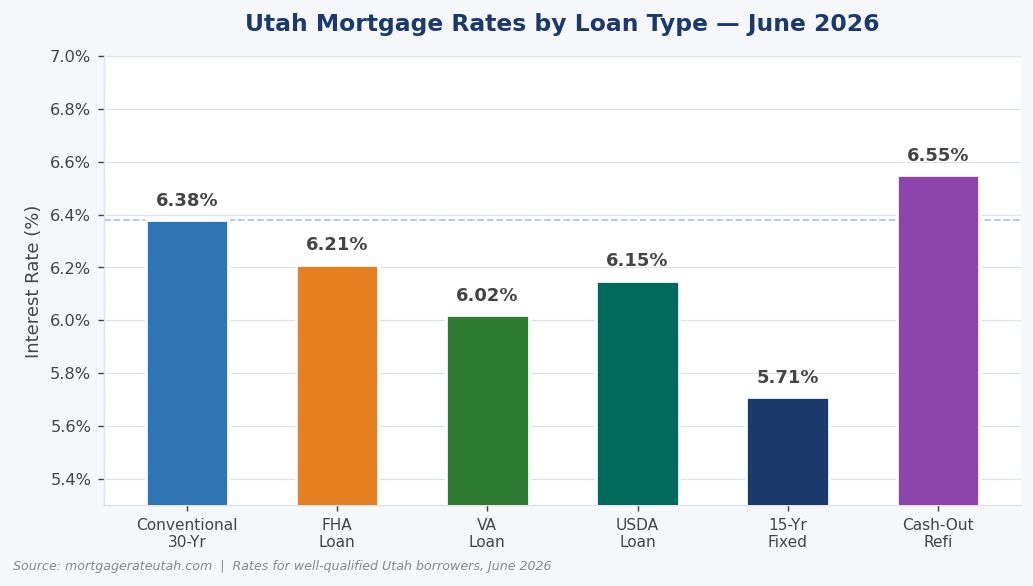
Mortgage rates in Utah generally track national trends, but they can vary based on local lenders, borrower qualifications, and loan type. As of today, Utah mortgage rates typically fall into the following categories:

  • 30-year fixed mortgage rates: Higher than short-term loans, but offer stable monthly payments
  • 15-year fixed mortgage rates: Lower interest rates with higher monthly payments
  • Adjustable-rate mortgages (ARMs): Lower initial rates that adjust after a set period

The exact rate a borrower receives depends heavily on credit score, loan size, and whether the loan is for a purchase or refinance. Even small rate differences can add up to tens of thousands of dollars over the life of a loan.


30-Year vs. 15-Year Mortgage Rates in Utah

One of the most common decisions buyers face is choosing between a 30-year and a 15-year mortgage.

A 30-year mortgage offers:

  • Lower monthly payments
  • Greater cash-flow flexibility
  • Higher total interest paid over time

A 15-year mortgage offers:

  • Lower interest rates
  • Faster equity buildup
  • Significant long-term interest savings

For many Utah buyers—especially first-time homebuyers—the 30-year mortgage remains the most popular option. Borrowers with strong income stability, however, may benefit from the long-term savings of a 15-year loan.


Refinance Mortgage Rates in Utah

Utah refinance mortgage rates vary based on market conditions and borrower profiles. Homeowners typically refinance to:

  • Lower their interest rate
  • Reduce monthly payments
  • Switch from an adjustable-rate to a fixed-rate loan
  • Access home equity through cash-out refinancing

Refinancing is usually most beneficial when the new rate is meaningfully lower than the existing one and the homeowner plans to stay in the property long enough to recover closing costs.


FHA, VA, Conventional, and Jumbo Loan Rates in Utah

Different loan types come with different rate structures and qualification requirements:

  • FHA loans: Competitive rates designed for buyers with lower credit scores or smaller down payments
  • VA loans: Often among the lowest rates available, reserved for eligible veterans and service members
  • Conventional loans: Rates depend heavily on credit score and down payment size
  • Jumbo loans: Used for higher-priced homes and may carry slightly higher rates due to increased lender risk

Choosing the right loan type can impact affordability just as much as the interest rate itself.


What Determines Mortgage Rates in Utah?

Several factors influence mortgage rates in Utah, including:

  • National economic conditions and inflation
  • Federal Reserve interest rate policy
  • Housing supply and demand within Utah
  • Borrower credit score and debt-to-income ratio
  • Loan term, type, and down payment amount

Because lenders evaluate risk differently, comparing offers from multiple lenders is one of the most effective ways to secure a better mortgage rate.


Utah Mortgage Rate Trends and 2025 Forecast

Many buyers are asking whether mortgage rates will drop in Utah. While exact predictions are impossible, most forecasts suggest:

  • Rates may gradually stabilize in 2025
  • Large, sudden drops are unlikely in the short term
  • Smaller fluctuations will continue throughout the year

Rather than trying to time the market perfectly, buyers should focus on affordability, personal finances, and long-term housing plans.


When to Lock a Mortgage Rate in Utah

Locking a mortgage rate can protect borrowers from sudden increases, especially in volatile markets. Borrowers close to finalizing a purchase often benefit from locking early, while those still shopping may monitor trends before committing.


How to Get the Best Mortgage Rate in Utah

To improve your chances of securing the best mortgage rate, consider the following steps:

  • Improve your credit score before applying
  • Pay down existing debt
  • Save for a larger down payment
  • Compare multiple lenders
  • Understand the differences between fixed and adjustable rates

Using a Utah mortgage rate calculator can also help estimate monthly payments and long-term costs.


Final Thoughts

Mortgage rates in Utah directly affect buying power, monthly payments, and long-term financial stability. Whether you’re purchasing your first home, refinancing, or upgrading to a larger property, understanding current rates and trends allows you to make more confident decisions.

By comparing lenders, choosing the right loan type, and preparing financially, Utah homebuyers and homeowners can navigate the housing market more effectively in 2025.

A How To Step-by-Step Guide for Homebuyers in Utah.

Sunset over Salt Lake City Valley, suburban Neighborhood
Utah Mortgage Rates Today
Let’s learn about Utah Mortgage Rates.

If you’re wondering how to qualify for a mortgage in Utah, you’re likely asking an important question: Do I meet the requirements to buy a home right now? With fluctuating Utah mortgage rates today, rising property values, and evolving lending guidelines, understanding the qualification process is essential.

Whether you’re researching how to get a home loan as a first-time buyer, comparing current home loan interest rates, or preparing to refinance your house, this step-by-step guide will show you exactly what Utah lenders look for in 2026.

Step 1: Understand How to Get a Home Loan in Utah

Before applying, it’s important to understand how to get a home loan and what lenders evaluate during underwriting.

Utah mortgage lenders typically review:

  • Credit score
  • Debt-to-income ratio (DTI)
  • Employment history
  • Income consistency
  • Down payment amount

If you’re exploring a first-time home owner’s loan, these criteria will determine both your approval and your interest rate.

https://senate.utah.gov/first-time-homebuyers-assistance-program-applications-available/ 
: A How To Step-by-Step Guide for Homebuyers in Utah.

Step 2: Review Utah Mortgage Rates Today and Loan Types

Interest rates significantly impact qualification because they affect your monthly payment and debt ratio.

Buyers often compare:

  • Utah mortgage rates today
  • 30 year fixed mortgage Utah options
  • National averages
  • Adjustable-rate options

Before committing, take time to compare mortgage rates Utah lenders offer. Working with the best mortgage lender in Utah ensures you understand which rate programs you personally qualify for.

Mortgage Brokers in Utah

Step 3: Calculate Your Budget Using an Affordability Calculator

A mortgage lender will assess whether your income supports the loan amount. Before applying, use an affordability calculator to estimate what you can comfortably afford.

Lenders in Utah typically prefer:

  • DTI under 43%
  • Stable income history (2+ years)
  • Minimal recent credit issues

This is especially important if you’re applying for low income home loans Utah programs or state-supported options.

Step 4: Prepare Your First Home Owners Loan Down Payment

One of the biggest barriers to entry is the first home owners loan down payment requirement.

Depending on loan type:

  • Conventional loans: 3–5% minimum
  • FHA loans: 3.5% minimum
  • VA & USDA: Potentially 0% down

If you qualify for Utah housing assistance mortgage programs, you may receive help covering your down payment. These programs are ideal for buyers searching for low income home loans Utah opportunities.

Step 5: Get Prequalified for a Home Loan

A critical step in qualification is to get prequalified for a home loan. This process estimates how much a lender may approve you for.

Today, many buyers choose to get prequalified for a home loan online, which allows for quick submission of basic financial information.

Some buyers even research how to get prequalified for a home loan reddit to read real-world experiences. However, speaking directly with mortgage brokers in Utah can provide more reliable guidance.

Second image will go here

Image alt text: Mortgage Brokers in Utah

Prequalification typically includes:

  • Income review
  • Debt evaluation
  • Soft credit check

Step 6: Understand How Long Mortgage Approval Takes in Utah

Many buyers ask: how long does mortgage approval take Utah?

Here’s a general breakdown:

  • Prequalification: 24–48 hours
  • Preapproval: 3–7 days
  • Full underwriting approval: 21–30 days

Timelines vary based on documentation readiness and lender efficiency.

Step 7: Compare Loan Programs and Interest Options

When qualifying, you must select the right loan structure. Popular options include:

  • Conventional loans
  • FHA loans
  • VA loans
  • USDA loans
  • 30 year fixed mortgage Utah products

If you already own a home and are exploring whether to refinance my house, monitor current home loan interest rates carefully. The best time to refinance in Utah is typically when rates drop significantly below your current loan rate.

Some homeowners also compare best home equity loan rates or search for best home equity loan rates near me when accessing equity for renovations or debt consolidation.

Step 8: Work With the Best Mortgage Lender in Utah

Choosing the best mortgage lender in Utah can improve both your rate and approval chances.

Alternatively, experienced mortgage brokers in Utah can:

  • Compare multiple lenders
  • Help you compare mortgage rates Utah offers
  • Match you with first-time buyer programs
  • Identify Utah housing assistance mortgage options

Professional guidance can streamline qualification and reduce costly delays.

Step 9: Improve Your Qualification Profile

If you don’t immediately qualify, there are ways to strengthen your application:

  • Reduce credit card balances
  • Avoid new debt
  • Increase savings
  • Improve your credit score
  • Stabilize employment
    Buyers researching how to get a home loan or how to get a home loan first time buyer programs often qualify faster once these factors are optimized.
How to Get a Home Loan

When Should You Refinance?

Homeowners frequently ask about the best time to refinance in Utah. Refinancing may make sense if:

  • You can secure lower current home loan interest rates
  • You want to switch to a 30 year fixed mortgage Utah structure
  • You need to tap into equity using the best home equity loan rates

Monitoring Utah mortgage rates today can help you time your refinance effectively.

Final Thoughts: How to Get a Home Loan Successfully in Utah

Learning how to qualify for a mortgage in Utah is about preparation, education, and choosing the right lender.

Whether you’re applying for a first time home owners loan, exploring low income home loans Utah, planning to refinance my house, or trying to get prequalified for a home loan online, the process becomes much easier when you understand each step.

Start by reviewing your credit, calculating affordability, comparing Utah mortgage rates today, and consulting trusted mortgage brokers in Utah.

With the right preparation and guidance, homeownership in Utah is well within reach.

Refinance Mortgage Rates Today: The Complete Utah Homeowner Guide


When Should I Refinance My Mortgage?

When you should refinance your mortgage depends on your current interest rate, equity, and future plans.

The best time to refinance a mortgage is typically when refinance mortgage rates today are significantly lower than your existing rate and you plan to stay in the home long enough to recover refinance mortgage closing costs.

Homeowners also wonder, how soon can you refinance a mortgage. In many cases, refinancing is possible after six months, though loan type matters.

If you paused payments, refinance mortgage after forbearance may require proof of resumed on-time payments.


Is Refinancing a Mortgage Worth It?

Whether refinancing a mortgage is worth it depends entirely on your financial goals.

Many borrowers refinance their mortgage to lower their monthly payment and create more room in their budget. Others choose to refinance to shorten their loan term, helping reduce the total interest paid overtime.

If your home has appreciated in value, refinancing may also allow you to remove PMI, which can significantly decrease your monthly costs.

Homeowners with strong equity might consider a cash-out refinance to access funds for other financial goals. Before moving forward, be sure to review cash-out refinance requirements, including minimum equity and credit score guidelines.


Refinance Mortgage Process Step by Step

Understanding the refinance process step by step makes it smoother.

  1. Compare refinance mortgage rates today
  2. Estimate refinance mortgage closing costs
  3. Submit income and credit documentation
  4. Complete underwriting
  5. Close on your new loan

Some homeowners ask about refinancing without an appraisal, which may be available in streamline programs. Others explore no-income verification options, though these are limited.


Refinance FHA Loan to Conventional

Many Utah homeowners choose to refinance an FHA loan into a conventional loan after building sufficient equity. This move can eliminate long-term mortgage insurance and provide greater loan flexibility.

It also works well for those looking to remove PMI and leverage increased home value to strengthen their approval and overall loan terms.


Refinance Mortgage vs Home Equity Loan

When comparing refinance mortgage vs home equity loan, remember:

● A refinance replaces your existing loan.
● A home equity loan adds a second lien.

If you have multiple loans, you may need to refinance your second mortgage or combine both into one new loan.


Refinancing with Credit or Income Challenges

It is possible to refinance a mortgage with bad credit, though rates may be higher. Improving your credit score before applying can improve results.

Similarly, refinance a mortgage with low income depends on your debt-to-income ratio. Entrepreneurs seeking to refinance mortgage while self-employed must typically provide additional documentation like tax returns.

If you have education debt, refinance mortgage with student loans may require lenders to
factor those payments into your qualification review.


Refinance Mortgage After Major Life Events

Life changes don’t automatically disqualify you.

● Refinance mortgage after bankruptcy is possible after waiting periods.
● Refinance mortgage after divorce is common when removing a spouse from the loan.
● Refinance mortgage with late payments may require recent clean payment history.
● Refinance mortgage after forbearance typically requires resumed on-time payments.

Understanding lender guidelines is essential in these scenarios.


Final Thoughts on Today’s Refinance Mortgage Rates

Ultimately, deciding whether refinancing a mortgage is worth it comes down to your financial goals.

Ask yourself:
● Should I refinance my mortgage to lower my monthly payment?
● Is it better to refinance a mortgage to shorten loan terms?
● Do I meet cash out refinance requirements?
● Will I recover refinance mortgage closing costs?
● Is now the best time to refinance a mortgage?

By reviewing today’s refinance rates and aligning them with your long-term goals, you can make a confident financial decision.

Your Complete Guide to Getting a Mortgage with Bad Credit

Securing a home loan can feel overwhelming when your credit isn’t perfect, especially if you’re dealing with low scores, limited credit history, or past financial setbacks. The good news? Many borrowers successfully obtain financing even with credit hurdles. This guide brings together the most common scenarios homebuyers face so you can better understand your options—whether you’re seeking a mortgage with 580 credit score, a mortgage with 600 credit score, a mortgage with 620 credit score, or even a mortgage with bad credit.

In fact, lenders today offer a number of alternative programs designed to help borrowers re-enter the housing market, rebuild after financial hardship, or buy their first home despite a minimal credit footprint. With the right approach, education, and strategy, you can position yourself for mortgage approval sooner than you think.

IMAGE #1: Bad Credit, Low Credit, No Credit

Understanding Credit Thresholds and Low-Score Mortgage Options

One of the most common concerns among buyers is qualifying for a mortgage with 580 credit score. FHA financing is the most widely accessible option for this scenario, as FHA guidelines typically allow borrowers to purchase a home with a 3.5% down payment when they have at least a 580 FICO. Similarly, a mortgage with 600 credit score often opens the door to even more lender flexibility, and a mortgage with 620 credit score is often considered the threshold where conventional financing becomes attainable.

These milestones matter because lenders classify credit tiers differently. While a mortgage with bad credit may sound discouraging, the truth is that many programs were created specifically to help borrowers with credit scores under 620. Additionally, if your credit is considered “fair,” working toward a mortgage with fair credit can still provide competitive opportunities. Each increase in score—even by 20 points—can significantly improve loan terms, which is why steady improvements often result in better approval odds and lower interest rates.

IMAGE #2: Credit Score Tiers- 580, 600, 620

Getting a Mortgage With Limited, No, or Alternative Credit History

Not everyone has an established credit profile, and that’s okay. Programs exist for those needing a mortgage without credit history, a mortgage with limited credit history, or even a mortgage with no fico score. In these cases, lenders may rely on alternative credit sources such as rental payments, utility accounts, or insurance premiums to evaluate payment reliability.

You may also see terms like mortgage without established credit or first time buyer mortgage no credit, both describing scenarios where a traditional credit report doesn’t reflect the borrower’s financial responsibility. Lenders familiar with manual underwriting often serve these buyers by reviewing consistent payment histories outside of standard credit reporting.

If you’re a first-time homebuyer who hasn’t used credit much—either by choice or circumstance—don’t assume that purchasing a home is out of reach. These programs were built with you in mind.


Navigating Mortgages After Bankruptcy, Foreclosure, or Credit Setbacks

Life happens, and financial challenges such as bankruptcy or foreclosure can temporarily disrupt your ability to qualify for a mortgage. Fortunately, many borrowers successfully obtain financing again once they meet the required waiting periods and demonstrate financial recovery.

A mortgage after bankruptcy is possible through several paths. Borrowers can pursue a mortgage after chapter 7 or a mortgage after chapter 13, depending on their filing type. The waiting periods differ, but many loan programs—including FHA, VA, and sometimes USDA—allow buyers to qualify sooner than conventional loans.

Similarly, if you’ve experienced a foreclosure, you may seek a mortgage after foreclosure. While foreclosure often carries a longer waiting period than bankruptcy, it does not permanently prevent homeownership. Lenders evaluate how you rebuilt your financial profile since that event and whether your current situation supports stable repayment.

Borrowers sometimes face other challenges like late payments or default history. If this sounds familiar, you may need guidance on obtaining a mortgage after missed payments or a mortgage after late mortgage payments. Many buyers also seek approval for a mortgage with recent credit issues, which could include anything from charge‑offs to collection accounts.

IMAGE #3: Documents needed for low-credit mortgage

Mortgages When You Have Collections, High Debt, or Disputes

Some scenarios involve more complex credit reports. For example, securing a mortgage approval with collections varies by loan type. FHA may permit approval with certain types of collections, while conventional financing may require the accounts to be resolved or addressed through payment plans. Every lender views collections differently, which is why shopping around can make a major difference.

If your debt load is high, a mortgage with high debt to income ratio may still be possible. FHA and VA loans tend to accommodate higher DTI ratios than conventional loans, making them more accessible for borrowers with strong income but higher monthly obligations.

Another roadblock buyers encounter is dealing with active disputes on their credit reports. A mortgage with credit disputes or a mortgage with disputed accounts can delay underwriting since many lenders require disputes to be removed or resolved before final approval. Addressing these issues early in the application process ensures a smoother path to closing.


Finding the Right Lenders for Challenging Credit Situations

A significant part of achieving mortgage approval lies in choosing the right lender—one familiar with working with imperfect or unusual credit histories. Searching for low credit score mortgage lenders or mortgage lenders for bad credit can help you find professionals comfortable evaluating non‑traditional financial profiles.

Some lenders specialize in FHA loans, others in VA or non‑QM (non‑qualified mortgage) programs, and others work specifically with first‑time or credit‑challenged borrowers. The key is identifying lenders who evaluate your full financial picture rather than denying applications based solely on score thresholds.


Conclusion

No matter your credit situation—whether you’re seeking a mortgage with 580 credit score, working on rebuilding after bankruptcy, needing a mortgage with no fico score, or searching for help after recent credit issues—you have more options than you may realize. Countless borrowers obtain mortgages every year with less‑than‑perfect credit, and with the right preparation, lender selection, and strategy, you can too.

How To Get The Best Mortgage Rate In Utah (2026 Guide)

Utah first time home buyer loan guide with house and mountain background

Buying a home in Utah in 2026 is a big financial decision, and securing the best mortgage rate possible can save you thousands of dollars over time. Even a small difference in interest rate can significantly impact your monthly payment and the total amount you pay over the life of your loan.

The good news is that getting a better rate is not about luck. It is about preparation, strategy, and understanding how lenders evaluate borrowers.

Understand What Impacts Your Mortgage Rate

Mortgage rates are influenced by both the overall economy and your personal financial profile. While national trends and inflation affect general rate levels, lenders look closely at your credit score, debt, income, and down payment when determining your individual rate.

This means you have more control than you might think.

Improve Your Credit Score

First time home buyer pre-approval in Utah with credit score and loan approval documents

Your credit score is one of the most important factors in securing a lower mortgage rate. Higher credit scores signal lower risk to lenders, which often results in better loan terms.

Before applying, consider:

  • Paying down credit card balances
  • Avoiding new large purchases
  • Making all payments on time
  • Checking your credit report for errors

Even small improvements in your score can help you qualify for better rates.

Lower Your Debt-to-Income Ratio

Lenders compare your monthly debt payments to your income. The lower your debt-to-income ratio, the more financially stable you appear.

If possible, pay down outstanding loans or avoid taking on new debt before applying for a mortgage. This strengthens your approval chances and may improve your rate offer.

Shop Around With Multiple Lenders

One of the biggest mistakes borrowers make is accepting the first rate they are offered. Different lenders may offer slightly different rates, fees, or loan structures.

Request quotes from multiple banks, credit unions, or mortgage brokers. Even a small difference in rate can add up to substantial savings over 15 or 30 years.

Consider Different Loan Types

Not all mortgages are the same. A 15-year loan often has a lower interest rate than a 30-year loan, though monthly payments will be higher. FHA and VA loans may offer competitive rates depending on your situation.

Understanding your options allows you to choose the structure that best fits your long-term goals.

Lock Your Rate at the Right Time

Mortgage rates can change daily. Once you find a rate you are comfortable with, ask your lender about locking it in. A rate lock protects you from increases while your loan is being processed.

This can provide peace of mind in a fluctuating market.

Utah home buyer assistance programs including down payment grants and closing cost support

Final Thoughts

Getting the best mortgage rate in Utah in 2026 comes down to preparation and smart decision-making. Strengthen your credit, reduce debt, compare lenders, and understand your loan options. With the right strategy, you can secure a rate that supports long-term affordability and financial stability.

Navigating Home Ownership: A Guide to Mortgage Success

The Journey to Your New Home

Buying a house can feel like being tossed into a frantic situation. While the process is complex, there is no need to fear! Understanding the market starts with finding the right mortgage lenders and home lenders who can explain how to get a home loan without the stress.

The first step for any first time home buyer is education. You need to know your mortgage rates and specifically mortgage rates today because they change faster than the speed of light. Use a home loan calculator to see how different current mortgage interest rates affect your monthly budget.

Preparing Your Application

Before you start looking at houses, you need a loan pre approval or home pre approval. This document is your shield in a competitive market. “What are we going to do?” You’re going to be prepared, that’s what!

When you fill out your mortgage application, lenders will look at your credit score to buy a house. This score determines if you qualify for the lowest home loan rates. If you are a single parent, look for a single parent home loan program designed to provide extra support.

Choosing the Right Loan Product

There is no “luck” in finding the right loan.

You must compare different options:
– 5 year arm rates: These can offer lower initial payments.
– 2nd home mortgage rates: Essential if you are looking for a vacation getaway.
– First time buyer mortgage: Specialized programs for those new to the market.
– Refinance rate: Keep an eye on this to see how to lower monthly mortgage payment costs later on.

Leveraging Your Equity

For those who already own property, the focus shifts to a home equity loan. Monitoring home equity rates and home equity loan interest rates allows you to use your home’s value for improvements or other expenses. The plan for your financial future is right here in your home’s equity.

Final Advice from the Pros

It’s all about knowing how to apply for a mortgage and tracking loan rates today. Whether you are a first time home buyer or looking to refinance rate terms, staying informed is your greatest advantage.

Don’t let your mortgage data get lost. Keep your home loan calculator results handy and stay in touch with your mortgage lenders.

For more information on the latest market trends, visit the Consumer Financial Protection Bureau.

Utah First Time Home Buyer Programs: 2026 Roadmap to Homeownership

Utah first time home buyer meeting with mortgage advisor discussing loan programs.

The dream of owning a home in the Beehive State is more achievable than many realize, especially with the current Utah housing market forecast 2026 indicating a shift toward a more balanced environment. After years of rapid price escalation, inventory has stabilized, and buyers finally have more room to breathe. However, the most common question remains: Is now a good time to buy a house in Utah? For those prepared to leverage state resources, the answer is a resounding yes. By understanding the various Utah first time home buyer programs, you can navigate the path from renting to owning with financial confidence.

How to Qualify for a Mortgage in Utah and Secure Your Financing

Before you begin touring neighborhoods, you must understand the financial benchmarks required by local lenders. Learning how to qualify for a mortgage in Utah starts with a deep dive into your credit health. The minimum credit score for mortgage in Utah typically ranges between 580 and 620 depending on the loan type, though a higher score will always unlock more competitive interest rates.

To gain a competitive edge, you should initiate the Utah home loan prequalification process as early as possible. This preliminary step gives you a ballpark figure of your borrowing power. However, in a serious market, a formal mortgage pre approval Utah is the “gold standard.” This document proves to sellers that a lender has fully vetted your financial documents and is ready to fund your purchase. During this phase, many buyers ask, “how long does mortgage approval take in Utah?” Generally, once you are under contract, the full underwriting process takes between 30 and 45 days.

Choosing the right loan product is equally vital. Most buyers weigh the pros and cons of an FHA vs conventional loan Utah. An FHA loan is excellent for those with lower credit scores or smaller down payments, while conventional loan requirements Utah often demand a slightly higher credit profile but may offer lower long-term costs. For specific groups, there are specialized paths:

  • Utah VA loan eligibility: Veterans and active-duty members can often buy with $0 down.
  • Utah rural development loan requirements: Those looking in less populated areas may qualify for zero-down USDA financing.
Visual comparison of FHA and conventional loan options for Utah home buyers.

Utah Home Buying Process Step by Step: From Search to Closing

Navigating the Utah home buying process step by step requires a blend of patience and preparation. Once you have secured your pre-approval, the next step is determining your budget. Use a Utah mortgage calculator to look beyond the listing price and understand the full monthly impact of your investment. This tool will help you answer the critical question: “How much house can I afford in Utah?”

When calculating your budget, don’t forget to account for the average mortgage payment in Utah, which includes principal, interest, taxes, and insurance (PITI). As you monitor the market, keep a close eye on Utah mortgage rates today. In early 2026, 30 year fixed mortgage rates Utah have stabilized, offering a more predictable environment than the volatility seen in previous years. You will also need to decide between a fixed vs adjustable mortgage Utah. While a fixed rate offers a “set it and forget it” stability, an adjustable-rate mortgage (ARM) might offer a lower initial rate if you plan to move or refinance within a few years.

As you approach the finish line, you must prepare for closing costs in Utah. These fees, which cover everything from title insurance to appraisals, typically range from 2% to 5% of the home’s purchase price. To ensure you aren’t overwhelmed by these upfront costs, work with the best mortgage lenders for first time buyers Utah who can help you structure your offer to potentially include seller concessions or lender credits.

Illustration representing down payment assistance programs for first time home buyers in Utah.

Maximizing First Time Home Buyer Grants Utah and Assistance

The most powerful tool in a new buyer’s arsenal is the availability of first time home buyer grants Utah residents can access. The state government and local municipalities have recognized the affordability challenge and created robust down payment assistance Utah initiatives.

One of the most popular programs is the “silent second” mortgage offered through the Utah Housing Corporation, which can provide the funds needed to cover your initial down payment or closing costs. These programs are often designed to work in tandem with other local first time home buyer grants Utah, effectively lowering the barrier to entry. For example, some cities offer forgivable loans if you stay in the home for a set number of years.

Even after you’ve successfully closed on your home, your financial strategy shouldn’t stop. As market conditions change, keep an eye on Utah refinance options for first time buyers. If interest rates drop significantly after your purchase, refinancing can help you lower your monthly payment or eliminate private mortgage insurance (PMI) more quickly as your home equity grows.

Conclusion: Securing Your Future in Utah

The 2026 market presents a unique opportunity for those who are well-informed and ready to act. By mastering the Utah home buying process step by step and taking full advantage of Utah first time home buyer programs, you can secure a home that fits both your lifestyle and your budget. Whether you are aiming for a zero-down path through Utah VA loan eligibility or seeking the best down payment assistance Utah has to offer, the resources are there to support you. Start your journey today by speaking with a local expert to begin your mortgage pre approval Utah and turn the dream of homeownership into a reality.

Best Mortgage Lenders for Self-Employed and Bank Statements

Sunset over Salt Lake City Valley, suburban Neighborhood

Self-employed borrowers face unique challenges when qualifying for a home loan. Traditional underwriting models were built for salaried employees, not entrepreneurs with fluctuating income. Fortunately, programs like bank statement home loans and other Non-QM options now make being self-employed and getting a mortgage far more accessible.

If you’ve been wondering, can a self-employed person get a mortgage? — This guide explains exactly how.

 Bank Statement Home Loans for Self-Employed Borrowers

A mortgage for the self-employed with bank statements allows borrowers to qualify using 12–24 months of bank deposits instead of tax returns.

Unlike conventional loans, bank statement mortgage loans calculate income based on actual deposits, not net income after deductions. This makes them ideal for business owners who maximize write-offs.

How Bank Statement Mortgage Lenders Calculate Income

Self-employed borrower qualifying for bank statement mortgage loans

Most bank statement mortgage lenders:

  • Review 12–24 months of personal or business bank statements
  • Apply an expense ratio (often 50%)
  • Average monthly deposits to determine qualifying income

This structure makes bank statement home loans one of the most popular options among the best mortgage lenders for self-employed borrowers.


Best Mortgage Lenders for Self Employed in 2026

Choosing the best mortgage lenders for self employed borrowers requires finding lenders that specialize in Non-QM products.

When comparing lenders, consider:

  • best bank statement mortgage lenders
  • best no doc mortgage lenders
  • best non qm lenders
  • best mortgage company for self employed
  • best lender for self employed
  • best mortgage broker for self employed
  • best mortgage provider for self employed

The best in mortgage lenders for entrepreneurs understand fluctuating income and business deductions.

Internal Link Suggestion

If you have a Non-QM page, link like this:

Explore all Non-QM options here:
https://www.yourwebsite.com/non-qm-mortgage-programs

Desktop Underwriting vs Manual Underwriting

Understanding Desktop Underwriting vs Manual Underwriting can dramatically affect approval outcomes.

Desktop Underwriting vs Manual Underwriting comparison for self employed mortgage

Desktop Underwriting (DU)

  • Strict documentation requirements
  • Automated approval system
  • Used for conventional loans

Manual Underwriting

  • Human review process
  • Greater flexibility
  • Ideal for self-employed borrowers

Many of the best home lenders for self-employed use manual underwriting when income is complex.

DSCR Loans for Real Estate Investors

If you own rental property, DSCR loans for real estate investors may be better than income-based loans.

Instead of verifying personal income, lenders qualify you based on rental property cash flow.

This makes DSCR programs a strong offering from the best non qm lenders.

Internal Link Suggestion

Learn more about DSCR loan programs here:
https://www.yourwebsite.com/dscr-loans-for-real-estate-investors

Anchor text suggestion: DSCR loans for real estate investors

 ITIN Home Loans for Non-Citizens

Self-employed borrowers without a Social Security number may qualify for ITIN home loans for non-citizens.

These programs:

  • Accept Individual Taxpayer Identification Numbers
  • Often paired with a bank statement, mortgage lenders
  • Provide alternative documentation options

Best Mortgage Refinance for Self-Employed Borrowers

Refinancing can help entrepreneurs access equity or lower rates.

Borrowers often search for:

  • best mortgage refinance companies for self-employed
  • best mortgage refinance for self employed
  • best refinance companies for self employed
Best mortgage refinance for self employed borrower reviewing loan documents

If your tax returns show limited income due to deductions, refinancing with bank statement mortgage loans may offer better qualification terms.

The best mortgage for self employed borrowers depends on the income structure.

You may prefer:

  • bank statement, home loan,s if you maximize deductions
  • DSCR loans for real estate investors if you scale rental properties
  • ITIN home loans for non-citizens if you lack an SSN
  • Manual underwriting if automated systems decline your file

If you previously researched the best mortgage for self employed 2021 or best mortgage for self employed 2022, you’ll find that today’s programs are more flexible and competitive.

Working with the best home loan lenders for self-employed individuals ensures your application is structured correctly from the beginning.

 Can a Self-Employed Person Get a Mortgage?

Yes — and more options exist than ever before.

Whether you’re comparing:

  • bank statement mortgage lenders
  • best mortgage lenders for self employed
  • best no doc mortgage lenders
  • best mortgage provider for self employed
  • best refinance companies for self employed

There is a solution that aligns with your business income.

If you’re serious about qualifying, start by speaking with the best lender for self-employed borrowers who understands how entrepreneurs earn, deduct, and grow income.

Utah Mortgage Rates for First Time Buyers: What to Expect and How to Prepare

Buying your first home is a major milestone, and understanding utah mortgage rates for first time buyers is one of the most important steps in the process. Mortgage rates influence how much home you can afford, your monthly payment, and your long-term financial commitment. In Utah’s competitive housing market, being informed can make the difference between feeling confident and feeling overwhelmed.

This guide breaks down current mortgage rate trends, loan options, affordability considerations, and the full application process so first-time buyers can navigate the Utah housing market with clarity.

Overview graphic explaining current Utah mortgage rates and first-time homebuyer trends

Mortgage Rates Today in Utah and Salt Lake City

Tracking mortgage rates today utah is essential for anyone considering buying or refinancing a home. Rates fluctuate based on economic conditions, inflation, and Federal Reserve policy, which means buyers should stay informed rather than rely on outdated information.

Rates can also vary by location. For example, mortgage rates salt lake city may differ slightly from other areas of the state due to housing demand and lender competition. Borrowers interested in refinancing should also monitor mortgage rates today refinancerefinance rates utah, and refinance rates today utah to determine whether refinancing could lower their monthly payment or overall loan cost.

Comparing multiple offers is critical, which is why using tools that focus on mortgage rate comparison utah can help buyers identify competitive loan options that align with their financial goals.

How Much House Can I Afford in Utah?

A common question among first-time buyers is how much house can i afford utah. Affordability depends on income, existing debt, interest rates, and down payment size. Even small differences in rates can significantly impact monthly payments.

Understanding mortgage down payment requirements utah is also important. While traditional loans often require larger down payments, many buyers qualify for low down payment mortgage utah options that make homeownership more accessible.

In addition to down payments, buyers should explore mortgage payment options utah, including fixed-rate and adjustable-rate loans, to determine which structure best fits their budget and risk tolerance.

FHA Loans and Other First-Time Buyer Options

Many first-time buyers benefit from government-backed loan programs such as FHA loans utah, which are designed to make homeownership more accessible for borrowers with lower down payments or less-than-perfect credit. Searching for FHA loans near me can help buyers connect with lenders who specialize in these programs.

For those specifically entering the market for the first time, a first time buyer fha loan utah can be an excellent option due to flexible qualification requirements. However, it’s still important to compare this option with conventional financing. Understanding conventional vs fha loan utah helps buyers weigh differences in mortgage insurance, interest rates, and long-term costs.

Borrowers with strong credit may also qualify for best home loans utah or best home loans for good credit utah, which can offer lower interest rates and reduced fees.

Credit Scores, Rates, and Timing the Market

Your credit profile plays a major role in determining loan terms. Knowing how credit score affects mortgage rate utahallows buyers to understand how improving their credit before applying could lead to meaningful savings over time.

Timing also matters. Many buyers ask about the best time to buy a house in utah, which depends on market conditions, inventory levels, and interest rate trends. While predicting the market perfectly is impossible, reviewing the utah mortgage interest rate forecast can help buyers make informed decisions about when to lock in a rate.

The Utah Mortgage Application and Approval Process

Understanding the utah home buying process mortgage helps first-time buyers feel prepared rather than surprised. The journey typically starts with pre-approval and continues through underwriting, appraisal, and final approval.

During this process, buyers will encounter the utah mortgage application process, which requires documentation such as income verification, credit history, and asset statements. Knowing the expected mortgage approval timeline utah can reduce stress and help buyers plan their move more effectively.

Working with local home loan lenders utah can be especially beneficial, as local lenders often understand regional market conditions and can provide personalized guidance.

Closing Costs, Rate Locks, and Final Considerations

Beyond the purchase price and interest rate, buyers should budget for average mortgage closing costs utah, which can include appraisal fees, title insurance, and lender charges. Planning for these expenses early helps avoid last-minute surprises.

Another key decision involves utah mortgage rate lock options. Locking in a rate protects buyers from market fluctuations during the loan process, offering peace of mind in a changing rate environment.

Finally, homeowners may want to explore future financing tools such as heloc rates utah, which can provide access to home equity for renovations or other financial needs after purchasing a home.

Preparing for Success as a First-Time Buyer in Utah

Navigating utah mortgage rates for first time buyers doesn’t have to be overwhelming. By understanding current rates, loan options, affordability factors, and the application process, buyers can approach homeownership with confidence. Taking time to compare lenders, improve credit, and plan for upfront costs can make the entire experience smoother and more financially rewarding.

With the right preparation and information, first-time buyers in Utah can turn homeownership from a challenge into an achievable goal.