
Utah FHA Mortgage Rates with Low Down Payment

Buying a home in Utah is a dream for many families, but the rising costs of real estate can make saving for a large down payment feel impossible. Fortunately, Utah FHA mortgage rates with low down payment provide a practical solution. Backed by the Federal Housing Administration, FHA loans are designed to help first-time buyers and borrowers with modest incomes or lower credit scores enter the housing market.

FHA Loans in Utah: How They Work

When comparing a Utah FHA vs conventional mortgage, FHA loans stand out because they allow for much smaller down payments. Conventional loans typically require 5–20% down, while FHA loans allow qualified borrowers to buy with as little as 3.5% down.
FHA loans are insured by the Federal Housing Administration and include:
-Flexible credit score requirements (often as low as 580)
Fixed-rate stability and predictable payments
-The ability to combine with Utah assistance programs for extra savingss 3.5% down.

FHA Interest Rates in Utah (2025–2026 Outlook)

The trend for FHA interest rates Utah 2025 shows continued competitiveness despite rising national mortgage rates. Looking ahead, analysts expect FHA interest rates Utah 2026 to remain a strong choice for borrowers who value consistency and government backing.

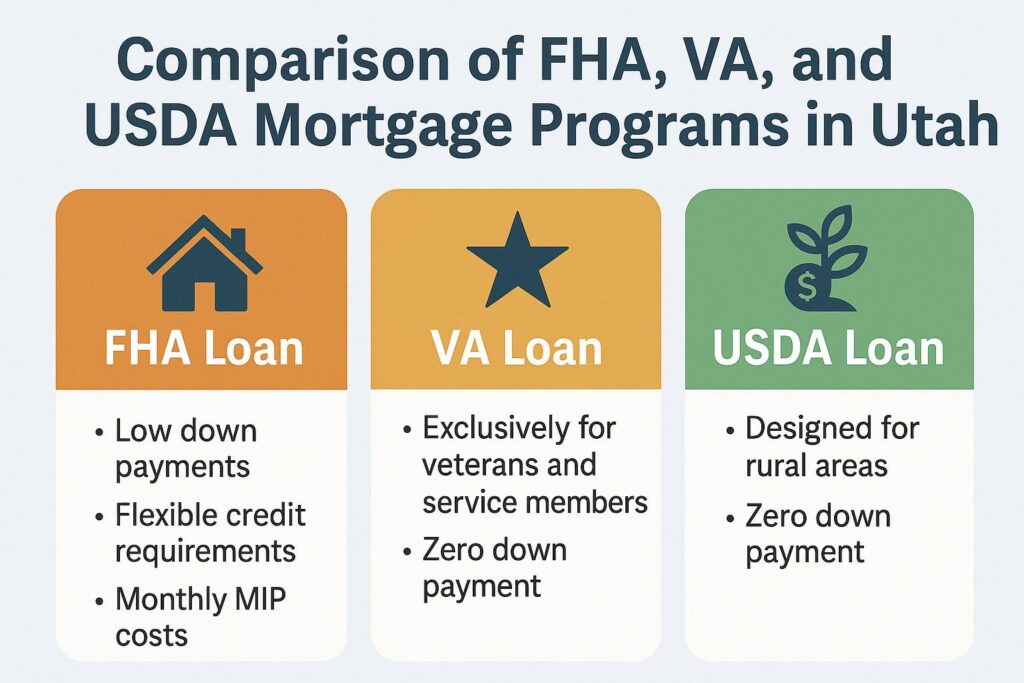
Comparing FHA, VA, and USDA Mortgage Rates in Utah

While FHA loans are popular, they aren’t the only government-backed programs available. Utah homebuyers should also consider:

Loan TypeDown PaymentCredit FlexibilityMortgage InsuranceBest For
FHA3.5%ModerateYes (MIP)Buyers with limited savings
VA0%HighNoneVeterans & service members
USDA0%HighYes (annual fee)Rural area buyers
Conventional3–20%HigherPMI (can cancel)Strong-credit borrowers

You can also compare Utah VA loan programs and explore USDA options to find the best fit.
Utah Home Buyer Programs and Assistance

Beyond federal programs, Utah offers local support for first-time buyers.

  • Utah Housing Corporation (UHC): Down payment and closing cost help
  • 2025–2026 Assistance Programs: State and county-level grants or loans
  • Combine these with FHA loans to lower your out-of-pocket costs

👉 Visit the Utah Housing Corporation website to learn more about current offers.

First-Time Buyers: Maximizing Savings

If you’re a first-time buyer in Utah, you can save even more by combining FHA loans with assistance programs.
Utah first-time buyer interest rates are sometimes reduced through state initiatives, plus you may receive closing cost help.

Pro Tips:

  • Compare at least three FHA lenders to find your best rate
  • Ask about seller concessions (FHA allows up to 6%)
  • Use a mortgage calculator to compare FHA vs conventional monthly payments

Why FHA Remains a Top Choice

Although VA and USDA loans are attractive for those who qualify, FHA remains the most widely used program in Utah. The combination of flexible credit requirements, small down payments, and steady interest rates keeps FHA at the center of the government mortgage programs Utah.

FAQs About FHA Mortgages in Utah

1. What credit score do I need for an FHA loan in Utah?
Most lenders require at least 580 for 3.5% down, though you may qualify with a lower score if you can put 10% down.

2. Are FHA interest rates lower than conventional?
Often, yes. FHA loans tend to offer competitive rates, though they include mortgage insurance premiums that add to overall costs.

3. Can first-time buyers combine FHA with Utah assistance programs?
Absolutely. Programs like Utah first time home buyer assistance 2025 can reduce upfront costs when paired with FHA.

4. Are FHA loans only for first-time buyers?
No. While they’re popular with new buyers, repeat buyers can also use FHA financing if they meet eligibility requirements.

Final Thoughts: Your Next Steps

For Utah residents, Utah FHA mortgage rates with low down payment remain one of the most powerful tools to achieve homeownership. By combining FHA financing with Utah home buyer programs 2025 and 2026, families can significantly lower upfront costs and monthly payments.


Current Mortgage Rates Utah – Your Complete 2025 Guide

Understanding current mortgage rates Utah can be the difference between saving thousands or paying more than you should for your home. Whether you’re a first-time buyer or considering a refinance, this guide will help you feel confident in your decisions. We’ll walk you through today’s interest rates, common loan options, and how to get pre approved for mortgage Utah quickly and easily.

Smiling couple discussing mortgage refinance options with a Utah lender at home

Compare Mortgage Rates Utah with Confidence

Before you choose a lender, it’s smart to compare mortgage rates Utah and see what options are available. Rates can change daily and depend on your credit score, income, and loan type. Using a mortgage calculator Utah shows you the impact of different rates and helps you plan your budget accurately.

If you’re shopping for a larger property, pay special attention to Utah jumbo mortgage rates, which can have stricter credit and down payment requirements.

Working with the best mortgage broker Utah can simplify the process. A broker can help you access competitive offers from the best mortgage lenders in Utah and make sure you’re getting the best terms for your situation.

For national mortgage news and advice, check out Bankrate’s Mortgage Rates.

What Are Utah FHA Loan Requirements?

FHA loans are a popular option for buyers who need flexibility. The Utah FHA loan requirements include a minimum credit score and specific property guidelines. With as little as 3.5% down, these loans can help more buyers enter the market.

If you need help with your down payment, consider exploring Utah down payment assistance programs or a zero down mortgage Utah. Both options can make buying a home more affordable, especially for first-time buyers.

Keep in mind that Utah mortgage closing costs can range from 2–5% of your loan amount. Using a mortgage affordability calculator Utah can help you plan for these expenses and avoid surprises.

Happy home buyer learning about Utah FHA loan programs for affordable mortgages.

How to Get Pre Approved for a Mortgage in Utah

The Utah mortgage pre approval process helps you understand exactly how much you can afford and shows sellers you’re serious. You’ll need to provide income documentation, verify employment, and have your credit reviewed. Most buyers can get pre approved for mortgage Utah within a few days.

Remember, the Utah mortgage approval timeline varies depending on the lender and your unique financial picture. If you’re concerned about credit issues, some lenders specialize in working with the best mortgage lenders for bad credit Utah, helping you find options that fit your needs.

Considering Refinancing in Utah?

With rates still relatively low, now can be a great time to explore mortgage refinancing rates Utah. Refinancing can help you lower your monthly payments, reduce your loan term, or tap into equity for renovations and other expenses.

A cash out mortgage refinance Utah allows you to use your home’s value to access cash. Use a mortgage refinance calculator Utah to estimate your savings and see if refinancing makes sense for your goals.

Veterans may qualify for Utah VA mortgage benefits, including no down payment and lower interest rates, making refinancing even more attractive.

Tips for Choosing the Right Mortgage Lender in Utah

Finding a lender you trust is as important as finding the right home. Start by reading Utah mortgage lender reviews and asking friends or your real estate agent for recommendations. A good lender should be responsive, transparent, and willing to answer all your questions.

Be sure to compare mortgage brokers Utah to see who offers the best service and rates. The best mortgage broker Utah will guide you through every step and make sure you never feel overwhelmed.

Conclusion

Navigating current mortgage rates Utah doesn’t have to be stressful. With the right tools and a trusted professional by your side, you’ll be able to compare rates, explore loan options, and move into your new home with confidence. Use resources like a mortgage calculator Utah, research Utah FHA loan requirements, and don’t hesitate to ask questions. The more informed you are, the smoother your mortgage journey will be. Staying up to date with mortgage rates Utah can help you save thousands on your home.

Utah Mortgage Myths

Blue sky with the welcome to Utah sign on the left showing red mountains.

Mortgage Myths Debunked: What Every Utah Homebuyer Should Know

Buying a home can feel like a daunting task, especially with some common misconceptions that can make it feel like homeownership is out of reach for so many. Homebuyer education, mortgage calculators and tools, loan, and down payment assistance programs can make homeownership more accessible and affordable than you might think. We will debunk common myths regarding mortgage rates and homeownership in Utah and show how you might access a mortgage that previously seemed out of reach.   

Myth: You Need a 20% Down Payment and Perfect Credit to Buy a House in Utah

The belief that you need a perfect credit score and a 20% down payment to buy a home discourages many potential homebuyers. While these can ease the process of buying a home, certain incentives and benefits make it easier to get approval for a loan than you might think. 

Utah Down payment Assistance

One myth that keeps many from pursuing homeownership is the idea that you need a 20% down payment to purchase a home. While it’s true that a larger down payment can help you secure a better mortgage rate, it’s far from a requirement. In fact, there are several Utah mortgage assistance programs that can help you cover your down payment. For first-time homebuyers in Utah, down payment assistance programs and low down payment mortgage options like FHA loans or USDA loans can make buying a home much more affordable. The Utah Housing Corporation down payment assistance program offers down payment assistance specifically for eligible Utah homebuyers. Some Utah communities offer additional down payment assistance should you choose to purchase a home there. Using a Utah mortgage calculator, you can quickly see how much you can save on your down payment by exploring different loan options, including low down payment mortgages or even no down payment loans for eligible buyers in rural areas with USDA loan eligibility.

Homebuyer Assistance in Utah with Low Credit

Smiling couple standing in front of their new home, holding a wooden sign that reads 'Home Sweet Home,' symbolizing homeownership and a fresh start. This is their first mortgage.

A common myth that discourages many potential buyers is the belief that you need a perfect credit score to secure Utah home loans. While having a strong credit history certainly helps when applying for a mortgage, it’s not a dealbreaker if your score isn’t flawless. Many Utah mortgage brokers and local mortgage companies in Utah offer specialized loan options for those with less-than-perfect credit. FHA loans, for instance, are designed to help buyers with lower credit scores (often as low as 580) secure financing with lower down payments. If you’re worried about your credit score, talk to the best mortgage lenders in Utah about homebuyer resources and options like FHA loans, VA loans or USDA loans. These can be forgiving of lower scores, especially if other financial factors, such as your debt-to-income ratio, are strong.

Myth: Renting is Always Cheaper Than Buying in Terms of Home Affordability

There is a common myth that states that renting is always cheaper than buying. We will discuss and debunk this myth. It is not necessarily true that renting is always cheaper. While renting has lower upfront costs, buying a house can be more cost-effective in the long run. There are many different factors at play to determine which is better for you. Current Utah mortgage rates, tax benefits, access to FHA loans in Utah, and property appreciation can all impact your financial decisions. Depending on the rates when you buy, a mortgage payment could be cheaper than a rent payment.

Utah Homebuyer Grants vs. Costs of Renting

While buying means more upfront costs, there are resources which can combat this. First-time homebuyers can qualify for homebuyer grants which provide sums of money for free to use towards a down payment or closing costs. This can be huge in the long run, because the larger down payment you put down, the lower your monthly mortgage payment is. On the flip side, with renting there can be many extra costs that can increase your monthly rent payment. For example, parking fees, pet ownership fees, and amenities fees; as well as one-time large payments for a security deposit. Additionally, when you pay a monthly mortgage, you are building equity by owning a property and can get money back if you sell the house later on. When you rent, you do not build any equity or get any money back that you have paid. This is because owning a house is an investment. Fixed-rate mortgages mean that payments do not inflate over time, but rent payments generally increase steadily every year. While mortgage rates are currently higher in Utah than they were several years ago, analysts predict them to be lower in the future. This gives you the chance to lock in a house at the current price and refinance at a lower rate down the road.  With the right loans, homeowner assistance programs, and a look to the future, now could be a great time to make the switch from being a renter to being a homeowner. 

Navigating Utah’s Mortgage Myths and Homebuying Realities

Buying a home in Utah can seem overwhelming with all the myths surrounding mortgage rates, down payments, and credit requirements. However, as we’ve explored, you don’t need a perfect credit score or a 20% down payment to become a homeowner. With various federal / Utah down payment assistance programs and flexible loan options, purchasing a home is more accessible than many realize. While renting might seem like the cheaper option upfront, buying a home can often be more cost-effective in the long run, thanks to homebuyer grants, equity building, and stable mortgage payments. To further assist you in navigating Utah’s mortgage landscape, check out the resource Mortgage Rates Made Easy for helpful tools, updated rates, and personalized guidance. Understanding your options, using tools like a Utah mortgage calculator and working with reputable lenders can help you make the best decision for your financial future. Whether you’re looking to buy your first home or exploring ways to invest, debunking these common myths is the first step toward turning homeownership into a reality in Utah.

Young couple in Utah sitting on the floor of their new home, toasting with drinks, surrounded by moving boxes and a pizza box, celebrating their move. This is their first home and first mortgage!

First-Time Home Buying 101: Understanding Mortgages, Refinancing, and Interest Rates

An illustration of a real estate agent transfers keys to the owners of a beautiful home in the suburbs. It is an illustration of a new home for the family with a sold sign pointed towards the home.

 What’s a mortgage, and why do we need them?

When choosing a mortgage, the most common types of loans are 15 and 30-year loans. It is important for future homeowners to understand the distinction between both loans so that they know what type of loan best suits their needs. The right decision differs from person to person; and is based on their income, financing, and long-term housing plans. Generally, a 15-year loan comes with a lower interest rate, which allows you to pay your home off faster.

However, that means that there will be higher monthly payments. Someone who would benefit from this is a person who has a job that provides them with a high, stable income because they can not only pay off their house faster but also save on interest. For individuals who would like more flexibility, and might not have the finances to pay off such a high monthly payment, they’d benefit from a 30-year loan. For example, a student homeowner would benefit from this loan because they likely have less income, and this not only makes their month-to-month payments more affordable but also gives them more freedom and flexibility to spend their income on other expenses such as tuition.

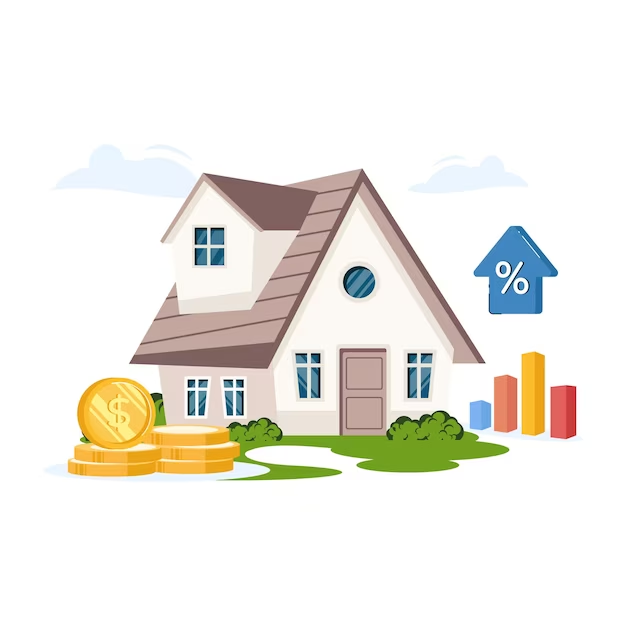
Illustration of a house, on the left side is a stack of goal coins and on the right is a bar graph with an arrow that has the percentage symbol on it pointed up signifying that interest rates are going up.

Different types of Mortgages

There are many ways to go about financing a home and there are different loan types to choose from based on your needs. A few examples of common ones are HELOC loans/HELOC as a line of credit, VA Loans, and Adjustable Rate Mortgages to name a few. A HELOC loan (Home Equity Line of Credit) is a line of revolving credit where homeowners borrow money, using the the equity in their home, similar to a credit card, with a variable interest rate. HELOC has a variety of benefits. The loan can be taken out for periods of 5-15 years, only makes you pay for what you used, and can be used for everything from home improvement to funding your child’s college education, or even a vacation if you choose. Though, as with any loan, it must be paid back within the same number of years that it was used. 

An Adjustable-Rate Mortgage (ARM) is a home loan with an interest rate that changes in response to market conditions, matching the current market rates. These often start with a lower fixed rate – compared to a fixed loan – for a set period before adjusting at regular intervals; commonly being annual, or semi-annual (every 6 months). Adjustable-rate mortgages are also a great option for homeowners looking to sell or refinance their home soon.  A VA Home Loan is a mortgage program backed by the U.S. Department of Veterans Affairs, aimed at helping military service members, veterans, and their families purchase homes with benefits like no down payment and competitive interest rates. Another great feature is that these loans offer lower credit standards for approval, making this another great option for first-time home buyers who would have difficulty securing financing through typical channels.

Refinancing Mortgage

In the state of Utah refinance mortgage rates as of February 5, 2025 range from 5.490% to 6.69% depending on the type of loan and the length of the term. Refinancing your home loan can be a powerful financial move, but it’s important to understand the process and consider if it aligns with your financial goals long term. For homeowners in Utah, refinancing has several benefits to offer, but it also comes with some considerations to weigh into your decision. One of the more popular advantages of refinancing is to secure a lower interest rate, which over the life of the loan could save thousands. Refinancing may also lower monthly mortgage payments, either by reducing the interest rate or by extending the term of the loan.

Additionally, if you’ve built up equity in your home, a cash-out refinance or a home equity loan are two viable options to access that equity. A cash-out refinance allows you to pay off your old mortgage in exchange for a new one, ideally, it would be at a lower interest rate. A home equity loan exchanges the equity you’ve built up in your home with cash. The home equity loan is a separate loan that has its own set of requirements and interest rates. While refinancing has some great advantages it does have its drawbacks. Refinancing may extend your loan term, potentially resulting in paying more in interest throughout the life of the loan. A cash-out loan holds its own risks of over-borrowing, increasing your financial risk.

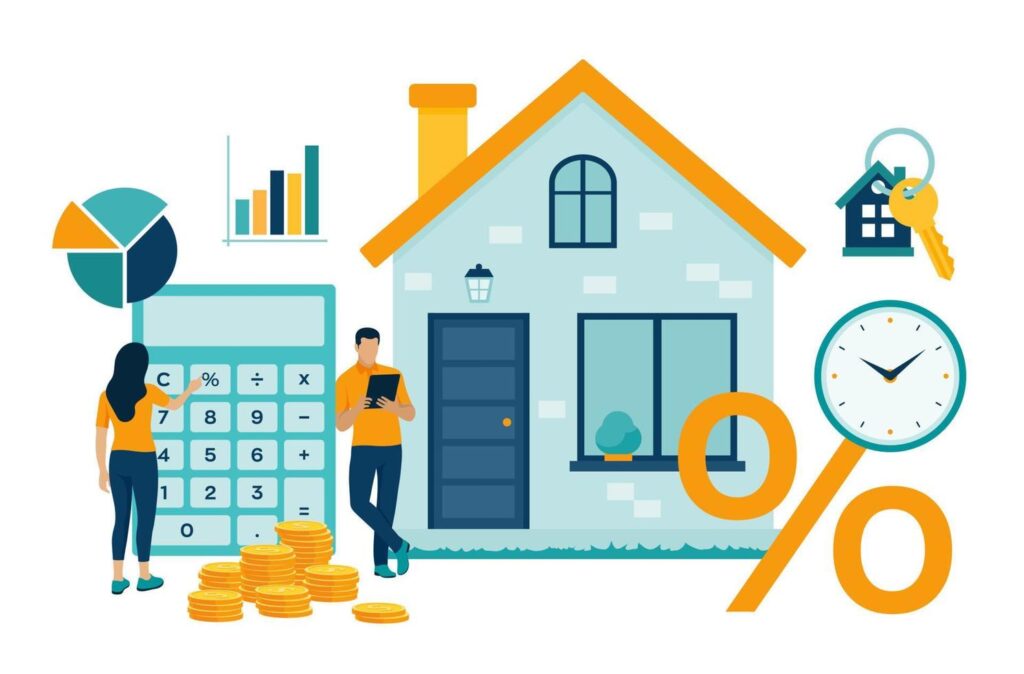
Illustration of a house. On the right side is a clock, percentage symbol, and key. On the left side is a man and woman standing next to a large calculator, gold coins, a pie graph, and bar graph. This image illustrates the multiple considerations that need to be made when refinancing a home.

Interest Rates

As of 2025, 30-year fixed mortgages (6.49%) in Utah have a higher rate than 15-year fixed mortgages (5.625%) because lenders take more risk by lending money for a longer period. The 5-year ARM (6.93%) and 5/1 ARM (6.75%) tend to have a lower rate but may increase over time due to market fluctuations. The conventional fixed mortgage (5.500%) has a lower rate than the Federal Housing Administration (FHA) fixed mortgage (5.875%) because FHA loans are designed for borrowers who either have lower credit scores or smaller down payments. In essence, mortgage rates vary due to several factors including loan length, risk factors, and market conditions.

Mortgages Summary

We hope that after reading this blog post you feel more confident about navigating finding the mortgage that’s right for you. Whether you’re deciding between a 15-year or 30-year loan, choosing to refinance your home in the future, or are a veteran who takes advantage of the highly cost-effective VA loan, feel free to return to this guide or any other sources we have on our site

Illustration of a happy family with three young kids and a dog standing outside their new home.