


Purchasing a Home in Utah: FHA & HELOC Guide

Utah couple standing in front of home after buying a house

Entering Utah’s housing market requires more than just finding the right property. it requires understanding how to finance it strategically. Whether you’re preparing to buy a home in Utah or planning long-term equity growth, knowing how FHA loans, refinancing options, and equity tools work together will put you in a stronger financial position.

This guide walks through the major financing options available to Utah buyers and explains how each decision impacts your long-term financial plan.

FHA Loans in Utah: Qualification, Credit Scores, and Loan Limits

For many buyers, FHA loans provide one of the most accessible paths to homeownership. These government-backed mortgages are especially helpful for borrowers with moderate income, limited savings, or credit challenges.

Those researching FHA loans for bad credit often find that FHA guidelines are more flexible than conventional programs. The typical FHA loan minimum credit score is lower than most traditional financing options, making it attractive for first-time buyers.

Understanding how to qualify for FHA loan programs requires reviewing income stability, debt-to-income ratio, and employment history. Before choosing FHA financing, buyers should evaluate the fha loan pros and cons, particularly mortgage insurance requirements. It’s also wise to compare FHA vs. conventional loan structures to determine which aligns best with your long-term financial goals. Additionally, county-specific FHA loan limits in Utah can influence how much you’re able to borrow, depending on where you plan to purchase.

Down Payment Assistance and First-Time Buyer Programs in Utah

One of the biggest obstacles for new homeowners is saving for a down payment. Fortunately, several first-time home buyer down payment assistance programs exist to reduce upfront costs.

Programs offering Utah first-time home buyer assistance and broader Utah down payment assistance programs help qualified buyers bridge the financial gap. Reviewing first-time home buyer requirements early ensures you’re fully prepared before entering the market.

If you’re still learning how to buy your first home, working with a local mortgage professional can clarify eligibility guidelines, documentation needs, and financing timelines.

In certain rural areas, a USDA loan Utah may also provide zero-down financing opportunities for eligible properties.

Monitoring Mortgage Rates and Evaluating Refinance Opportunities

Interest rates significantly affect monthly payments and long-term affordability. Keeping an eye on the mortgage rate forecast and reviewing a mortgage rate history chart can help you understand current market trends.

Choosing between a fixed vs adjustable mortgage is another critical decision. Fixed-rate loans offer payment stability, while adjustable-rate mortgages may offer lower introductory rates depending on market conditions.

After purchasing, many homeowners begin asking when they should refinance. To answer that, you must consider refinance closing costs, evaluate whether a no closing cost refinance makes sense, and compare current cash out refinance rates.

Some borrowers also compare refinancing vs. home equity loan options to determine which offers greater flexibility or lower overall borrowing costs.

Home Equity Loan vs HELOC: Accessing Built-Up Equity

As property values increase, homeowners build equity that can later be accessed strategically. Before applying, it’s important to understand how much equity is needed to qualify for secondary financing.

When comparing home equity loans vs. HELOC products, the primary difference is structure. A traditional home equity loan provides a lump-sum payment with fixed repayment terms, while a revolving line of credit offers more flexibility. Evaluating HELOC vs. home equity loan options allows homeowners to match borrowing structure with financial goals.

Understanding typical HELOC requirements, including minimum credit thresholds, equity levels, and income documentation, improves your chances of approval.

Many borrowers choose a home equity loan for debt consolidation to reduce high-interest balances and simplify monthly payments.
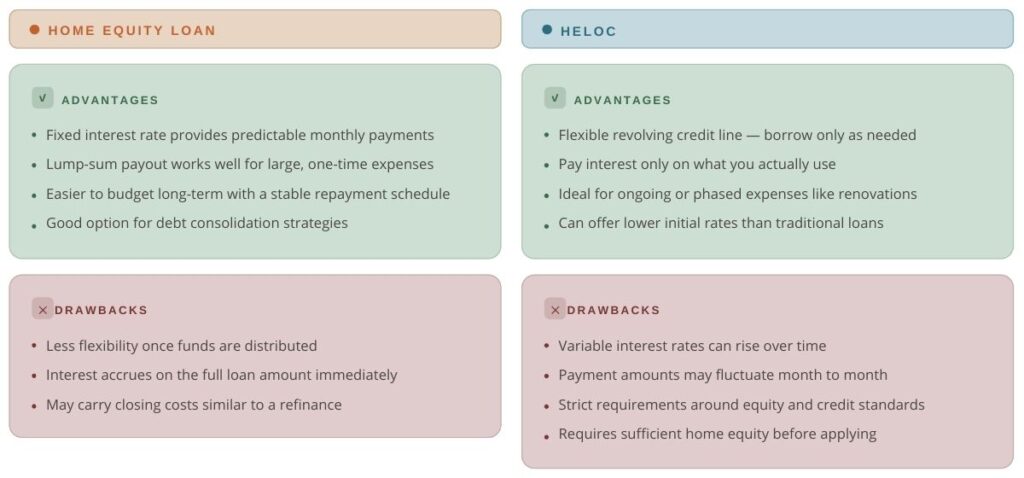
Table describing the Pros and Cons of Home Equity Loans vs. HELOC loans

Building a Sustainable Strategy

Successfully planning to buy a home in Utah involves more than securing loan approval. It requires understanding how FHA loans, Utah assistance programs, refinancing strategies, and equity tools fit into a long-term financial plan.

By monitoring rate trends, comparing loan structures (e.g., fixed vs. adjustable mortgages), evaluating refinance timing, and preparing for future equity access, you position yourself for financial stability and growth.

Working with experienced Utah mortgage professionals ensures you remain informed as market conditions evolve and your goals change.

How to Apply for a Home Renovation Loan in Utah

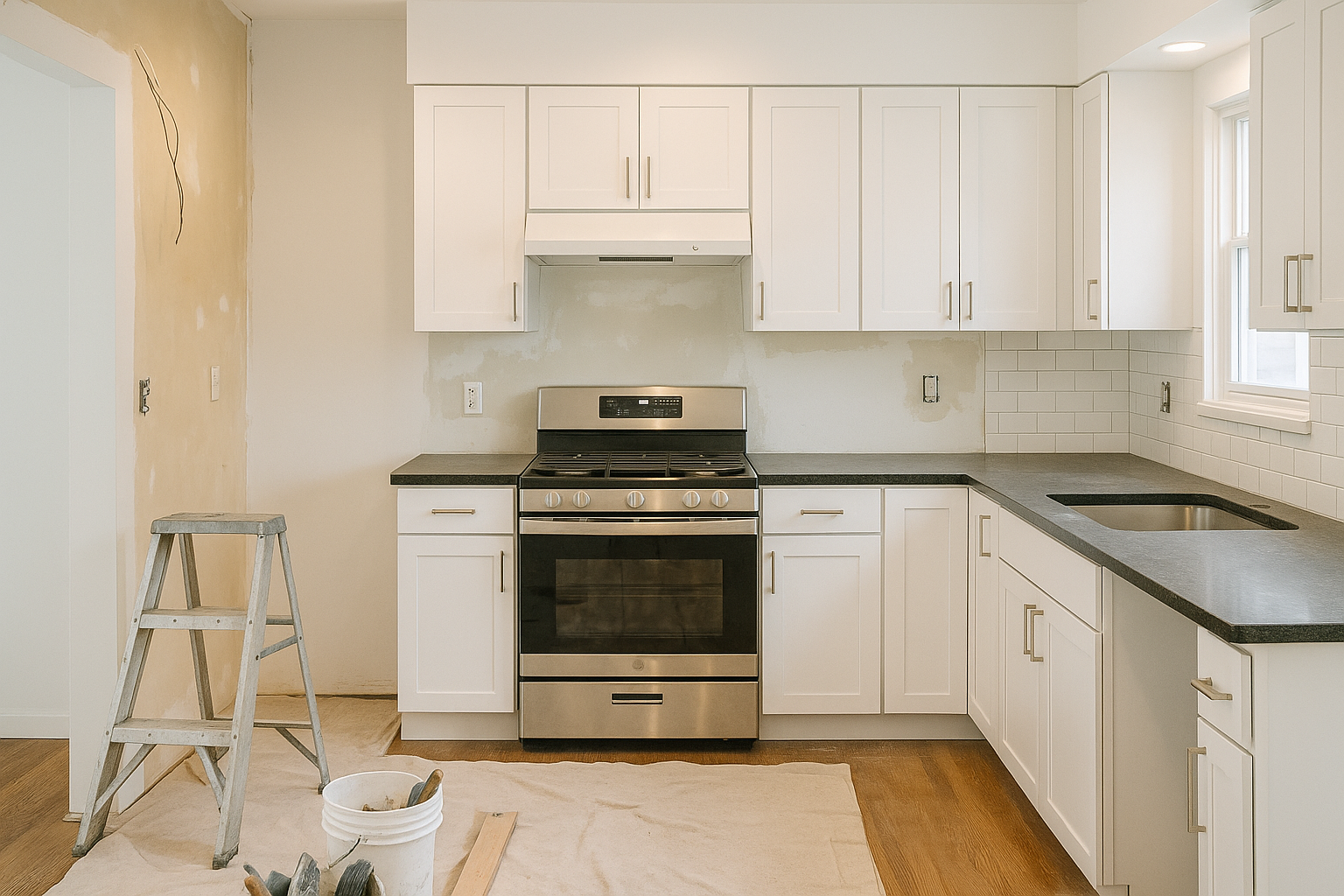
A kitchen renovation in progress featuring white shaker cabinets, black countertops, a stainless steel gas range, and an unfinished backsplash. A ladder, drop cloth, and bucket of tools are visible on the wooden floor, indicating ongoing construction work

If you’re looking to buy a fixer-upper or make improvements to your current home, understanding how to apply for a home renovation loan in Utah can make the process simpler and more affordable. Renovation loans let you bundle home improvement costs into a single mortgage, making your dreams of home improvement realistic without the burden of additional loans. This guide will clearly outline your options, who they are best suited for, and precisely how you can navigate the application process.

Understanding FHA 203k Loans: What They Are & Who Should Use Them?

An FHA 203k loan in Utah is one of the most popular home renovation loan programs available. It’s backed by the Federal Housing Administration (FHA) and specifically helps homeowners purchase and renovate homes simultaneously. This type of loan is ideal for first-time homebuyers or those with limited savings, as it often requires lower down payments and more lenient credit requirements.
The 203k loan requirements Utah homeowners should be aware of include:

  • The property must be your primary residence.
  • Renovations must start within 30 days of loan closing and be completed within 6 months.
  • Licensed contractors must do work.
  • You must meet standard FHA credit and income criteria.
  • If you are wondering if you can use a 203k loan for a kitchen remodel, the answer is yes. Kitchen renovations, bathroom updates, structural repairs, and even accessibility improvements typically qualify.

Step-by-Step: How to Apply for a 203k Home Renovation Loan

Illustration of a man in glasses and a green sweater pointing to a speech bubble that says 'Steps to Apply for a 203k Loan'.

Understanding the steps to apply for a 203k loan is crucial to a smooth process:

  • FHA 203k pre approval – Start by obtaining pre-approval from a lender, giving you an edge in the competitive Utah housing market.
  • Find Professionals – You’ll need licensed contractors and possibly an FHA-approved consultant for significant renovations.
  • Plan Submission – Submit detailed renovation plans, including itemized bids and costs.
  • Home Appraisal – The lender will order an appraisal based on the home’s value after renovations.
  • Final Loan Approval and Closing – After appraisal and underwriting, you’ll finalize your loan.
  • Begin Renovations – After closing, renovation funds are placed in escrow and disbursed as work progresses.

Frequently Asked Questions (FAQs)

What Documents Are Needed for a Renovation Loan?

Now that you know how to apply for a home renovation in Utah, it’s important to understand exactly what documents are needed to avoid delays. Typically, you will need:

  • Proof of income
  • Employment verification
  • Credit reports
  • Detailed renovation plans and cost estimates
  • Contractor licenses and bids

What Credit Score Do You Need for a Renovation Loan?

Many borrowers ask, what credit score do you need for a renovation loan? FHA typically requires a minimum score of around 620, but some lenders approve applicants with scores as low as 580. Higher scores generally secure better terms.

Can You Add Renovation Costs to a Mortgage?

Absolutely. One significant advantage of these loans is you can add renovation costs to a mortgage, eliminating the need for separate loans.

How Long Does a 203k Loan Take?

Many homeowners wonder, how long does a 203k loan take? Generally, expect around 45–60 days, slightly longer than standard mortgages due to additional appraisals and inspections.

Can I Get a Home Loan for Renovation if I Already Own the Home?

Yes, refinancing your current mortgage into a renovation loan is possible. If you are asking, can I get home loan for renovation, you definitely can through refinancing or a second mortgage.

Best Renovation Loan Lenders?

When searching for the best renovation loan lenders, look for those with experience in FHA 203(k) loans. Local Utah lenders and credit unions are often your best starting points.

Who Is Eligible for a FHA Renovation Loan?

Eligibility for FHA renovation loans typically includes:

  • U.S. citizenship or legal residency
  • Owner occupancy
  • Meeting FHA credit and income standards
  • A home needs qualifying improvements.

Whether you are curious about how to bundle home renovation with a mortgage or wondering if you can get a mortgage that includes renovation costs, the answer is yes. Government-backed renovation loans provide a practical, cost-effective way to finance improvements. Knowing how to qualify for a 203k loan can empower you to make informed financial decisions.

Other Renovation Loan Options to Consider

While FHA 203(k) loans are popular, some buyers might consider other renovation loan options:

  • VA rehab loan – Specifically designed for military veterans or active service members, offering zero down payment and competitive rates.
  • Fannie Mae HomeStyle loans – Ideal for those with stronger credit profiles, offering more flexibility for substantial and higher-end remodels.

These options might be suitable if your specific situation matches the unique benefits these programs offer.


 graphic with bold text reading 'Home Renovation Loan' on a yellow background, featuring a small paintbrush icon in the corner.

Have other questions about Utah mortgage rates? Review our detailed Utah mortgage interest rate guide.

Now that you’ve ready a step-by-step summary of how to apply for a home renovation loan in Utah, we recommend visiting the U.S. Department of Housing and Urban Development’s (HUD) page on the 203(k)!