

Mortgage Rate Trends in Utah: 2026 Forecast, When Rates May Drop & Best Time to Lock

Magnifying glass showing 2026 Utah mortgage rate trends with rising and falling arrows over financial chart with Delicate Arch background

The Utah housing market has experienced significant movement in recent years. If you’ve been watching mortgage rate trends in Utah state, you’re likely wondering what 2026 could bring — and whether now is the right time to act to lock at the best mortgage rate.

Whether you’re looking into how mortgage interest rates are determined, reviewing mortgage rates today, tracking mortgage rates daily and mortgage rate trends in Utah overall, or trying to determine the best time to lock mortgage rate, understanding both the bigger picture and the practical implications can help you make smarter financial decisions.


How Mortgage Interest Rates Are Determined

Before evaluating mortgage rates forecast 2026, it’s important to understand how mortgage interest rates are determined.

Mortgage rates are largely driven by national economic forces rather than local state policy. Key factors include inflation trends, Federal Reserve decisions, and movements in the 10-year U.S. Treasury yield. When inflation rises, investors demand higher returns, which pushes current mortgage interest rates and current housing interest rates higher. When inflation stabilizes, rates often ease.

This relationship explains why housing interest rates today and interest rates today 30 year fixed can move even if Utah’s local housing demand stays strong. For broader context, see Fannie Mae Economic Forecast, which outlines how economic conditions influence long-term projections.

Understanding these forces makes it easier to interpret overall mortgage rate trends and changes reflected in a mortgage rates today chart.


Current Mortgage Rates Utah and National Comparisons

So what do rates look like right now? According to Freddie Mac Primary Mortgage Market Survey (PMMS), recent 30 year mortgage rates today have generally ranged in the mid-6% range, depending on weekly market conditions.
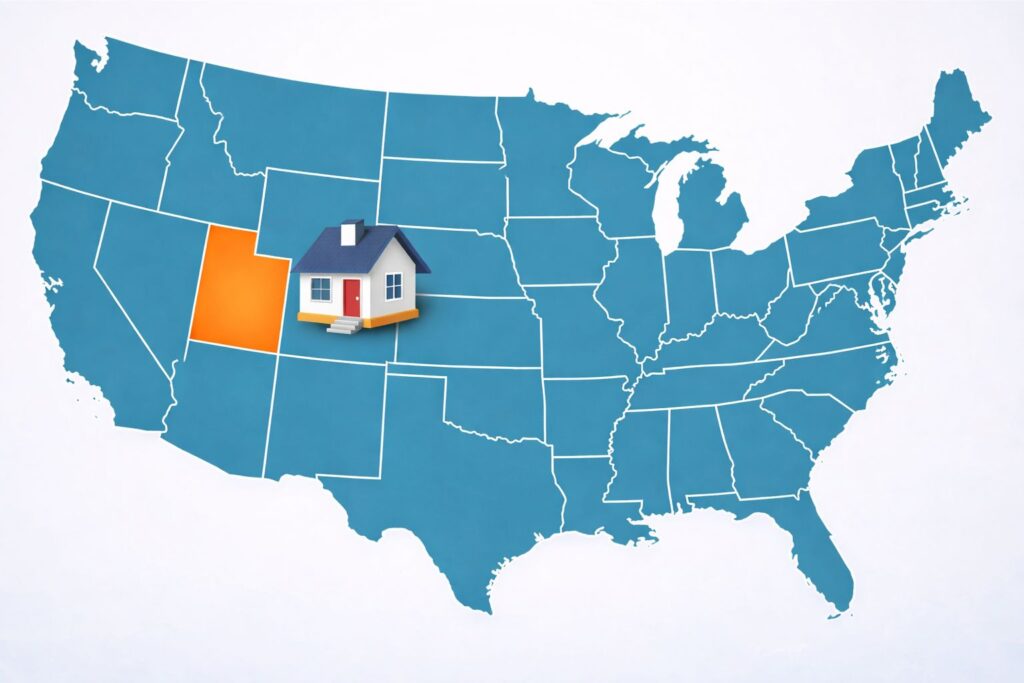
Map of the United States highlighting Utah with a house icon to represent current mortgage rates Utah compared to national mortgage rate trends

Here in Utah, current mortgage rates Utah typically mirror national averages, though your personal rate depends on credit score, loan type, and down payment. For example:

  • Usually, mortgage rates today 30 year fixed usually provide lower monthly payments but higher long-term interest costs.
  • Mortgage rates today 15 year fixed tend to offer lower interest rates but higher monthly payments.
  • For eligible military borrowers, current VA mortgage rates may be more competitive.

Even a small difference in current mortgage rates 30 year fixed can significantly affect total loan cost over 30 years. Comparing current mortgage rates and interest rates today 30 year fixed across lenders can help you find meaningful savings.

For historical perspective, see 30-Year Mortgage Rates History Utah (2023 vs Today) to understand how recent rate movements compare to prior years.


Mortgage Rates Forecast 2026: When Will Mortgage Rates Drop Again?

A common question right now is: when will mortgage rates drop again?

Most industry analysts suggest that mortgage rates forecast 2026 may show gradual stabilization or modest easing if inflation continues cooling. However, this does not necessarily mean a sharp drop. Instead, borrowers should expect moderate fluctuations influenced by economic data releases.

If you’re comparing refinance mortgage rates today 30 year fixed or reviewing mortgage rates today refinance options, it’s helpful to watch inflation reports and Federal Reserve announcements, since these events often trigger short-term movement.

For Utah-specific market expectations, review Utah Mortgage Rates 2025 Outlook, which provides regional context that may influence timing decisions.


How Mortgage Rate Trends Affect Monthly Payment

Understanding how mortgage rates affect monthly payment is critical before making a decision.

For example, a 0.25% increase in current housing interest rates can add thousands of dollars in total interest over the life of a 30-year loan. Even modest changes in current mortgage rates 30 year fixed can meaningfully alter monthly affordability.

Many buyers ask, what credit score gets best mortgage rates? Generally, higher credit scores qualify for lower mortgage interest rates today, which reduces both monthly payments and overall borrowing costs.

Tracking a mortgage rates today chart can help you visualize whether rates are trending upward or downward before committing.


Best Time to Lock Mortgage Rate in 2026

Home on a target with an arrow, alarm clock, and padlock representing best time to lock mortgage rate during changing mortgage rate trends

Choosing the best time to lock mortgage rate requires balancing risk and certainty.

If mortgage rate trends in Utah are rising steadily, locking your rate protects you from additional increases before closing. On the other hand, if rates are trending downward and your lender offers flexibility, you might wait. However, there is a possibility that markets could reverse unexpectedly.

When monitoring mortgage rate trends in Utah, look for daily updates alongside key economic indicators. Such examples are inflation reports and Federal Reserve policy decisions, which can provide valuable insight into short-term direction.

If you’re evaluating home refinance rates today or comparing refinance mortgage rates today 30 year fixed, locking at the right time can lower your long-term cost significantly. The goal isn’t to perfectly “time the bottom,” but to secure a rate that aligns with your comfort level.


Conclusion on Mortgage Rate Trends in Utah

For Utah buyers and homeowners, 2026 may offer a more predictable environment compared to recent volatility. While mortgage rate trends suggest gradual stabilization, financial preparation remains essential.

Whether you’re reviewing mortgage rates today, current mortgage rates, current mortgage rates 30 year fixed, interest rates today 30 year fixed, mortgage rates today 15 year fixed, current VA mortgage rates, or exploring mortgage rates today refinance options, informed timing and lender comparison can make a meaningful difference.

By understanding how mortgage interest rates are determined, monitoring mortgage rates forecast 2026, and locking the mortgage rate strategically, Utah borrowers can move forward with greater confidence.


When Should You Buy a Home in Utah?

Why 2025 Might Be the Right Time to Buy a Home in Utah

View of Salt Lake City skyline with Wasatch Mountains,showing real estate variety

Economic Outlook & Housing Market Trends
Wondering when to buy a home in Utah? The Utah housing market has undergone significant transformation in the past decade. As we enter 2025, the state continues to enjoy strong job growth, a diversified economy, and a stable real estate environment. Employment rates are high across tech, health, and education sectors, especially in areas like Salt Lake City and Provo. This economic strength contributes to a buyer-friendly atmosphere as more individuals qualify for home loans and local governments introduce initiatives aimed at making housing more accessible.

Rising vs. Falling Interest Rates in Utah
Interest rates are a critical factor for home buyers. After reaching historic highs in 2023, mortgage rates began to cool in mid-2024. Analysts predict continued stabilization in 2025, making now an opportune time for buyers to lock in relatively low rates before any future increases. A lower rate can mean thousands in savings over the life of a loan. Additionally, fixed-rate mortgages are gaining popularity for their predictability and long-term savings potential.


Utah’s Housing Inventory and Affordability
The rise in new construction and reduced demand from investors have opened up more inventory for first-time buyers. Suburban developments near Ogden, Layton, and Spanish Fork are offering homes in more affordable price ranges. Though prices remain higher than pre-pandemic levels, the growth has slowed. Combined with local incentives and improved loan access, homes in 2025 are more within reach for many buyers than just a year or two ago.

Financial Preparation and Credit Score Tips
Before you even browse listings, it’s crucial to assess your financial health. Your credit score is one of the most important indicators lenders will evaluate. A score of 620 or higher can open doors to better interest rates, though programs like FHA loans may accept scores as low as 580. Pay down credit card balances, avoid new debt,
and review your credit report for errors before applying.

Creating a Realistic Home Buying Budget
Setting a realistic budget means looking beyond the sale price of a home. Use a mortgage calculator to factor in property taxes, homeowner’s insurance, and private mortgage insurance (PMI), if applicable. Determine what you can comfortably afford monthly, not just what the bank approves. Budgeting conservatively ensures you won’t be
‘house poor’ and allows room for savings and unexpected costs.


Documents You’ll Need Before You Start
To get pre-approved, gather documentation including:

  • W-2s or 1099s
  • Tax returns from the past two years
  • Recent pay stubs
  • Bank statements
  • ID

Organizing these ahead of time will streamline the mortgage process and reduce delays when making offers.


First-Time Home Buyer Loans in Utah: What Are Your Options?
FHA Loans and Their Requirements

Young woman in new home with moving boxes and smiling.


The Federal Housing Administration (FHA) backs loans with lower down payment requirements and flexible credit guidelines. These loans are popular with first-time buyers who may not have saved a 20% down payment. With only 3.5% down and credit requirements starting at 580, FHA loans are among the most accessible options in
Utah.

Utah Housing Corporation Loan Programs
Utah Housing offers programs specifically tailored for first-time buyers such as the FirstHome Loan and HomeAgain Loan. These programs provide competitive fixed rates and assistance with down payments or closing costs. Some even allow you to finance up to 100% of the purchase price.

USDA, VA, and Conventional Loan Comparisons
For those in rural areas, USDA loans require no down payment. VA loans, offered to veterans and active-duty military, eliminate PMI and provide favorable terms. Conventional loans offer more flexibility for buyers with higher credit scores and larger down payments, and may carry lower overall costs if you meet the criteria.

How to Get Pre-Approved for a Home Loan in Utah
Pre-Approval vs. Pre-Qualification Explained
Pre-qualification is an informal estimate of how much you can borrow, while pre-approval involves a deeper review of your financial documents. Sellers view pre-approval as a sign of serious intent and it can significantly strengthen your negotiating position.

Steps to Secure a Pre-Approval Letter
Start by choosing a lender and submitting financial documentation. The lender will perform a credit check and verify your income and employment. Once approved, you’ll receive a pre-approval letter valid for 60–90 days, helping you shop within your means.

What Lenders Look for in Utah Applicants
Lenders will assess your credit score, income stability, debt-to-income ratio (DTI), and savings. A DTI under 43% is preferred. They’ll also check your employment history and may ask for explanations about large deposits or
financial inconsistencies.

Simple Mortgage Calculator: Plan Your Payments
Monthly Payment Estimation
A mortgage calculator is a powerful budgeting tool. Enter your loan amount, interest rate, loan term, and down payment to estimate your monthly obligation. Include estimated property taxes, insurance, and HOA fees for accuracy.

Principal, Interest, Taxes & Insurance Breakdown
Your mortgage payment isn’t just your loan. It typically includes principal, interest, taxes, and insurance (PITI). Understanding this full breakdown helps avoid budget surprises and plan long-term finances effectively.

Smart Steps to Buy Your First Home in Utah
2025 is shaping up to be a strategic time for first-time home buyers in Utah. With steadying rates, expanding loan options, and more inventory, the timing couldn’t be better. Work with trusted professionals at MortgageRateUtah.com to get pre-approved, explore tailored mortgage solutions, and turn your homeownership
dream into reality.

Everything You Need to Know About Mortgage Rates in Utah: A Homebuyer’s Guide

Understanding Mortgage Rates in Utah

What Are Mortgage Rates and Why Do They Matter?

Mortgage Rate Utah

Mortgage rates are the interest charged on home loans. They significantly affect the total cost of homeownership. These rates frequently fluctuate based on inflation, the Federal Reserve’s policies, and market demand. In Utah, mortgage rates depend on credit scores, loan types, and lender policies. Therefore, understanding these factors helps homebuyers make informed financial decisions when refinancing or purchasing a home.

Current Mortgage Trends in Utah

Recently, Utah’s real estate market has seen rising interest rates, which have affected housing affordability. As a result, homebuyers should actively track mortgage rates and compare adjustable vs. fixed-rate options. Since federal and local factors influence Utah’s home-buying rates, staying informed allows buyers to choose the best loan for their situation.

Utah's rising rates impact affordability.

How Interest Rates in Utah Are Determined

Market conditions, housing supply, and demand primarily determine Utah’s interest rates. Although buyers cannot control these factors, they can improve their credit scores to secure lower rates. Since low credit scores lead to higher interest rates, improving creditworthiness is crucial. Furthermore, comparing mortgage providers is essential, as different lenders offer varying rates. Additionally, researching fees and prepayment penalties before choosing a mortgage can help avoid unexpected costs.

Locking in an interest rate can prevent fluctuations, offering financial stability. To learn more, the Utah Department of Financial Institutions provides mortgage tips and information on rate locks. Visit their site here: https://dfi.utah.gov/general-information/consumer-tips/mortgage-loan-tips/.

Fixed vs. Adjustable-Rate Mortgages: Which One Is Best?

Utah fixed-rate mortgages (FRMs) and adjustable-rate mortgages (ARMs)

When applying for a home loan in Utah, the two most typically chosen options for mortgage rates are fixed-rate mortgages and adjustable-rate mortgages.

Fixed-Rate Mortgages (FRM)

These loans have a stable interest rate throughout the term. As a result, they offer predictable monthly payments, making them ideal for long-term loans (10+ years). However, they typically start with higher rates than ARMs. Moreover, if market rates drop, borrowers cannot adjust their original rate.

Adjustable-Rate Mortgages (ARM)

These loans start with a lower interest rate but adjust based on market conditions. Consequently, they work well for short-term loans or those planning to refinance or sell soon. However, rates can rise over time, leading to unpredictable payments. Therefore, ARMs are riskier for long-term borrowers.

Should You Refinance Your Mortgage?

Refinancing replaces an existing mortgage with a new one. Many homeowners refinance to lower rates, reduce monthly payments, or access home equity. Even a slight rate drop can lead to significant savings. Additionally, refinancing can shorten loan terms or switch an ARM to an FRM for stability.

Furthermore, cash-out refinancing provides funds for renovations or investments. However, since refinancing comes with fees, homeowners must carefully weigh the costs against the benefits before proceeding. The U.S. Department of Housing Development gives advice on when to refinance.

Refinancing lowers costs, modifies loans.

Making Smart Mortgage Decisions in Utah

If you’re a homeowner considering refinance rates in Utah or a first-time homebuyer navigating the mortgage process, it’s important to understand mortgage rates in Utah. Comparing fixed vs. adjustable-rate mortgages, observing current interest rates, and using tools like mortgage calculators can help secure the best possible loan. Advising with local lenders and researching Utah home loan options can offer insights aligned with your financial goals. For more detailed guidance, check out our first-time homebuyer resources and refinancing insights to take the next step toward homeownership.