

What You Need to Get Pre-Approved for a Home

A married couple in a mortgage pre-approval meeting with a mortgage broker.

Introduction

Navigating the real estate market in the Beehive State can be daunting, but understanding how to get a mortgage is the first real step toward homeownership. Many prospective home buyers start their journey by exploring the financial landscape of home loans —the real competitive edge comes from securing a mortgage pre-approval. This document proves to sellers that a mortgage lender has already vetted your finances and is ready to back your offer.

To start the process, you should research the best mortgage companies and best mortgage lenders available in the state of Utah. Experts encourage you to get a mortgage quote from several different sources to ensure you get the best deal. While some buyers prefer large national banks, others have found that working with a local mortgage broker offers help with the local markets and a more personalized experience.

What You Need to Get Pre-Approved
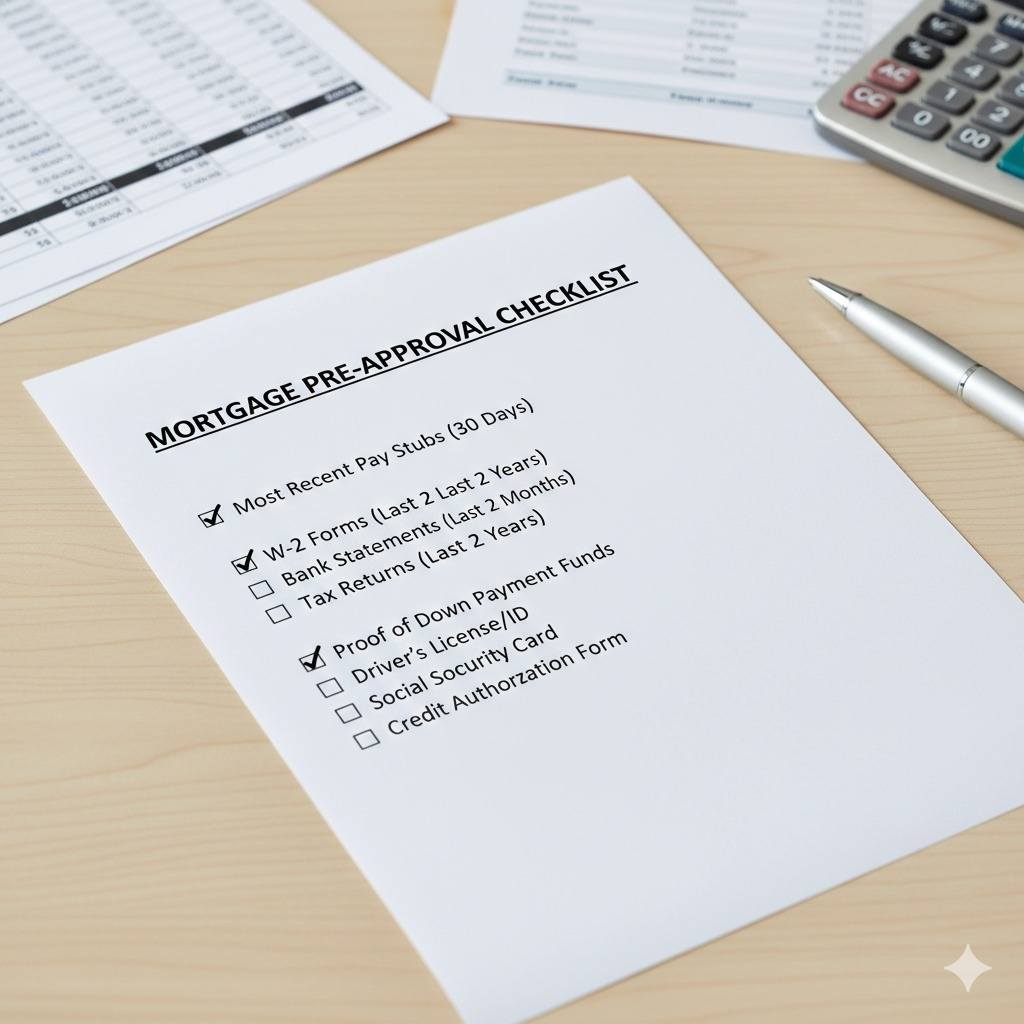
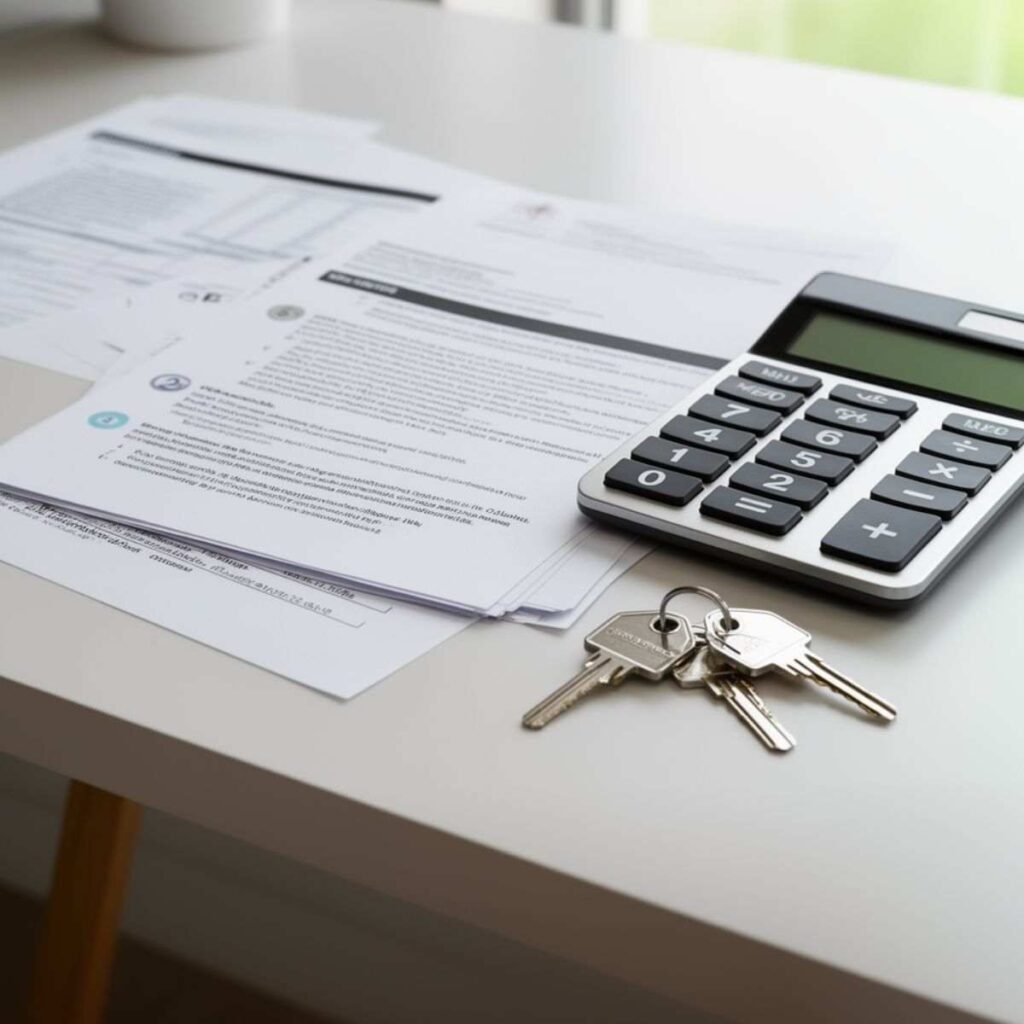
Paper showing mortgage pre-approval checklist showing W-2s, tax returns, drivers license, and social security.

When you sit down with a professional to discuss your mortgage application, you might ask, “What will I need to get a mortgage?” Generally, you will need to provide proof of income (such as W-2s and tax returns) and evidence of assets for a down payment. Knowing specifically what you need for pre-approval saves time and stops the underwriting process from stalling.

Once you have gathered your documents, the next question is timing. When should I apply for the mortgage loan paperwork? Ideally, this should happen before you even set foot in an open house. When should a lender pre-approve my mortgage loan? Most experts recommend getting your letter 3 to 6 months before you intend to buy. This gives you time to fix any credit issues that might arise during the steps to buying a house. When should you get a mortgage pre-approval? As soon as you are serious about entering the market.

Understanding Home Loan Interest Rates and Programs
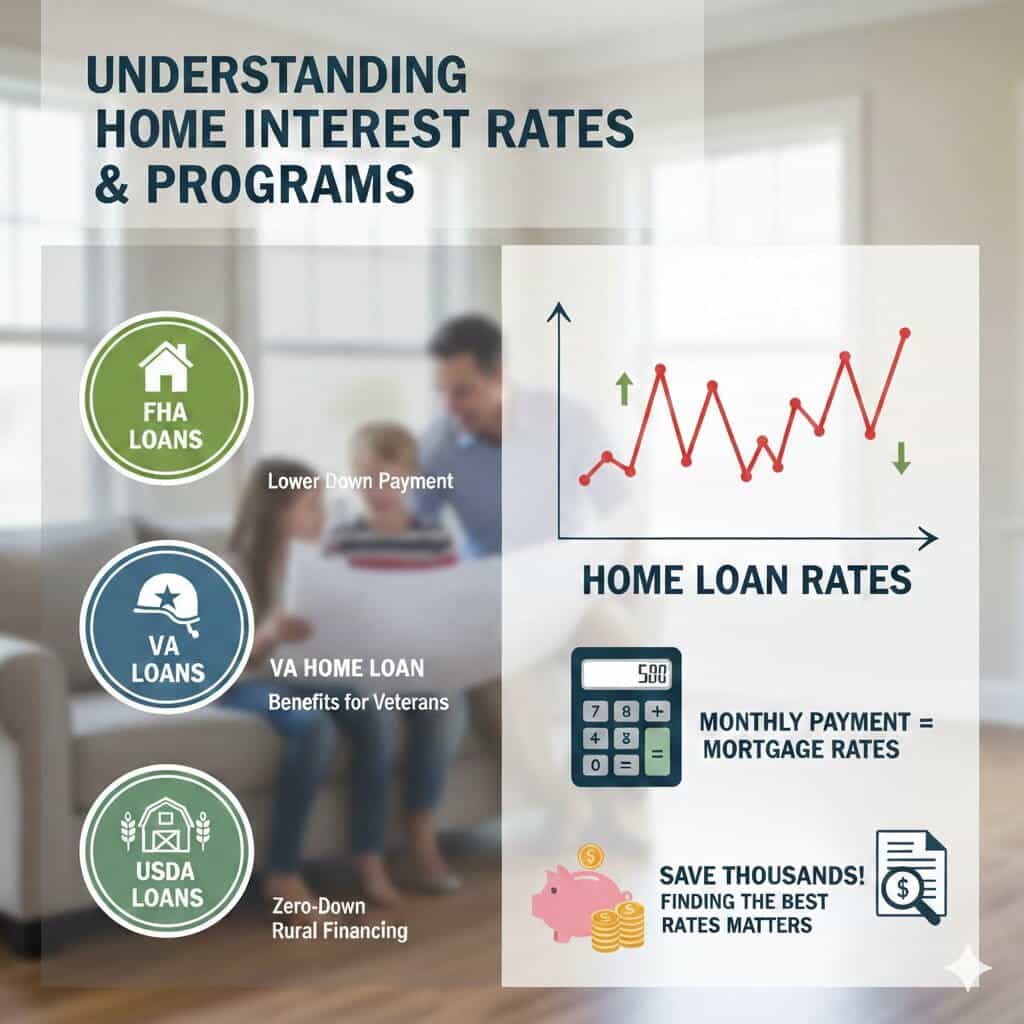
An infographic titled, "UNDERSTANDING HOME INTEREST RATES & PROGRAMS" Text reads: FHA Loans for lower down payments, VA Loans providing benefits for veterans, and USDA Loans for zero-down rural financing.

Your choice depends on your financial situation and specific program requirements. For many, FHA loans are an excellent entry point because they offer lower down payment options. Veterans should always look into a VA home loan, which provides significant benefits for those who have served. In more rural Utah communities, USDA loans are another powerful tool for zero-down financing.

Regardless of the program, current mortgage rates and home loan interest rates dictate your monthly payment. It pays to be diligent; finding the best mortgage or home loan rates can save you thousands of dollars over the lifetime of your loan. Keep a close eye on home loan rates, as they fluctuate with market conditions.

Finalizing Your Mortgage Pre-Approval in Utah

A smiling young couple sits at a wooden conference table in a modern Brokers Office, reaching out to receive a vetted mortgage pre-approval from a person in a navy suit. The document is clearly labeled "PRE APPROVED."

It is important to understand the difference between securing a home loan approval and obtaining a prequalification for a home. A pre-qualification is a surface-level look at your debt, while a pre-approval is a deep dive into your credit score. Most sellers in Utah will not even look at an offer without a formal pre-approval letter. As you finalize your plans, continue to monitor current mortgage rates and stay in close contact with your lender. Following these steps will position you to secure your dream home. Whether comparing lenders or quotes, preparation is the key to success.


View Mortgage Rates in Utah

https://ivoryhomes.com/home-calculator?utm_source=google&utm_medium=cpc&utm_campaign=cpcsaltlakecounty&utm_content=793482558148&utm_term=interest%20rates%20today%2030%20year%20fixed&gad_source=1&gad_campaignid=23415678908&gbraid=0AAAAAD_wVcBHV8B_7U-y63W1S0Bzzd4Bd&gclid=CjwKCAiA2PrMBhA4EiwAwpHyC5s5gLKyrUfxQazMB3vmS5pPl8XNwIUCc9nCsewyZhOvCo_fLv2p4BoCAYEQAvD_BwE

FHA Loan for Bad Credit in 2026: Mortgage Rate Forecast and Full Monthly Payment Breakdown

Sunset over Salt Lake City Valley, suburban Neighborhood

If you are searching for an FHA loan for bad credit in 2026, you are likely also checking mortgage rates today, reviewing the mortgage rate forecast, and calculating what your real monthly payment might look like.

The good news is that an FHA loan continues to be one of the most accessible mortgage options for borrowers with lower credit scores. In 2026, FHA financing remains a practical path to homeownership for buyers who may not qualify for a conventional mortgage but have stable income and manageable debt. Understanding FHA loan requirements, current mortgage rates, the 2026 mortgage rate forecast, and a detailed payment breakdown can help you decide whether now is the right time to buy.

Can You Get an FHA Loan With Bad Credit in 2026?

An FHA loan is backed by the Federal Housing Administration and is specifically designed to expand access to homeownership. Compared to conventional home loans, FHA mortgage guidelines are more flexible when it comes to credit history.

FHA loans were designed to expand access to homeownership, particularly for borrowers who may not qualify for conventional financing. In 2026, the core credit standards remain similar to previous years.

Borrowers generally need:

  • 580+ credit score to qualify with 3.5% down
  • 500–579 credit score with at least 10% down
  • Verifiable income and stable employment history
  • A manageable debt-to-income ratio
  • The property must be a primary residence

Lenders will evaluate your overall financial picture, including employment stability, income consistency, and your debt-to-income ratio. FHA loans are available for primary residences only, and the home must meet FHA appraisal standards.Because FHA loans allow lower credit scores, they require mortgage insurance. This includes an upfront mortgage insurance premium and an annual premium that is divided into monthly payments. While this adds to your total housing cost, it is what makes FHA financing accessible to borrowers rebuilding their credit.

FHA Mortgage Rates in 2026

When researching an FHA loan for bad credit, one of the most important factors is the interest rate. FHA mortgage rates in 2026 remain competitive compared to many conventional loan options, especially for borrowers with lower credit scores. Because FHA loans are government-backed, lenders may offer more favorable pricing than they would for a conventional loan with similar credit.

Your FHA mortgage rate depends on several factors, including your credit score, loan amount, down payment, and overall financial profile. Even small changes in mortgage rates can significantly affect your monthly payment, which is why monitoring current mortgage rates remains essential.

Mortgage Rate Forecast for 2026

The 2026 mortgage rate forecast suggests gradual stabilization compared to the volatility seen in previous years. Inflation trends, Federal Reserve policy decisions, and broader economic conditions continue to influence mortgage rates.Most analysts expect moderate fluctuations rather than dramatic spikes or sharp drops. While some forecasts anticipate slight rate decreases if inflation continues to ease, mortgage rates are unlikely to return to historic lows in the near future.

For borrowers considering an FHA loan for bad credit, waiting for the “perfect” rate may not always be the best strategy. When mortgage rates decline, buyer demand often increases, which can push home prices higher. Many buyers choose to purchase when they qualify and refinance later if mortgage rates improve.

FHA Loan Payment Breakdown in 2026

Understanding your full mortgage payment is just as important as understanding current mortgage rates. Many buyers look only at principal and interest, but a true FHA payment includes several components.

Imagine purchasing a home for $300,000 in 2026 with a 3.5 percent down payment. That equals $10,500 down, leaving a loan amount of $289,500 before adding the upfront mortgage insurance premium. If your FHA mortgage rate is 6.5 percent on a 30-year term, your principal and interest payment would be approximately $1,830 per month.

However, that is not your total monthly housing cost. FHA requires annual mortgage insurance, which may add around $140 per month in this example. Property taxes, depending on location, might add $300 per month. Homeowners insurance could add another $125 per month.

When you combine principal, interest, FHA mortgage insurance, property taxes, and homeowners insurance, your total monthly mortgage payment would be approximately $2,395. This full payment breakdown provides a more realistic picture of affordability than simply reviewing advertised mortgage rates.

Is an FHA Loan Right for You?

FHA loans remain one of the strongest options for borrowers who feel discouraged by their credit history. They provide a structured pathway to homeownership at a time when affordability remains a national concern. With steady mortgage rate forecasts and gradual economic normalization, 2026 may offer more predictability than recent years, even if rates are not dramatically lower.

Ultimately, the decision to move forward comes down to your financial stability, comfort with the projected payment, and long-term housing goals. If you have stable income, manageable debt, and a realistic understanding of your total monthly obligation, an FHA loan can be a practical solution—even with bad credit. Monitoring mortgage rates and understanding the full payment breakdown puts you in control, rather than leaving your decision to market headlines.

Mortgage Pre-qualification vs Pre-approval: A Comprehensive Guide 

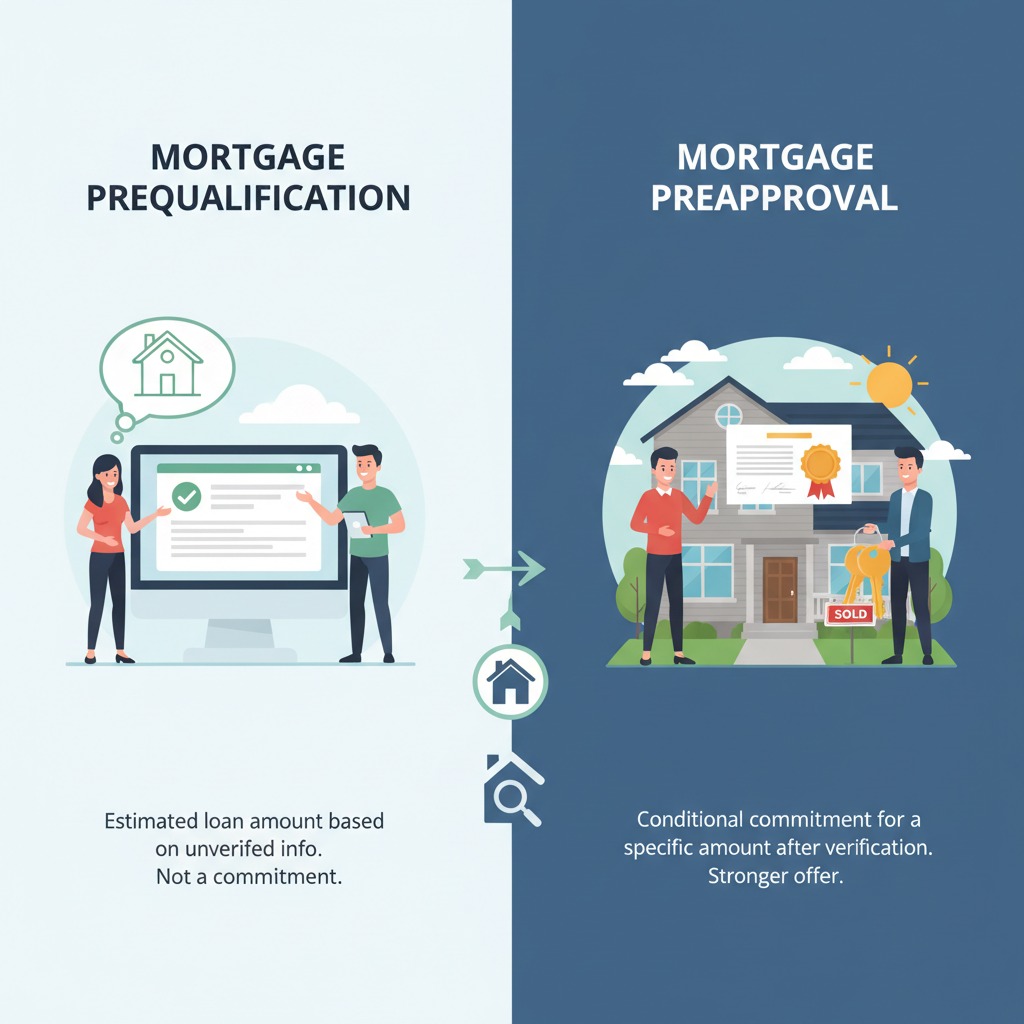
Graphic demonstrating mortgage pre-qualification vs. pre-approval

Navigating the 2026 real estate market requires more than just a passing interest in home listings; it requires a fortified financial strategy. As home prices remain steady and inventory remains a challenge, the first step for any serious buyer is understanding the difference between mortgage prequalification vs preapproval. While a prequalification gives you a ballpark estimate of your buying power based on self-reported data, a preapproval is a rigorous, verified commitment from a lender that carries significant weight when you finally make an offer. 

How Much House Can I Afford ?

Determining your budget is the cornerstone of a successful home search. To truly answer the question, “how much house can I afford,” you must look beyond the sticker price and evaluate your monthly cash flow. In 2026, lenders are scrutinizing mortgage income requirements more closely than ever, typically looking for a debt-to-income (DTI) ratio that ensures your total monthly obligations, including your future mortgage, stay within a manageable range. 

When running these numbers, many buyers forget to include the mortgage insurance cost, which is a mandatory fee for those putting down less than 20% on a conventional loan or using an FHA product. Furthermore, you must determine exactly how much do I need for a down payment to reach your desired price point. While traditional advice suggests 20%, modern FHA down payment requirements allow buyers to enter the market with as little as 3.5% down, making homeownership accessible even as savings are stretched. 

A tablet screen showing ITIN home loan and FHA 203k loan options.

First Time Home Buyer Programs 

The path to your first front door is often paved with financial assistance. There are numerous first time home buyer programs available in 2026 designed to lower the barrier to entry for new market participants. These programs often provide a combination of low-interest loans and first time home buyer grants that do not require repayment, provided the buyer remains in the home for a specified period. 

Because real estate trends are highly localized, you should also investigate home buyer grants [state-specific] that may offer additional tax credits or cash assistance for down payments. Many buyers find that they can “stack” these benefits with down payment assistance programs and closing cost assistance to significantly reduce the out-of-pocket expenses required at the signing table. Taking the time to research these options before you start touring homes can add tens of thousands of dollars to your effective budget. 

First time home buyers at the bank analyzing mortgage rates.

How to Improve Credit to Buy a House 

Your credit score is the single most important factor in determining your interest rate and loan eligibility. If you find your score is below the minimum credit score for mortgage approval, typically 620 for conventional loans or 580 for FHA, you must prioritize how to improve credit to buy a house. This process includes paying down high-interest credit card debt, ensuring all utility bills are paid on time, and avoiding any new large purchases or credit inquiries in the months leading up to your application. 

Once your credit is in a healthy range, you can explore more specialized financing options. For example, if you are looking at properties in less populated areas, a USDA rural development loan offers a 0% down payment option for eligible borrowers. For those with an Individual Taxpayer Identification Number, an ITIN home loan provides a vital alternative to traditional Social Security-based financing. If your dream home is a fixer-upper, the fha 203k loan allows you to bundle renovation costs directly into your mortgage, though you should be prepared for the fact that this specific, “how long does mortgage approval take” question often results in a 45-to-60-day timeline due to the extra inspections required. 

Navigating Specific Loan Requirements 

Different properties come with vastly different financial hurdles. If you are eyeing a luxury property, you must meet the stringent jumbo loan requirements, which often include higher cash reserves and credit scores. Conversely, those interested in a more affordable entry point might investigate a manufactured home loan, though these require the home to be permanently affixed to a foundation to qualify for traditional real estate rates. 

Condo living offers its own set of challenges, as condo financing requirements demand that the homeowner association (HOA) maintains adequate insurance and financial reserves. Regardless of the property type, your lender will conduct a thorough audit of your finances to ensure you meet all mortgage income requirements. Understanding these nuances early in the process, before the clock starts ticking on a purchase agreement, is the difference between a smooth closing and a failed deal. 

Purchasing a Home in Utah: FHA & HELOC Guide

Utah couple standing in front of home after buying a house

Entering Utah’s housing market requires more than just finding the right property. it requires understanding how to finance it strategically. Whether you’re preparing to buy a home in Utah or planning long-term equity growth, knowing how FHA loans, refinancing options, and equity tools work together will put you in a stronger financial position.

This guide walks through the major financing options available to Utah buyers and explains how each decision impacts your long-term financial plan.

FHA Loans in Utah: Qualification, Credit Scores, and Loan Limits

For many buyers, FHA loans provide one of the most accessible paths to homeownership. These government-backed mortgages are especially helpful for borrowers with moderate income, limited savings, or credit challenges.

Those researching FHA loans for bad credit often find that FHA guidelines are more flexible than conventional programs. The typical FHA loan minimum credit score is lower than most traditional financing options, making it attractive for first-time buyers.

Understanding how to qualify for FHA loan programs requires reviewing income stability, debt-to-income ratio, and employment history. Before choosing FHA financing, buyers should evaluate the fha loan pros and cons, particularly mortgage insurance requirements. It’s also wise to compare FHA vs. conventional loan structures to determine which aligns best with your long-term financial goals. Additionally, county-specific FHA loan limits in Utah can influence how much you’re able to borrow, depending on where you plan to purchase.

Down Payment Assistance and First-Time Buyer Programs in Utah

One of the biggest obstacles for new homeowners is saving for a down payment. Fortunately, several first-time home buyer down payment assistance programs exist to reduce upfront costs.

Programs offering Utah first-time home buyer assistance and broader Utah down payment assistance programs help qualified buyers bridge the financial gap. Reviewing first-time home buyer requirements early ensures you’re fully prepared before entering the market.

If you’re still learning how to buy your first home, working with a local mortgage professional can clarify eligibility guidelines, documentation needs, and financing timelines.

In certain rural areas, a USDA loan Utah may also provide zero-down financing opportunities for eligible properties.

Monitoring Mortgage Rates and Evaluating Refinance Opportunities

Interest rates significantly affect monthly payments and long-term affordability. Keeping an eye on the mortgage rate forecast and reviewing a mortgage rate history chart can help you understand current market trends.

Choosing between a fixed vs adjustable mortgage is another critical decision. Fixed-rate loans offer payment stability, while adjustable-rate mortgages may offer lower introductory rates depending on market conditions.

After purchasing, many homeowners begin asking when they should refinance. To answer that, you must consider refinance closing costs, evaluate whether a no closing cost refinance makes sense, and compare current cash out refinance rates.

Some borrowers also compare refinancing vs. home equity loan options to determine which offers greater flexibility or lower overall borrowing costs.

Home Equity Loan vs HELOC: Accessing Built-Up Equity

As property values increase, homeowners build equity that can later be accessed strategically. Before applying, it’s important to understand how much equity is needed to qualify for secondary financing.

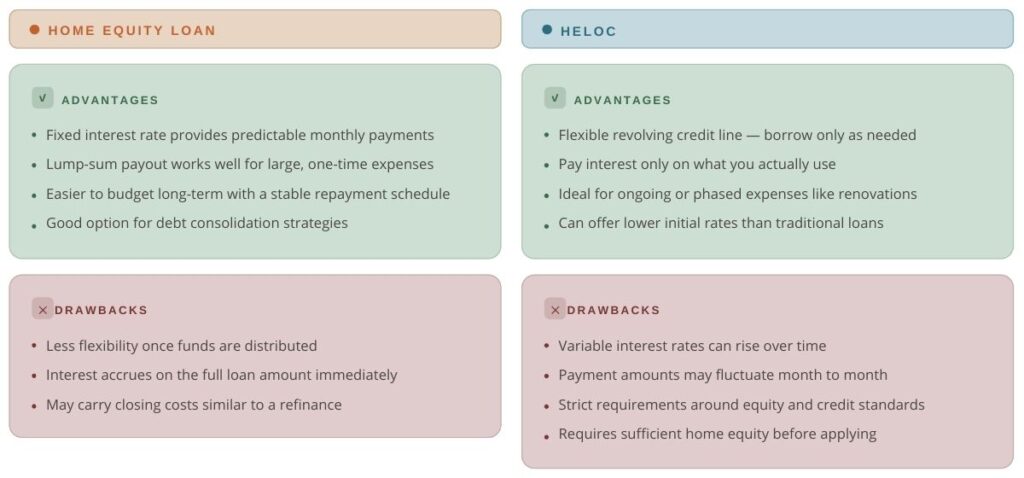
When comparing home equity loans vs. HELOC products, the primary difference is structure. A traditional home equity loan provides a lump-sum payment with fixed repayment terms, while a revolving line of credit offers more flexibility. Evaluating HELOC vs. home equity loan options allows homeowners to match borrowing structure with financial goals.

Understanding typical HELOC requirements, including minimum credit thresholds, equity levels, and income documentation, improves your chances of approval.

Many borrowers choose a home equity loan for debt consolidation to reduce high-interest balances and simplify monthly payments.

Table describing the Pros and Cons of Home Equity Loans vs. HELOC loans

Building a Sustainable Strategy

Successfully planning to buy a home in Utah involves more than securing loan approval. It requires understanding how FHA loans, Utah assistance programs, refinancing strategies, and equity tools fit into a long-term financial plan.

By monitoring rate trends, comparing loan structures (e.g., fixed vs. adjustable mortgages), evaluating refinance timing, and preparing for future equity access, you position yourself for financial stability and growth.

Working with experienced Utah mortgage professionals ensures you remain informed as market conditions evolve and your goals change.

Utah FHA Mortgage Rates with Low Down Payment

Buying a home in Utah is a dream for many families, but the rising costs of real estate can make saving for a large down payment feel impossible. Fortunately, Utah FHA mortgage rates with low down payment provide a practical solution. Backed by the Federal Housing Administration, FHA loans are designed to help first-time buyers and borrowers with modest incomes or lower credit scores enter the housing market.

FHA Loans in Utah: How They Work

When comparing a Utah FHA vs conventional mortgage, FHA loans stand out because they allow for much smaller down payments. Conventional loans typically require 5–20% down, while FHA loans allow qualified borrowers to buy with as little as 3.5% down.
FHA loans are insured by the Federal Housing Administration and include:
-Flexible credit score requirements (often as low as 580)
Fixed-rate stability and predictable payments
-The ability to combine with Utah assistance programs for extra savingss 3.5% down.

FHA Interest Rates in Utah (2025–2026 Outlook)

The trend for FHA interest rates Utah 2025 shows continued competitiveness despite rising national mortgage rates. Looking ahead, analysts expect FHA interest rates Utah 2026 to remain a strong choice for borrowers who value consistency and government backing.

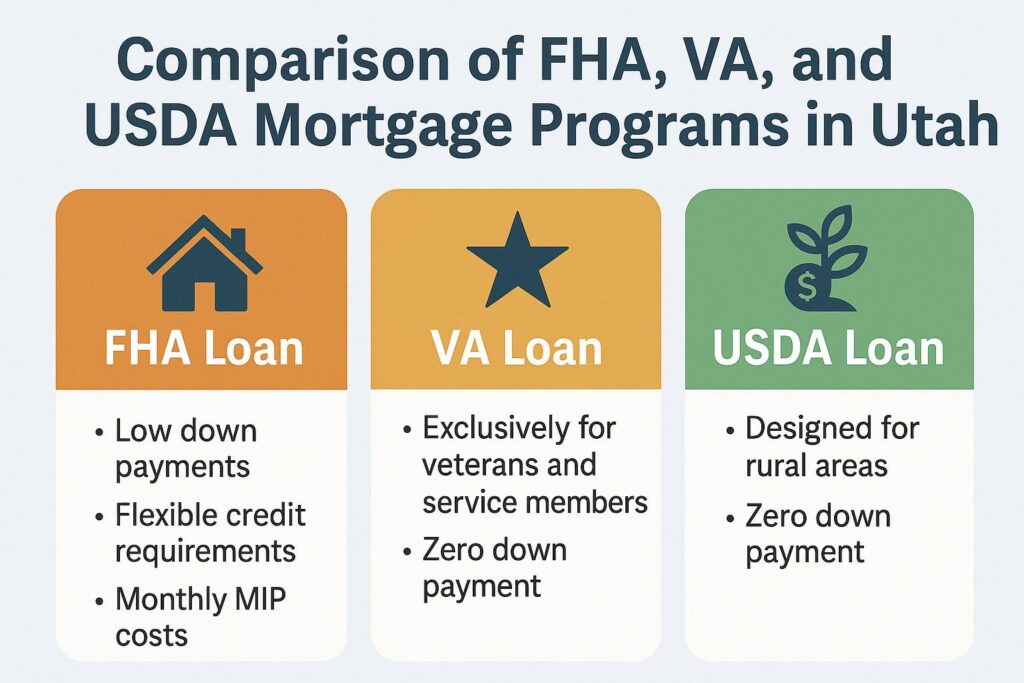
Comparing FHA, VA, and USDA Mortgage Rates in Utah

While FHA loans are popular, they aren’t the only government-backed programs available. Utah homebuyers should also consider:

Loan TypeDown PaymentCredit FlexibilityMortgage InsuranceBest For
FHA3.5%ModerateYes (MIP)Buyers with limited savings
VA0%HighNoneVeterans & service members
USDA0%HighYes (annual fee)Rural area buyers
Conventional3–20%HigherPMI (can cancel)Strong-credit borrowers

You can also compare Utah VA loan programs and explore USDA options to find the best fit.

Utah Home Buyer Programs and Assistance

Beyond federal programs, Utah offers local support for first-time buyers.

  • Utah Housing Corporation (UHC): Down payment and closing cost help
  • 2025–2026 Assistance Programs: State and county-level grants or loans
  • Combine these with FHA loans to lower your out-of-pocket costs

👉 Visit the Utah Housing Corporation website to learn more about current offers.

First-Time Buyers: Maximizing Savings

If you’re a first-time buyer in Utah, you can save even more by combining FHA loans with assistance programs.
Utah first-time buyer interest rates are sometimes reduced through state initiatives, plus you may receive closing cost help.

Pro Tips:

  • Compare at least three FHA lenders to find your best rate
  • Ask about seller concessions (FHA allows up to 6%)
  • Use a mortgage calculator to compare FHA vs conventional monthly payments

Why FHA Remains a Top Choice

Although VA and USDA loans are attractive for those who qualify, FHA remains the most widely used program in Utah. The combination of flexible credit requirements, small down payments, and steady interest rates keeps FHA at the center of the government mortgage programs Utah.

FAQs About FHA Mortgages in Utah

1. What credit score do I need for an FHA loan in Utah?
Most lenders require at least 580 for 3.5% down, though you may qualify with a lower score if you can put 10% down.

2. Are FHA interest rates lower than conventional?
Often, yes. FHA loans tend to offer competitive rates, though they include mortgage insurance premiums that add to overall costs.

3. Can first-time buyers combine FHA with Utah assistance programs?
Absolutely. Programs like Utah first time home buyer assistance 2025 can reduce upfront costs when paired with FHA.

4. Are FHA loans only for first-time buyers?
No. While they’re popular with new buyers, repeat buyers can also use FHA financing if they meet eligibility requirements.

Final Thoughts: Your Next Steps

For Utah residents, Utah FHA mortgage rates with low down payment remain one of the most powerful tools to achieve homeownership. By combining FHA financing with Utah home buyer programs 2025 and 2026, families can significantly lower upfront costs and monthly payments.

FHA Loans and Today’s Cheapest Home Loan Rates

Young Couple Reviewing FHA options to apply for FHA Mortgage

Stop Renting & Start Winning: Why FHA Loans + Today’s Cheapest Home Loan Rates Could Be Your Best Bet

If you’ve ever stared at your rent payment and thought, “This is just building my landlord’s wealth, not mine”—you’re not alone. More Americans are asking not only should you get a mortgage at all, but also how to secure the cheapest home loan rates without drowning in fine print. That’s where the FHA mortgage swoops in. Whether you’re exploring easy mortgage loans, home loans for low income, or trying to find the cheapest loan rates available today, FHA-backed programs have become the go-to solution for buyers tired of waiting on the sidelines.

Why FHA Loans Are a Big Deal Right Now

Young Couple Reviewing FHA options to apply for FHA Mortgage

An FHA mortgage is designed with first-timers and those with less-than-perfect credit in mind. In fact, the FHA loan first time home buyer program is one of the most popular government-backed options in the U.S. Why? Because the FHA loan interest rate is competitive, the down payment can be as low as 3.5%, and lenders are generally more forgiving than conventional programs.

Right now, current FHA mortgage rates hover around 6.25%–6.5% for a 30-year fixed FHA loan and 5.5%–5.75% for a 15-year fixed loan. That’s not the absolute cheapest home loan rates in history, but compared to conventional loans requiring higher credit scores and larger down payments, FHA offers a realistic path—especially for the FHA first time home buyer crowd.

Even for higher loan amounts, the numbers remain manageable. A mortgage on 250000 could cost around $1,540 per month, while a mortgage on 500000 might land near $3,080. A monthly mortgage on 300k would be approximately $1,850, before taxes and insurance. These real figures help you visualize what “affordable” really looks like.


How to Apply for an FHA Loan Without the Headache

People often ask, “So how do I actually do this?” Here’s a detailed roadmap:

  1. Gather Your Documents: Collect pay stubs, W-2s, or tax returns, recent bank statements, and your credit report.
  2. Check Your Numbers: Use an FHA pre approval calculator to see how much you might qualify for.
  3. Go Online: Most lenders now let you apply for FHA loan online or through mobile apps, making it easier than ever.
  4. Get Pre-Approval: Securing FHA loan pre approval shows sellers you’re serious. Even if your credit is low, programs exist to apply for FHA loan with bad credit.
  5. Select a Lender: From a local easy home loan bank to nationwide lenders, FHA programs are widely available. For guidance on where to get a FHA loan, consider checking reputable local banks or national lenders with FHA experience.
  6. Submit Your Application: Complete the FHA loan application online, upload your documentation, and wait for underwriting.

Underwriting typically takes 2–4 weeks. Lenders verify employment, income, and debts. Some may request additional documents. Once approved, you close the deal, transfer your down payment, and—keys in hand—you officially become a homeowner.

Let’s Talk Numbers: A Realistic Example

Young Couple Reviewing FHA options to apply for FHA Mortgage

Numbers make everything tangible. Curious about a monthly mortgage on 300k? With a 6.25% FHA loan interest rate, your principal and interest could be around $1,665. Add taxes and insurance, and you’re likely at $1,900—a price often less than rent for comparable apartments.

Let’s say you’re a first-time home buyer in your late 20s, earning $60,000 a year, and you’re eyeing a $280,000 starter home. With a 3.5% down payment (~$9,800), your loan is $270,200. Your monthly principal and interest might be $1,665, and taxes/insurance push it to roughly $1,900. Compare that to $2,200 in rent, and you’re building equity instead of padding someone else’s retirement.

Even buyers with imperfect credit can benefit. For example, if your score is around 620, you can still apply for FHA mortgage and get pre-approved within a few days, provided your income documentation is solid. Using FHA loan pre approval bad credit options, your chances of homeownership remain realistic.

Beyond Buying: FHA Cash-Out Refinances

FHA isn’t just for purchasing your first home. An FHA cash out refinance allows you to tap into accumulated equity. Use it to consolidate debt, fund home improvements, or finance essential projects. With historically low FHA mortgage rates, cash-out refinancing can even save money compared to high-interest credit cards.


The Big Question: Should You Get a Mortgage at All?

At the end of the day, should you get a mortgage at all? Renting keeps you flexible, but mortgages build wealth. The real question is whether you’re ready to invest in yourself. With the FHA first time home buyer program, easy mortgage loans, and current FHA mortgage rates lower than conventional alternatives, the answer often leans toward yes.

Stop endlessly scrolling listings and start running the numbers. With programs that allow you to apply for FHA home loan online, and options tailored for home loans for low income households, the path to ownership may be more accessible—and cheaper—than you think.

Stop endlessly scrolling listings and start running the numbers. Programs that let you apply for FHA home loan online, and resources tailored for home loans for low income households, make the path to ownership easier—and cheaper—than you think.

For official guidance, check the HUD FHA resources here.