
Utah Home Loans and Mortgage Rates 2025: A Complete Buyer’s Guide

Buying a home in Utah in 2025? You’re not alone. From Salt Lake City to St. George, the Utah real estate market remains competitive — and understanding your mortgage options is more important than ever. With rising home prices and fluctuating interest rates, this guide will help you explore home loans, compare mortgage rates, and make smart, informed decisions as a buyer or refinancer in Utah.

Utah Home Loans and Mortgage Rates 2025: A Complete Buyer’s Guide

Utah home loans continue to adapt with the evolving housing market. Whether you’re buying your first home or refinancing a second, knowing your loan options is step one. Most borrowers choose from the following:

  • 30-year fixed mortgage: A popular choice for stability.
  • 15-year mortgage: Faster payoff and less interest over time.
  • Adjustable-rate mortgage (ARM): Lower initial rate that adjusts after a set period.

In 2025, the 30-year fixed mortgage remains a favorite in Utah thanks to long-term predictability. However, with interest rates slightly higher than recent years, ARMs and 15-year options are gaining traction for those who plan to move or refinance within a few years.
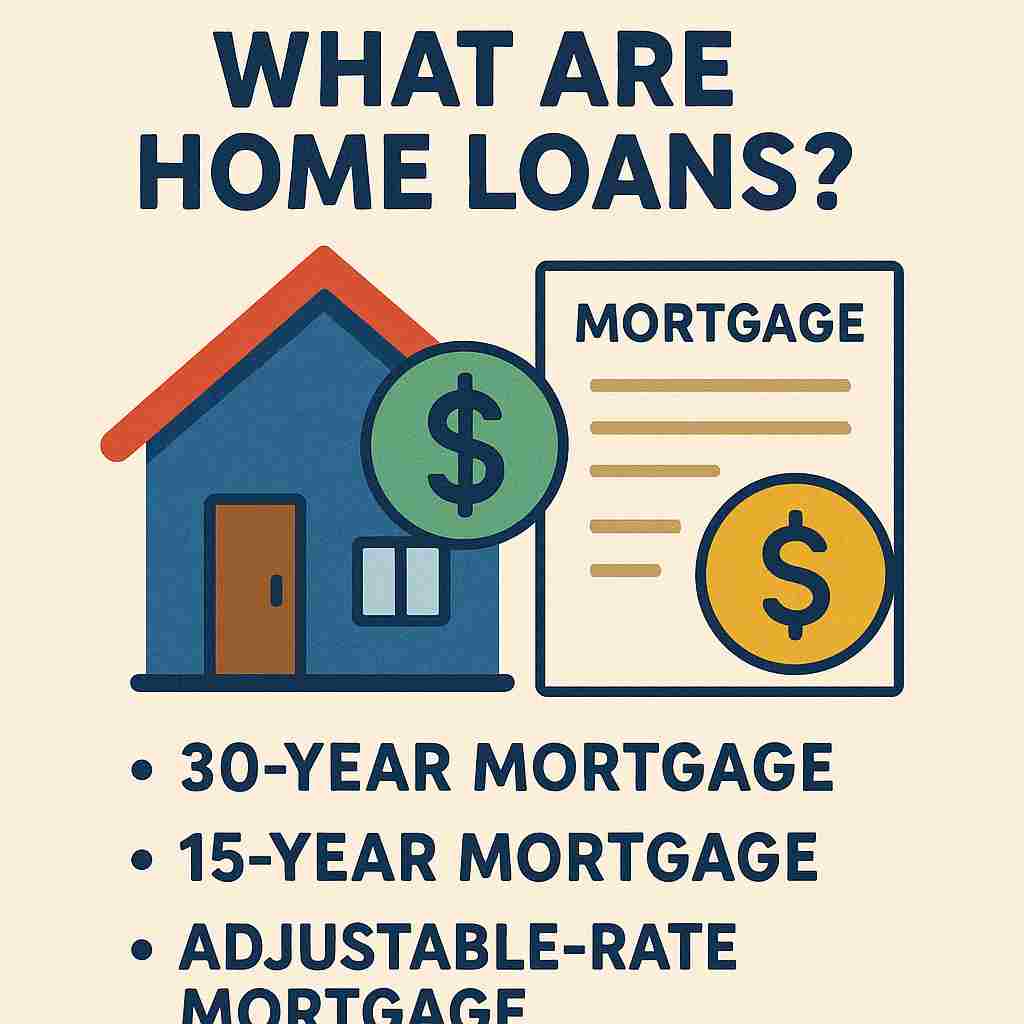
Infographic showing house and mortgage types: 30-year, 15-year, and adjustable-rate loans.

How to Compare Utah Mortgage Rates in 2025

Interest rates vary by day, lender, and borrower profile. When comparing Utah mortgage rates in 2025, don’t stop at the advertised number. Ask about:

  • Origination fees
  • Discount points
  • Prepayment penalties
  • Rate lock policies
  • Customer support and digital tools

Sites like MortgageRateUtah.com are especially helpful, showing local and national lender rates side-by-side. This helps you spot deals that generic national sites might miss.

Using FHA Loans and Calculators for Utah Homebuyers

Utah buyers often turn to FHA loans in 2025 for their more relaxed credit and down payment requirements. These federally-backed mortgages allow qualified buyers to purchase homes with as little as 3.5% down. However, they do come with mortgage insurance premiums (MIP) that affect monthly costs.

Recommended tools:

  • Ramsey mortgage calculator
  • FHA loan payment calculator
  • Utah-based house note and affordability estimators

These calculators let you visualize your total monthly obligation, including insurance, taxes, and PMI.

Refinancing a Home in Utah: What to Know in 2025

If you’re already a homeowner, 2025 may still be a good time to refinance. Even with slightly elevated rates, many Utah residents are locking in better terms than what they originally signed.

Reasons Utahns are refinancing:

  • Lowering interest rates
  • Shortening the loan term
  • Switching from ARM to fixed
  • Removing FHA mortgage insurance

Pulling cash out for renovations
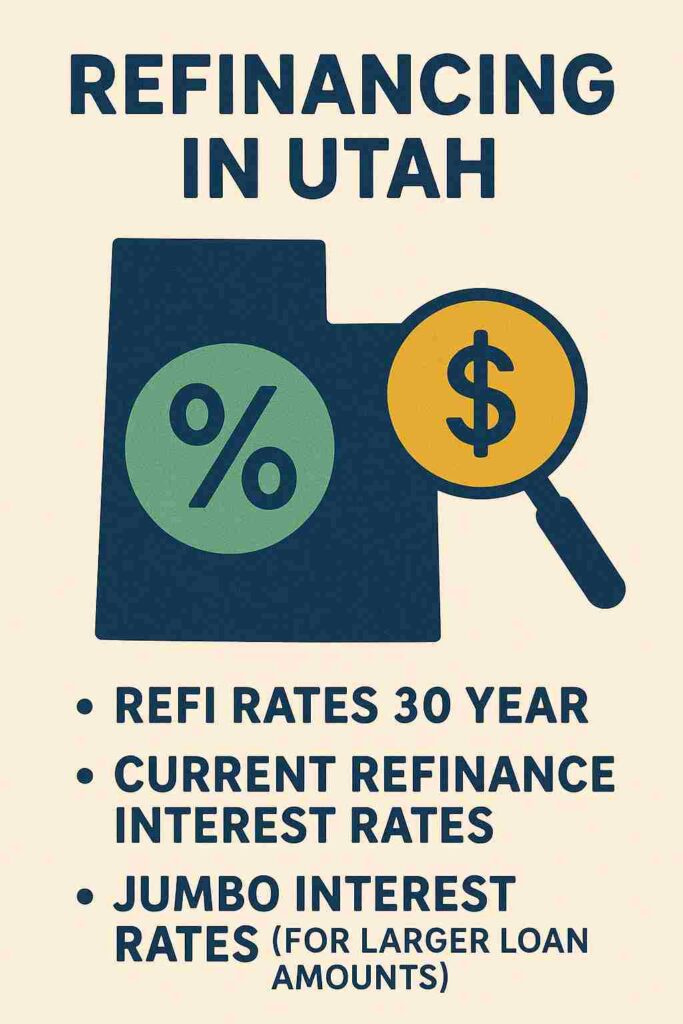
Illustration of Utah outline with refinancing terms like jumbo and refinance rates.

How Utah’s 2025 Housing Market Affects Loan Choices

In 2025, Utah’s housing market remains one of the hottest in the nation. Salt Lake County and Utah County, in particular, have seen home price increases fueled by high demand and limited inventory.

This environment encourages buyers to:

  • Get pre-approved early
  • Use rate lock options strategically
  • Consider assumable mortgages in high-rate environments
  • Explore credit union and state housing agency programs

Local loan officers and credit unions may also offer first-time buyer incentives, especially for buyers in cities like Ogden, Provo, or Logan.

Top Utah Mortgage Lenders to Compare in 2025

Finding the right lender is as important as finding the right home. In Utah, these are among the most searched lenders:

  • Freedom Mortgage – Known for refinance and VA loan options
  • Pennymac – A digital-forward lender with competitive rates
  • Bank of America – Offers first-time buyer programs
  • Wells Fargo – Well-known for traditional loans

Don’t skip Utah-based lenders either. Local credit unions often have lower fees and better service — plus insight into state-specific programs.

Special Loan Options in Utah: Jumbo & Assumable Mortgages

For homes priced above conforming limits (often ~$750,000+ in Utah counties), jumbo loans are necessary. These come with stricter credit and down payment requirements.

Assumable mortgages are another unique opportunity in 2025. These let you take over a seller’s loan — including their lower interest rate — which can save thousands over time. These are more common on FHA and VA loans.

Final Tips on Securing Utah Home Loans in 2025

  • Always compare rates from 3+ lenders
  • Use calculators to understand full payment breakdown
  • Watch for hidden fees, prepayment penalties, and high origination costs
  • Use lender review sites like NerdWallet or LendingTree
  • Leverage Utah-specific tools like MortgageRateUtah.com
Graphic with dollar sign inside house outline and title: The 2025 Guide to Home Loans and Mortgage Rates for Utah Homebuyers.

Securing the right mortgage in Utah in 2025 means knowing your options, comparing rates, and using the best tools available. Whether you’re locking in a fixed rate, refinancing for savings, or exploring FHA loans, use resources like MortgageRateUtah.com to shop smart and buy confidently. With the right preparation, your Utah dream home is within reach.

Utah Housing Loan: The Key to Affordable Homeownership in Utah

If you’re exploring homeownership in the Beehive State, a Utah housing loan might be your best path forward. Whether you’re a first time home buyer in Utah, a low-income family, a self-employed professional, or even a single parent, Utah offers a wide range of mortgage programs tailored to your needs. These programs—often backed by the Utah Housing Corporation—can help make buying a home more affordable with flexible credit requirements, down payment assistance, and low-interest financing options.

FHA Home Loan in Utah: A Flexible Option for New Buyers

The FHA home loan in Utah is one of the most popular loan options for new buyers, particularly those with moderate or low credit scores. FHA loans are backed by the federal government and offer a down payment as low as 3.5%. These loans also pair well with Utah housing loan programs, which may include grants or second mortgages to assist with upfront costs.

If you’re not sure whether an FHA loan is your best fit, consider using a home loan comparison in Utah to explore other choices. For many, the FHA option stands out thanks to its low barrier to entry and compatibility with Utah mortgage assistance offerings.

The Utah First Time Home Buyer Program: What You Should Know

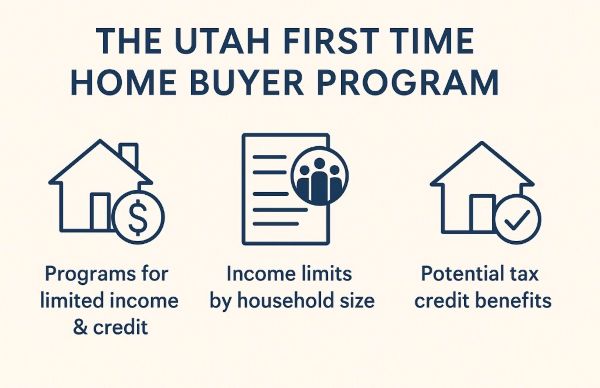
The Utah first time home buyer program offers significant support for those purchasing their first home. Through the Utah Housing Corporation, eligible buyers can access programs like FirstHome, HomeAgain, Score, and NoMI—all designed to support individuals with limited income or credit history.

These programs often come with Utah housing first time buyer income limits, which are set based on household size and location. If you qualify, you may also be eligible for the first time home buyer tax credit in Utah, giving you additional savings after your purchase.

Don’t forget to check whether your home qualifies for a USDA home loan in Utah—an option for buyers in rural areas—or if you’re a veteran, a VA home loan in Utah might offer zero down and no mortgage insurance. Check out Tools to Beat Today’s Mortgage Rates

Utah Mortgage Preapproval Checklist: Preparing for Success

Before you apply for a mortgage, use a Utah mortgage preapproval checklist to get organized. Preapproval increases your credibility with sellers and gives you a clearer idea of your budget.

Here’s what you’ll likely need:

  • Two years of tax returns and W-2s
  • Recent pay stubs or income proof
  • Asset documentation and bank statements
  • Photo ID and Social Security number

For buyers in unique situations, such as applying for a mortgage for self employed in Utah, you’ll need to provide business income verification, including profit-and-loss statements and 1099 forms. Similarly, a mortgage for single parents in Utah may involve proof of child support or government assistance.

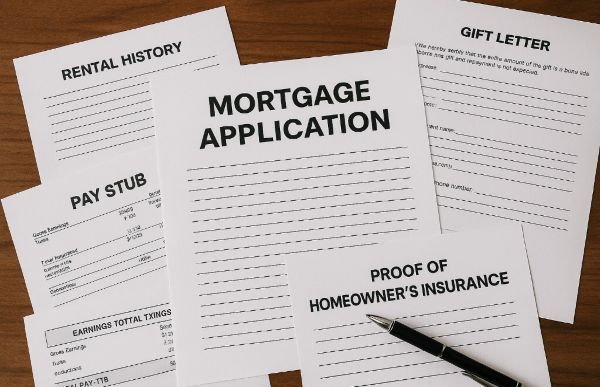
Collecting the documents needed for a mortgage application in Utah can feel overwhelming, but preparation makes the process smoother. Beyond financial records, lenders may also ask for rental history, gift letters (if applicable), and proof of homeowner’s insurance. These documents are crucial, especially when you’re applying for low income mortgage programs in Utah or using down payment assistance Utah funding.

Low Down Payment Mortgage Options in Utah

If saving for a down payment is holding you back, you’re not alone. Thankfully, low down payment mortgage Utah options can get you into a home with minimal upfront cost. These programs—often available through the Utah housing loan system—include grants or secondary loans that cover both the down payment and part of the closing costs.

Working with one of the best lenders for first time buyers in Utah ensures you receive guidance on these options and helps you navigate the eligibility criteria effectively.

How to Apply for a Home Loan in Utah

Understanding how to apply for a home loan in Utah is simpler when broken down step-by-step:

  1. Gather financial documents and get preapproved
  2. Choose a lender or mortgage broker in Salt Lake City
  3. Explore Utah housing loan programs
  4. Compare offers using a home loan comparison Utah tool
  5. Submit your full application and schedule a home inspection

The best mortgage companies in Utah will walk you through each of these steps and ensure you receive all applicable Utah mortgage assistance.

Refinance and Beyond: Getting the Best Rates in Utah

Already a homeowner? You may still benefit from the best refinance rates Utah. Refinancing your existing mortgage—especially if you originally used a Utah housing loan—can lower your monthly payments or reduce your interest rate. Be sure to ask your lender if you qualify for a streamlined refinance under FHA or VA guidelines.

Choosing the Right Lender or Mortgage Broker in Salt Lake City

Partnering with a mortgage broker in Salt Lake City can help you compare multiple loan options at once, especially if you’re not sure whether to go with a conventional, FHA, VA, or USDA home loan in Utah. Brokers often have access to exclusive rates and can assist with unique needs like self-employment income or single-parent households.

Navigating 30-Year Fixed-Rate Refinancing in Utah: Your Complete Guide

Person deciding to refinance

Navigating 30-Year Fixed-Rate Refinancing in Utah: Your Complete Guide

For many Utah homeowners, their home is not just a place to live; it’s a significant financial asset. As market conditions evolve, understanding your mortgage options becomes paramount. Among the various choices, the 30-year fixed-rate mortgage stands out as a popular and stable option, especially when considering refinancing. This guide will delve into the intricacies of 30-year fixed-rate refinancing in Utah, exploring everything from current refinance rates 30 year fixed to the potential impact on your monthly budget and long-term financial goals. Haven’t bought your forever home yet? Check out our tips and tricks to buying in Utah.

Understanding the Appeal of a 30-Year Fixed Mortgage

A 30-year fixed mortgage offers remarkable predictability, a quality highly valued by homeowners. Unlike adjustable-rate options, this loan type is characterized by a consistent interest rate throughout the entire loan term. This stability ensures that the principal and interest portion of your mortgage payment 30 years remains unchanged, providing a predictable housing cost for three decades. When you decide to refinance into a 30-year fixed loan, you are essentially replacing your existing mortgage with a new one that locks in these stable rates refinance 30 year fixed, offering a sense of financial security. Want to learn more about your current mortgage? Check out our helpful piece on understanding your mortgage .

Why Consider Refinancing Your Mortgage?

The decision to refinance into a new 30 year mortgage is often driven by several strategic financial motivations. Understanding these can help you determine if it’s the right move for your current situation:

  1. Lowering Your Monthly Payments: This is perhaps the most compelling reason homeowners explore refinance rates 30 year fixed. If today’s refinance mortgage rates 30 year fixed are significantly lower than what you’re currently paying, even a modest reduction can lead to substantial long-term savings and a more manageable mortgage payment 30 years. Many individuals actively seek the lowest 30 year refinance rates or the best 30 year refinance rates to optimize their monthly budget.
  2. Accessing Home Equity (Cash-Out Refinance): A cash out refinance rates 30 year fixed allows you to leverage your home’s accumulated equity. This popular option provides a lump sum of cash, ideal for funding major expenses such as home renovations, educational pursuits, or consolidating high-interest debt. When considering this, it’s crucial to thoroughly evaluate the 30 year cash out refinance rates and compare them against other financing avenues.
  3. Changing Loan Terms: Life circumstances change, and so might your financial capacity. If you’re currently managing a more aggressive 15-year loan and find its higher mortgage payment challenging, refinancing from 15 to 30 year loan can dramatically reduce your monthly obligations, thereby improving your cash flow. Conversely, if your goal is to pay off your home faster and you can comfortably afford higher payments, refinancing from 30 year to 15 year mortgage can save you significant interest over the loan’s lifetime.
  4. Switching Loan Types: For those with an adjustable-rate mortgage (ARM) who desire greater stability, a 30-year conventional mortgage refinance rates option provides the security of a predictable fixed rate, shielding you from future market fluctuations.

Factors Influencing Your 30-Year Refinance Rate

While general trends like the average 30 year refinance rate are widely reported, your specific refinance rates 30 year fixed in Utah will be a personalized reflection of several individual and broader market factors:

  • Credit Score: Your creditworthiness is a primary determinant. A robust credit profile, typically a FICO score of 740 or higher, will generally qualify you for the most favorable and lowest 30 year mortgage refinance rates.
  • Loan-to-Value (LTV) Ratio: This ratio compares your loan amount to your home’s appraised value. A lower LTV, indicating substantial equity in your home, usually translates into more competitive rates refinance 30 year fixed.
  • Debt-to-Income (DTI) Ratio: Lenders meticulously assess your ability to comfortably manage monthly payments by comparing your total monthly debt obligations against your gross monthly income.
  • Discount Points: You may have the option to pay “points” (prepaid interest) at closing, which are essentially prepaid interest. In exchange for this upfront cost, you can secure a lower interest rate over the life of the loan.
  • Market Conditions: Broader economic indicators, including inflation rates and the monetary policies set by the Federal Reserve, exert a direct influence on mortgage rates today refinance 30 year fixed across the market.

Understanding Your 30-Year Mortgage Payments: A Look at the Numbers

Understanding 30-Year Mortgage Payments

One of the most practical considerations for any homeowner contemplating a refinance is the actual mortgage payment 30 years. While an online mortgage 30 years calculator is an invaluable tool for precise figures, let’s explore some typical scenarios to give you an idea of potential monthly principal and interest payments (note: these figures are illustrative and do not include property taxes or home insurance, which vary by location in Utah):

  • For a $100 000 mortgage payment 30 years, at an example 6.5% interest rate, your principal and interest payment would be approximately $632.
  • A $250 000 mortgage payment 30 years at the same 6.5% rate would be around $1,580.
  • If you have a $300 000 mortgage payment 30 years, expect to pay roughly $1,896.
  • For a $350 000 mortgage payment 30 years, the payment could be approximately $2,219.
  • And for a $400 000 mortgage payment 30 years, it would be in the vicinity of $2,528.
  • Even for a $500 000 mortgage 30 years, the monthly principal and interest could be around $3,160.

These examples powerfully demonstrate how significantly the total loan amount impacts your monthly mortgage payment 30 years, even with consistent interest rates.

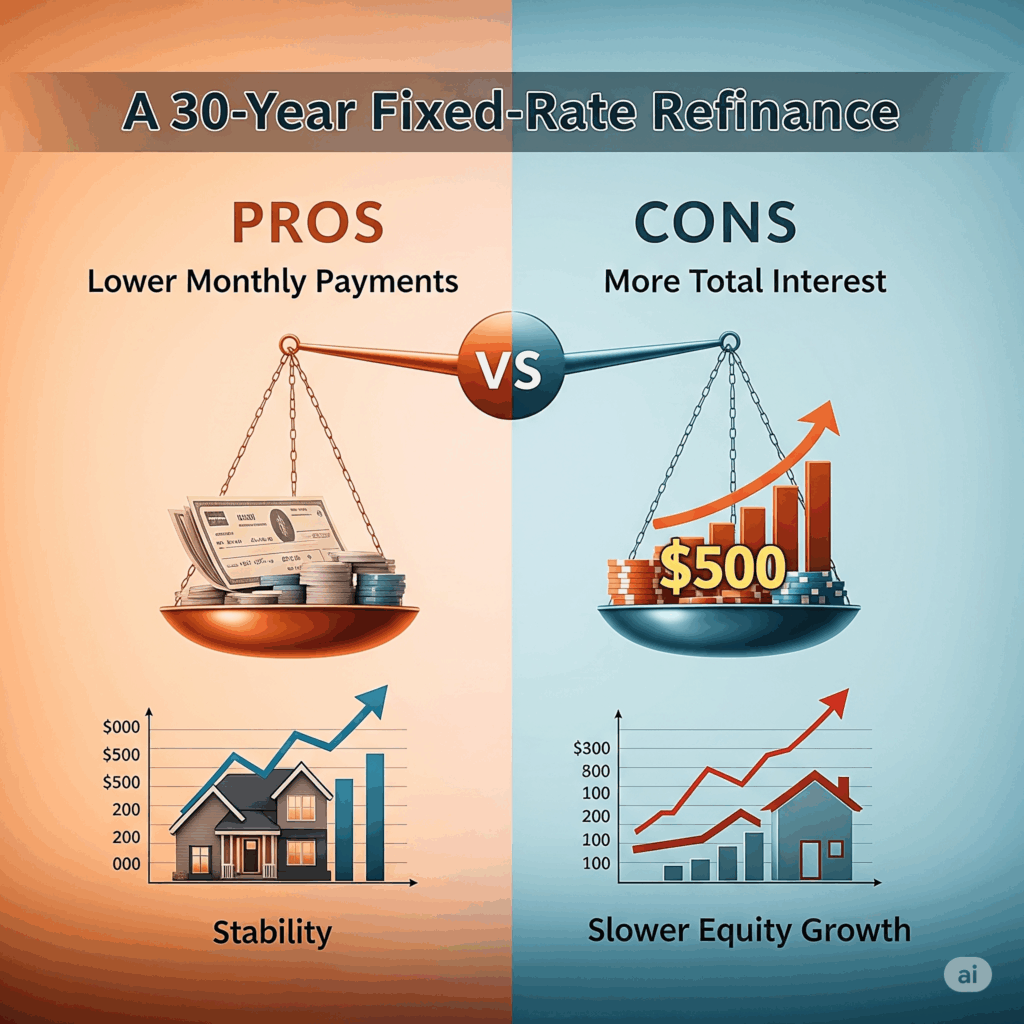
The Pros and Cons of a 30-Year Fixed Refinance

Pros and Cons of 30-Year Fixed Refinance

Choosing a 30-year fixed loan for your refinancing comes with a distinct set of advantages and disadvantages, which are crucial to weigh against your personal financial goals:

Pros:

  • Lower Monthly Payments: Spreading the loan over 30 years typically results in the lowest possible monthly principal and interest payment, significantly improving your monthly cash flow.
  • Payment Stability: The fixed interest rate provides unparalleled budget predictability, effectively shielding you from future rate hikes and market volatility.
  • Financial Flexibility: Lower payments can free up valuable funds that can be strategically redirected towards other investments, bolster your savings, or accelerate the repayment of other higher-interest debts.
  • Wider Lender Choice: Due to its widespread popularity, you’ll generally find a broad array of competitive 30 year mortgage quote options from numerous lenders, offering ample choice.

Cons:

  • More Total Interest Paid: Over a lengthy 30-year term, you will inevitably pay a significantly larger sum in total interest compared to a shorter-term loan, such as a 15-year fixed mortgage.
  • Slower Equity Build-Up: The extended amortization schedule means that a smaller proportion of your early payments is allocated towards reducing the principal, which can slow down the pace at which you build home equity.
  • Slightly Higher Interest Rates: In some market conditions, the 30 year refinance rates offered might be marginally higher than the interest rates available for 15-year terms on the same day.

Specialized 30-Year Refinance Scenarios and Lender Considerations

Beyond the standard conventional mortgage refinance rates, several specialized scenarios might apply when considering a 30-year fixed loan:

  • 30 year second home mortgage rates: If you own a vacation home or an investment property in Utah, refinancing it can carry different rate implications compared to a primary residence, often due to perceived higher risk.
  • Lender-Specific Rates: As you explore the lowest 30 year mortgage rates refinance, you’ll likely encounter specific offers from various financial institutions. For instance, some individuals actively seek USAA 30 year mortgage rates, Navy Federal 30 year mortgage rates, or Alliant Credit Union 30 year mortgage rates. It’s always prudent to compare offers from a diverse range of lenders to ensure you secure the best 30 year refinance rates tailored to your unique financial situation.

Getting Your Personalized 30-Year Mortgage Quote in Utah

The most effective way to determine if a 30-year fixed-rate refinance aligns with your financial aspirations is to obtain a personalized 30 year mortgage quote. It’s important not to rely solely on broadly advertised mortgage rates today refinance 30 year fixed, as these are often presented for ideal borrower profiles. A local Utah mortgage professional possesses the expertise to help you understand all the intricate factors at play, including closing costs and fees, and can expertly guide you through every step of the process. They can thoroughly explain how various scenarios, such as refinancing from 15 year to 30 year or vice-versa, will specifically impact your financial future.

Ultimately, whether your primary goal is to find the lowest 30 year refinance rates to significantly reduce your monthly expenses, or you’re contemplating a cash out refinance rates 30 year fixed to strategically unlock your home’s equity, making a well-informed decision is paramount. By understanding the profound nuances of the 30-year fixed loan, diligently comparing rates refinance 30 year fixed, and carefully considering your long-term financial objectives, you can confidently navigate the dynamic Utah mortgage market. We encourage you to reach out to a local expert today to get a tailored 30 year mortgage quote and thoroughly explore all your available options.