Mortgage Pre-qualification vs Pre-approval: A Comprehensive Guide 

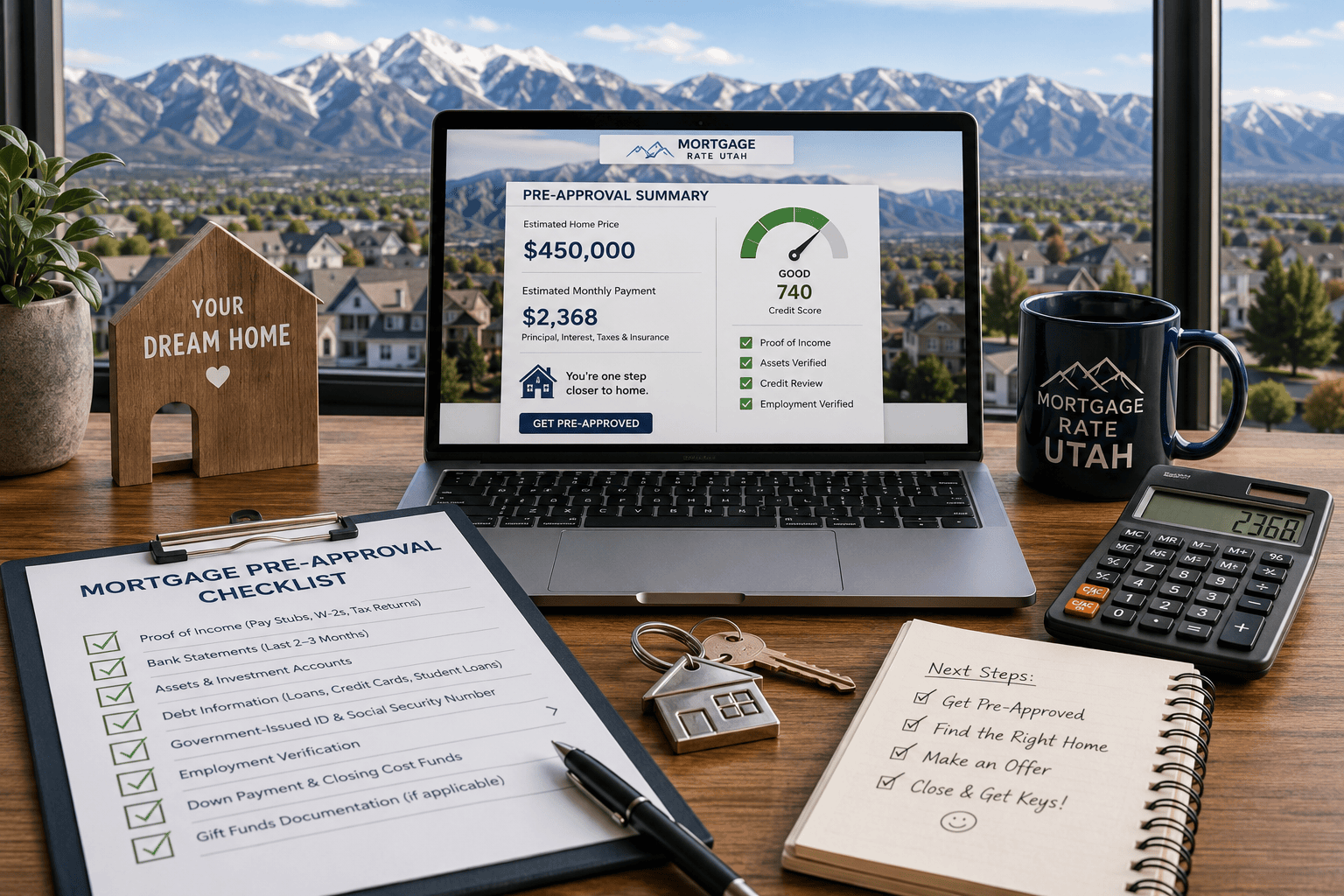
Graphic demonstrating mortgage pre-qualification vs. pre-approval

Navigating the 2026 real estate market requires more than just a passing interest in home listings; it requires a fortified financial strategy. As home prices remain steady and inventory remains a challenge, the first step for any serious buyer is understanding the difference between mortgage prequalification vs preapproval. While a prequalification gives you a ballpark estimate of your buying power based on self-reported data, a preapproval is a rigorous, verified commitment from a lender that carries significant weight when you finally make an offer. 

How Much House Can I Afford ?

Determining your budget is the cornerstone of a successful home search. To truly answer the question, “how much house can I afford,” you must look beyond the sticker price and evaluate your monthly cash flow. In 2026, lenders are scrutinizing mortgage income requirements more closely than ever, typically looking for a debt-to-income (DTI) ratio that ensures your total monthly obligations, including your future mortgage, stay within a manageable range. 

When running these numbers, many buyers forget to include the mortgage insurance cost, which is a mandatory fee for those putting down less than 20% on a conventional loan or using an FHA product. Furthermore, you must determine exactly how much do I need for a down payment to reach your desired price point. While traditional advice suggests 20%, modern FHA down payment requirements allow buyers to enter the market with as little as 3.5% down, making homeownership accessible even as savings are stretched. 

A tablet screen showing ITIN home loan and FHA 203k loan options.

First Time Home Buyer Programs 

The path to your first front door is often paved with financial assistance. There are numerous first time home buyer programs available in 2026 designed to lower the barrier to entry for new market participants. These programs often provide a combination of low-interest loans and first time home buyer grants that do not require repayment, provided the buyer remains in the home for a specified period. 

Because real estate trends are highly localized, you should also investigate home buyer grants [state-specific] that may offer additional tax credits or cash assistance for down payments. Many buyers find that they can “stack” these benefits with down payment assistance programs and closing cost assistance to significantly reduce the out-of-pocket expenses required at the signing table. Taking the time to research these options before you start touring homes can add tens of thousands of dollars to your effective budget. 

First time home buyers at the bank analyzing mortgage rates.

How to Improve Credit to Buy a House 

Your credit score is the single most important factor in determining your interest rate and loan eligibility. If you find your score is below the minimum credit score for mortgage approval, typically 620 for conventional loans or 580 for FHA, you must prioritize how to improve credit to buy a house. This process includes paying down high-interest credit card debt, ensuring all utility bills are paid on time, and avoiding any new large purchases or credit inquiries in the months leading up to your application. 

Once your credit is in a healthy range, you can explore more specialized financing options. For example, if you are looking at properties in less populated areas, a USDA rural development loan offers a 0% down payment option for eligible borrowers. For those with an Individual Taxpayer Identification Number, an ITIN home loan provides a vital alternative to traditional Social Security-based financing. If your dream home is a fixer-upper, the fha 203k loan allows you to bundle renovation costs directly into your mortgage, though you should be prepared for the fact that this specific, “how long does mortgage approval take” question often results in a 45-to-60-day timeline due to the extra inspections required. 

Navigating Specific Loan Requirements 

Different properties come with vastly different financial hurdles. If you are eyeing a luxury property, you must meet the stringent jumbo loan requirements, which often include higher cash reserves and credit scores. Conversely, those interested in a more affordable entry point might investigate a manufactured home loan, though these require the home to be permanently affixed to a foundation to qualify for traditional real estate rates. 

Condo living offers its own set of challenges, as condo financing requirements demand that the homeowner association (HOA) maintains adequate insurance and financial reserves. Regardless of the property type, your lender will conduct a thorough audit of your finances to ensure you meet all mortgage income requirements. Understanding these nuances early in the process, before the clock starts ticking on a purchase agreement, is the difference between a smooth closing and a failed deal. 

Utah Mortgage Myths

Blue sky with the welcome to Utah sign on the left showing red mountains.

Mortgage Myths Debunked: What Every Utah Homebuyer Should Know

Buying a home can feel like a daunting task, especially with some common misconceptions that can make it feel like homeownership is out of reach for so many. Homebuyer education, mortgage calculators and tools, loan, and down payment assistance programs can make homeownership more accessible and affordable than you might think. We will debunk common myths regarding mortgage rates and homeownership in Utah and show how you might access a mortgage that previously seemed out of reach.   

Myth: You Need a 20% Down Payment and Perfect Credit to Buy a House in Utah

The belief that you need a perfect credit score and a 20% down payment to buy a home discourages many potential homebuyers. While these can ease the process of buying a home, certain incentives and benefits make it easier to get approval for a loan than you might think. 

Utah Down payment Assistance

One myth that keeps many from pursuing homeownership is the idea that you need a 20% down payment to purchase a home. While it’s true that a larger down payment can help you secure a better mortgage rate, it’s far from a requirement. In fact, there are several Utah mortgage assistance programs that can help you cover your down payment. For first-time homebuyers in Utah, down payment assistance programs and low down payment mortgage options like FHA loans or USDA loans can make buying a home much more affordable. The Utah Housing Corporation down payment assistance program offers down payment assistance specifically for eligible Utah homebuyers. Some Utah communities offer additional down payment assistance should you choose to purchase a home there. Using a Utah mortgage calculator, you can quickly see how much you can save on your down payment by exploring different loan options, including low down payment mortgages or even no down payment loans for eligible buyers in rural areas with USDA loan eligibility.

Homebuyer Assistance in Utah with Low Credit

Smiling couple standing in front of their new home, holding a wooden sign that reads 'Home Sweet Home,' symbolizing homeownership and a fresh start. This is their first mortgage.

A common myth that discourages many potential buyers is the belief that you need a perfect credit score to secure Utah home loans. While having a strong credit history certainly helps when applying for a mortgage, it’s not a dealbreaker if your score isn’t flawless. Many Utah mortgage brokers and local mortgage companies in Utah offer specialized loan options for those with less-than-perfect credit. FHA loans, for instance, are designed to help buyers with lower credit scores (often as low as 580) secure financing with lower down payments. If you’re worried about your credit score, talk to the best mortgage lenders in Utah about homebuyer resources and options like FHA loans, VA loans or USDA loans. These can be forgiving of lower scores, especially if other financial factors, such as your debt-to-income ratio, are strong.

Myth: Renting is Always Cheaper Than Buying in Terms of Home Affordability

There is a common myth that states that renting is always cheaper than buying. We will discuss and debunk this myth. It is not necessarily true that renting is always cheaper. While renting has lower upfront costs, buying a house can be more cost-effective in the long run. There are many different factors at play to determine which is better for you. Current Utah mortgage rates, tax benefits, access to FHA loans in Utah, and property appreciation can all impact your financial decisions. Depending on the rates when you buy, a mortgage payment could be cheaper than a rent payment.

Utah Homebuyer Grants vs. Costs of Renting

While buying means more upfront costs, there are resources which can combat this. First-time homebuyers can qualify for homebuyer grants which provide sums of money for free to use towards a down payment or closing costs. This can be huge in the long run, because the larger down payment you put down, the lower your monthly mortgage payment is. On the flip side, with renting there can be many extra costs that can increase your monthly rent payment. For example, parking fees, pet ownership fees, and amenities fees; as well as one-time large payments for a security deposit. Additionally, when you pay a monthly mortgage, you are building equity by owning a property and can get money back if you sell the house later on. When you rent, you do not build any equity or get any money back that you have paid. This is because owning a house is an investment. Fixed-rate mortgages mean that payments do not inflate over time, but rent payments generally increase steadily every year. While mortgage rates are currently higher in Utah than they were several years ago, analysts predict them to be lower in the future. This gives you the chance to lock in a house at the current price and refinance at a lower rate down the road.  With the right loans, homeowner assistance programs, and a look to the future, now could be a great time to make the switch from being a renter to being a homeowner. 

Navigating Utah’s Mortgage Myths and Homebuying Realities

Buying a home in Utah can seem overwhelming with all the myths surrounding mortgage rates, down payments, and credit requirements. However, as we’ve explored, you don’t need a perfect credit score or a 20% down payment to become a homeowner. With various federal / Utah down payment assistance programs and flexible loan options, purchasing a home is more accessible than many realize. While renting might seem like the cheaper option upfront, buying a home can often be more cost-effective in the long run, thanks to homebuyer grants, equity building, and stable mortgage payments. To further assist you in navigating Utah’s mortgage landscape, check out the resource Mortgage Rates Made Easy for helpful tools, updated rates, and personalized guidance. Understanding your options, using tools like a Utah mortgage calculator and working with reputable lenders can help you make the best decision for your financial future. Whether you’re looking to buy your first home or exploring ways to invest, debunking these common myths is the first step toward turning homeownership into a reality in Utah.

Young couple in Utah sitting on the floor of their new home, toasting with drinks, surrounded by moving boxes and a pizza box, celebrating their move. This is their first home and first mortgage!

Beginner’s Guide to Banking

Banking For Beginners - A Basic Guide

Entry-level Banking Guide

Welcome to a beginner’s guide to banking. If you are looking to get a better understanding of basic banking for beginners, or just starting out on your financial journey, you are in the right place. Banking is the foundation of personal finance, and it is important to understand it with confidence. This page provides you with a basic understanding of four crucial pieces to a healthy personal financial plan. Once you are familiar, we recommend that you navigate to other pages on this website for deeper insights.

Checking and Savings Accounts

            The first step of the beginner’s guide to banking is opening checking and savings accounts. A checking account stores the majority of your spending money. This account is used for day to day purchases and a great start for banking with 16 year olds. You can access the money in this account by making cash withdrawals at a branch or using a debit card. You can fund this account with cash or check deposits. Once you are comfortable with the amount in your checking account, you can start a savings account. It is recommended that every adult has a savings account that can cover you for 3-6 months with no income. Savings accounts are a place to store money for a rainy day. They are not as easily accessible as a checking account. However, you can make transfers from your savings account to your checking account if needed. Savings accounts typically pay interest. Hence, the balance in your account will increase by a specific percentage each month, even if you do not make any additional deposits. To find what are good banks to open an account with, you can check different interest rates on websites such as Nerdwallet. There are also different types of savings such as money market accounts and CD’s. (insert internal links to money market page and CD page)

Credit Score

            Your credit score is essentially a ranking given to you by a reporting from places such as Transunion or Experian. A good credit score allows you to take out loans with better interest rates and apply for credit cards with better benefits. Eligibility for a credit card begins at 18. Therefore, many parents help their children open this account when they start banking for seniors. In order to have a good credit score you must have a credit history. You collect this by obtaining a credit card, using it, and paying it off on time. Credit cards allow you to borrow a set amount of money each month. It is important to pay it off before the end of the month so that there is no interest. However, the longer each month you wait to pay it, interest will accrue meaning that the balance will grow. To have good credit you also must make good on your loan payments.

Credit Score Ranges

  • 800 to 850: Excellent – Borrowers within this range are deemed low-risk. This makes it easier for them to secure loans compared to those with lower scores.
  • 740 to 799: Very good – Those falling into this category have a track record of positive credit behavior, increasing their chances of approval for additional credit.
  • 670 to 739: Good – Lenders generally regard individuals with credit scores of 670 and above as acceptable or low-risk borrowers.
  • 580 to 669: Fair – People in this group are often labeled as “subprime” borrowers. They are considered higher-risk by lenders and may struggle to qualify for new credit.
  • 300 to 579: Poor – Individuals within this range frequently face challenges in obtaining new credit. If you find yourself in the poor category, it’s likely that you’ll need to take steps to improve your credit scores before securing any new credit.

Loans

            A loan is an arrangement where one party borrows money from another. In this case, we will assume that you are the borrower and a bank is the lender. You will pay back this money over time with interest. This means that you will pay the lender back more money than what you borrowed. Paying back a loan quickly reduces the amount of interest you’ll need to pay. People use loans for various purposes, including buying cars, boats, managing personal finances, and acquiring homes. There are multiple different types of home loans, such as FHA loans and VA loans. Loans are a valuable resource but can cause intense levels of debt. That is why it is important that you comprehend the terms and repayment schedules of your loans.

Investing 

To learn to invest is where finances get more complicated. However, trained professionals can help you. Investment companies such as Fidelity and Edward Jones can help match you with an advisor. Financial advisors help find an investment strategy that meets your goals while staying within your risk tolerance and financial capability. These strategies can include stocks, bonds, real estate, or businesses. The typical goals of investing are to generate and preserve capital. In today’s economy, to begin investing is often a vital piece of a healthy financial plan. 

Next Steps In Banking For Beginners

While some banks might offer different interest rates or incentives, there is no best bank for beginners. It depends on your situation and preferences. Banking is crucial, and although there are many different ways to go about it, we are here to help. Just by being on this page, you are taking the first step to learn more about finances. After reading a beginner’s guide to banking, you can find many other helpful resources on our website. Learn about Home Equity Lines of Credit HELOC, Refinancing, How to Start Investing, and How to Prepare for Buying a Home.