

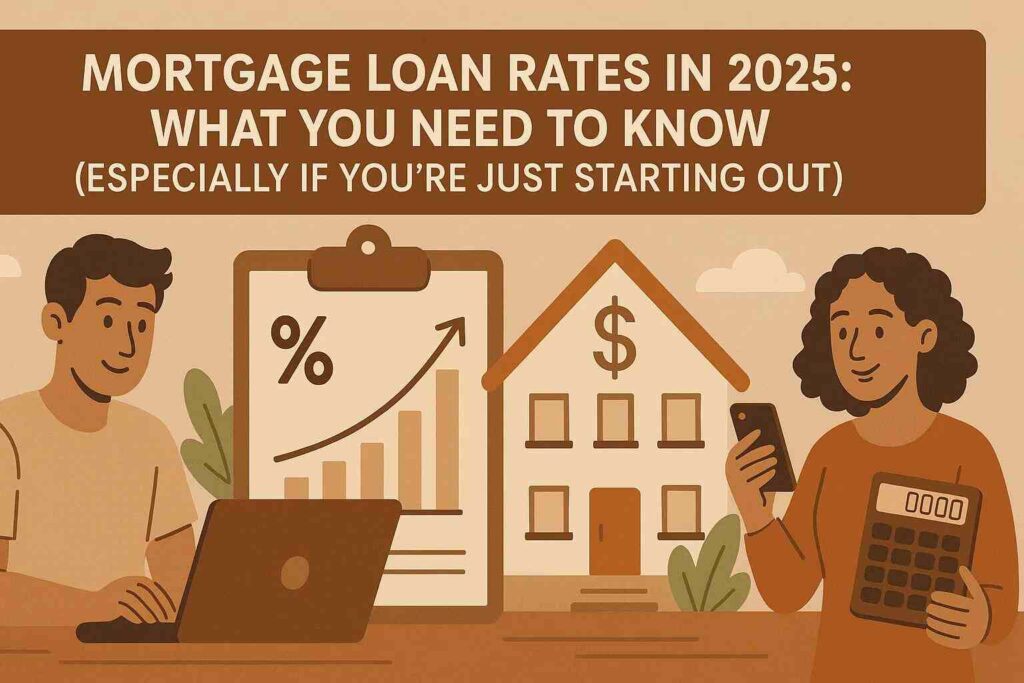
Mortgage Rates in 2025: What You Need to Know

Illustration of buyers using calculators and tools to research mortgage loan rates in 2025

Buying a home can be one of the most exciting and confusing experiences of your life. Whether you’re trying to figure out how much house you can afford, worried about your credit score, or just wondering if mortgage rates are finally going down, you’re not alone. The good news? You don’t need to be a financial expert to make smart decisions. You just need the right information, and that’s exactly what this guide is here for.

2025 Mortgage Rate Forecast for Home Buyers

Let’s start with the question on everyone’s mind: “Will mortgage rates drop this year?”

According to expert predictions on mortgage rates for next quarter, we’re seeing some cautious optimism. The 2025 mortgage rate forecast for home buyers suggests that rates may stabilize or slightly decline as inflation slows and the Federal Reserve eases its policies. However, don’t expect a huge drop overnight. The era of ultra-low interest rates is behind us, for now.

Some mortgage lenders may cut interest rates on specific products or for well-qualified buyers. If you’re waiting to “time the market,” it’s smarter to focus on your financial readiness instead. Locking in a rate when you’re prepared to buy, rather than waiting endlessly for the perfect dip, can save you more in the long run.

Getting Prequalified When You’re Self-Employed

Mortgage Rates as a Self-Employed Person

If you’re a freelancer, business owner, or contractor, getting a mortgage loan can feel like a maze. Lenders love consistency, and self-employment income isn’t always straightforward. Still, you absolutely can qualify.

To get started, you’ll need to show:

  • Two years of steady income (via tax returns)
  • Clear bank statements
  • Profit and loss statements
  • A reasonable debt-to-income ratio (typically below 43%)

Understanding how the debt-to-income ratio affects mortgage eligibility is critical. It’s one of the main metrics lenders use to evaluate whether you can realistically manage your monthly payments.

Need to improve your standing fast? Learn how to improve your credit score quickly before a mortgage application by paying down credit cards, disputing errors on your report, and avoiding new debt.

Mortgage Loan Options for Buyers with Fair Credit

Can I Get a Mortgage Loan with Fair Credit or Collections?

Yes! Many people assume you need a perfect credit score to buy a home, but that’s not true. Plenty of mortgage loan options for buyers with fair credit are available, especially if you explore government-backed programs like FHA, USDA, or VA loans.

Some lenders specialize in working with nontraditional borrowers:

  • Mortgage lenders that work with Chapter 13 bankruptcy cases
  • Lenders who help people get a mortgage with collections on their credit report

If your score is around 600, don’t panic. You may still qualify with the best mortgage lenders for a 600 credit score with a low down payment, just expect to provide more documentation and possibly pay a slightly higher interest rate.

Use the Right Mortgage Calculator

Helpful Tools to Estimate Your Costs

There are a lot of mortgage calculators out there, but not all are created equal.

Start with a mortgage loan calculator for a basic monthly payment estimate based on your loan amount, interest rate, and term.

Then try a mortgage calculator for FHA loans with taxes and insurance to get a clearer picture of what you’d owe every month (including escrows like property tax and homeowners’ insurance). You can also play around with a mortgage estimator with a credit score to get quotes based on your actual profile.

Planning to pay ahead? A mortgage calculator with extra payments can show you how much time and interest you’ll save by adding a little extra each month.

For couples or co-buyers, a mortgage affordability calculator for dual-income households can help you see your full buying power combined.

How Much House Can I Afford?
Concerned buyer thinking about how much house they can afford with rising mortgage loan rates

Income, Debt, and Mortgage Rates

Now let’s get into one of the most common questions: how much house can I afford based on income and debt?

There are two answers: what the lender will approve you for, and what you can comfortably afford. They’re not always the same.

Lenders typically use your gross monthly income and debts to calculate affordability. Tools like a mortgage rate estimator based on income or a mortgage estimator with taxes can help you do this before even talking to a lender.

Not sure whether to focus on savings or debt reduction? Ask yourself: Should I pay off debt or save for a mortgage down payment? Ideally, you’re doing both. But if you must prioritize, eliminate high-interest debt first, then redirect those payments into your savings.

Budgeting for the Hidden Costs

How to Budget for Mortgage Closing Costs and Fees

You’ve saved your down payment. Great! But what about everything else?

When buying a home, you’ll also need to budget for closing costs. These can include:

  • Appraisal fees
  • Loan origination fees
  • Title insurance
  • Escrow deposits
  • Prepaid taxes and insurance

On average, closing costs run between 2%–5% of the home price. Learning how to budget for mortgage closing costs and fees is just as important as saving for the home itself. A good mortgage estimator with taxes can help you avoid surprises.
Icons showing home purchase, money, and rising interest rates to represent mortgage loan options and closing costs

What If I’m a First-Time Buyer?

Buying your first home can feel like stepping into the unknown, but don’t worry, you’ve got options.

Programs like FHA, USDA, and VA loans were built to help people just like you. Some of the most helpful mortgage options for first-time home buyers with no down payment come from these federally backed programs. They reduce or eliminate down payments and make qualifications more flexible.

Final Thoughts

Buying a home in 2025 doesn’t have to be overwhelming. Whether you’re exploring mortgage loan rates, figuring out how much you can afford, or using a mortgage calculator with taxes and insurance, there are tools and options to help you every step of the way.

From self-employed buyers to those with fair credit, you’re not alone, and you’re not out of options. Use what you’ve learned here to take the next step, smarter and more confidently.

Start where you are. Use the tools. Ask the questions. And keep going! Your home is closer than you think.

The Ultimate Guide to Getting a Mortgage in 2025: Tools, Tips, and Loan Options

Buying a home in 2025? Whether you’re a seasoned homeowner or a first-time buyer,
understanding how to qualify for a mortgage is the first step to unlocking the door to
homeownership. From comparing mortgage rates, getting a loan, and getting pre-approved to choosing the right mortgage lender, this guide will help you navigate today’s mortgage landscape with confidence.

Young couple gathering pay stubs and tax documents to apply for a mortgage loan

To qualify for a mortgage, lenders will assess your credit score, income, debt-to-income ratio,
and job history. Specific income requirements for a home loan vary by loan type, but the
golden rule is this: lenders want to see that you can comfortably manage monthly payments.
If you’re applying for your first home, lenders often recommend programs tailored to mortgage
loans for first-time buyers, which come with lower down payment requirements and flexible
credit standards.

Government-Backed Loan (FHA & VA)

FHA loans for manufactured homes are great for buyers seeking affordability in non-
traditional housing. Veterans should explore their benefits with VA loans, and make sure you
understand VA loan closing costs explained before committing.

Conventional vs Government Loans

Conventional loans typically require higher credit scores and down payments, but they can save
you money in the long run.

The 15-year vs 30-year mortgage comparison helps determine the right term for your budget
and lifestyle. A 15-year term saves on interest; a 30-year term offers lower monthly payments.

Why Mortgage Pre-Approval Matters

Getting mortgage pre-approval shows sellers you’re serious and gives you a clear budget to
work with.

How to Apply for a Mortgage Online

Most lenders now let you apply for a mortgage online and get results quickly. Be sure to request a mortgage quote to compare options.

Use a mortgage calculator to estimate monthly payments. Want more details? Try a mortgage estimator with taxes or use the MACU mortgage calculator for Utah-specific results.

Amortization & PMI Planning

Use an amortization calculator with PMI to understand the payment structure, or a home equity
payment calculator with extra payments to see how extra payments can reduce your interest.

National Trends vs Local Rates

In 2025, home mortgage interest rates for 30-year fixed mortgages continue to fluctuate.
Check both national and regional offers, like mortgage interest rates in Utah and mortgage
rates in Utah.

How to Get a Mortgage Quote

A mortgage quote provides you with real-time pricing tailored to your specific situation.
Compare multiple mortgage rates to find the best fit for you.

Refinancing Options for Lower Scores

You can still refinance a mortgage with bad credit by choosing FHA-backed options or
improving your credit score first.

  • Look for transparent, tech-friendly mortgage companies with solid customer service.
  • Research Rocket Home Loans and Other Digital Options
  • Platforms like Rocket Home Loans simplify the process with fast approvals.
  • Best Mortgage Lenders in Utah
  • If you’re buying locally, check out the best mortgage lenders in Utah for state-specific perks.
  1. Get Pre-Approved: Start with your mortgage pre-approval.
  2. Compare Loan Types: From FHA to VA Loans, Explore Your Options.
  3. Use Tools: Calculate using a mortgage calculator and estimate additional costs, such as PMI.
  4. Know the Rates: Track mortgage rates and request a mortgage quote.
  5. Pick the Right Lender: Choose from the best mortgage companies and compare each
    mortgage lender.
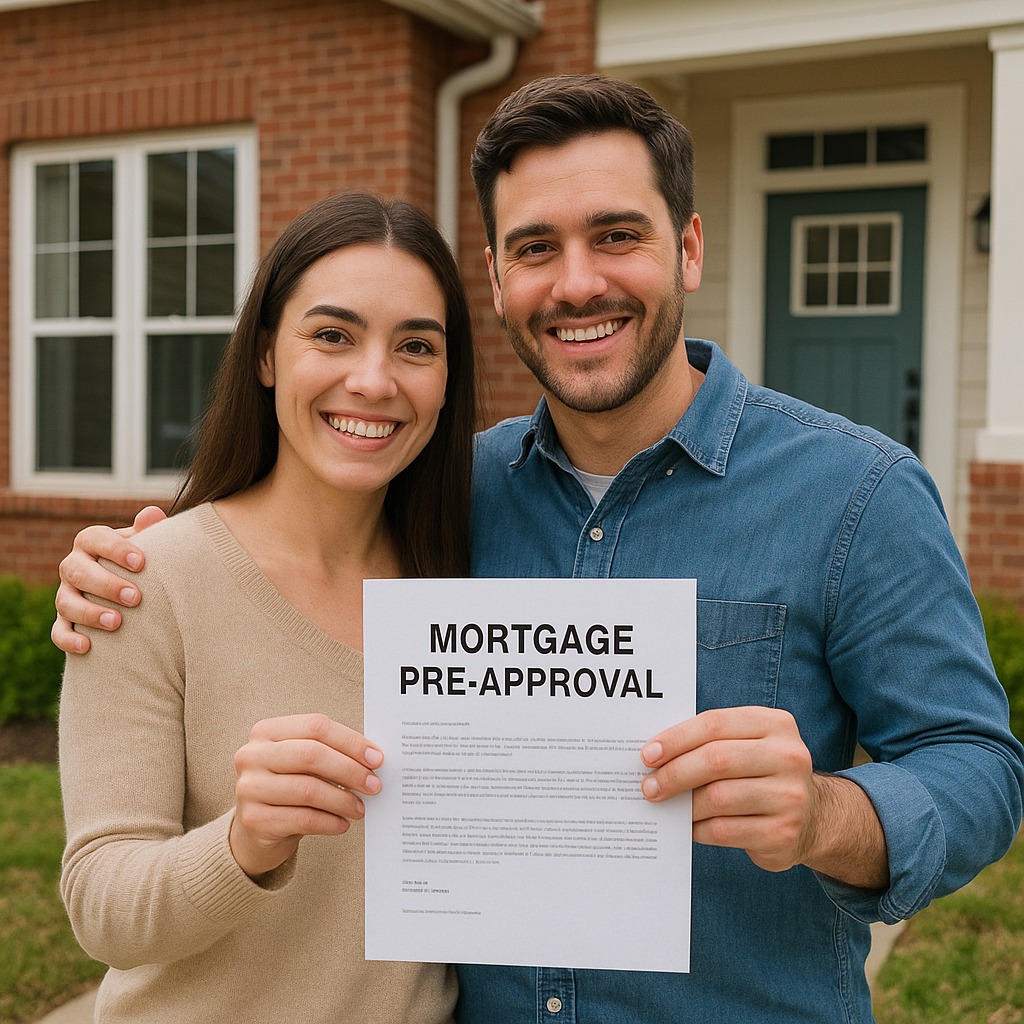
Happy couple holding mortgage loan pre-approval letter in front of their new home

Get that Mortgage Pre-Approval & enjoy your new home!

Utah Mortgage Myths

Blue sky with the welcome to Utah sign on the left showing red mountains.

Mortgage Myths Debunked: What Every Utah Homebuyer Should Know

Buying a home can feel like a daunting task, especially with some common misconceptions that can make it feel like homeownership is out of reach for so many. Homebuyer education, mortgage calculators and tools, loan, and down payment assistance programs can make homeownership more accessible and affordable than you might think. We will debunk common myths regarding mortgage rates and homeownership in Utah and show how you might access a mortgage that previously seemed out of reach.   

Myth: You Need a 20% Down Payment and Perfect Credit to Buy a House in Utah

The belief that you need a perfect credit score and a 20% down payment to buy a home discourages many potential homebuyers. While these can ease the process of buying a home, certain incentives and benefits make it easier to get approval for a loan than you might think. 

Utah Down payment Assistance

One myth that keeps many from pursuing homeownership is the idea that you need a 20% down payment to purchase a home. While it’s true that a larger down payment can help you secure a better mortgage rate, it’s far from a requirement. In fact, there are several Utah mortgage assistance programs that can help you cover your down payment. For first-time homebuyers in Utah, down payment assistance programs and low down payment mortgage options like FHA loans or USDA loans can make buying a home much more affordable. The Utah Housing Corporation down payment assistance program offers down payment assistance specifically for eligible Utah homebuyers. Some Utah communities offer additional down payment assistance should you choose to purchase a home there. Using a Utah mortgage calculator, you can quickly see how much you can save on your down payment by exploring different loan options, including low down payment mortgages or even no down payment loans for eligible buyers in rural areas with USDA loan eligibility.

Homebuyer Assistance in Utah with Low Credit

Smiling couple standing in front of their new home, holding a wooden sign that reads 'Home Sweet Home,' symbolizing homeownership and a fresh start. This is their first mortgage.

A common myth that discourages many potential buyers is the belief that you need a perfect credit score to secure Utah home loans. While having a strong credit history certainly helps when applying for a mortgage, it’s not a dealbreaker if your score isn’t flawless. Many Utah mortgage brokers and local mortgage companies in Utah offer specialized loan options for those with less-than-perfect credit. FHA loans, for instance, are designed to help buyers with lower credit scores (often as low as 580) secure financing with lower down payments. If you’re worried about your credit score, talk to the best mortgage lenders in Utah about homebuyer resources and options like FHA loans, VA loans or USDA loans. These can be forgiving of lower scores, especially if other financial factors, such as your debt-to-income ratio, are strong.

Myth: Renting is Always Cheaper Than Buying in Terms of Home Affordability

There is a common myth that states that renting is always cheaper than buying. We will discuss and debunk this myth. It is not necessarily true that renting is always cheaper. While renting has lower upfront costs, buying a house can be more cost-effective in the long run. There are many different factors at play to determine which is better for you. Current Utah mortgage rates, tax benefits, access to FHA loans in Utah, and property appreciation can all impact your financial decisions. Depending on the rates when you buy, a mortgage payment could be cheaper than a rent payment.

Utah Homebuyer Grants vs. Costs of Renting

While buying means more upfront costs, there are resources which can combat this. First-time homebuyers can qualify for homebuyer grants which provide sums of money for free to use towards a down payment or closing costs. This can be huge in the long run, because the larger down payment you put down, the lower your monthly mortgage payment is. On the flip side, with renting there can be many extra costs that can increase your monthly rent payment. For example, parking fees, pet ownership fees, and amenities fees; as well as one-time large payments for a security deposit. Additionally, when you pay a monthly mortgage, you are building equity by owning a property and can get money back if you sell the house later on. When you rent, you do not build any equity or get any money back that you have paid. This is because owning a house is an investment. Fixed-rate mortgages mean that payments do not inflate over time, but rent payments generally increase steadily every year. While mortgage rates are currently higher in Utah than they were several years ago, analysts predict them to be lower in the future. This gives you the chance to lock in a house at the current price and refinance at a lower rate down the road.  With the right loans, homeowner assistance programs, and a look to the future, now could be a great time to make the switch from being a renter to being a homeowner. 

Navigating Utah’s Mortgage Myths and Homebuying Realities

Buying a home in Utah can seem overwhelming with all the myths surrounding mortgage rates, down payments, and credit requirements. However, as we’ve explored, you don’t need a perfect credit score or a 20% down payment to become a homeowner. With various federal / Utah down payment assistance programs and flexible loan options, purchasing a home is more accessible than many realize. While renting might seem like the cheaper option upfront, buying a home can often be more cost-effective in the long run, thanks to homebuyer grants, equity building, and stable mortgage payments. To further assist you in navigating Utah’s mortgage landscape, check out the resource Mortgage Rates Made Easy for helpful tools, updated rates, and personalized guidance. Understanding your options, using tools like a Utah mortgage calculator and working with reputable lenders can help you make the best decision for your financial future. Whether you’re looking to buy your first home or exploring ways to invest, debunking these common myths is the first step toward turning homeownership into a reality in Utah.

Young couple in Utah sitting on the floor of their new home, toasting with drinks, surrounded by moving boxes and a pizza box, celebrating their move. This is their first home and first mortgage!